
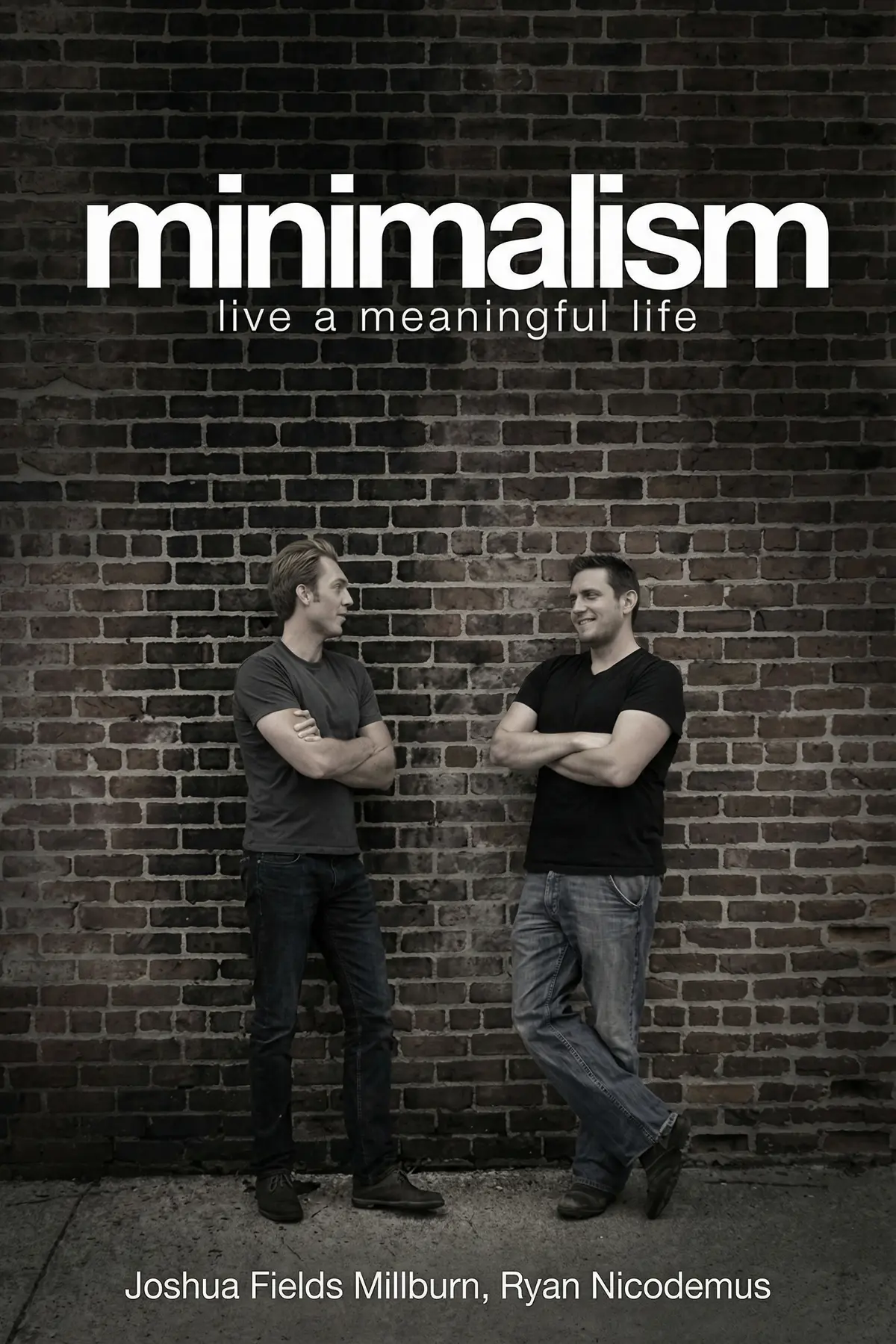
Minimalism: Live a Meaningful Life
Joshua Fields Millburn
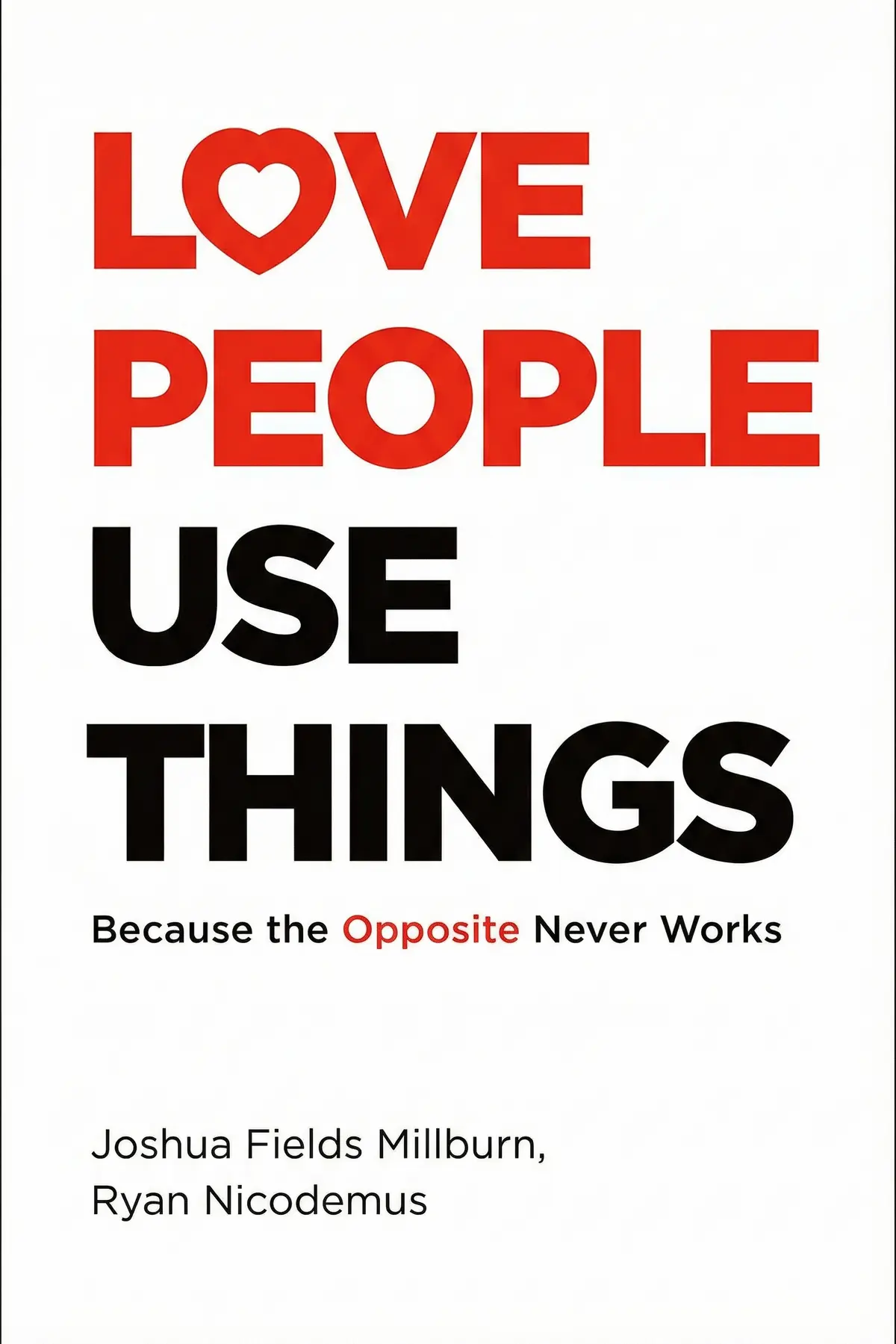
Love People, Use Things explores how to reclaim your life from the weight of consumerism. It offers a blueprint for finding fulfillment through intentional living, focusing on relationships, values, and purpose.
1 min 33 sec
In the modern age, we are often told that the path to a meaningful life is paved with acquisitions. We are encouraged to climb the ladder, fill our homes with the latest gadgets, and curate an image of success that is measured by the sheer volume of our belongings. Yet, for so many people, this pursuit leads to a strange paradox: the more we own, the more overwhelmed and empty we feel. We find ourselves surrounded by things we don’t need, working jobs we don’t like, to buy items that don’t bring us lasting joy.
This is the starting point for a journey into minimalism—a philosophy that isn’t just about owning less, but about making room for more of what matters. The core idea is simple yet revolutionary: we have been conditioned to use people and love things, when we should be doing the exact opposite. By shifting this focus, we can begin to untangle ourselves from the web of consumerism and distraction that keeps us from our true potential.
Over the course of this exploration, we will look at how our material habits impact our mental well-being, our finances, and our relationships. We’ll delve into the ways that truth-telling and mindfulness can clear the internal clutter that is often more damaging than the physical junk in our garages. We’ll also examine how to redefine our values so that our daily choices align with our long-term goals. This isn’t just a guide to tidying up; it’s a manual for reclaiming your time, your energy, and your life. Prepare to discover how letting go of the superficial can lead you to a depth of experience you never thought possible.
2 min 08 sec
Possessions often promise happiness but deliver distraction and debt, acting as a physical barrier to the life we truly want to lead.
2 min 04 sec
True simplicity requires more than just clearing physical space; it demands a rigorous commitment to honesty with ourselves and others.
1 min 52 sec
Mindfulness allows us to escape the cycle of constant wanting by finding profound joy in the simple, everyday experiences we often overlook.
2 min 01 sec
Defining what truly matters helps us resist external pressures and make choices that lead to long-term fulfillment rather than temporary gratification.
1 min 55 sec
Breaking the cycle of debt and mindless spending is essential for reclaiming your time and opening doors to a more purposeful future.
2 min 00 sec
Removing digital distractions and the pressure to consume allows our natural creative instincts to flourish and solve meaningful problems.
1 min 55 sec
Minimalism reveals that the quality of our relationships is the true measure of a good life, requiring vulnerability and clear boundaries.
1 min 43 sec
The journey through these principles brings us back to a fundamental truth: a life cluttered with the unnecessary is a life lived at a fraction of its potential. We have seen how the objects we own can end up owning us, how the lies we tell create internal chaos, and how the pursuit of ‘more’ often leads to ‘less’ in the areas that truly count. Minimalism isn’t a destination or a set of rigid rules; it is a continuous process of editing your life so that only the essential remains.
By reclaiming your relationship with money, you gain the freedom to pursue your passions. By embracing honesty and mindfulness, you clear the mental fog that prevents you from experiencing the world as it truly is. And by focusing on your core values and the people around you, you build a foundation for a happiness that isn’t dependent on the next product launch or the latest trend. This is the promise of living intentionally—that by letting go of what doesn’t matter, you finally find the room to hold onto what does.
As you move forward, remember that every small step counts. You don’t have to overhaul your entire existence overnight. Start with a single room, a single debt, or a single day of digital silence. A helpful tool to keep in your pocket is the 20/20 rule: if you are struggling to let go of an item, ask yourself if it could be replaced for less than twenty dollars in less than twenty minutes. More often than not, the answer is yes, and that realization can give you the courage to let go. The goal is to reach a place where your possessions serve you, your values guide you, and your heart is reserved for the people in your life. Because in the end, we should love people and use things—because the opposite never works.
This summary explores the foundational philosophy of the minimalist movement, moving beyond the simple act of decluttering a closet to address the deeper emotional and psychological attachments we have to our possessions. It argues that modern society has inverted a fundamental rule of happiness, leading many to love objects while merely using people. Through personal narratives and practical frameworks, the text examines how excess material goods, financial debt, and digital distractions create a barrier to genuine connection and self-expression. It promises a path toward a more intentional existence by redefining our relationships with money, truth, and creativity. By focusing on seven essential areas of life, the summary provides a roadmap for anyone feeling overwhelmed by the demands of contemporary consumer culture, offering a way to prioritize what truly matters.
Joshua Fields Millburn and Ryan Nicodemus are the founders of TheMinimalists.com, a platform focused on the practice of minimal living. Millburn has authored several best-selling books, including Everything That Remains: A Memoir, Essential: Essays by The Minimalists, and Minimalism: Live a Meaningful Life. Nicodemus is a prominent writer whose work has been featured in major publications like the Chicago Tribune, the Seattle Times, and LA Weekly.
Joshua Fields Millburn
Listeners find the work well-crafted and a useful minimalist guide, and one listener remarks that it is a great choice for the entire family. They appreciate the evocative material, as one review emphasizes its role in helping individuals assess their values and connections, while another listener says it offers a profound look at minimalist theory. The text earns praise for its message regarding intentional living, and listeners value its uncomplicated approach. However, opinions among listeners are split regarding the specific word choices.
Finally got around to reading this after hearing the Minimalists on a podcast, and it really shifted my perspective on family priorities. Instead of just talking about tossing out your junk, Joshua and Ryan dig deep into the values that drive our consumption habits. The way they frame relationships versus possessions felt incredibly timely as we navigate a world that feels increasingly cluttered and disconnected. Truthfully, the chapter on creativity sparked a conversation with my spouse that led to us re-evaluating our financial goals and even our future car purchase. It’s a well-written guide that doesn't just demand you live in a bare white room but encourages you to find more room for what matters. We’ve started implementing the rules slowly, and the simplicity is a breath of fresh air for our household.
Show moreAfter hearing the Minimalists speak online, I wasn't sure if a book could offer more, but this is a truly deep dive into their philosophy. It’s not just about cleaning out your closet; it’s about a total stewardship program for your life and your time. The stories Joshua shares about his mother and his own past mistakes are vulnerable and provide a necessary context for why these changes matter. I found the section on "Creativity" particularly inspiring, as it helped me realize how much "stuff" was actually blocking my artistic output. This is a book that encourages responsible growth and contribution over mindless accumulation, which is exactly what I needed to hear right now. Highly recommended for families who want to simplify their lives and focus on building lasting memories together.
Show morePicked this up during a move, and it was exactly the motivation I needed to stop lugging around a decade’s worth of useless junk. The authors' point about memories being inside us, rather than in the objects themselves, really helped me let go of some sentimental items I was clinging to out of guilt. I love the focus on making room for "more"—more passion, more freedom, and more contentment—rather than just focusing on the "less." It’s an easy-to-read, welcoming book that provides simple steps that never felt overwhelming even when my house was in total chaos. The focus on intentional living has already made my new home feel much more peaceful and manageable. This is a must-read for anyone who feels weighed down by the cycle of unrestricted acquisition.
Show moreEver wonder why we keep buying things we don't need to impress people we don't even like? That’s the core question here, and the authors do a decent job of unpacking the psychological baggage behind our stuff. I appreciated the specific questions they suggest asking before making a purchase, as it’s already helped me curb some impulsive online shopping habits. While the structure is a bit messy—fluctuating between a memoir and a self-help workbook—the emotional core of the book remains strong. Some of the sections on "Self" felt a little oversimplified, especially regarding mental health, but the overall message about intentional living is worth the read. It’s a thought-provoking deep dive for anyone looking to reset their relationship with the material world.
Show moreThe chapter on 'Self' really challenged me to look at my internal clutter rather than just the boxes sitting in my garage. It’s an interesting take on minimalism that moves beyond the physical and into the mental and emotional spheres of our daily lives. I actually enjoyed the sophisticated vocabulary, though I can see why some might find it a bit pretentious or unnecessary. The book isn't a quick read because it forces you to stop and reflect on your own relationships after every few pages. To be fair, some of the advice assumes a level of financial stability that not everyone possesses, but the underlying philosophy is still quite valuable. It’s a great guide for anyone who feels like they are drowning in "stuff" and wants to reconnect with their human side.
Show moreLook, the message is solid, but the execution is far from minimalist in terms of writing style or structure. I agree that we should love people and use things, but did it really take over 300 pages to drive that point home? Some of the anecdotes felt like unnecessary digressions that didn't move the needle on the actual advice being given. I also noticed that several of the statistics cited seemed a bit dated, which made me question some of the broader arguments about consumer trends. That being said, the "Coda" sections at the ends of chapters provided some of the most practical and actionable tips in the whole book. It’s a decent starting point for beginners, but seasoned minimalists might find it a bit bloated and repetitive.
Show moreWhile the core ideas are great, I found the book's organization to be a bit frustrating at times. It jumps between the two authors' perspectives in a way that feels disjointed, and the tone shifts dramatically from chapter to chapter. Personally, I think it works better as a memoir than as a self-help guide, as the personal stories are much more engaging than the "rules" which are often recycled from other sources. I did appreciate the discussion on money management and the importance of having values-aligned spending habits. However, the writing is occasionally so dense that it defeats the purpose of a book promoting a simpler life. It's an insightful read with some good takeaways, but it definitely could have benefited from a more rigorous edit to remove the fluff.
Show moreAs someone who has followed the podcast for years, I felt like I was reading a transcript of episodes I’ve already heard multiple times. There is very little "new" information here, and the repetitive nature of the stories made it a bit of a slog to get through. The book struggles with an identity crisis; it can’t decide if it wants to be Joshua’s personal biography or a practical manual for decluttering. I found the tone occasionally condescending, particularly when the authors describe people who haven't yet seen the "light" of minimalism. While there are a few golden nuggets of wisdom buried in the chapters on money and values, they are hidden under layers of flowery prose. You’re better off watching their Netflix documentary and saving yourself the time.
Show moreThis book was a massive disappointment that felt more like a wealthy man’s vanity project than a helpful guide for the average person. I found the comments about how this book could have "saved" people during the pandemic to be incredibly tone-deaf and dismissive of real struggle. Throughout the text, Joshua constantly mentions his high corporate salary in Dayton, which frankly starts to feel more like bragging than a cautionary tale after the fifth time. There is a pervasive sense of privilege here that ignores anyone who can’t simply "decide" to have three months of emergency savings or buy expensive organic food. For a book that preaches minimalism, the writing is ironically long-winded and stuffed with unnecessary words that add zero value. If you want actual advice on living with less, skip this ego trip and find someone more grounded in reality.
Show moreTo be fair, I wanted to like this, but the overwhelming sense of privilege made it impossible to finish without rolling my eyes. The authors suggest that everyone can just "pull themselves up" or move through depression by staying active, which is a dangerous and reductive viewpoint. There is almost zero acknowledgment of how systemic issues or race might affect one's ability to live this supposedly simple lifestyle. I was also put off by the constant self-promotion of their other projects and their friends' businesses throughout the text. It feels less like a book about using things and more like a tool to sell the Minimalist brand to a wider audience. If you aren't already a wealthy professional, most of these suggestions will feel completely out of reach.
Show more
William B. Irvine
Andrew D. Thompson
Deepak Chopra
Richard Wiseman
AUDIO SUMMARY AVAILABLE
Get the key ideas from Love People, Use Things by Joshua Fields Millburn, plus 5,000+ more titles in English and Thai.







