
16 min 33 sec
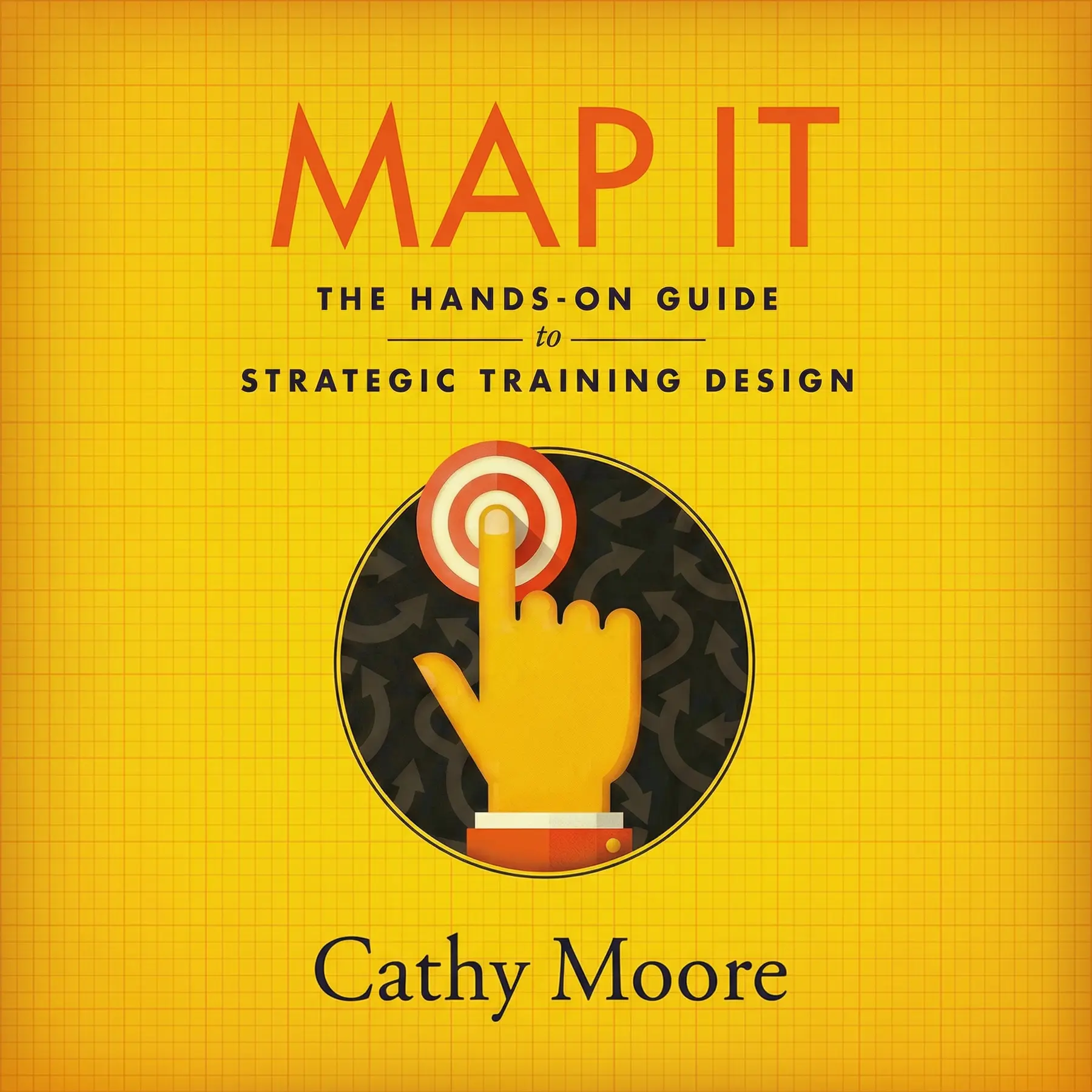
Map It: The Hands-On Guide to Strategic Training Design
By Cathy Moore
Map It introduces a performance-focused framework called Action Mapping, designed to move corporate training away from boring information dumps toward measurable business results and engaging, decision-based learning experiences.
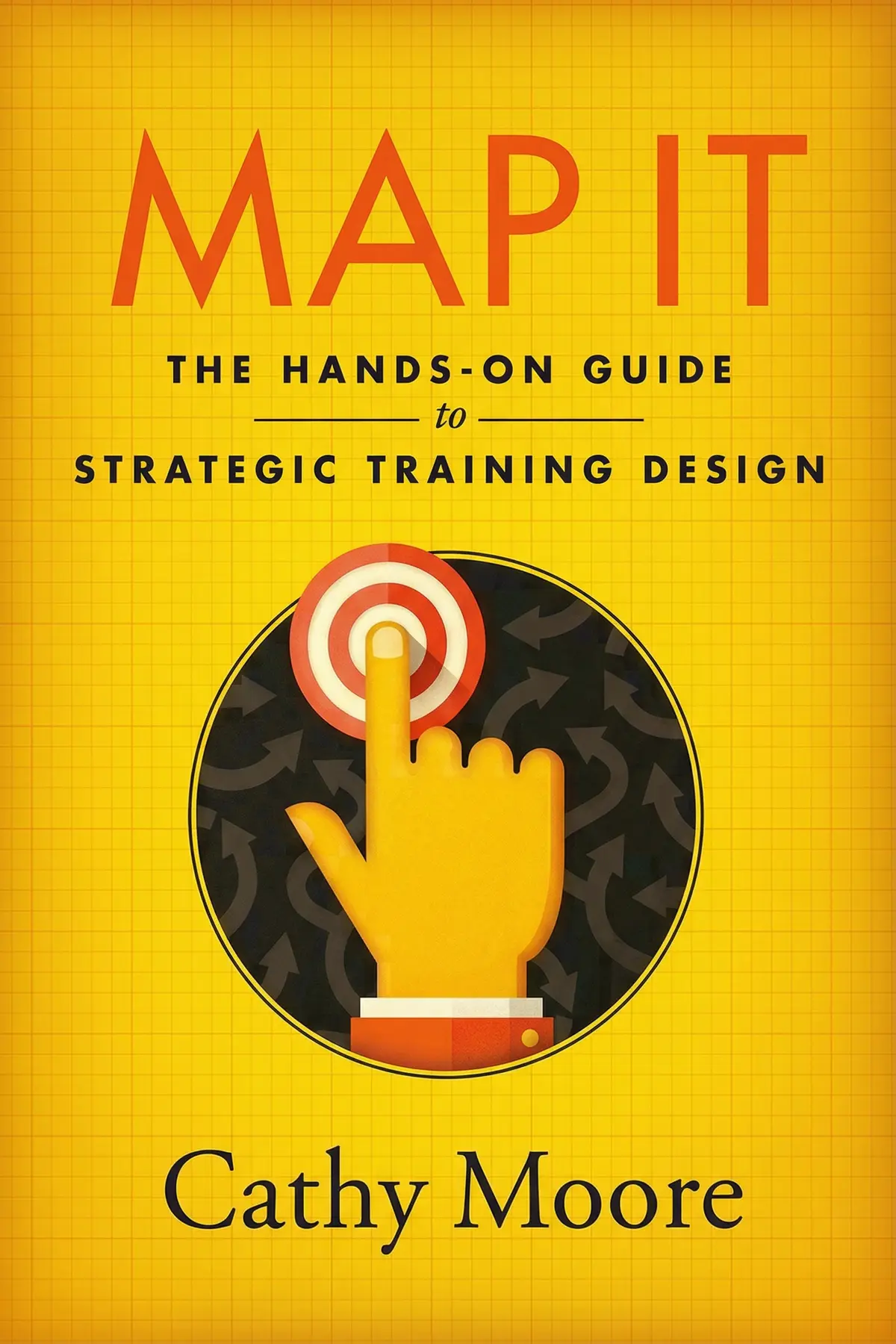
Table of Content
1. Introduction
2 min 03 sec
Picture yourself in a high-stakes management meeting. You are looking at a report that shows employee injuries have spiked by fifteen percent over the last year. It is a sobering statistic, and as a leader, your immediate instinct is to protect your people. The standard response in almost every corporate environment is to call for more training. We assume that if people are making mistakes, it must be because they don’t have enough information. So, we commission a new safety course, distribute a thick manual, and hope for the best.
But here is where the path diverges. You have two options for how to handle this. You could go to someone like Tom, a veteran trainer who loves his slide decks. Tom will build you a comprehensive, beautifully designed presentation filled with every safety regulation ever written. It will be professional, it will be thorough, and it will almost certainly fail to change a single thing on the warehouse floor.
Then there is Amy. Amy is an action mapper. She doesn’t start by designing slides; she starts by asking uncomfortable questions. She wants to know why the existing signs are being ignored. She wants to know if the safety equipment is actually where it is supposed to be. Amy isn’t interested in dumping information into people’s heads; she is interested in solving the underlying problem.
In this summary, we are going to explore why Amy’s approach is the future of strategic training design. We will dive into the methodology of Map It by Cathy Moore, a book that fundamentally shifts the goal of training from ‘knowing’ to ‘doing.’ We’ll look at how to define real problems, set goals that actually matter, and design challenges that keep learners engaged because they mirror the reality of the job. Whether you are an instructional designer or a business leader looking for better results, this throughline will change how you think about development: training isn’t a product you deliver; it is a solution to a performance gap.
2. Investigating the Root Cause
2 min 24 sec
Before jumping to training as a solution, effective designers must act like detectives to uncover why a performance gap exists in the first place.
3. Establishing Measurable Outcomes
2 min 35 sec
Success in training is only possible when you define exactly what a ‘win’ looks like using specific, measurable business metrics.
4. Pinpointing Critical Actions
2 min 29 sec
The bridge between a goal and a result is a series of specific actions that people must perform differently on the job.
5. Crafting Decision-Based Prototypes
2 min 44 sec
Engagement comes from challenge, not consumption; prototypes should focus on simulating the tough choices employees face every day.
6. Iterating Through Rigorous Testing
2 min 42 sec
A training solution is never truly finished until it has been tested by real users and refined based on their actual performance and feedback.
7. Conclusion
1 min 36 sec
As we wrap up this look into Map It, the core message is clear: the traditional model of corporate training is broken, but we have the tools to fix it. Training should never be about the delivery of information for its own sake. It is a tool for change, a means to an end, and a way to solve real-world business problems.
By following the action mapping process—starting with a deep investigation into root causes, setting measurable and specific goals, identifying the critical actions that matter, and building decision-based challenges—you can create training that people actually want to take because it respects their time and mimics their reality. You shift from being a ‘content provider’ to being a ‘performance consultant’ who adds tangible value to the organization.
But here is the most exciting part: action mapping isn’t just for the workplace. You can apply these same principles to your personal goals. If you want to get healthier, or learn a new skill, or improve your financial situation, stop looking for more ‘information’ and start looking at your actions. Define your goal precisely, identify the barriers that are stopping you from taking the right actions today, and create small, realistic challenges for yourself to practice the behaviors that will lead to success.
Whether in business or in life, the path to improvement isn’t found in a textbook or a slide deck. It’s found in the choices we make every day. So, the next time you encounter a problem, don’t ask what you need to know. Ask what you need to do—and then map it.
About this book
What is this book about?
Many corporate training programs fail because they focus on delivering information rather than changing behavior. Map It challenges this traditional model by introducing Action Mapping, a streamlined process for identifying the root causes of performance gaps and designing targeted solutions. Instead of assuming that a slide deck or a video will solve a problem, this approach starts with a measurable business goal and works backward to identify the specific actions employees need to take. The book provides a practical, step-by-step guide to transforming training from a passive experience into an active, problem-solving journey. By focusing on realistic scenarios, consequence-based feedback, and rigorous testing, organizations can ensure that their training investments actually lead to safer workplaces, higher sales, and more efficient operations. It is a roadmap for instructional designers and managers who want to prove the value of their work through data and real-world impact.
Book Information
About the Author
Cathy Moore
Cathy Moore is an internationally renowned training designer, sought-after speaker, business author and blogger. Her Action Mapping system has improved instructional design for companies and organizations around the globe, from Amazon to The United Nations World Food Program.
Ratings & Reviews
Ratings at a glance
What people think
Listeners find the material highly beneficial for learning, and one listener describes it as a fundamental resource for instructional design. The book's content also draws praise, with one listener highlighting the way it leads people through step-by-step processes. Perspectives on readability vary significantly; while some listeners consider it very easy to follow, others label it as completely unreadable. Listeners also value the work's overall impact, with one noting how it helpfully repeats crucial ideas. However, reactions to the performance technology elements remain mixed.
Top reviews
Jiraporn
Finally got around to reading this after hearing my colleagues rave about it for years, and I can confirm the hype is real. Cathy Moore has produced something rare: a technical guide that is actually a page-turner. Her background in technical writing shines through in every punchy, witty sentence. The core of the book—Action Mapping—is a paradigm shift that moves us away from the 'Tom' style of information dumping toward 'Amy’s' focus on performance. I particularly loved the 'choose your own adventure' practice scenarios that pop up in every chapter. They aren't just filler; they genuinely challenge your decision-making and force you to apply the logic immediately. If you are tired of being a 'content stenographer' and want to start solving actual business problems, this is your roadmap. It is worth every penny of the cover price.
Show moreWillow
This book is a masterclass in stripping away the fluff that plagues modern corporate learning departments. Moore’s core philosophy—that we should focus on what people need to DO rather than just what they need to KNOW—is a total game-changer for anyone tired of building boring slide decks. I found the sections on setting measurable goals particularly illuminating because they force you to have difficult, necessary conversations with stakeholders before a single slide is ever drafted. While the narrative is punchy and the Amy vs. Tom scenarios make the concepts stick, it’s the sheer volume of practice activities that makes it special. Most books give you two examples; Moore showers you with a dozen. If you want to stop being an information dumper and start being a problem solver, buy this book.
Show moreMonthon
The chapter on prototyping was the exact 'aha' moment I needed. For years, I’ve been over-designing modules before testing the actual logic, but Moore’s process of building stripped-down challenges first is a lifesaver. It saves time, money, and a massive amount of ego. I love how she frames the 'Amy' character as someone who takes a step back to ask 'why' before diving into the 'how.' The book is packed with insight for training designers who are sick of the status quo. It’s a pure delight to read, which is a sentence I never thought I’d write about a business manual. Sentence lengths vary, the tone is conversational, and the logic is airtight. It’s staying on my professional reference shelf forever. I cannot recommend it enough for people who want results.
Show moreWatcharin
Not what I expected from a business guide! Usually, these books are dry and repetitive, but Cathy Moore writes with a sharp wit that kept me engaged from cover to cover. The 'Amy vs. Tom' comparison is a genius way to illustrate the difference between helpful intervention and useless information-dumping. I especially appreciated the 'would you steal that?' scenarios which help you identify what truly belongs in a training session. Most IDs include way too much 'nice to know' info, but this book gives you the permission—and the tools—to cut the fat. It’s an expensive investment, but considering how much it improves the quality of your work, it pays for itself in a single project. Buy it. Read it. Map it.
Show moreMalee
Picked this up because my team’s training metrics were stagnant, and I’m so glad I did. The focus on measurable goals—like reducing warehouse injuries by a specific percentage—changed the way I pitch projects to leadership. Moore’s narrative style is fantastic. She makes you feel like you’re having a coffee with a very smart, very blunt mentor. The advice to 'lose an imaginary limb' in training scenarios to show consequences is both funny and effective. I’ve already started applying the prototyping phase to my current project, and the feedback from my beta testers has been night and day compared to my old methods. This isn't just a book about instructional design; it's a book about solving problems through better thinking. Every manager should read this.
Show moreKomsan
In my experience, most ID books are incredibly dry, but Moore’s technical writing background makes this a genuine page-turner. I love the way she showers you with examples and then provides her own rationale. It feels like a personalized coaching session. The distinction between 'education' and 'challenging people in areas that reflect on-the-job experience' is such a vital point. We often treat adult learners like children, and Moore calls us out on it in the best way possible. Personally, I found the practice sections in each chapter to be the most valuable part. They aren't easy, and they don't always have a single 'right' answer, which is exactly like the real world. If you’re serious about your career, you need this on your desk. Period.
Show moreLucas
Ever wonder why your company’s safety training feels like a total waste of time? This book answers that question by exposing the flaw in the 'school model' of corporate instruction. Moore’s step-by-step process for identifying measurable goals is brilliant. She doesn't just tell you to improve; she shows you how to prove that your training actually moved the needle. I appreciated the emphasis on non-training solutions, which most instructional designers are too afraid to suggest. My only real complaint is that some of the references to her website felt a bit disconnected, and I struggled to find a few of the specific examples she mentioned online. To be fair, though, the printed content is so strong that the website issues are just a minor annoyance. This is foundational stuff for anyone in L&D.
Show moreThawee
Frankly, the price tag initially made me hesitate. Fifty dollars is a lot for a paperback, but after finishing the first three chapters, I realized I would have paid double. This is essentially the Bible for anyone who takes instructional design seriously. Moore uses a witty, punchy style to dismantle the traditional 'information dump' approach that most of us were unfortunately taught to replicate. Instead of building another snazzy slide deck that everyone ignores, she teaches you how to map out actual behaviors that drive business results. My only gripe is that some of the performance technology discussions felt a little dated. But that is a minor flaw in an otherwise transformative work. It has completely changed how I talk to my clients about their training needs. Stop designing content; start mapping actions.
Show morePraepimon
Truth is, I was stuck in the Tom mindset for a long time. I thought my job was to make the most beautiful, interactive slides possible, regardless of whether they actually changed behavior. This book was a much-needed wake-up call. Moore’s step-by-step approach to defining performance problems is incredibly practical. She forces you to look at the environment, the tools, and the motivation before you even think about teaching a skill. My only criticism is that the performance technology aspect of the book felt a little bit glossed over in favor of the conceptual mapping. I would have liked more on the technical implementation of these complex branching scenarios. Still, the foundation it provides is unparalleled in the field. It’s a must-read for anyone who wants their work to matter.
Show moreBoss
As someone who has worked in both K-12 and corporate environments, I have some complicated feelings about this text. On one hand, Moore’s action mapping process is logically sound and offers a brilliant framework for diagnosing whether training is even the right solution. The focus on measurable performance goals is exactly what our industry needs to move away from 'completion rate' metrics. However, I found her frequent disparagement of the 'school model' to be a bit reductive and outdated. Modern education has moved far beyond the rote memorization she describes, and using it as a constant foil felt unnecessary after the first few chapters. Additionally, some might find the layout distracting or even 'unreadable' if they prefer a more traditional textbook structure. Truth be told, it’s a solid methodology wrapped in a tone that didn't always sit right with me.
Show moreReaders also enjoyed
7 Powers: The Foundations of Business Strategy
Hamilton Helmer

A Bigger Prize: How We Can Do Better Than the Competition
Margaret Heffernan
A Year with Peter Drucker: 52 Weeks of Coaching for Leadership Effectiveness
Joseph A. Maciariello
AUDIO SUMMARY AVAILABLE
Listen to Map It in 15 minutes
Get the key ideas from Map It by Cathy Moore, plus 5,000+ more titles in English and Thai.
- 5,000+ titles
- Listen as much as you want
- 7-day free trial
- Cancel anytime







