
The State of Affairs: Rethinking Infidelity
Esther Perel
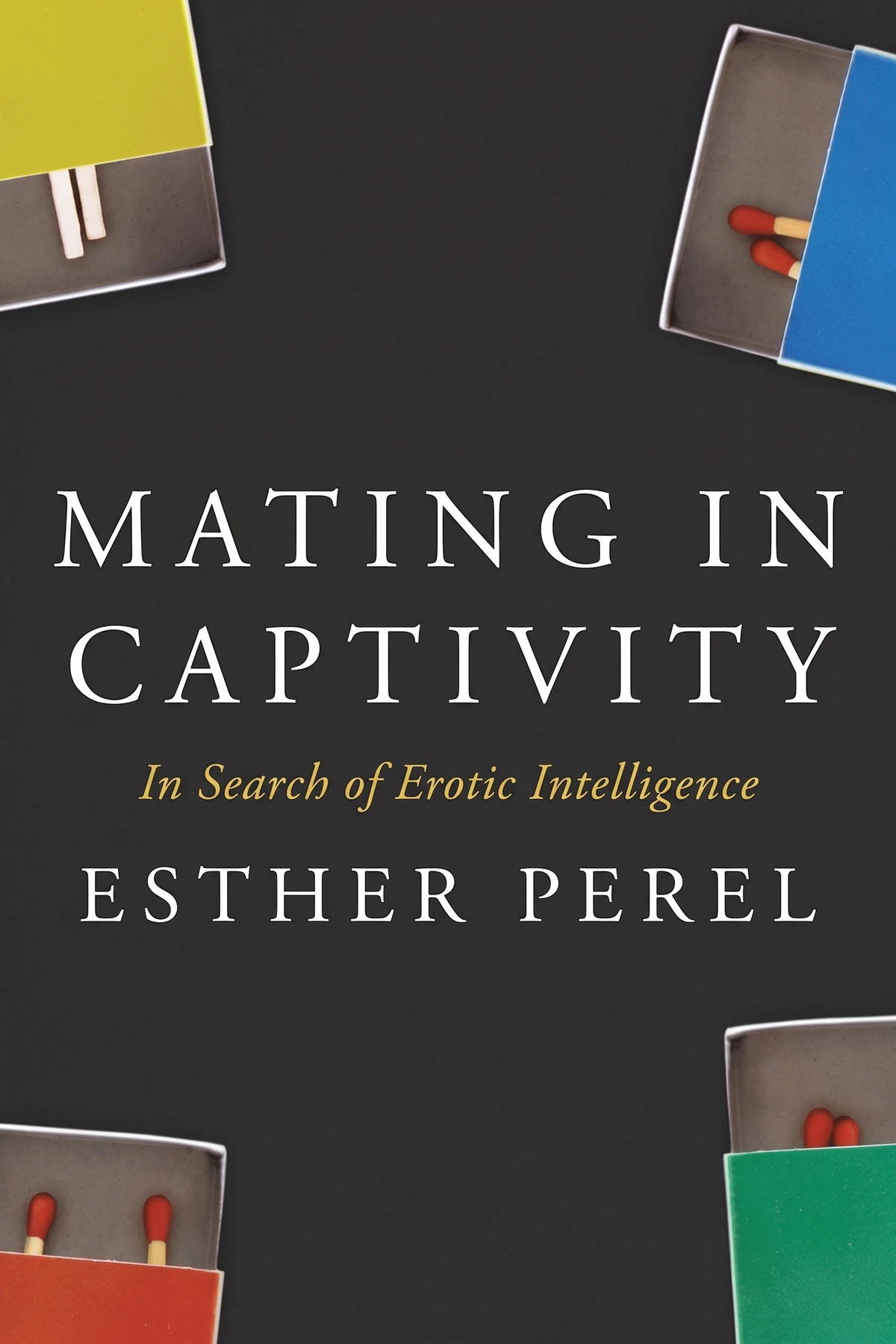
Explore the delicate balance between domestic stability and sexual desire. This summary reveals why emotional closeness can sometimes stifle passion and how to cultivate erotic intelligence in long-term relationships.
1 min 58 sec
Think back to the very beginning of your current relationship, or perhaps a past romance that left a lasting impression. Do you remember the electricity of those early days? There was a sense of mystery, a constant state of discovery, and a physical pull that felt almost impossible to resist. You were two separate individuals navigating the unknown together. But as time passed, the goal shifted. You worked to build a life. You sought security, reliability, and deep emotional connection. You successfully created a home, perhaps raised children, and became each other’s primary support system.
And then, something strange happened. As the emotional intimacy grew, the sexual spark seemed to dim. It’s a common story: you love your partner more than ever, but you find yourself less attracted to them—or simply too tired to try. Many people assume this is just the inevitable tax of a long-term commitment. They believe that you can have a stable, secure partnership or a passionate, erotic one, but rarely both at the same time.
This summary challenges that assumption. It posits that eroticism and domesticity are not mutually exclusive, but they do exist in a state of tension. To keep the fire of desire alive, we have to stop trying to merge our lives into one indistinguishable unit. We have to learn that erotic intelligence is about managing the space between us. Over the next several segments, we will explore why we expect too much from our partners, how parenthood changes our sexual identity, and why a little bit of separateness is actually the best thing for your sex life. We are going to look at the psychological shifts required to move from ‘mating in captivity’ to a relationship that feels both safe and adventurous. By the end, you’ll see that passion isn’t something you find; it’s something you cultivate by understanding the hidden dynamics of desire.
2 min 44 sec
Discover why the very comfort we seek in a partner can often be the greatest enemy of our sexual attraction and mystery.
2 min 31 sec
Learn why the romantic ideal of ‘becoming one’ can actually stifle the physical connection that keeps a couple vibrant.
2 min 13 sec
Explore how shifting your focus from verbal communication to physical expression can open new doors for connection.
2 min 19 sec
Uncover the surprising truth about why our social ideals of equality don’t always translate to the world of eroticism.
2 min 28 sec
See how your earliest experiences with caregivers set the stage for your adult comfort with vulnerability and sex.
2 min 30 sec
Understand the unique challenges that children bring to a couple’s sex life and how to reclaim your identity as lovers.
2 min 09 sec
Learn why your internal world of imagination is not a source of shame, but a vital tool for sexual healing and growth.
2 min 22 sec
Discover how acknowledging the reality of outside attraction can actually strengthen your commitment and keep things exciting.
2 min 27 sec
As we come to the end of this journey through the landscape of erotic intelligence, it’s worth reflecting on the central paradox we’ve explored. The very things that make a long-term relationship successful—stability, trust, predictability, and deep emotional merging—are often the very things that make sexual desire more difficult to sustain. We have learned that to keep the spark alive, we must balance our need for closeness with a respect for each other’s individuality. We have seen that desire requires space, and that the ‘mystery’ of our partner is something we must actively protect, rather than try to eliminate.
We’ve looked at how our childhood blueprints and the demands of parenthood can shape our sexual selves, and how our fantasies can serve as a powerful tool for healing and growth. Most importantly, we’ve seen that eroticism in a long-term relationship is not a spontaneous event that just happens to us; it is a practice. It requires intention, playfulness, and the courage to be vulnerable in ways that go beyond simple emotional honesty.
So, what can you do right now to begin cultivating this erotic intelligence? One actionable step is to create a ‘separate’ space for your erotic communication. If the daily grind of domestic talk—bills, schedules, and chores—has taken over your relationship, try opening a dedicated channel for your desires. This could be as simple as a specific email thread or a physical notebook where you share fantasies, flirtations, and reflections on your physical connection. By moving these conversations away from the kitchen table and into a dedicated space, you signal to yourselves that your erotic bond is a priority that deserves its own room to breathe.
Ultimately, sustaining passion is about moving from a mindset of ‘certainty’ to one of ‘curiosity.’ It’s about realizing that the person sitting across from you at dinner is still an entire world you haven’t fully explored. If you’re interested in diving deeper into the complexities of commitment and the challenges of infidelity, you might find Esther Perel’s other work, *The State of Affairs*, to be a compelling next step. It continues the exploration of how we can navigate the modern landscape of love with honesty and resilience. Remember, desire is a living thing. If you give it the air it needs and the attention it deserves, it can stay vibrant for as long as you both choose to keep it burning.
Many couples believe that as a relationship matures, it is only natural for the sexual spark to fade into a comfortable, companionate glow. We trade the wild uncertainty of early romance for the safety of a shared life, only to find that the very security we craved has become a cage for our desire. This exploration challenges the conventional wisdom that intimacy and eroticism are the same thing, arguing instead that they often require very different conditions to thrive. By examining the psychological underpinnings of how we love, this summary provides a blueprint for sustaining passion without sacrificing commitment. It dives into the contradictions of human nature—our simultaneous need for belonging and for freedom. You will learn how to maintain your individuality within a partnership, how to navigate the shift from being a lover to being a parent, and how to use your internal world of fantasy to bridge the gap between the domestic and the divine. Ultimately, the promise is a deeper understanding of erotic intelligence, allowing you to keep the fire of desire burning for a lifetime.
Esther Perel is a New York-based psychotherapist renowned for her innovative perspectives on modern relationships. With over twenty years of experience in couples therapy, she authored the New York Times bestseller Mating in Captivity, which has been translated into 24 languages. Beyond her writing, she is a global speaker whose TED Talk reached over 5 million viewers within its first year. She also hosts the popular podcast, Where Should We Begin?, providing listeners with an intimate look at real-world therapy sessions.
Esther Perel
Listeners find this work to be an absorbing listen that offers fresh viewpoints on connection and closeness. The prose is captivating, with the author incorporating case studies throughout, and listeners value how it captures and clarifies the intricacies of romance and sex. Listeners characterize the material as intellectually stimulating and profoundly wise, with one listener highlighting its refreshing honesty about love. The work earns praise for its methods for sustaining desire within lasting partnerships.
Wow. I didn't expect a book about sex to make me rethink my entire philosophy on companionship, but here we are. Perel argues that the very things that make a relationship stable—safety and predictability—are the same things that stifle eroticism. It’s a paradox that feels uncomfortable to acknowledge yet ringingly true when you see it on the page. The writing is elegant, almost lyrical at times, moving through case studies that feel like looking through a keyhole into other people's lives. Look, it’s not a 'how-to' manual with tips and tricks; it’s more of a psychological deep dive. Some might find her Belgian perspective a bit detached or even condescending toward American norms, but I found it refreshing. It forced me to look at the 'domestic' and the 'erotic' as two different animals that need to be fed separately. If you’re looking for a comfortable read that confirms everything you already believe, skip this. But if you want to be challenged, it’s essential.
Show moreThe chapter on 'The Pitfalls of Modern Intimacy' alone is worth the price of admission. Perel brilliantly deconstructs how we expect one single person to provide us with everything a whole village used to offer. We want a best friend, a co-parent, a financial partner, and a wild lover all in one, and then we wonder why we're exhausted. This book doesn't sugarcoat the reality that maintaining desire takes work and, paradoxically, a bit of distance. Frankly, it’s a relief to hear a professional say that being 'too close' can actually be a problem for your sex life. The case studies are fascinating, though I agree with some other reviewers that they can feel a bit curated for dramatic effect. However, the overarching theory is so strong that it didn't bother me much. It’s a thought-provoking piece of sociology masquerading as a self-help book. I've already recommended it to several friends who are struggling with the transition from 'dating' to 'domesticity'.
Show moreAs someone who has been in a committed relationship for nearly fifteen years, I found this book incredibly validating. We often feel guilty when the initial fire dies down, thinking something is wrong with our bond. Perel explains that this isn't a failure of love, but a natural result of domesticity. The idea that 'love enjoys knowing everything' while 'desire needs mystery' changed the way I look at my husband. I stopped trying to merge our lives into one single entity and started appreciating our separate selves again. The writing style is engaging, and the audio version—read by Perel herself—is particularly good because you can hear her warmth and empathy. A minor criticism would be that the book stays very focused on the psychological, occasionally ignoring the practical fatigue of raising kids. But as a guide to the 'erotic mind,' it is absolutely unparalleled. It’s refreshing, honest, and deeply intellectual.
Show moreIn my experience, few books in the 'self-help' genre actually live up to the hype, but this one is an exception. It’s less of a manual and more of a philosophical inquiry into how we love today. Perel challenges the notion that intimacy and passion are the same thing, which is a total game-changer. I loved her focus on 'play' and 'fantasy' within the context of a stable marriage. It gives you permission to be something other than just a 'spouse' or a 'parent.' The book is beautifully written, avoiding the clunky jargon that usually plagues these types of texts. Frankly, it’s one of the most insightful things I’ve read on the human condition in a long time. It does require an open mind, as she touches on some taboo topics like infidelity and non-traditional arrangements. If you’re willing to look past your initial biases, there’s a lot of wisdom to be found here.
Show moreEsther Perel has a way of cutting through the noise and getting straight to the heart of why we struggle with desire. This book is a masterclass in understanding the 'Eros' that gets buried under the weight of bills, kids, and chores. I was particularly struck by the way she describes monogamy as a negotiation rather than a static rule. It’s a very modern, cosmopolitan take on relationships that feels much more realistic than the fairy tales we're usually sold. The chapters are well-paced, and the case studies provide a necessary 'human' element to the theory. Some might find her Belgian roots make her a bit dismissive of traditional American values, but I think that distance is what allows her to see our blind spots so clearly. It’s a deeply insightful, provocative, and ultimately hopeful book about the possibilities of long-term love. I’ll be thinking about these concepts for a long time.
Show moreFinally got around to reading this after seeing Esther Perel all over social media, and I have complicated feelings about it. On one hand, her insights into the tension between security and adventure are absolutely brilliant. She uses these vivid case studies—like Adele and her 'contemporary angst'—to illustrate why we lose the spark in long-term commitments. On the other hand, the prose can be a bit 'airy' and academic, which might lose readers looking for immediate solutions. To be fair, she isn't interested in giving you a checklist; she wants you to change how you think about your partner. I particularly appreciated her thoughts on the limitations of verbal communication in the bedroom. Sometimes we talk things to death until there's no mystery left. My only real gripe is that some of the examples felt a bit repetitive toward the end of the book. Still, it’s a compelling read that provides a much-needed perspective on modern intimacy.
Show moreEver wonder why the passion seems to evaporate the moment you start sharing a mortgage and a laundry list? Perel tackles this head-on, suggesting that our need for certainty kills the 'erotic space' required for longing. It’s a fascinating premise that goes against almost every piece of conventional relationship advice I’ve ever heard. Usually, we're told to communicate more, but she suggests that too much talk can actually be a passion-killer. The case studies involving couples like Zoe and Naomi add a nice human touch, making the abstract theories feel more grounded. Truth is, some of her ideas are a bit 'out there' and might be hard to implement in a traditional household. I also felt like the book focused a bit too much on certain types of New York professionals, which made it feel less universal. Despite that, the book is incredibly insightful and will definitely spark some intense conversations with your partner.
Show morePicked this up after hearing Perel speak on a podcast, and her voice really carries through the writing. She has this way of framing complex emotional dilemmas in a way that feels both sophisticated and accessible. The central conflict—the need for belonging vs. the need for autonomy—is something everyone in a long-term relationship deals with. I found the sections on 'sexual communication' particularly helpful, especially the idea of using a 'body tongue' instead of just talking. It’s a brave book that isn't afraid to challenge the 'monogamy-only' ideal that dominates our culture. My only complaint is that the case studies can feel a bit 'Springeresque' or tawdry at times, which felt at odds with the elegant tone of the rest of the book. Still, if you want to understand the mechanics of desire, this is a must-read. It’s not a quick fix, but it provides a great framework for deeper understanding.
Show moreTo be fair, there are some truly revolutionary ideas tucked away in these pages. Perel’s exploration of how democracy in the household has left Eros limp is a perspective I hadn't considered before. However, the book often feels like a collection of anecdotes rather than a rigorous study. I would have preferred more hard data or anthropological context—more de Beauvoir and less 'Jed and Naomi.' At times, the narrative felt a bit repetitive, circling the same themes without adding much new depth in the later chapters. Also, her 'outsider' status as a European living in Manhattan occasionally translates into a condescending view of American intimacy. She seems to think our quest for equality is what's making our bedrooms boring. While I don't entirely agree with her conclusions, I can't deny that the book is thought-provoking. It’s a solid 3-star read for the concepts alone, even if the execution left me wanting more substance.
Show moreThis book feels like it was written for people who aren't actually happy in their marriages. Perel’s core premise—that intimacy is the enemy of desire—just feels fundamentally flawed to me. Why should I have to keep my spouse at a distance just to stay attracted to them? It feels like she's pathologizing the very comfort and safety that most people spend their entire lives trying to find. The suggestion to flirt with others or keep secrets to create 'mystery' sounds like a recipe for disaster and insecurity. Not gonna lie, I found her tone a bit patronizing toward American culture and our supposedly 'boring' approach to sex. While the writing is sophisticated, the advice feels cynical and out of touch with what a healthy, trusting relationship should look like. If you enjoy second-guessing your happiness, go ahead and read it. For me, it was a frustrating exercise in over-intellectualizing something that should be simple: loving your partner.
Show more
bell hooks


Katherine Woodward Thomas
AUDIO SUMMARY AVAILABLE
Get the key ideas from Mating in Captivity by Esther Perel, plus 5,000+ more titles in English and Thai.