

19 min 06 sec
Mayflower: Voyage, Community, War
Mayflower explores the complex history of the 1620 voyage and the ensuing fifty years of fragile peace and brutal conflict between English settlers and the Native American tribes of New England.
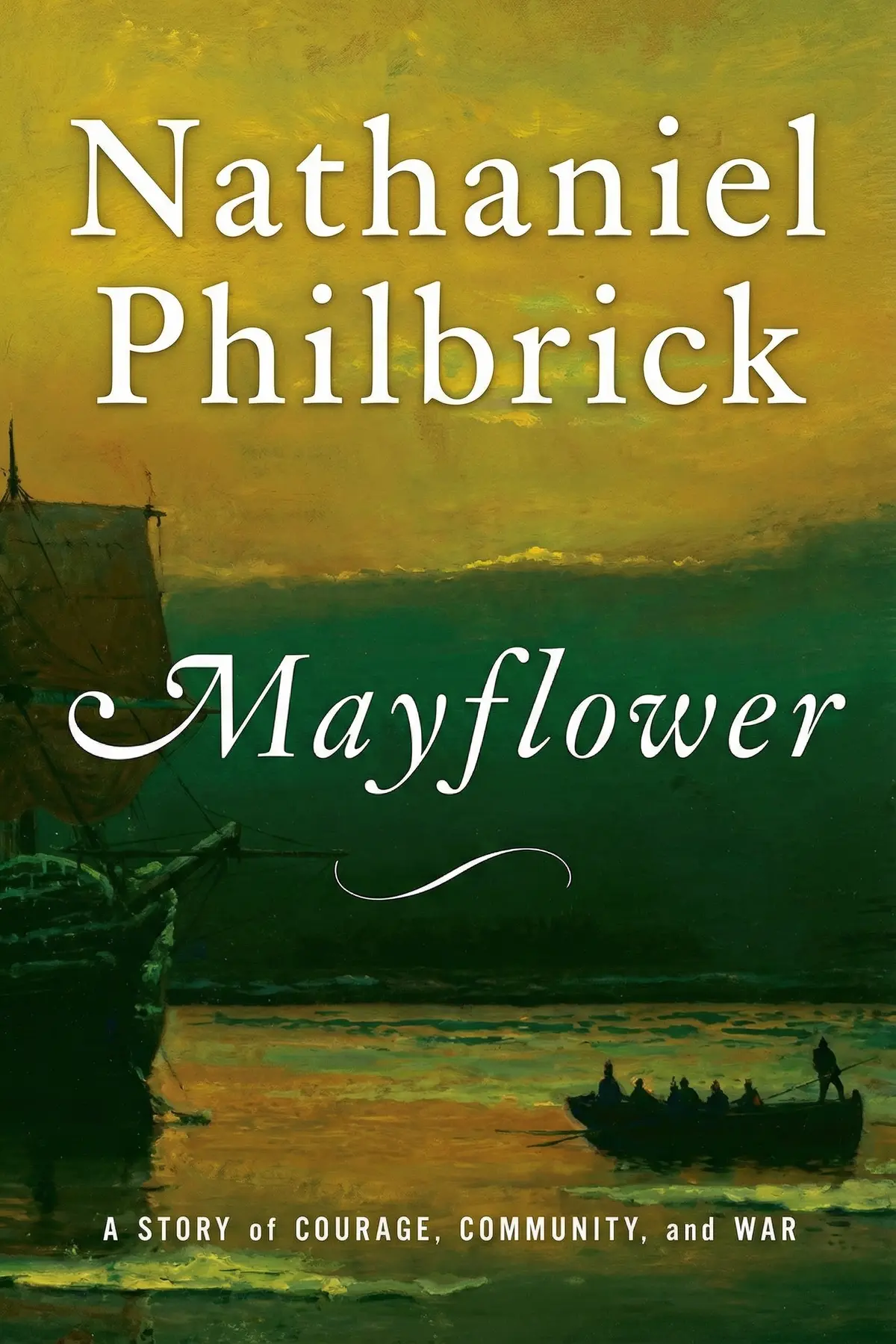
Table of Content
1. Introduction
1 min 27 sec
The story of the Mayflower is often presented as a simple legend of buckle-shoed settlers and a peaceful harvest dinner. However, the reality is far more intricate and haunting. To understand the birth of what would become a new nation, we have to look past the elementary school mythology and see the event for what it was: a high-stakes gamble driven by radical faith, a desperate struggle against an unforgiving wilderness, and a complex political drama between two very different cultures.
This isn’t just a story about a two-month boat ride across the Atlantic. It is a chronicle that spans decades, beginning long before the ship ever raised its sails and continuing through the bloody conflicts that defined the fate of New England. It’s a tale of people who were twice-migrants, individuals who were so committed to their specific vision of a godly community that they were willing to risk everything in a land they didn’t understand.
But as we will see, their arrival didn’t happen in a vacuum. They stepped onto a stage already shaped by tragedy and shifting power dynamics among the indigenous people. The throughline of this journey is one of survival through integration, followed by a tragic descent into war. By looking at the motivations of the passengers and the tribes they encountered, we can see how the initial seeds of cooperation eventually grew into a legacy of displacement and struggle. Let’s dive into the real story of the Mayflower, exploring the courage, the community, and the war that followed.
2. The Radical Drive for Separation
2 min 59 sec
Discover why a small group of English families felt compelled to leave everything behind twice, choosing the perils of the ocean over the comforts of Europe to protect their faith.
3. A Land Altered by Tragedy
2 min 43 sec
While the settlers expected a pristine wilderness, they actually stepped into a landscape recently devastated by a hidden catastrophe that would define their early interactions.
4. The Strategic Alliance for Survival
2 min 49 sec
Witness how a shared need for protection and a few key intermediaries transformed a group of starving strangers into a thriving regional power.
5. The Erosion of Harmony
2 min 37 sec
As the colony grew and its needs shifted from survival to expansion, the original bonds of cooperation began to fray under the pressure of new arrivals.
6. A Generation of Betrayal
2 min 30 sec
Follow the tragic transition of power as the children of the first settlers and native leaders trade diplomacy for suspicion and violence.
7. The Dark Legacy of the Seaflower
2 min 32 sec
The story of the Mayflower finds its tragic conclusion not in a harvest feast, but in a ship carrying the children of allies into a life of bondage.
8. Conclusion
1 min 29 sec
As we look back at the fifty-year arc following the Mayflower’s landing, we see a narrative that challenges the simple, sanitized versions of history. The journey began with a radical search for religious purity and a desperate need for help, leading to a decade of survival that would have been impossible without the strategic partnership of the Pokanoket and leaders like Massasoit. For a brief window, two very different cultures found a way to exist side-by-side, driven by mutual necessity and a few key diplomatic voices.
However, the throughline of this history is also a warning about the fragility of peace when it is not nurtured by subsequent generations. The shift from the Mayflower to the Seaflower—from a ship of seekers to a ship of enslavers—reveals how quickly a legacy of cooperation can be dismantled. When the second generation prioritized land and absolute authority over the relationships their fathers had built, the result was a tragedy of immense proportions.
Ultimately, Nathaniel Philbrick’s account reminds us that the foundations of a nation are often built on a mix of incredible courage and profound failure. The real lesson of the Mayflower isn’t found in the myth of a perfect dinner, but in the complex reality of how communities are formed, how they fracture, and the long-lasting consequences of the choices made in the heat of conflict. By understanding this full, unvarnished story, we gain a deeper appreciation for the true costs of the American experiment and the enduring importance of empathy and diplomacy in a changing world.
About this book
What is this book about?
Mayflower offers an immersive journey through one of the most misunderstood chapters of North American history. It goes far beyond the iconic image of the Pilgrim voyage, tracing the fifty-year trajectory of the Plymouth Colony from its desperate beginnings to the devastating explosion of King Philip’s War. By examining the shifting alliances between the English settlers and the Wampanoag people, it reveals how a community built on a foundation of mutual survival eventually fractured under the weight of cultural change, land hunger, and generational betrayal. The book promises a nuanced look at the personalities involved—from the diplomatic sachem Massasoit and the savvy interpreter Squanto to the pious Governor Winslow and the militaristic Miles Standish. It provides a sobering exploration of how the first generation’s hard-won cooperation gave way to a second generation’s tragic war. Through this lens, the narrative uncovers the origins of a nation, moving past myth to document the courage, community, and violence that shaped the American landscape.
Book Information
About the Author
Nathaniel Philbrick
Nathaniel Philbrick is an award-winning and New York Times best-selling author of many history-themed books. His acclaimed body of work includes titles such as In the Heart of the Sea, Bunker Hill, and Away Off Shore, establishing him as a prominent voice in historical non-fiction.
Ratings & Reviews
Ratings at a glance
What people think
Listeners find this historical account captivating and thoroughly documented, providing in-depth descriptions of mid-17th-century occurrences and the hardships faced by the Pilgrims. The prose is informal and straightforward, resulting in a pleasant experience, and listeners value the educational insights, including one who highlights how it clarifies the era's religious landscape. Its storytelling approach earns high marks, with one listener observing that it feels more like a tale than a dry historical record. While many listeners find it enlightening, some point out that it can occasionally feel slow.
Top reviews
Rin
Nathaniel Philbrick has a gift for taking the dusty myths we learned in third grade and stripping them down to their raw, often bloody, reality. This book is far more than a simple chronicle of a ship's voyage; it is an epic, multi-generational saga about the messy, human collision of two distinct cultures. I was particularly fascinated by the way he humanizes the protagonists, quirks and all, instead of treating them like marble statues. The narrative flows like a novel, yet it is clearly backed by exhaustive research. While the account of the voyage itself is surprisingly brief due to limited primary sources, the subsequent chapters on the growth of Plymouth and the eventual devastation of King Philip's War are utterly gripping. Philbrick manages to balance the perspectives of the Indigenous peoples and the English colonists with incredible nuance. It’s a sobering look at how fear and greed can dismantle decades of hard-won peace.
Show morePop
Ever wonder what happened after the turkeys were eaten and the wine was gone? Philbrick shatters the idyllic myth of the First Thanksgiving by showing the sixty years of treachery and alliance that followed. The most poignant part for me was the section on King Philip’s War—a conflict so brutal that it remains one of the bloodiest proportional events on American soil. The author does a fantastic job of illustrating how the children of the original Pilgrims failed to maintain the peace their fathers had brokered with Massasoit. Seeing the head of King Philip displayed on a pike in Plymouth for twenty years really puts the 'gluttonous holiday' into perspective. It is a haunting, powerful account that draws heavily on firsthand diaries to bring these long-dead figures to life. A must-read for anyone who values truth over comfortable illusions. It is a tragic, beautiful, and complicated story.
Show moreUraiwan
What struck me most was how Philbrick balances the perspectives of the Wampanoag people and the English settlers without falling into simple tropes. He treats everyone as a real person with complicated motives rather than just symbols of 'good' or 'evil.' The section describing the conditions on the ship was so visceral I could almost smell the chamber pots and salt water. I was shocked to learn how much the Pilgrims depended on the Native Americans for their very survival, only for the next generation to engage in a methodical purge of those same people. The book is beautifully written, with a narrative quality that rivals any historical fiction I've read recently. Even when the subject matter gets incredibly dark during the war sections, the prose keeps you engaged. It’s a poignant account of a tragic history that every American should probably read at least once. It really helps you make sense of the 'convoluted mess' of our origins.
Show moreBam
Picked this up thinking it was a seafaring tale about the Mayflower itself, but it turned out to be a deep dive into the first sixty years of New England history. Frankly, the title is a bit misleading because the ship is sold for scrap early on. However, what follows is a brilliantly written account of the political chessboard of the 17th century. I loved the vignettes of characters like the irascible Myles Standish and the tactical Benjamin Church. Philbrick’s writing style is conversational and accessible, making complex tribal alliances easy to follow. My only complaint is that the middle section regarding land disputes got a little dry and felt a bit like a textbook. Still, for anyone wanting to move beyond the 'First Thanksgiving' fantasy and understand the brutal reality of King Philip’s War, this is essential reading. It definitely makes you rethink your American heritage.
Show morePatchara
As someone who grew up with the idealized version of Plymouth Rock, this was a necessary and enlightening wake-up call. Philbrick doesn't just present facts; he paints a vivid picture of the 'between decks' of a leaky merchant vessel and the dank, airless spaces where the passengers huddled. I was enlightened to learn how the Native Americans weren't just passive victims but active power players using the English to further their own tribal interests. The dynamic between Squanto, Massasoit, and William Bradford is depicted with such Machiavellian complexity that it feels more like 'Game of Thrones' than a history lesson. I did find the later chapters on Benjamin Church’s military campaigns a bit long-winded, but the emotional payoff at the end was worth the effort. It’s a very human look at how 'us vs. them' mentalities can lead to absolute catastrophe. Truly an eye-opening piece of historical revisionism.
Show moreSaovapa
Finally got around to reading this during the autumn season, and it definitely changed how I'll look at my holiday dinner. The truth is that humans are gonna human—driven by fear, prejudice, and short-term gain—and Philbrick captures that perfectly. I loved the character of Benjamin Church, specifically the anecdote where he meets a captive named 'Conscience' and declares the war over. Little tidbits like that make the history feel immediate and relatable. The prose is clear and moves quickly, though the level of detail regarding specific Native American tribes can get confusing if you aren't taking notes. Philbrick is incredibly evenhanded, calling out the 'savage butchers' on both sides of the conflict without falling into the trap of making one side a caricature. It’s a balanced, readable, and deeply researched account of a critical phase in our formation as a nation. Highly recommended for fans of narrative non-fiction.
Show moreSomchai
Philbrick provides a fascinating glimpse into the religious fervor that drove these people across the Atlantic. I enjoyed his previous work on Bunker Hill, and this book carries that same conversational yet authoritative tone. It’s a dense read, packed with meticulous research, but the simple prose helps the medicine go down. I found the analysis of the 'First Thanksgiving' particularly useful for debunking the Victorian-era myths we all grew up with. The author does a great job explaining the destabilizing opportunities the Pilgrims presented to local tribes who had already been ravaged by European diseases. My only minor gripe is that the ending felt a little rushed compared to the extremely detailed middle. Overall, it’s an insightful and educational book that successfully brings the 17th century to life. If you want to understand the origins of New England beyond the funny hats and buckles, start here.
Show moreSaengdao
To be fair, I found the first half of this book absolutely gripping, while the second half felt like a bit of a slog through a history textbook. Philbrick is a master storyteller when he’s describing the survival struggles of the initial 102 passengers. However, as the focus shifts toward the intricate details of the later wars, the pace slows down significantly. I appreciated the educational value regarding the religious context of the Puritans, but the sheer volume of names and dates became overwhelming at times. I found myself slogging through sections about specific skirmishes just to find those little nuggets of human interest. It’s a well-researched volume, no doubt about it, but it lacks the effortless momentum of his other book, 'In the Heart of the Sea.' If you’re a hardcore history buff, you’ll love the detail, but casual readers might find it tedious after the 200-page mark.
Show moreMilk
The truth is, the title 'Mayflower' is a bit of a misnomer since the ship is gone by page eighty and the rest of the book focuses on decades of war. While I enjoyed the early sections, I felt the transition to King Philip's War was a bit abrupt and the tone shifted from a survival saga to a grim military report. Philbrick relies heavily on William Bradford's diaries, which makes the narrative feel a bit one-sided at times, despite his efforts to include Indigenous perspectives. Some of the details about the treatment of the Pokanokets were truly horrifying and made for sad reading. I appreciated the education on the religious intolerance of the Pilgrims, who weren't quite the freedom-lovers they are often portrayed to be. However, the pacing was uneven and some chapters felt like they were stuffed with filler to hit a page count. It’s a decent history, just not the seafaring adventure I expected.
Show moreWipawan
Look, I know Philbrick is a respected historian, but this book was a major disappointment for me after his other works. I wanted a story about a ship and a voyage, but the titular Mayflower is basically a footnote. Instead, the book devolves into a dense, repetitive account of colonial politics and endless forest skirmishes. The writing is simple enough, but the narrative is hampered by a total dearth of sources for the most interesting bits, leading to a lot of 'supposition' and 'may have felt' language. I found the descriptions of the violence to be overly graphic and the pacing to be incredibly disjointed. It felt like two different books stapled together. One was a brief survival story, and the other was a tedious military history of a war I had little interest in. It was a struggle to finish, and I wouldn't recommend it unless you enjoy reading about 17th-century land deeds.
Show moreReaders also enjoyed
Alexander the Great
Philip Freeman
A History of Iran: Empire of the Mind
Michael Axworthy

A History of the World in 6 Glasses
Tom Standage

A Long Way Gone: Memoirs of a Boy Soldier
Ishmael Beah


A Splendid Exchange: How Trade Shaped the World
William J. Bernstein
AUDIO SUMMARY AVAILABLE
Listen to Mayflower in 15 minutes
Get the key ideas from Mayflower by Nathaniel Philbrick, plus 5,000+ more titles in English and Thai.
- 5,000+ titles
- Listen as much as you want
- 7-day free trial
- Cancel anytime







