

A Bigger Prize: How We Can Do Better Than the Competition
Margaret Heffernan
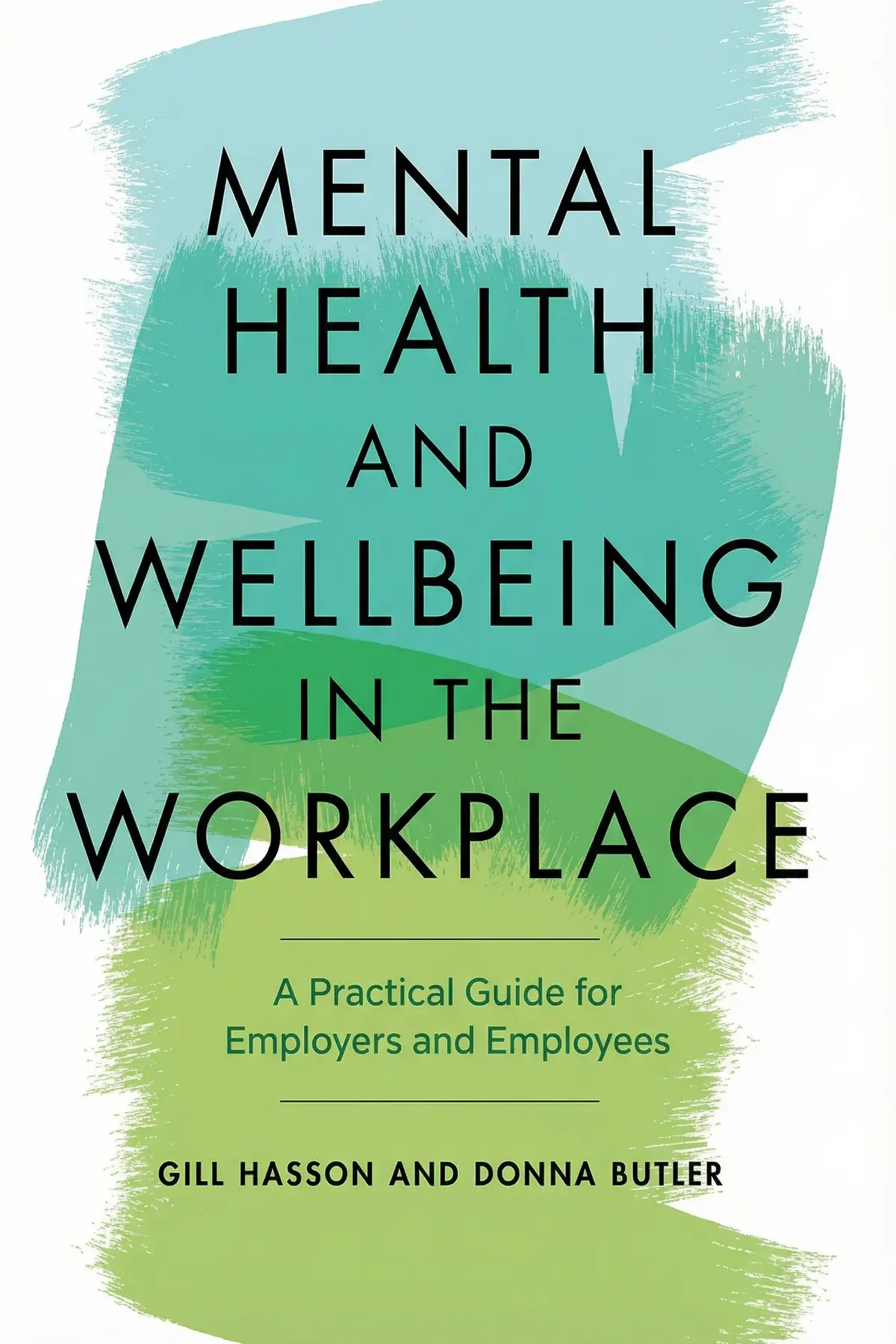
Mental Health and Wellbeing in the Workplace offers a comprehensive roadmap for navigating emotional health at work. It provides practical strategies for both staff and leadership to build supportive, balanced, and thriving professional environments.
2 min 06 sec
Imagine waking up on a Monday morning. For many, that initial moment of consciousness is met with a familiar tightening in the chest—a quiet, persistent hum of anxiety about the week ahead. We often dismiss this as ‘just part of the job.’ We tell ourselves that everyone is stressed, that long hours are the price of success, and that feeling drained is simply the natural state of a working adult. But what if we’ve been looking at it all wrong? What if the stress we accept as inevitable is actually a signal that our fundamental mental well-being is under threat?
In this exploration of Mental Health and Wellbeing in the Workplace, we are diving into a crucial manual for the modern professional world. This isn’t just a book about avoiding burnout; it’s a guide to understanding the very fabric of our emotional lives within the context of our careers. We spend a massive portion of our existence at work, yet we often treat our professional and personal selves as entirely separate entities. This guide challenges that divide, showing us that when our mental health suffers, our work suffers—and conversely, the workplace can be one of the most powerful tools for recovery and resilience.
Over the next several sections, we’re going to walk through what it really looks like to be ‘mentally healthy.’ We’ll move past the buzzwords and look at the actual indicators of wellness. We will also pull back the curtain on the specific factors in an office environment that contribute to our stress levels, from how much control we feel we have over our tasks to the way our managers handle big organizational shifts.
Whether you are an employee looking for ways to reclaim your evenings or a leader trying to figure out how to support a struggling team member, these insights provide a clear path forward. We’re going to look at practical tools like wellness action plans and thought diaries, and we’ll discuss how to build a culture where talking about mental health is as normal as talking about a project deadline. By the end of this journey, the goal is for you to feel empowered to change the narrative of your working life, turning the office from a source of strain into a place of potential and well-being.
2 min 43 sec
Understanding mental health requires looking beyond the absence of illness to see a full spectrum of emotional resilience and self-assurance.
2 min 48 sec
The recipe for a healthy job isn’t found in the salary alone, but in how six specific areas of work life are managed.
2 min 24 sec
Leaders hold the power to dismantle the silence surrounding mental health by modeling vulnerability and proactive listening.
2 min 29 sec
Achieving a sustainable work-life balance requires intentional boundaries and psychological tricks to leave work at the office.
2 min 11 sec
When an employee struggles, a collaborative and structured support document can bridge the gap between distress and recovery.
2 min 23 sec
Self-help begins with identifying personal triggers through a thought diary and maintaining the physical habits that support the mind.
1 min 57 sec
As we wrap up this look at Mental Health and Wellbeing in the Workplace, the most important takeaway is that mental health is a journey, not a destination. We all move back and forth along a spectrum of wellness throughout our lives. There will be seasons of high resilience and seasons of deep struggle, and both are part of the human experience. The goal of this guide is to ensure that when the struggles happen, they don’t have to happen in the dark.
For the individual, the path forward involves reclaiming agency. It’s about recognizing your own value outside of your job description and taking the necessary steps to protect your personal time. It’s about using tools like the thought diary to understand your triggers and the Zeigarnik effect to leave your work at the desk. For the employer, the message is equally clear: the well-being of your staff is the engine of your success. By fostering a culture of openness and using collaborative tools like Wellness Action Plans, you aren’t just being ‘nice’—you are building a more robust, effective, and sustainable organization.
As an immediate step, consider how you can foster better social bonds in your workplace. Whether you’re a manager or an employee, try to organize or participate in activities that promote both physical health and social connection. This could be a team lunch featuring healthy food or a group walk for a good cause. Exercise and positive social interaction are two of the best natural stress-reducers available.
Remember, your mental health is just as vital as your physical health. By paying attention to the pillars of workplace well-being and being willing to have honest conversations, we can transform our professional environments from places of strain into places of growth. Take a moment today to check in with yourself, and perhaps, check in with a colleague. Sometimes, the most powerful thing you can do for someone’s mental health is simply to let them know they aren’t navigating the challenges alone.
Mental Health and Wellbeing in the Workplace addresses the often-overlooked intersection of our professional lives and our psychological health. The book serves as an essential manual for understanding that mental wellness is not merely the absence of illness, but a proactive state of being. It breaks down the specific elements of a job that can either boost or break our spirit, from the weight of our workload to the quality of our professional relationships. For employees, the book promises a set of tools to reclaim their personal time and manage their internal narratives. For employers and managers, it provides a blueprint for creating a culture where vulnerability is met with support rather than silence. Through concepts like the wellness action plan and the thought diary, the guide moves beyond theory into actionable change. Ultimately, the book promises that by fostering a culture of openness and implementing structured support systems, organizations can enhance productivity while ensuring every individual feels valued and mentally secure.
Donna Butler brings over three decades of experience to this guide, having served as an integrative psychotherapist and trauma specialist within the United Kingdom’s National Health Service. Her deep clinical background provides the book with a foundation of professional expertise. Co-author Gill Hasson is a prolific writer with more than twenty books to her name, focusing extensively on personal development and mental wellness. Together, they combine practical psychological insights with accessible advice to help readers navigate the complexities of modern work life.
Listeners find this guide to be an approachable manual for workplace wellness, though perspectives on its practical application vary, with some listeners observing that the included resources are geared toward a UK audience. Listeners value the extensive research and the way it addresses both employee and managerial roles in fostering work-life balance and spotting stress indicators. Additionally, they appreciate the specific advice for handling common difficulties like burnout and anxiety. They also characterize the material as a digestible resource, with one listener remarking that it offers meaningful "food for thought" for senior leaders seeking to improve support for their teams.
Picked this up during a particularly grueling month at the office, and it served as a much-needed lifeline. The layout is incredibly user-friendly, allowing you to jump between management strategies and personal resilience tips quite easily. One thing I loved was how it framed mental health as something we all need to manage, rather than just a problem for those with a diagnosis. In my experience, the advice on navigating burnout was practical enough to implement immediately. It’s true that the resources are mostly for people in the UK, but the psychological principles behind them are sound regardless of geography. It’s an authentic look at how we can improve our daily lives through small, intentional shifts in perspective. If you need a quick, encouraging read on wellbeing, this is a great choice.
Show moreWow, finally a book that addresses the nuance of mental health without getting bogged down in impenetrable jargon or clinical coldness. Hasson and Butler have created something truly accessible here, blending research with a very human touch that is often missing from business books. I found the section on work-life balance particularly illuminating because it didn't just tell me to work less; it explained the psychological need for structure and belonging. Frankly, the inclusion of art and imagination as tools for wellness was a beautiful and unexpected addition. Even though I’m not in the UK, I found the strategies for approaching management about mental health struggles to be incredibly empowering. This should be mandatory reading for every manager who wants to see their team thrive in the long run. It is easily one of the most compassionate books on the topic I’ve ever read.
Show moreAs a team leader in a mid-sized firm, I found the dual perspective offered by Hasson and Butler to be quite refreshing. Most books in this genre focus solely on what the employee can do, but this one places a healthy amount of responsibility on management as well. Truth is, the resources are heavily skewed toward a UK audience, which might frustrate those in the States looking for specific legal or medical links. However, the core advice regarding stress triggers and maintaining a work-life balance remains universal. The writing is accessible and avoids the dense jargon often found in psychological texts. It provides plenty of food for thought for anyone in a senior position wanting to foster a better environment. While some of the scenarios feel a bit like a 'best-case' fantasy, the general framework is solid and actionable.
Show moreThe chapter on resilience really hit home for me, especially the part about identifying specific triggers that lead to burnout. Gill Hasson has a clear way of explaining things that makes you feel understood rather than lectured. I liked that the book addresses both the employee’s role and the employer’s responsibility in creating a healthy environment. It’s a very easy-to-read book that doesn't require a background in psychology to grasp the main concepts. Some of the scenarios described are definitely 'best-case,' but they serve as a good target for what a healthy office should look like. Got to say, I will definitely be implementing the journaling techniques suggested to help manage my own stress levels. It’s a solid, practical guide that offers a lot of food for thought for anyone feeling overwhelmed.
Show moreFinally got around to reading this for my professional development goals, and I think it hits the mark for what it aims to be. It’s an easy-to-read guide that demystifies mental illness in the workplace and offers a clear path toward better wellbeing. I appreciated the thoroughness of the research, even if the stats are a bit dated now and very specific to Britain. The dual perspective is the book's strongest asset, helping me understand what my manager might be thinking when I bring up these issues. While some parts felt a bit repetitive, the overall message about the importance of mental health as a spectrum is vital. It’s a great read for anyone wanting to gain a better understanding of how to support themselves and others at work. Not perfect, but certainly a valuable tool for modern professionals.
Show moreEver wonder why your job feels like an endless cycle of anxiety and exhaustion? This guide attempts to answer that by looking at the mental health spectrum and how it intersects with our professional lives. It’s an easy-to-read resource that manages to be thorough without being overwhelming, which I appreciated. Not gonna lie, the heavy focus on UK-specific institutions made certain sections completely irrelevant to my situation in Chicago. Despite that, the general tips for identifying stress triggers were helpful for my personal growth. The authors do a great job of explaining how work is a double-edged sword that provides structure but also creates hazards. It’s a decent introductory text for those new to the concept of workplace wellness, though it lacks the depth of a clinical manual.
Show moreNot what I expected given the hype, as it feels very much like a basic primer for those who have never considered mental health at work before. The book is written in a very accessible style, but that often means it skims the surface of complex issues like depression and clinical anxiety. To be fair, the research presented is thorough, especially the references to various UK government reviews on health and work. However, the tone can be a bit repetitive at times, hitting the same points about mindfulness over and over. I struggled with some of the more unrealistic tips that assume every workplace is willing to make accommodations for staff. It’s a well-intentioned book, but it lacks the practical 'real world' application for those in more toxic environments. It’s probably most useful for HR departments looking for a starting point.
Show moreHonestly, I think this book tries to do too much by speaking to both bosses and workers at the same time. The result is a text that feels a little scattered, shifting between policy-level discussions and personal mindfulness exercises. That said, there are some really good tips for managing stress at work if you’re willing to dig through the more theoretical parts. My biggest gripe is that the advice often feels geared toward a very specific type of office-based, corporate professional. It doesn't really account for people in high-pressure service jobs or manual labor where 'taking a mindful break' isn't always an option. In my experience, the book is most successful when it’s discussing the signs of burnout and how to recognize them in yourself. It’s a helpful guide, but keep your expectations realistic regarding how much it can actually change a rigid workplace.
Show moreThis book felt more like a collection of common-sense platitudes than a professional psychological guide. Look, if you’ve never thought about mindfulness or work-life balance, you might find some value here, but seasoned professionals will likely find it repetitive. Personally, I found it frustrating that the authors lack advanced degrees in psychiatry, as the advice often feels like it's based on research rather than clinical experience. It paints a picture of a first-world workplace that is far more accommodating than the reality most of us face daily. The tips on journaling and awareness are fine, but they don't help much when your boss expects you to 'suck it up' and meet impossible deadlines. Frankly, it’s a bit too theoretical and idealistic for my taste. I was hoping for something with more bite and less fluff.
Show moreAfter hearing so much about workplace wellness, I was disappointed to find this volume a bit thin on actionable global resources. Most of the websites and organizations listed are exclusive to the United Kingdom, which makes a large portion of the appendix useless for international readers. The writing style is fine, but it lacks the professional weight I was looking for in a book about such a serious topic. Look, it’s a decent enough overview of why mental health matters, but it doesn't offer much that a quick Google search wouldn't provide. The secondary author's background in fiction writing perhaps contributes to the somewhat narrative, less clinical feel of the text. It’s not a bad book, just a very basic one that might not satisfy those looking for deep psychological insights. I’d recommend it only as a very early introduction to the subject.
Show moreMargaret Heffernan

Alcoholics Anonymous World Services

Steven C. Hayes


Leanne Maskell
AUDIO SUMMARY AVAILABLE
Get the key ideas from Mental Health and Wellbeing in the Workplace by Gill Hasson, plus 5,000+ more titles in English and Thai.







