
14 min 40 sec
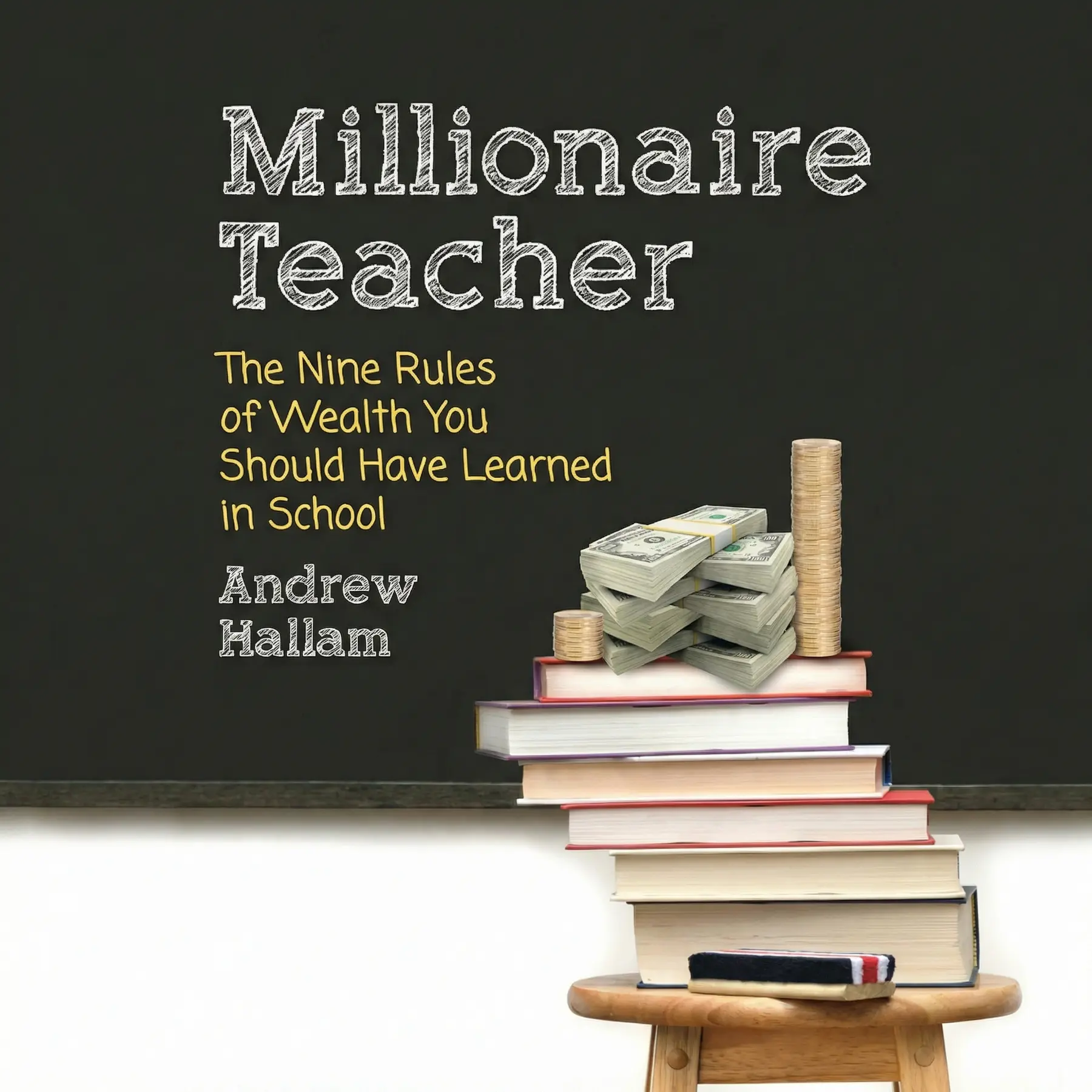
Millionaire Teacher: The Nine Rules of Wealth You Should Have Learned in School
Discover how a high school teacher built a fortune by following simple financial principles. This guide reveals how to leverage frugality, low-cost index funds, and time to achieve true financial independence.
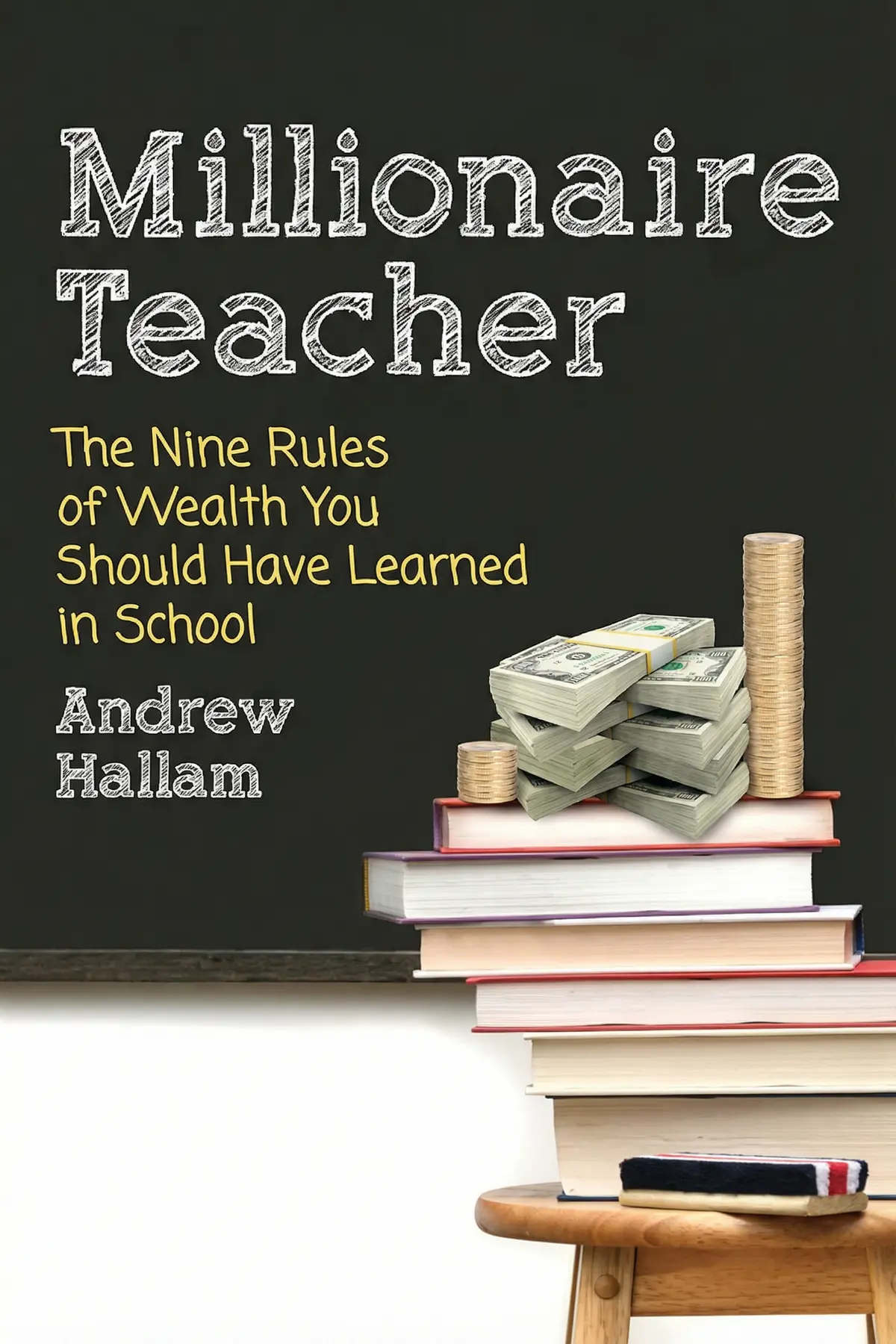
Table of Content
1. Introduction
1 min 42 sec
When we think about the wealthy, our minds often jump to images of luxury: high-rise penthouses, designer clothing, and elite professionals like surgeons or investment bankers. We assume that to reach that level of financial freedom, one must possess a massive salary and a high-stakes career. But what if the person standing next to you in line—perhaps a middle school teacher or a librarian—is actually wealthier than the person driving the flashy sports car? This is the central premise of the financial philosophy shared by Andrew Hallam.
You don’t need a six-figure income to become a millionaire. In fact, many of the people who look rich are actually buried in debt, while the truly wealthy are often the ones living modest, unassuming lives right under our noses. Building wealth isn’t about luck, and it certainly isn’t about having a complex, insider understanding of the stock market that only a few possess. Instead, it is the result of a few simple, repeatable rules that focus on saving, smart investing, and patience.
In this discussion, we are going to explore a clear path toward financial independence. We’ll look at how your spending habits today determine your net worth tomorrow, and why the most powerful tool you have isn’t your paycheck, but time. We will dive into the mechanics of compound interest, the hidden traps of professional financial advice, and the stabilizing power of a balanced portfolio. By the end, you’ll see that becoming rich is less about how much you make and more about how much you keep and how wisely you put that money to work. This isn’t about get-rich-quick schemes; it’s about a steady, reliable journey toward a future where you are no longer a slave to your bills, but a master of your own financial destiny.
2. Redefining Wealth through Frugality
1 min 50 sec
Think you know what a millionaire looks like? The reality of wealth is often found in modest driveways rather than luxury estates.
3. Harnessing the Miracle of Compounding
2 min 03 sec
Discover how the simple passage of time can turn modest savings into a massive fortune through the invisible power of compound interest.
4. The Index Fund Advantage
1 min 48 sec
Uncover why paying for professional financial advice might actually be the biggest obstacle standing between you and your first million.
5. Achieving Stability with Bonds
1 min 50 sec
Learn how to protect your portfolio from the stock market’s roller coaster by finding the perfect balance of risk and reward.
6. Resisting the Trap of Market Timing
1 min 54 sec
Why trying to predict the next market crash is a losing game, and why the most successful investors are often the most bored.
7. The Disciplined Way to Buy Stocks
1 min 55 sec
If you can’t resist the urge to pick individual stocks, follow these three crucial rules to keep your financial house in order.
8. Conclusion
1 min 38 sec
Building wealth is not a mysterious process reserved for the elite; it is a mechanical one available to anyone with the discipline to follow a few core principles. We’ve seen that the foundation of a million-dollar portfolio isn’t a high-flying career, but the humble habit of frugality. By living below your means and avoiding the trap of looking rich, you create the capital necessary to let the miracle of compound interest work its magic over time.
The throughline of this journey is simplicity. By opting for low-cost index funds over actively managed ones, you ensure that you aren’t losing your hard-earned gains to unnecessary fees. By balancing your growth with the stability of bonds, you create a portfolio that can survive any market condition. And perhaps most importantly, by resisting the urge to time the market or chase the latest trends, you avoid the emotional mistakes that ruin so many other investors.
As you move forward, start by looking at your largest expenses. One of the most effective ways to immediately increase your savings rate is to change how you view transportation. Avoid the lure of the dealership and the massive depreciation that comes with a brand-new car. Instead, follow the lead of many actual millionaires and buy reliable, well-maintained second-hand vehicles. This single choice can save you hundreds of thousands of dollars over your lifetime when that money is instead channeled into your investments.
Wealth is the result of many small, smart choices made consistently over a long period. Start today, stay patient, and let the power of these rules carry you toward the financial freedom you deserve. You have the tools; all that’s left is to put them into practice.
About this book
What is this book about?
Millionaire Teacher challenges the common misconception that building significant wealth requires a massive salary or complex trading strategies. Instead, it focuses on the power of simple, disciplined habits that anyone can adopt, regardless of their profession. By examining the spending habits of actual millionaires and the mathematical reality of the stock market, the book provides a roadmap for long-term prosperity. The core promise of the book is that by avoiding the high fees of actively managed funds and embracing the steady growth of index funds and bonds, you can outperform most professional investors. It teaches you how to ignore market noise, capitalize on compound interest, and build a balanced portfolio that withstands economic fluctuations, ultimately allowing your money to work harder for you than you do for it.
Book Information
About the Author
Andrew Hallam
Andrew Hallam is an investment speaker and author who made his first million while working as a teacher. Originally from Canada, Hallam now travels the world as a digital nomad. He is also the author of Millionaire Expat (2017).
Ratings & Reviews
Ratings at a glance
What people think
Listeners consider this book essential reading, especially for the younger generation, and value its hands-on investment strategy. The material is straightforward and accessible, with one listener pointing out how intricate concepts are explained simply. They prize the informative nature of the text; one review emphasizes the inclusion of citations and real-world instances, while another listener observes that the author grounds every claim in factual data.
Top reviews
Air
This book should be mandatory reading for every college senior before they enter the real world. Andrew Hallam manages to strip away the intimidating jargon of Wall Street, replacing it with a straightforward roadmap that anyone can follow. I especially liked the emphasis on how much money we bleed to financial advisors through hidden fees. It’s eye-opening to see the math laid out so clearly. While some might find the teacher-turned-millionaire story a bit repetitive, the core logic about low-cost index funds is bulletproof. It’s not about getting rich overnight; it’s about that slow, steady climb toward financial independence. It is an easy read and exactly the kind of no-nonsense advice I needed.
Show moreIsaiah
Finally got around to finishing this after it sat on my shelf for months, and I'm kicking myself for not reading it sooner. Hallam uses a 'mad dog on a long lead' analogy for the stock market that perfectly illustrates why we shouldn't panic during a crash. The truth is, most of us are our own worst enemies when it comes to investing. This book provides the psychological armor needed to stay the course. I’ve already started rebalancing my holdings to include a higher percentage of international stocks and a steady bond floor. It’s a game-changer for my long-term outlook and a must-read for young adults just starting out.
Show moreSelin
The chapter on cars alone is worth the price of the book. Most people view their vehicle as a status symbol, but Hallam treats it like the depreciating asset it is, advocating for reliable, used Japanese models. It’s a refreshing take in a world obsessed with leasing luxury cars we can't afford. Beyond the lifestyle advice, the 'Lazy Man's' strategy of using just three index funds is incredibly liberating. It takes the stress out of the 'what should I buy?' question. I’ve shared this with three friends already. It’s practical, evidence-based, and surprisingly humorous for a finance book. Hallam proves that you don't need a high salary to build a massive nest egg.
Show moreRin
Frankly, I wish I had read this at twenty instead of forty. The math behind starting early is staggering, and Hallam makes it impossible to ignore the power of compound interest. I really appreciated the specific details on P/E ratios and how to tell if a market is becoming overvalued. It gives you a sense of control without requiring you to become a full-time day trader. The tone is encouraging and no-nonsense, which is exactly what I needed to stop procrastinating on my retirement plan. It's a masterclass in building wealth without the Wall Street headache. It’s a great follow-up if you've already read things like The Wealthy Barber.
Show moreSombat
After hearing so many people rave about this, I decided to give it a shot. It lives up to the hype. The most valuable part for me was the step-by-step guide on how to actually set up an account and which funds to look for. Many finance books are too theoretical, but this one provides the tactical steps needed to move from 'I should invest' to 'I am investing.' Even the section on individual stocks, which I thought I'd skip, was fascinating and taught me a lot about business fundamentals. It’s an essential addition to any personal library and bases every single statement on cold, hard facts rather than speculation.
Show morePrapaiwan
As someone living in Canada, I was pleasantly surprised to find a finance book that wasn't 100% focused on the American market. Hallam actually discusses TD e-Series funds and the specific challenges we face with some of the highest mutual fund fees in the world. The writing style is very conversational, making it easy to digest even if you aren't a 'numbers person.' I took one star off because the middle section on picking individual stocks felt like it contradicted his main message about passive indexing. Still, it’s a solid foundational text for anyone looking to stop 'donating' their retirement savings to big banks. It's much more accessible than The Intelligent Investor.
Show moreSiriporn
Wow, this was much more accessible than many other finance titles I've tried to tackle. Hallam has a knack for taking complex economic theories and turning them into digestible metaphors. I particularly liked how he backed up every claim with data from Nobel Prize winners and Warren Buffett, ensuring the advice didn't feel cherry-picked. My only gripe is that some of the frugality examples are a bit extreme for the average person who just wants to live a normal life. However, if you can look past the bike-riding stories, the core strategy of rebalancing once a year is pure gold. It’s a very good introduction to investing for the general public.
Show moreCherry
Look, you aren't going to find a 'get rich quick' scheme here, and that’s exactly why it’s a great book. It focuses on the boring, reliable path to wealth. The author does a fantastic job explaining why humans are psychologically wired to buy high and sell low, and how to fight those instincts. I found the section on bonds particularly helpful for creating a portfolio that doesn't keep me up at night when the market dips. It’s a little repetitive in the middle, especially the 'why index' parts, but the message needs to sink in: stop paying the banks and start paying yourself. A solid four-star read for any DIY investor.
Show moreHenry
Not gonna lie, the title is a bit cringeworthy and the author’s anecdotes about his own frugality felt a little smug at times. Do I really need to hear about biking 70 miles a day or never turning on the heat to understand compound interest? If you cut out the personal fluff, you could probably condense the actual advice into a short 30-page pamphlet. That being said, the technical explanation of why index funds beat managed funds 90% of the time is excellent. I finally understand how to balance my portfolio with international indexes and bonds. Good information, but be prepared to skim through the parts where he pats himself on the back.
Show moreTum
Ever wonder why financial advisors hate books like this? It's because Hallam exposes the voodoo of active management for the expensive gamble it truly is. For a complete beginner, this is a goldmine of information, but if you’ve already read Bogle or Graham, much of this will feel like a redundant review. I appreciated the clear breakdown of bonds—which I always found confusing—but I found the repetition regarding the superiority of Vanguard-style indexing to be a bit much. It’s a decent entry-level guide with some practical examples, but it doesn't offer many deep insights for seasoned investors who already know the basics of asset allocation.
Show moreReaders also enjoyed
AUDIO SUMMARY AVAILABLE
Listen to Millionaire Teacher in 15 minutes
Get the key ideas from Millionaire Teacher by Andrew Hallam, plus 5,000+ more titles in English and Thai.
- 5,000+ titles
- Listen as much as you want
- 7-day free trial
- Cancel anytime







