
A Promised Land
Barack Obama
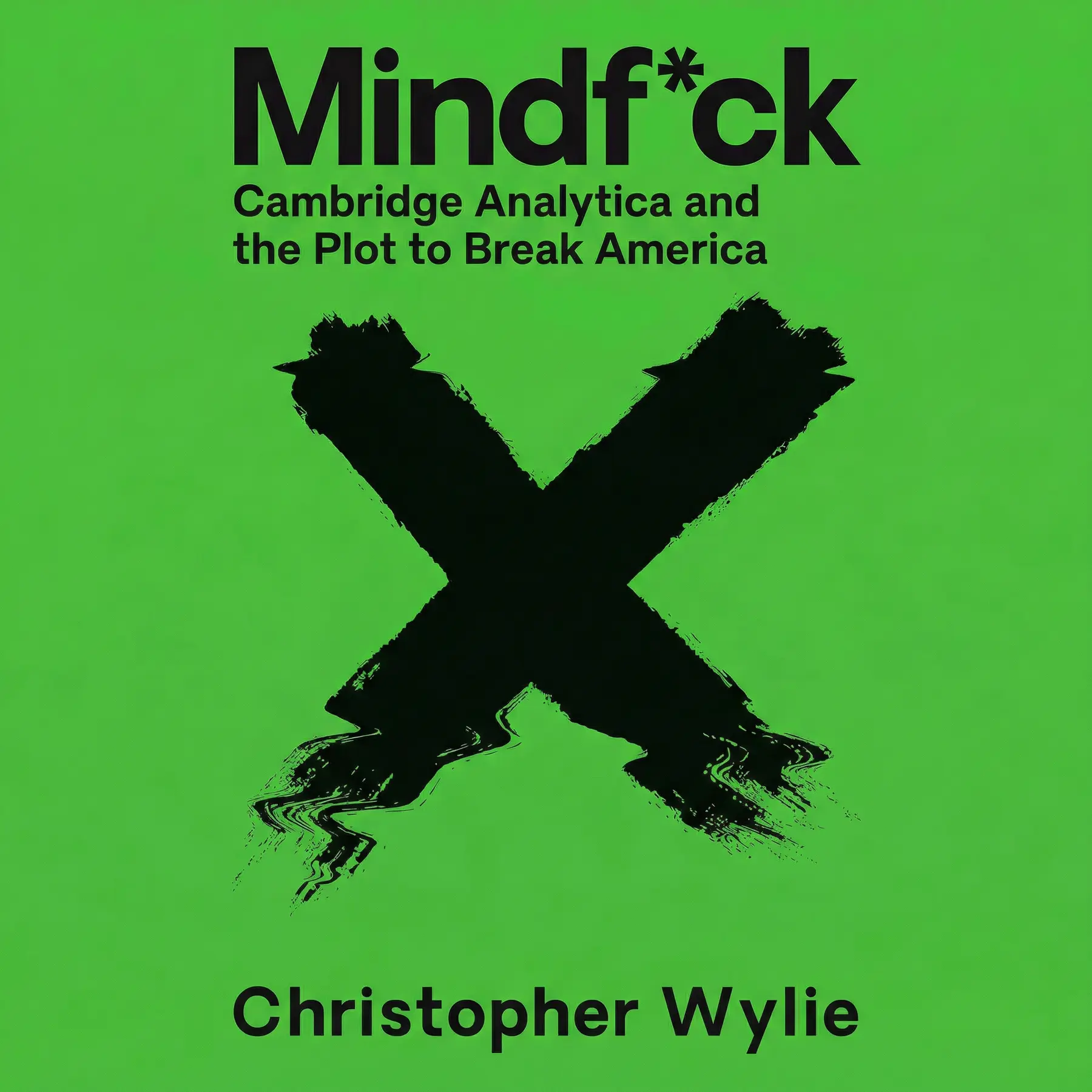
Christopher Wylie reveals the inner workings of Cambridge Analytica, explaining how digital data was harvested from millions of Facebook users to psychologically manipulate voters and influence global democratic outcomes.

1 min 58 sec
In the autumn of 2016, the political landscape of the United States shifted in a way that few predicted and even fewer truly understood at the time. As the results of the presidential election flickered across television screens on November 8, many people felt they were witnessing a glitch in the matrix—a reality that seemed to defy the logic of traditional polling and political theory. For some, it was a long-awaited triumph; for others, a nightmare come to life. But for those behind the scenes, it was the culmination of a massive, silent experiment in human psychology and digital engineering.
What if the outcome of that election, and many others around the world, wasn’t just the result of shifting opinions, but the product of high-tech mind control? This might sound like a premise for a dystopian novel, but as Christopher Wylie reveals, it was the specific mission of a company called Cambridge Analytica. By harvesting the personal data of up to 87 million Facebook users, this firm didn’t just advertise to people; they sought to re-wire their perceptions of reality.
In this summary, we are going into the heart of one of the biggest scandals of the twenty-first century. We will follow Wylie’s path from a young, ambitious data consultant to the whistleblower who pulled back the curtain on a global operation of disinformation. We will explore how campaigns in Africa, the Middle East, and the Caribbean served as testing grounds for tactics that would eventually be deployed against the American and British electorates.
This isn’t just a story about technology or data points. It’s a story about how our digital footprints—the things we like, the quizzes we take, and the groups we join—were used to build psychological profiles that could be exploited to stir up rage and division. Through Wylie’s account, we will see how a group of consultants transformed social media into a battlefield for the soul of democracy, and what it means for our future when our own minds are the primary targets of political warfare. Prepare to look behind the screen and see the machinery that was designed to break the world apart.
2 min 35 sec
Traditional campaigning has been replaced by sophisticated data tools that allow for deep, personal microtargeting of every individual voter.
2 min 26 sec
Personality profiling, specifically the Big Five model, provides a more accurate way to predict and influence voter behavior than traditional demographics.
2 min 21 sec
A secretive company specialized in psychological warfare, using data asymmetry to overwhelm and disrupt targets on behalf of military and political clients.
2 min 19 sec
Before targeting the West, the firm perfected its tactics by intervening in elections and disrupting narcotics operations in developing countries.
2 min 19 sec
Steve Bannon saw the potential of SCL’s data tools to fight a cultural war, leading to a pivotal experiment in Virginia that proved the power of consistent extremism.
2 min 20 sec
Cambridge Analytica secured funding from Robert Mercer and used a deceptive app to harvest the private data of tens of millions of Facebook users without their knowledge.
2 min 31 sec
The firm used Facebook’s algorithms to funnel vulnerable individuals into extremist groups, creating the foundations of the alt-right movement through manufactured rage.
2 min 36 sec
Cambridge Analytica and its sister companies used illegal funding and shared data to tilt the Brexit referendum toward the Leave campaign.
2 min 29 sec
Manipulators exploit cognitive biases like the affect heuristic and identity-motivated reasoning to bypass logic and ensure voters act on raw emotion.
2 min 31 sec
After witnessing the immoral impact of his work, Wylie exposed the operation, leading to a massive legal battle and a global conversation about data privacy.
2 min 19 sec
The story of Cambridge Analytica is more than just a tale of a single company’s greed or a single election’s outcome. It is a profound wake-up call about the nature of power in the digital age. As we have seen through Christopher Wylie’s journey, the very platforms we use to share our lives and connect with our friends were transformed into sophisticated weapons of psychological warfare. By harvesting our digital footprints and mapping our innermost personality traits, Cambridge Analytica and its allies found a way to bypass our rational defenses and influence our behavior through raw, manufactured emotion.
The throughline of this account is the terrifying concept of information asymmetry. When a small group of people has a deep, data-driven map of your mind while you have no idea who they are or what they want, the very idea of ‘free will’ begins to erode. We are no longer making choices in a fair marketplace of ideas; we are reacting to triggers in a digital environment that has been custom-built to manipulate us. The fact that many of the key players in this scandal have faced few consequences is a stark reminder that our laws and regulations are lagging far behind the capabilities of our technology.
However, there is a path forward. The first step is awareness. By understanding the tactics of psychometrics, the affect heuristic, and identity-motivated reasoning, we can begin to build a mental resilience against these types of manipulation. We can start to question why certain content makes us angry and who benefits from that rage. Beyond individual awareness, there is a desperate need for a new framework of digital rights—laws that treat our personal data not as a commodity to be sold, but as an extension of our very selves that deserves protection.
Christopher Wylie’s decision to come forward reminds us that even within the most secretive and powerful organizations, individuals still have the power to choose truth over complicity. As you move back into the digital world, carry this knowledge with you. Be skeptical of the ‘free’ quizzes, be mindful of the groups you join, and recognize that the most important territory in the world isn’t a piece of land, but the space between your ears. Protecting that space is the most vital democratic act we can perform in the twenty-first century.
This summary explores the rise and fall of Cambridge Analytica, the data firm that claimed responsibility for reshaping modern politics. It follows the journey of Christopher Wylie, the whistleblower who helped build the very tools he eventually exposed. The book details the intersection of military-grade psychological warfare and social media technology, showing how personal data became a weapon used to sway elections in the United States, the United Kingdom, and across the globe. Listeners will learn about the specific techniques used to harvest information from tens of millions of people without their consent. The narrative traces the influence of figures like Steve Bannon and the Mercer family, explaining the psychological triggers—from fear to identity—that were used to polarize societies. Ultimately, it is a sobering look at the fragility of privacy and the dangers of unregulated tech in the hands of those seeking cultural and political upheaval.
Christopher Wylie is a Canadian data consultant widely recognized as the whistleblower who exposed the Cambridge Analytica scandal. His background in data science and political strategy led him to a central role in the firm's early years. Following his disclosures, he has worked in fashion-trend forecasting in London.
Listeners find the material thought-provoking, with one review noting its logical framework for clarifying a complicated topic. Furthermore, the title earns praise for its readability, as several listeners characterize it as a fascinating experience. However, the book's overall impact is varied; while some listeners consider it eye-opening, others maintain mixed views regarding its suspenseful qualities. Finally, the caliber of the writing draws a range of reactions from listeners.
Wow. This book is a terrifyingly lucid look into how our own psychological vulnerabilities were weaponized against us. Wylie writes with a frantic energy that matches the high stakes of the story, detailing the rise of Cambridge Analytica and Steve Bannon’s chilling vision for cultural warfare. It’s one thing to suspect social media is manipulative, but it’s another to see the blueprints for how they mapped our personalities to fracture society. The technical explanations are surprisingly accessible, avoiding dense jargon while still making you feel like you’ve been given a peek behind the curtain. Even if you don’t like Wylie’s personal tone, the implications of his work are too important to ignore. We are living in a world where data is the new nuclear weapon, and we are all currently in the fallout zone.
Show moreThis felt more like a tech-thriller than a non-fiction book, which made it incredibly hard to put down. Not gonna lie, I finished it in two sittings because the pacing is so relentless. Wylie does an incredible job of demystifying how data mining works and why it’s so dangerous when paired with political extremism. The specific details about how they used fashion brands and personality tests to predict voting behavior blew my mind. It’s a wake-up call about how our digital footprints are being used to build "artificial societies" where we can be easily manipulated. Even though some parts of his personal backstory felt a bit long, the payoff in the final chapters is worth it. It’s an enlightening, scary, and ultimately brave piece of whistleblowing that everyone needs to see.
Show moreAfter following the news for years, I thought I knew the Cambridge Analytica story, but this book proved me wrong. Wylie goes so much deeper than the headlines, offering a granular look at the intersection of big data and cultural warfare. The book is structured exceptionally well, moving from his early days in Canada to the corridors of power in London and DC. It’s a haunting reminder that our identities have become commodities in a high-stakes trade we didn't sign up for. The descriptions of "digital colonialism" in the Global South were especially poignant and often overlooked in Western media coverage. This is a must-read for anybody interested in the future of our digital democracy. It’s rare to find a book that is both a psychological thriller and a call to action.
Show moreEveryone needs to pick this up before the next major election cycle begins. It’s a total mindf*ck, just as the title promises. The book successfully opens your eyes to the idea of data as a commodity that can be used to subvert democracy from the inside out. I was particularly struck by the description of how they targeted "incels" and used their specific psychological vulnerabilities to foster dissent. It’s a grim look at the darker side of human nature and how technology amplifies our worst impulses. Wylie’s suggestions for regulation at the end are thought-provoking, even if they feel like a small band-aid on a massive wound. This book changed the way I look at every "like" and "share" on my timeline. Essential, enlightening, and deeply uncomfortable.
Show moreAs someone who works in tech, this book was both a professional fascination and a personal horror story. Wylie captures the "move fast and break things" culture of Silicon Valley and shows what happens when that ethos is applied to the fabric of society. The level of detail regarding the "personality models" they built is staggering and shows just how much we've surrendered for the sake of free social media. While some reviewers found Wylie’s tone too familiar, I felt it added a layer of authenticity to the whistleblower narrative. It feels like a genuine mea culpa from someone who realized too late that they were building a monster. The implications for our future are dire if we don't implement the kind of guardrails he advocates for. Truly a gripping read.
Show moreFinally got around to reading this, and I’m still processing the sheer scale of the manipulation described. The title isn't just clickbait; it truly describes the sensation of learning how your own mind can be mapped and influenced without your consent. Wylie does a great job of showing how Steve Bannon and Robert Mercer used CA to essentially conduct a psychological experiment on the entire US population. I appreciated the logical flow of the book, which helped me understand the technical bits without feeling overwhelmed. My only gripe is that it feels a little bit repetitive in the middle sections. Still, it’s a fascinating account of one of the biggest scandals of our time. It’s eye-opening, scary, and ultimately a very necessary piece of investigative writing.
Show moreEver wonder how your Facebook feed became a toxic wasteland of conspiracy theories? Wylie provides a logical, if harrowing, structure to explain exactly how that happened through the lens of psychological warfare. The way he describes the "dark triad" traits—narcissism, Machiavellianism, and psychopathy—and how they were targeted is brilliant and scary. I found the section on Steve Bannon particularly compelling; it shows a man who understands cultural undercurrents better than most politicians. While the book can feel a bit repetitive when it comes to Wylie's personal journey, the broader implications for democracy are staggering. It’s not just about an election; it’s about the fundamental way we perceive reality being altered by algorithms. This should be required reading for anyone with a smartphone.
Show moreGotta say, I didn't expect a book about data science to be this readable. Wylie has a way of explaining complex AI algorithms that makes them feel tangible and immediate. The way he describes the transition from counter-terrorism work to political manipulation is a masterclass in how "mission creep" can lead to catastrophe. I did find his tone a little bit arrogant at times, but maybe you have to be a bit arrogant to think you can change the world—or break it. The focus on the 2016 election is the hook, but the insights into how CA operated in other countries were what really shocked me. It’s a fascinating, if somewhat suspenseful, read that left me feeling both smarter and significantly more paranoid about my privacy settings.
Show moreThe content here is vital, but I struggled with the delivery. Wylie spends a massive amount of time being defensive about his own involvement, and it starts to feel a bit self-serving after a while. He wants us to believe he was just a naive kid, yet he was also the mastermind behind these sophisticated tools. It's a hard pill to swallow. To be fair, the first-hand accounts of the inner workings at CA are absolutely fascinating and worth the price of admission alone. The chapters on the experiments in Trinidad and the Global South are particularly eye-opening and deeply disturbing. However, the overly chatty and familiar writing style occasionally undercut the seriousness of the subject matter for me. It’s an essential read for the facts, even if the messenger feels a bit unreliable.
Show moreLook, the information is 10/10, but the writing style is a bit of a mess. Wylie oscillates between being a high-level data scientist and a gossipy twenty-something, which makes for a very jarring reading experience. I found myself skimming through some of the more defensive personal anecdotes to get back to the meat of the CA operations. Frankly, it feels like he’s trying too hard to be the hero of a story where he was originally a willing participant. That being said, the sections on how they "weaponized" Facebook data are genuinely terrifying and well-explained. It’s an important expose on how our laws are lagging behind technology, but a more objective editor could have made this a lot tighter. It’s worth reading, but be prepared for some eye-rolling moments along the way.
Show moreBarack Obama
Masaji Ishikawa
John Rawls
Yuval Noah Harari


Miles Taylor
AUDIO SUMMARY AVAILABLE
Get the key ideas from Mindf*ck by Christopher Wylie, plus 5,000+ more titles in English and Thai.







