
22 min 30 sec
Moonwalking with Einstein: The Art and Science of Remembering Everything
By Joshua Foer
Discover the hidden potential of your mind as you explore the science and history of memory. Learn how ancient techniques can transform anyone into a master of information and recall.
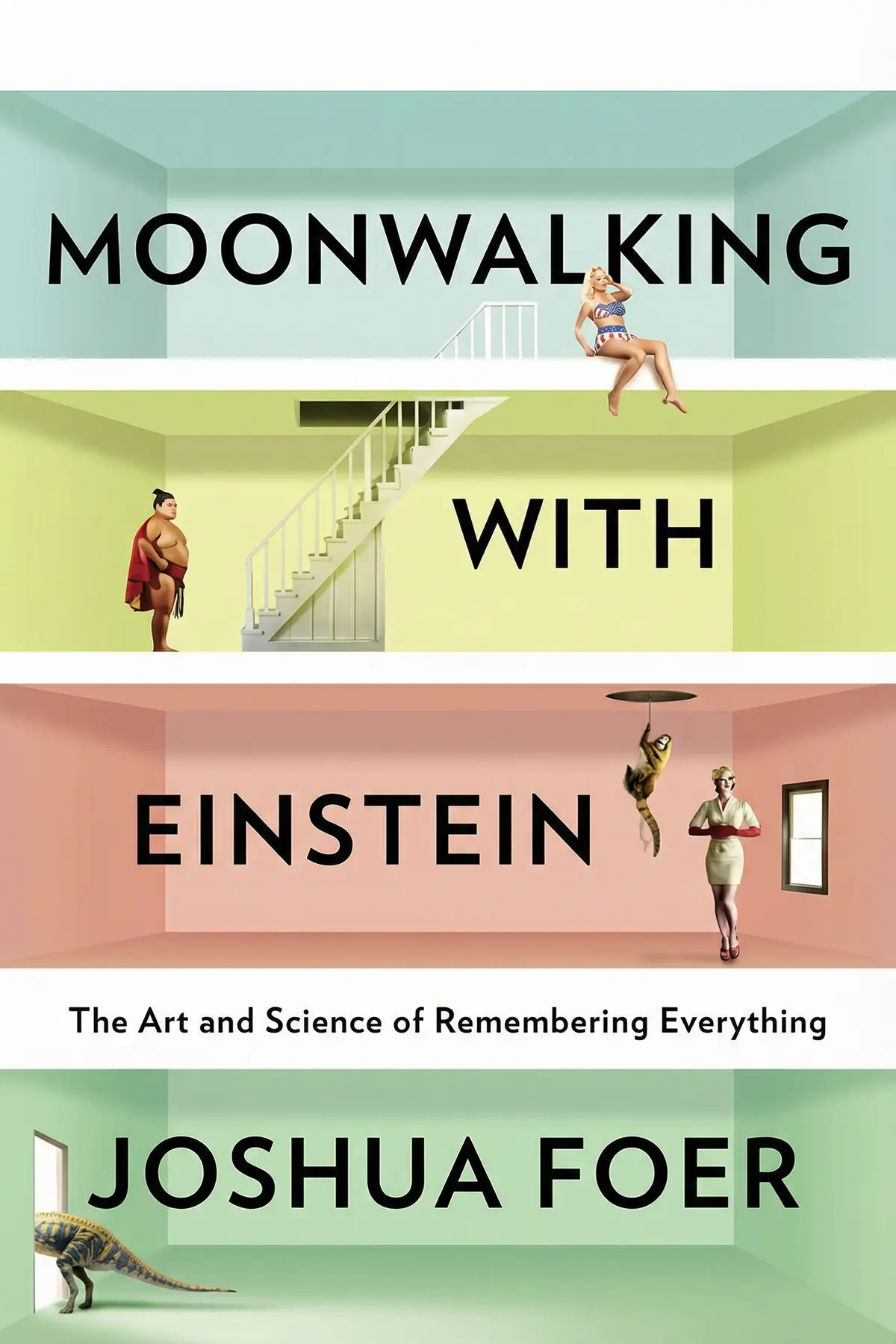
Table of Content
1. Introduction
1 min 33 sec
We have all experienced that sinking feeling when a name escapes us or a crucial fact vanishes just when we need it most. For many, a ‘poor memory’ is viewed as an unchangeable burden, a limitation of the brain that we simply have to accept. But what if that perspective is entirely wrong? What if the ability to remember isn’t an innate talent, but a craft that has been forgotten over centuries? This is the central question we are exploring today: the idea that the human mind is capable of extraordinary feats of recall if only we provide it with the right tools.
Throughout this journey, we will look at how the art of memory was once the cornerstone of human culture, essential for survival and the preservation of history. We will see how the invention of the printing press and the rise of digital technology have slowly eroded our internal storage, and why our current educational methods are often working against the way our brains actually function. Most importantly, we will dive into the specific, practical techniques that anyone can use to store information more effectively. From the way world-class chess players view a board to the spatial tricks used by ancient orators, we are going to unlock the secrets of the mental athletes. By the end, you’ll understand that a better memory isn’t about working harder; it’s about working in harmony with your brain’s natural strengths, using imagery, emotion, and space to build a more robust and reliable mind.
2. Memory as a Malleable Skill
2 min 07 sec
Could 250 hours of practice increase your memory capacity by tenfold? Discover why elite performance in recollection is a product of training rather than biological luck.
3. The Power of Chunking and Sensory Detail
2 min 11 sec
How can you turn a long string of random numbers into a single, unforgettable image? Explore the mechanics of chunking and the brain’s preference for vivid, sensory data.
4. Understanding Conscious and Unconscious Systems
2 min 08 sec
What happens when you lose the ability to form new memories? The tragic case of an amnesiac reveals the deep divide between our conscious and unconscious minds.
5. The Historical Significance of Oral Tradition
1 min 56 sec
Before books were common, memory was a social necessity. Learn how ancient cultures used complex techniques to preserve their entire history through the spoken word.
6. How Technology Changed the Way We Remember
2 min 00 sec
From the invention of the alphabet to the rise of the internet, discover why Socrates feared that writing would lead to the decay of the human mind.
7. Rethinking Education and Rote Learning
2 min 06 sec
Is our school system failing our students? Explore how moving beyond simple repetition can lead to dramatic improvements in academic performance.
8. Techniques for Recalling Names and Faces
2 min 11 sec
Struggle with names? The ‘Baker/baker’ paradox explains why your brain remembers a profession more easily than a surname and how to fix your social recall.
9. Mastering Text and the Mental Map
2 min 14 sec
From ‘image alphabets’ to emotional mapping, discover the sophisticated tools used by mental athletes to memorize entire poems and speeches word-for-word.
10. The Architecture of the Memory Palace
2 min 09 sec
Step inside the ‘Method of Loci,’ the most powerful memory tool ever created. Learn how to store thousands of facts within the familiar rooms of your childhood home.
11. Conclusion
1 min 55 sec
In our fast-paced, digital world, it is easy to assume that we no longer need a powerful internal memory. We have smartphones to remember our schedules, the internet to answer our questions, and cloud storage for our photos and documents. But as we have seen through the exploration of Joshua Foer’s work, our memory is about more than just data storage. It is the foundation of our intellect, our ability to make connections between ideas, and our very sense of self. When we outsource our memories, we are, in a sense, outsourcing a part of our humanity.
The journey through the science and history of memory reveals a hopeful truth: an extraordinary memory is not a gift for the lucky few, but a potential that resides within all of us. By embracing techniques like chunking, elaborative encoding, and the Method of Loci, we can move past the frustration of forgetting and begin to reclaim our mental capacity. We have seen that the brain thrives on imagery, emotion, and spatial context—elements that are often missing from our modern ways of learning.
The final takeaway is an invitation to practice. You don’t need to become a world champion to benefit from these tools. Simply by making a conscious effort to turn a new acquaintance’s name into a vivid image, or by mentally ‘placing’ your daily to-do list around your living room, you can begin to strengthen your mental muscles. Start small: the next time you have a piece of information to remember, don’t reach for your phone to write it down. Instead, take a moment to see it, feel it, and place it somewhere in your mind. In doing so, you aren’t just remembering a fact; you are participating in a timeless human art that has the power to enrich your mind and transform your life.
About this book
What is this book about?
Most of us walk through life assuming that a 'bad memory' is a fixed trait, like eye color or height. However, the truth is far more exciting: memory is a skill that can be developed, refined, and mastered. This summary takes you on a journey from the competitive world of memory championships to the cutting-edge laboratories of cognitive science to reveal how human memory actually works. By exploring the evolution of how we store information—from the oral traditions of ancient Greece to the digital outsourcing of the modern era—this book provides a blueprint for reclaiming our mental capacity. You will learn the specific strategies used by 'mental athletes,' such as the Method of Loci and elaborative encoding, which rely on our brain's natural affinity for spatial and sensory data. The promise of this work is simple yet profound: by understanding the architecture of our minds, we can learn to remember anything, from complex poetry to long lists of random digits, turning what once seemed like magic into a repeatable, practical art.
Book Information
About the Author
Joshua Foer
Joshua Foer is a graduate of Yale University and a prominent freelance science journalist. His investigative work and insightful features have been published in internationally recognized outlets, including The New York Times, National Geographic, and The Washington Post.
Ratings & Reviews
Ratings at a glance
What people think
Listeners find this book both captivating and fun, remaining hooked until the very last page. They also praise its accessibility, with one listener remarking that it unfolds with the pace of a thriller. The text offers useful overviews of memory strategies and is clearly well-researched, as one listener points out its distinctive perspectives. Furthermore, the narrative approach makes the subject matter fascinating, and listeners consider it deeply reflective, revealing the hidden potential of mnemonics. They also prize its utility, mentioning that the methods shared are extremely beneficial.
Top reviews
Leah
Ever wonder how someone can memorize a whole deck of cards in seconds? This book explains the "why" and "how" with incredible clarity and wit. I found myself trying out the techniques in my own living room, visualizing ridiculous images just to remember a grocery list. Frankly, the practical value here is immense, even if you don't plan on becoming a "mental athlete." Foer’s writing style is punchy and accessible, making complex concepts like the Method of Loci feel like common sense. It’s a thought-provoking look at how our culture has outsourced its memory to smartphones and external drives. Looking back, the most haunting part was the discussion on how novelty expands our perception of time. It’s more than just a book about tricks; it’s about how we choose to live our lives. This kept me interested until the very last page and made me rethink my relationship with my iPhone.
Show moreMingkwan
As someone who struggles to remember what I had for breakfast, this book was a revelation. It completely changed how I think about the capacity of the human mind. Foer takes us on a journey that is both personal and profoundly educational, blending history and psychology with a touch of humor. I loved the idea that memory is a skill rather than a fixed trait we are born with. To be fair, the descriptions of the competitive circuit are a bit eccentric, but they illustrate his points perfectly. The concept of "deliberate practice" mentioned in the later chapters was particularly thought-provoking for my own career goals. It’s rare to find a non-fiction book that is this entertaining while also providing such immense practical value. I’ve already started building my own memory palace in my childhood home. This is essential reading for anyone who wants to take back control of their brain.
Show moreVipawan
Wow, what an incredibly entertaining ride. Joshua Foer has a gift for taking a topic that sounds incredibly dry—memorizing lists—and making it feel like a high-stakes adventure. The way he weaves in the history of the "art of memory" alongside his own struggles in the competition is seamless. Truth is, this book reminded me that we often underestimate our own potential simply because we’ve become lazy with technology. The sections on how the brain processes images versus raw data were eye-opening and have already helped me in my studies. It’s a well-researched, thought-provoking book that bridges the gap between entertainment and education. I finished it in two sittings because the pacing was just that good. It’s definitely one of the most readable non-fiction books I’ve picked up in years. The techniques introduced are immensely useful for anyone who wants to learn more efficiently.
Show moreManop
Picked this up on a whim after seeing it mentioned in a Sunday supplement, and it didn’t disappoint. Joshua Foer manages to turn a niche topic like competitive memorization into a narrative that feels as high-stakes as a sports thriller. I was skeptical about the "one-year journey" gimmick at first, as it's a bit of a cliché in modern non-fiction, but his self-deprecating tone makes it work. To be fair, while the science of the "memory palace" is fascinating, the book leans more toward the narrative side of things than deep neurological study. It’s well-researched and engaging, but if you’re looking for a strictly academic textbook, you might be slightly let down by the magazine-style pacing. Still, the way he describes the eccentric characters at the USA Memory Championship is absolutely riveting. It really opened my eyes to the potential of the human brain. I found the ending surprisingly moving despite knowing the outcome.
Show moreFord
Joshua Foer has written something that reads like a thriller despite being a book about people sitting quietly in rooms. The way he builds tension toward the finale of the US Memory Championship is masterful and kept me hooked. I particularly enjoyed the sections debunking the idea of "photographic memory" and the exploration of savants like Kim Peek. Look, the book won't turn you into a genius overnight, but it does demystify the process of learning. Some of the anecdotes about his mentors were a bit repetitive, and I found the "memory palace" examples to be a little too specific to his own life at times. However, the overall message about the importance of attention in a world of distractions is incredibly timely. It’s a well-researched, highly readable piece of journalism that provides unique insights. You won't regret spending time with this even if you aren't a competitive person.
Show moreWararat
Finally got around to reading this after hearing so much about it over the years. It’s a fascinating dive into a subculture I never knew existed. The research is top-notch, especially the parts regarding how the ancient Greeks used memory as a pillar of education. Gotta say, I was surprised by how much I enjoyed the narrative arc of Foer’s own training. The writing is smooth and professional, though it does follow the standard "I did X for a year" template that’s become so common lately. My only real complaint is that the middle sections drag a bit when he gets into the minutiae of specific card-memorizing systems. It’s still a very worthwhile read for anyone interested in cognitive limits. It makes the world of mnemonics feel accessible rather than just a parlor trick for magicians. It’s a great example of how to make a dense topic feel light and engaging.
Show moreRania
The chapter on the "OK plateau" was worth the price of the book alone. It offered a brilliant explanation of why we stop improving at skills like typing or driving once we reach a level of "good enough." Joshua Foer does a great job of applying these concepts to the world of memory. To be fair, some of the competition details felt a bit indulgent, and I didn't need to know every single thing about the organizers' backgrounds. But the core message—that we can all improve our minds through focused, uncomfortable effort—is very powerful. The book is engaging and provides a unique window into a weird world. It’s a solid piece of narrative non-fiction that manages to be both informative and fun. I’d recommend it to anyone who feels like their brain has turned to mush in the digital age. It's well-researched and far more engaging than your average science book.
Show morePita
This is a great example of a book that could have been a long-form article, which isn't surprising given Foer's background as a journalist. While the narrative of him training for the championship is fun, I felt there was a lot of filler surrounding the core concepts. Truth is, the most useful information—the actual mnemonics—could be summarized in about twenty pages. I appreciated the historical context of memory in the ancient world, but sometimes the pacing slowed to a crawl during the more biographical sections. It's written in that polished, Gladwellian style that makes for easy reading, but I occasionally found myself wanting more substance. It’s an entertaining ride for a plane journey, but don't expect a comprehensive manual on cognitive science. It’s a bit light on the "science" part of the subtitle. If you like memoirs with a side of trivia, you will enjoy this, but serious students of psychology may find it superficial.
Show moreChanon
Not what I expected, but interesting nonetheless. I thought this would be more of a self-help book, but it’s really more of a journalistic exploration. Personally, I found the "mental athletes" to be a bit strange, though their dedication is undeniable. Foer’s style is very reminiscent of a long magazine piece, which makes it easy to digest but sometimes lacking in rigorous data. The bits about "Moonwalking with Einstein" were clever and gave me a good laugh. However, I’m not sure how much of this I’ll actually use in my day-to-day life. It’s a fun, lightweight read that offers some unique insights into the brain without being too heavy. If you’re looking for a deep dive into neurobiology, you might find this a little too superficial for your tastes. It's a solid 3-star book that is entertaining but didn't quite change my life as much as the cover promised.
Show moreMoon
The title is incredibly misleading if you’re actually looking for a guide on how to improve your memory. I expected a toolkit, but what I got was a memoir about a guy hanging out with quirky "mental athletes" for a year. Not gonna lie, I felt a bit ripped off by the hype surrounding the practical applications. The author is clearly a talented writer, and his prose is slick, yet it lacks the depth of a truly transformative work. He spends dozens of pages on the competition drama, but very little time on helping the reader implement these skills in a meaningful way. If you want to hear about people memorizing numbers in a basement, this is for you. If you want to actually stop losing your keys, look elsewhere. It's more about the spectacle than the science. It reads fast, but I didn't walk away with much that I couldn't have Googled in five minutes.
Show moreFeatured in
Readers also enjoyed
AUDIO SUMMARY AVAILABLE
Listen to Moonwalking with Einstein in 15 minutes
Get the key ideas from Moonwalking with Einstein by Joshua Foer, plus 5,000+ more titles in English and Thai.
- 5,000+ titles
- Listen as much as you want
- 7-day free trial
- Cancel anytime







