
6 min 24 sec
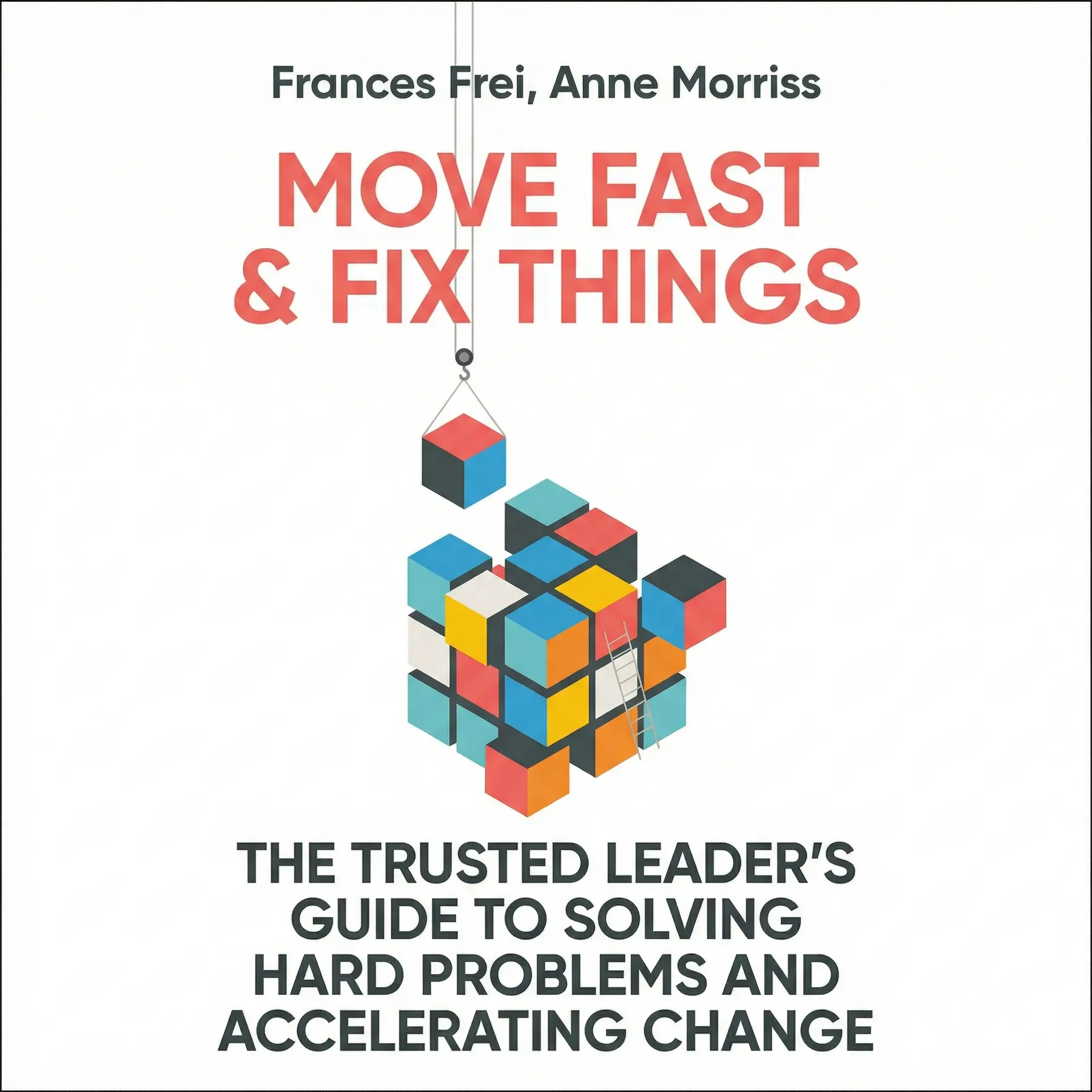
Move Fast and Fix Things: The Trusted Leader's Guide to Solving Hard Problems and Accelerating Change
Leaders often feel pressured to choose between speed and stability. This guide explains how to accelerate change by building deep trust and solving foundational problems rather than just treating superficial symptoms.
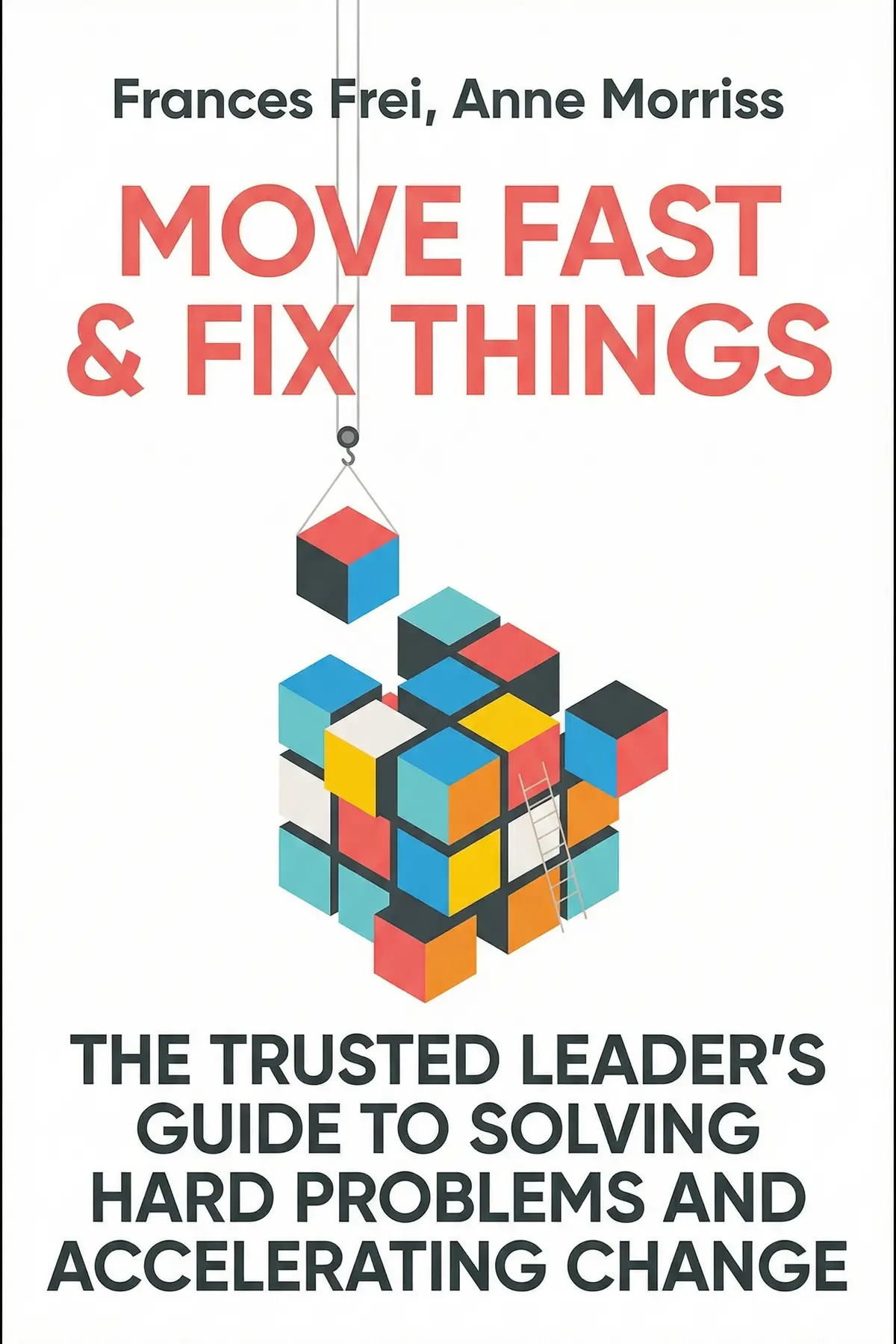
Table of Content
1. Introduction
1 min 01 sec
For years, the professional world lived by a singular, aggressive mantra: move fast and break things. It suggested that destruction was the necessary price of innovation. But as many organizations eventually learned, breaking things—especially relationships, culture, and trust—creates a debt that eventually comes due. In their work, Frances Frei and Anne Morriss offer a powerful correction to this philosophy. They argue that the most successful organizations don’t just move quickly; they move fast while simultaneously fixing what isn’t working. This approach isn’t about slowing down to be careful; it’s about accelerating by removing the friction that slows everyone down.
When we learn to identify the real obstacles and build a foundation of deep trust, speed becomes a natural byproduct of a healthy system. This summary explores how to shift from reactive firefighting to proactive, strategic problem-solving. By the end, you’ll see how a commitment to addressing root causes and mending broken trust can transform a struggling team into a high-velocity powerhouse.
2. Finding the Source of the Friction
1 min 24 sec
Why do we often solve the same problems over and over again? Discover how to move past superficial symptoms to find the hidden structural issues holding your team back.
3. Overcoming the Trust Wobble
1 min 28 sec
Trust is the invisible force that allows teams to move at high speeds. Learn how to identify and repair the specific instabilities that threaten your organizational stability.
4. Cultivating a Safe Haven for Honesty
1 min 30 sec
True innovation requires the ability to speak hard truths. Explore how to build a safe environment where feedback flows freely and problems are solved in the light.
5. Conclusion
1 min 01 sec
Moving fast and fixing things is more than just a catchy phrase; it is a framework for sustainable excellence. It requires the discipline to look past the obvious and the heart to build genuine connections with those we lead. We’ve seen that true leadership involves a deep, curiosity-driven dive into the root causes of our challenges. It means recognizing that when things feel shaky, it’s often because of a wobble in the trust we have built with our stakeholders.
By focusing on empathy, logic, and authenticity, we can stabilize our organizations and create a runway for genuine innovation. As you move forward, keep asking yourself if you are treating the disease or just the symptoms. Are you building trust or just demanding compliance? The path to success isn’t about avoiding problems; it’s about having the tools and the trust to fix them quickly. When you commit to this process, you don’t just achieve your goals faster—you build an organization that is actually worth moving fast in.
About this book
What is this book about?
In the modern business world, the mantra of moving fast and breaking things has become a cliché that often leads to organizational failure. This summary explores a superior alternative: moving at high speed while simultaneously repairing the systems and relationships that support growth. It argues that the most effective leaders do not sacrifice stability for pace. Instead, they learn to identify the invisible barriers holding their teams back and address them head-on. The promise of this approach is a more resilient organization where speed is fueled by trust rather than chaos. By focusing on the trust wobbles that often destabilize teams—issues related to logic, empathy, and authenticity—leaders can create a sustainable culture of high performance. This narrative walks through the steps of diagnosing hidden friction, fostering a climate of radical curiosity, and building the relational foundations necessary for rapid improvement. It is a roadmap for any leader who wants to solve difficult problems without leaving a trail of destruction in their wake.
Book Information
About the Author
Frances Frei
Frances Frei is a Harvard Business School professor and former Uber executive who guided the company through leadership recalibration. Anne Morriss is an entrepreneur and leadership coach who founded The Leadership Consortium. Together, they have written influential books like Uncommon Service and Unleashed, and they host the leadership podcast Fixable.
Ratings & Reviews
Ratings at a glance
What people think
Listeners find the book effective, with one review highlighting its structured method for problem-solving and actionable tips. They appreciate its readability, with one noting it is not filled with empty platitudes, and its pacing, with one describing it as engaging. The work receives positive feedback for its storytelling quality, with one review mentioning stories of others doing it right, and its level of difficulty, with one noting it is doable. The writing style receives mixed reactions from listeners.
Top reviews
Koi
Finally got around to reading this, and the focus on building trust as a prerequisite for speed is a total game-changer. Unlike the old 'move fast and break things' mantra, Frei and Morriss argue that empowering others is the only way to move quickly over the long term. The pacing is incredibly engaging, making it a quick read that doesn't feel like a chore. I loved the simplicity of the implementation scenarios provided for each day of the week. The 'Friday' chapter on moving fast was particularly inspiring, emphasizing that being too late is a real risk in today's market. By focusing on trust and inclusion, the authors show that you don't have to burn everything to the ground to see progress. This isn't just a collection of empty platitudes; it’s a manual for change that feels authentic and human. If you want to fix your culture while staying competitive, this is the book.
Show morePracha
Wow, I didn't think a business book could be this engaging while actually providing a manual for change. The simplicity of the ideas is their greatest strength. Moving through a problem-solving process in five clear steps makes a daunting task feel manageable. I love the focus on driving excellence through teamwork and creativity rather than just top-down mandates. The authors emphasize that individual impact still matters, but contributing to the success of others is just as vital for advancement. This is a refreshing take in a world that often rewards 'brilliant jerks.' The pacing is fast, the examples are relevant, and the tips on creating a safe work environment are spot-on. Not gonna lie, I was skeptical of the five-day schtick at first, but it really helps frame the urgency needed to fix things. Highly recommended for any leader who wants to move quickly but sustainably.
Show morePita
The concept of a five-day work week framework is what initially drew me in, and for the most part, it delivers a very structured approach to problem-solving. Frei and Morriss provide actionable tips that feel doable rather than just theoretical, which is a breath of fresh air in the business genre. I particularly enjoyed the section on 'conflict debt'—a term I hadn’t encountered before but one that perfectly describes the stagnation in my current office. While the writing style can be a bit flippant at times, the storytelling quality is high, highlighting leaders who actually got it right. Some of the endnotes felt unnecessary and snarky, which occasionally pulled me out of the flow, but the core message remains strong. It is a solid guide for anyone looking to drive excellence without leaving a trail of destruction behind them. To be fair, the 'Monday' chapter on identifying problems could use more objective methodology, but the later chapters on storytelling and speed are excellent.
Show moreCherry
As someone who is tired of business books filled with empty platitudes, I found this refreshingly concrete. The authors present a very solid challenge to conventional wisdom by focusing on an expansion model rather than a destructive one. I very much appreciated the subtle takes on how inclusion actually helps a company win, rather than just being a checkbox. The writing is engaging, though I’ll admit some of the 'Easter eggs' and snarky footnotes were a bit much for my taste. The book is doable for a busy manager and provides a clear map for driving creativity within a team. My favorite takeaway was the concept of the 'change mandate'—it’s a perspective I hadn't considered quite that way before. It’s not perfect, but it’s a useful and quick guide for anyone in a leadership position who wants to improve their operations without losing their soul.
Show moreFelix
The perspective shift from 'breaking' to 'fixing' is exactly what modern leadership needs right now. I picked this up hoping for a more collaborative approach to tech management, and the authors delivered. They argue that trust is the foundation that allows organizations to move fast and fix things confidently, which resonates with my experience. The storytelling is high quality, and the use cases provided are actually relatable to real-world office politics. While I have some quibbles with how they handle the initial problem identification phase, the overall order of operations works well. Personally, I found the advice on empowering others to be the most practical part of the framework. It’s a very quick read that avoids the typical dry tone of most management books. Even if you don't agree with every conclusion, you'll walk away with several new tricks for your next project.
Show moreWit
Look, you have to take some of the early chapters with a grain of salt because they lack a bit of rigor. However, the overall framework for tackling issues is genuinely useful. I've been in management for a long time, and the idea of 'conflict debt' really hit home for me—it's something we rarely name but always feel. The book is a quick read, and the pacing keeps you interested even through the more 'eye-rolling' parts of the authors' snarky commentary. I especially liked the Friday chapter on speed and the importance of reducing WIP to actually get things done. The story structure they suggest for communicating change—the good ol' days, the mandate, and the optimistic future—is something I can see myself using immediately. It’s a solid 4-star book that offers a lot of useful ideas if you can filter out the fluff. It’s a refreshing vantage point on business growth.
Show moreKru
Ever wonder why some organizations just can't seem to get out of their own way? This book attempts to answer that with a collaborative model, but the results are mixed. The first 60% of the read is honestly a bit of an eye-roller, filled with random anecdotes and a writing style that tries too hard to be hip. However, the last 40% actually contains some gems. The discussion on 'conflict debt' and the importance of reducing work-in-progress (WIP) was quite valuable for my team. I also appreciated the phrase 'can someone articulate a different point of view' as a tool for inclusion. It's a very average performance book that doesn't necessarily reinvent the wheel. If you can get past the snarky endnotes and the somewhat weak 'Monday' chapter, you’ll find a few tools worth keeping in your leadership kit. It’s a 50/50 split between fluff and utility.
Show moreNutnicha
This is one of those books where the second half is significantly stronger than the first. The authors use a gimmick where each chapter is a day of the week, which I found more distracting than helpful for navigation. Specifically, 'Monday' and 'Tuesday' felt like a wild goose chase because they lacked a truly objective methodology for finding the root cause of organizational issues. You might end up solving the wrong problem if you follow their advice too literally early on. To be fair, once you hit 'Thursday' and 'Friday,' the advice on storytelling and creating safe working environments is top-tier. I liked the 'good ol' days' story structure for change management. It’s a decent performance book, but it’s not as revolutionary as the authors seem to think. It’s worth a read for the specific frameworks in the back, but feel free to skim the beginning.
Show moreTen
Frankly, I struggled to get past the tone of this book. It felt over-bloated with the authors seemingly convinced they were sharing revolutionary secrets, when in reality, much of it felt like common sense wrapped in flowery language. The endnotes were particularly distracting; there is an asterisk explaining what a paper check is to 'younger readers' that just felt patronizing and weird. I found the five-day schtick confusing because I kept having to flip back to the table of contents to remember what 'Tuesday' was supposed to represent. While I like the idea of Hanlon's Razor and the focus on inclusion, the book lacks the depth needed for complex organizational change. It feels like a long-form blog post that was stretched into a full book. I’ve seen this information streamlined much better elsewhere. Don't waste your time if you are looking for a deep dive into root cause analysis.
Show moreFang
Not what I expected given the hype surrounding these authors. It felt like a very blasé performance book that didn't bring much new to the table. The five-day structure felt forced and made the information harder to retain. I’m not sure who the target audience is when they include 'funny' notes explaining what a check is, as it just comes off as condescending. The truth is, the book is way over-bloated. It could have been a 20-page white paper and been twice as effective. I liked a couple of the stories about companies doing things right, but they were buried under too much fluff and flowery language. It honestly felt like a missed opportunity to provide a rigorous framework for fixing broken cultures. If you're looking for deep insights, you might find this version of the material a bit too abridged in terms of actual substance.
Show more
Readers also enjoyed
7 Powers: The Foundations of Business Strategy
Hamilton Helmer

A Bigger Prize: How We Can Do Better Than the Competition
Margaret Heffernan
A Year with Peter Drucker: 52 Weeks of Coaching for Leadership Effectiveness
Joseph A. Maciariello
AUDIO SUMMARY AVAILABLE
Listen to Move Fast and Fix Things in 15 minutes
Get the key ideas from Move Fast and Fix Things by Frances Frei, plus 5,000+ more titles in English and Thai.
- 5,000+ titles
- Listen as much as you want
- 7-day free trial
- Cancel anytime







