
4 min 50 sec
Uncommon Service: How to Win by Putting Customers at the Core of Your Business
Discover how to build a world-class business by making intentional trade-offs. Learn why being strategically bad at the right things is the only way to be truly great at what matters most.
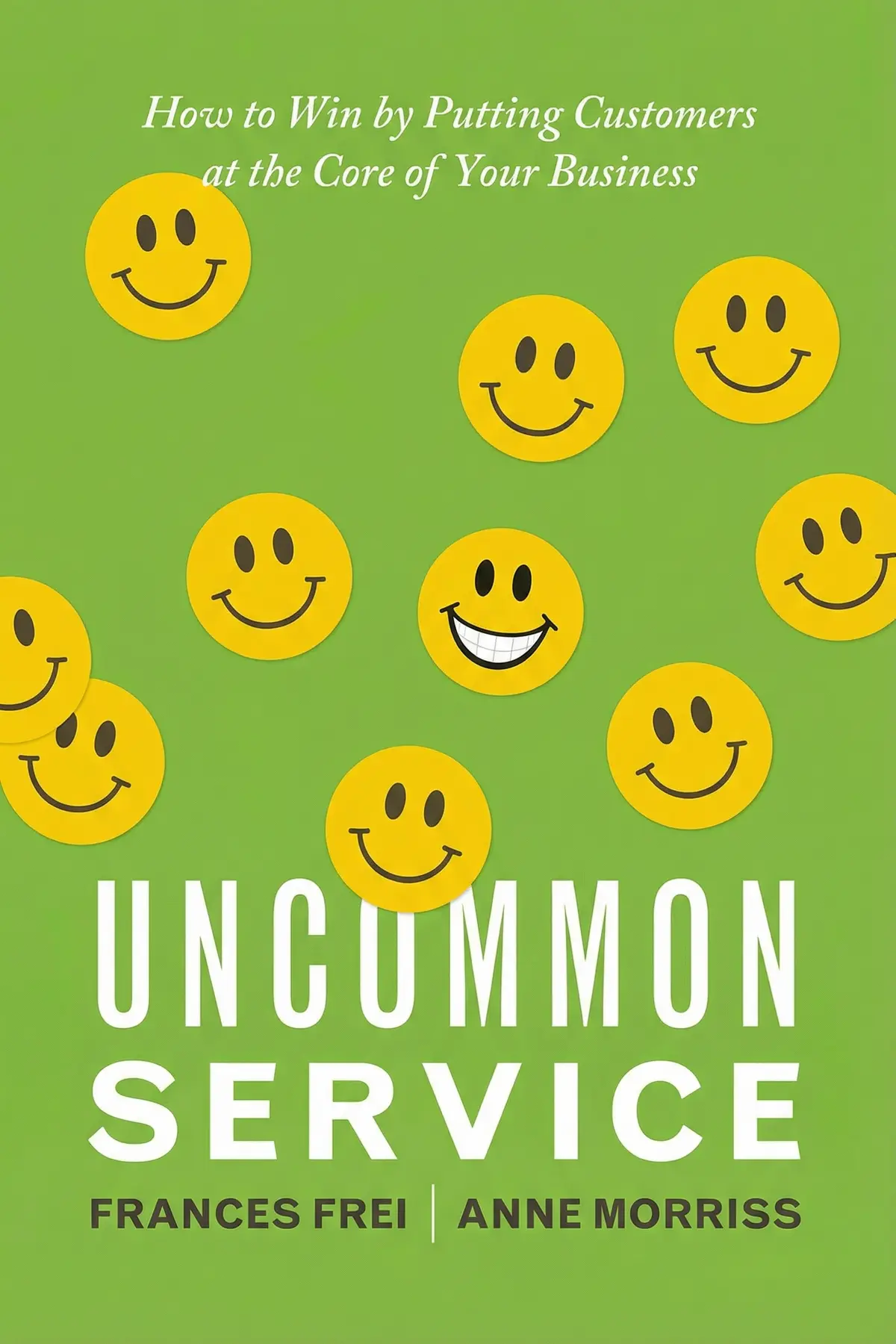
Table of Content
1. Introduction
39 sec
Welcome to this exploration of how businesses can achieve extraordinary results by making choices that seem, at first glance, completely wrong. Most managers are trained to believe that perfection across the board is the ultimate goal. They want every customer to be happy with every single detail. But authors Frances Frei and Anne Morriss argue that this pursuit of all-around excellence is actually a recipe for failure. Instead, the secret to creating a truly dominant service brand is the courage to be bad—intentionally. By the end of this summary, you will understand how to identify the areas where your business should underperform so that you can become spectacular in the ways that truly define your success.
2. The Power of Strategic Underperformance
1 min 11 sec
Discover why being mediocre in certain areas isn’t a failure, but a deliberate choice that fuels your company’s greatest strengths.
3. Mapping Your Path to Excellence
1 min 14 sec
Learn the practical steps to identifying which service features deserve your full investment and which ones you should intentionally neglect.
4. Contextualizing Service and Cultural Alignment
1 min 13 sec
Understand how the rules of trade-offs shift across different markets and why internal culture is vital to success.
5. Conclusion
33 sec
The bottom line is that achieving uncommon service is about making the hard choices that others are afraid to make. It means moving away from the safety of being “good enough” at everything and leaning into the discomfort of being “bad” at some things. By being honest about what you cannot and should not do, you free your organization to be incredible at what you must do. This isn’t just about efficiency; it’s about identity. Strategic focus turns a standard business into a market leader that customers can’t help but talk about, because you are finally giving them exactly what they value most.
About this book
What is this book about?
Many businesses struggle because they fall into the trap of trying to be everything to everyone. They aim for universal excellence, but often end up with high costs and mediocre results. This summary explores the counterintuitive concept of "uncommon service," where the path to legendary performance is built on the foundation of strategic underperformance. By identifying which service attributes customers value most and which they care about least, companies can stop wasting resources and start dominating their niche. You will learn how to align your internal operations with a clear service promise, making the hard choices that competitors are often too afraid to make. The promise of this approach is a more focused, profitable, and customer-centric organization that wins by being different, not just better.
Book Information
About the Author
Frances Frei
Frances Frei is a distinguished professor at Harvard Business School, where she focuses on the mechanics of large-scale organizational transformations. She is joined by Anne Morriss, the Managing Director of The Leadership Consortium. Morriss is highly regarded for her ability to challenge traditional leadership norms and help organizations navigate complex change.

Ratings & Reviews
Ratings at a glance
What people think
Listeners find the work to be an excellent read, with one listener highlighting its compelling narratives. Furthermore, the writing style earns praise for its refreshingly blunt tone, and listeners value the practical, actionable insights it provides. The book also receives acclaim for its service management focus; one listener notes it is a perfect resource for anyone running a service business, while another points out its remarkably clear logic.
Top reviews
Lucas
Ever wonder why some brands thrive while offering seemingly mediocre perks? This book breaks down the brutal logic of strategic trade-offs with such clarity that it feels like a revelation for any service-based business owner. The authors argue that to be truly uncommon in excellence, you must have the courage to be bad in ways that don't matter to your core customers. It is a compelling argument backed by interesting case studies, like how IKEA offloads labor to the customer to keep prices low. The writing style is refreshingly direct and steers clear of the usual fluff you find in management books. I came away with a list of actionable insights that I can actually implement in my own firm's operations tomorrow. This is hands-down one of the most practical guides on service management I have ever encountered.
Show moreFord
Wow, I wasn't expecting a business book to be this compelling, but the stories about everything from healthcare to the airline industry kept me hooked. The authors provide a very logical framework for deciding which customer needs to prioritize, which is a breath of fresh air compared to the customer is always right mantra. I loved the example of the insurance company that reduced costs by sending agents directly to accident scenes to minimize legal fees. It’s such a smart way to align customer needs with business savings and operational efficiency. While some of the corporate analogs felt a little repetitive, the overall message is incredibly powerful and well-delivered. This is essential reading for anyone who wants to move beyond mediocrity and build something that truly stands out.
Show moreFon
After hearing Frances Frei talk about her work at Uber, I picked this up and was immediately impressed by the actionable nature of her advice. She and Morriss don't just tell you to provide better service; they explain exactly how to fund it by making deliberate, sometimes painful, trade-offs. The distinction they make between marketing segments and operating segments is one of the most useful things I've read in years. It helps explain why two customers might want the same thing but require vastly different delivery methods to be satisfied. The writing is clear and avoids unnecessary jargon, making it accessible even if you didn't go to a top-tier business school. It’s a great read that I’ll likely revisit as my company continues to grow and face new challenges.
Show moreA
This book sticks with you because it challenges the dangerous best at everything myth that sinks so many ambitious startups. It’s a brutally honest look at how to scale without losing your soul, emphasizing that you have to choose your service sins wisely to succeed. I particularly liked the discussion on how shared services can help large, multi-focused organizations compete with smaller, more focused entrants. The authors provide a very clear roadmap for designing a system where excellence isn't just a happy accident but a structural certainty. While it can feel a little academic at times, the real-world examples from airlines and retail keep the concepts grounded and relatable. Highly recommended for anyone running a service-oriented team or looking to sharpen their competitive edge in a crowded marketplace.
Show moreSing
The chapter on hiring for empathy was a total standout for me, particularly the section where they describe asking candidates to share embarrassing stories during group interviews. It's a clever way to see who is actually listening and supporting their peers rather than just waiting for their turn to speak. Beyond the hiring tips, the book offers a great micro-MBA feel by focusing on how to design systems where good service is the default. I did find the Commerce Bank example a bit dated, as brick-and-mortar hours aren't the differentiator they used to be in our digital age. Still, the underlying principles of focusing on your strengths while deprioritizing weaknesses remain incredibly relevant for today's market. It provides a solid framework that forces you to make the hard choices necessary for real growth.
Show moreTakeshi
As someone who has managed customer-facing teams for years, I appreciated how this book shifts the focus from culture to intentional system design. We often put too much pressure on our hero employees to save the day, but Frei and Morriss argue that this is unsustainable and bad for the bottom line. The logic flow is impeccable, moving from the four basic service dimensions to the gritty details of how to pay for your improvements. I especially liked the idea that service charges must be palatable and transparent to the customer to avoid long-term resentment. It's a brutally honest look at the trade-offs required to scale a service business without sacrificing the quality that made you famous. While some of the charts are a bit academic, the actual advice is grounded in reality.
Show moreMan
Finally got around to reading this after seeing it on several must-read lists, and the logic flow is just impeccable throughout the text. It’s essentially a guide to service management that treats it as a rigorous discipline rather than a soft skill, which I found very refreshing. The authors do a great job of explaining why you can't just aim for average across the board, or you'll end up being mediocre everywhere. One of my biggest takeaways was how to let customers help each other through forums to reduce the load on your internal support teams. Even if you're not in a service-focused role, the insights into how organizations scale through shared services are well worth the time. It’s a practical, actionable guide for any professional looking to improve their operational strategy.
Show moreGioia
To be fair, the core thesis that you must choose where to fail so you can excel elsewhere is a brilliant and necessary insight for any leader. However, I found that the remainder of the book tends to fall increasingly flat, with fewer additional ideas that could be considered truly unique. It starts strong with the concept of funding your excellence through strategic trade-offs, but the subsequent chapters felt like they were dressing up basic logic as a complex framework. I appreciated the specific examples involving airline service and the MacBook's design, but the ten-step plan felt a bit forced and unnecessary. It’s a solid read that probably could have been a very impactful long-form essay rather than a full book. I don't regret reading it, but I likely won't be revisiting these chapters anytime soon.
Show moreSangduan
Personally, I found it difficult to get past some of the older examples, like the focus on physical bank branch hours which feels like a relic of a bygone era. While the point about convenience vs. interest rates is still logically sound, I would have loved to see more modern, tech-focused case studies to bridge that gap. That being said, the growing your strengths philosophy is a great analog to personal development advice I’ve read elsewhere. It’s a solid strategy book, but you have to be willing to look past the dated references to find the nuggets of wisdom buried in the text. It’s definitely not a total waste of time, but it’s also not the revolutionary gospel some reviewers make it out to be. Read the first half and you'll get the gist.
Show moreSupaporn
Look, I really wanted to find some hidden gems here because my manager hyped it up, but it mostly felt like common sense from an entry-level business course. The central idea that you can't be everything to everyone is solid, yet it didn't feel revolutionary enough to justify an entire book. I found myself skimming after the first few chapters because the guru-style framework started to feel repetitive and quite dry. While the authors are clearly knowledgeable, the tone was a bit too prescriptive for my taste, and I struggled to stay engaged throughout the middle sections. If you’ve never thought about trade-offs in business, you might find it eye-opening, but for most professionals, it's stuff you already know instinctively. It felt like a long-form article that was stretched out to meet a publisher's word count requirement.
Show moreReaders also enjoyed

7 Powers: The Foundations of Business Strategy
Hamilton Helmer

A Bigger Prize: How We Can Do Better Than the Competition
Margaret Heffernan
A Year with Peter Drucker: 52 Weeks of Coaching for Leadership Effectiveness
Joseph A. Maciariello
AUDIO SUMMARY AVAILABLE
Listen to Uncommon Service in 15 minutes
Get the key ideas from Uncommon Service by Frances Frei, plus 5,000+ more titles in English and Thai.
- 5,000+ titles
- Listen as much as you want
- 7-day free trial
- Cancel anytime







