
14 min 33 sec
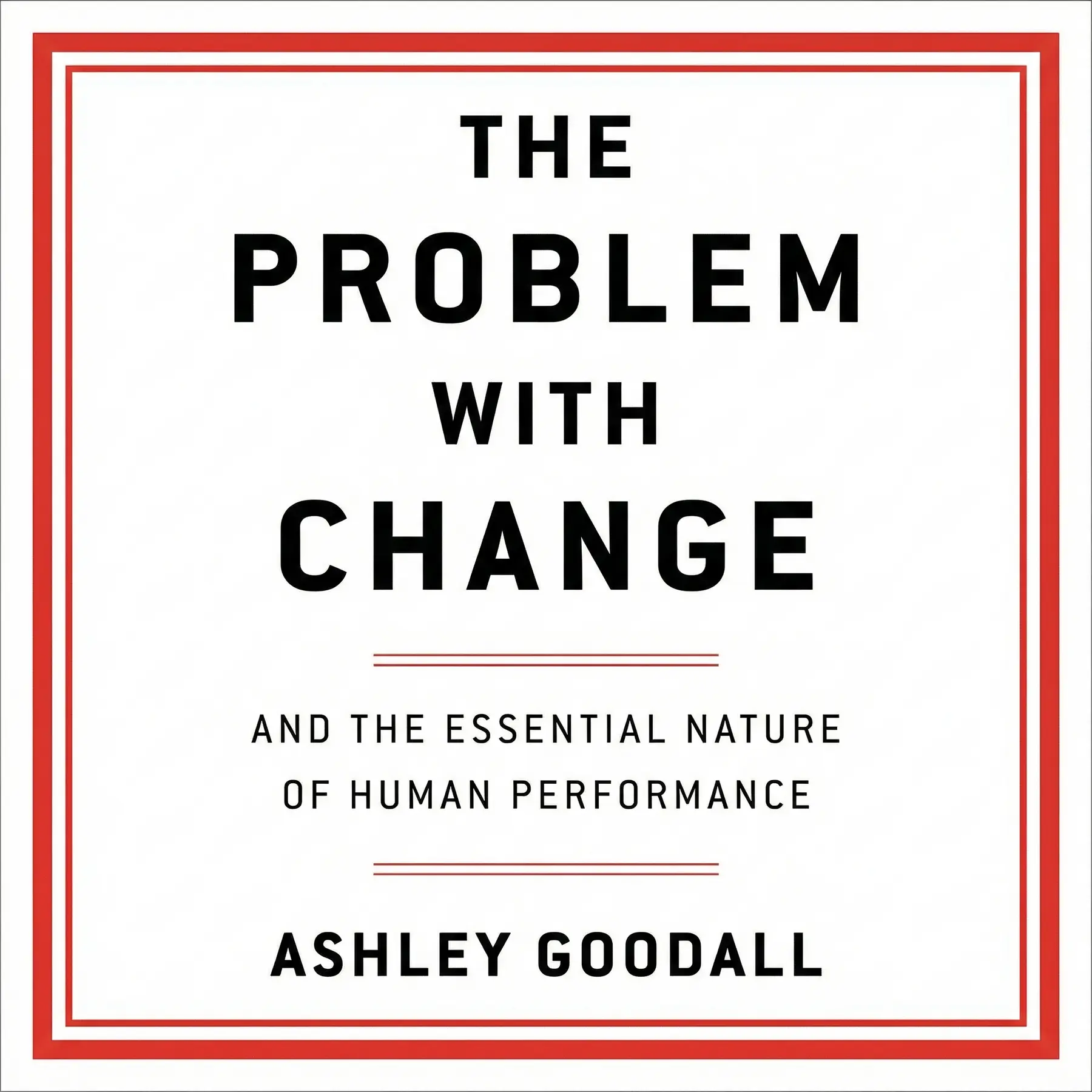
The Problem with Change: And the Essential Nature of Human Performance
The Problem with Change explores the hidden human costs of constant organizational disruption. It offers a guide for leaders to maintain stability, preserve employee engagement, and build resilience in high-flux environments.
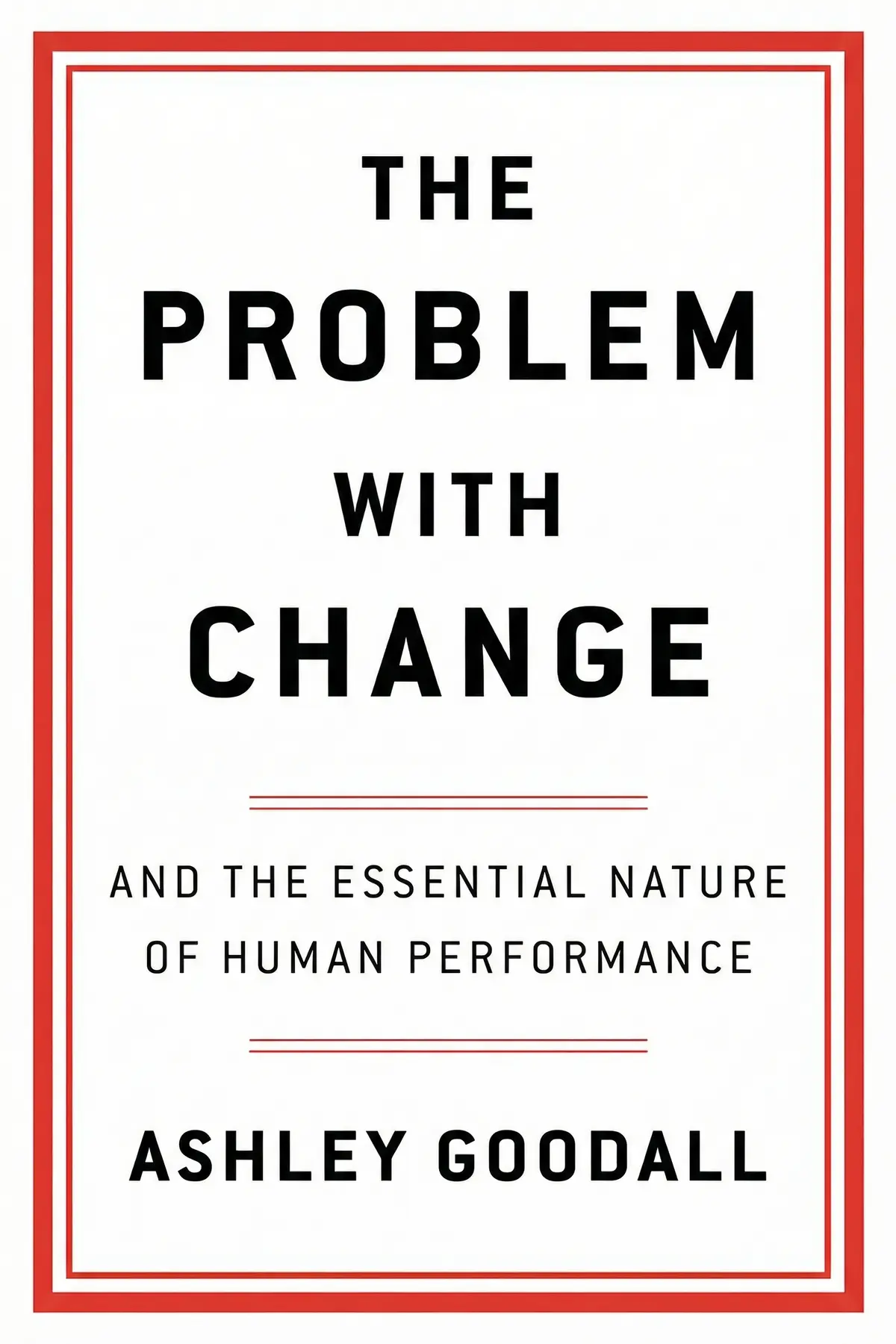
Table of Content
1. Introduction
1 min 43 sec
Imagine the atmosphere of a typical corporate Monday. You walk into the office, or perhaps you log into a virtual meeting, and there is a particular kind of electricity in the air. It isn’t the spark of excitement; it’s the static of anxiety. You see an invitation for an unscheduled all-hands meeting. The agenda is vague, filled with corporate jargon about “synergy,” “pivot,” and “the next chapter.” To leadership, this is a moment of strategic evolution. But for you and your colleagues, it’s the start of yet another cycle of upheaval. This is the reality many of us face in a world where disruption is worshipped as a virtue.
In this summary of The Problem with Change, we are going to explore why this relentless focus on transformation often backfires. We will look at how the constant shifting of the ground beneath our feet doesn’t just make us tired—it fundamentally breaks the mechanisms that allow us to do our best work. Ashley Goodall argues that while change might be necessary for a company to survive, the way we manage it often kills the very engagement and resilience required for that survival.
Over the next few minutes, we will unpack the hidden costs of life in the corporate “blender.” We’ll look at the physiological stress of losing control, the social grief of losing work friends, and the disorientation of losing familiar routines. But we won’t just leave you in the chaos. We will also examine how leaders can act as anchors for their teams. We’ll discuss practical ways to provide space, foster connection, and offer the kind of affirmation that helps people feel grounded even when everything else is in flux. The goal here is to move past the “toxic positivity” of traditional change management and toward a more honest, human-centered approach to performance.
2. The High Price of Constant Corporate Disruption
2 min 18 sec
What happens when an organization treats every strategy as temporary? Discover why the obsession with constant disruption often leaves employees feeling like they are living inside a blender.
3. The Psychological and Biological Toll of Uncertainty
2 min 21 sec
Change isn’t just an intellectual challenge; it’s a physical one. Learn how a lack of control in the workplace can trigger stress responses that rival serious health risks.
4. Uprooting Social Connections and Daily Routines
2 min 09 sec
We aren’t just workers; we are social beings rooted in place. Explore why losing your ‘work best friend’ or your physical desk can be more disruptive than a new business model.
5. Creating Space for Autonomy and Groundedness
1 min 56 sec
How can a leader help their team survive a storm? The answer lies in doing less, not more. Learn the power of providing space and trust during transitions.
6. Restoring Stability through Connection and Affirmation
2 min 21 sec
Stability doesn’t come from a new org chart; it comes from human interaction. Discover how simple check-ins and specific praise can anchor a team in flux.
7. Conclusion
1 min 45 sec
As we reach the end of our journey through The Problem with Change, the central message is clear: performance is not a machine that can be taken apart and reassembled at will. It is a human phenomenon that grows out of stability, trust, and connection. When we treat disruption as a constant necessity, we risk destroying the very foundations that allow our people to excel.
We have explored how the “blender” of modern corporate life takes a biological and psychological toll, leading to a state of learned helplessness and a loss of social belonging. We’ve seen that people don’t just lose their jobs or their titles during a reorg; they lose their friends, their routines, and their sense of agency. But we have also seen that there is another way to lead.
By providing space, leaders can restore the autonomy that the brain craves. By maintaining consistent connections, they can provide the predictability that reduces anxiety. And by offering specific affirmation, they can help employees remember their own value when everything else is in doubt.
The throughline of this book is that the most successful organizations of the future won’t be the ones that change the fastest, but the ones that provide the most groundedness to their people while they change. When you move forward from here, think about the “micro-stabilities” you can create for those around you. You may not be able to stop the big shifts coming from the top, but you can choose to be the anchor for your team. You can turn the chaos into a shared experience of resilience and growth. Thank you for listening to this BookBits summary of The Problem with Change by Ashley Goodall. We hope these insights help you build a more stable, high-performing environment, no matter what changes lie ahead.
About this book
What is this book about?
The Problem with Change challenges the modern business obsession with constant disruption. In today’s corporate world, leadership often treats change as an inherent good, yet for the employees on the ground, it frequently feels like living in a blender. This book identifies why traditional change management fails so spectacularly: it ignores the fundamental human needs for stability, predictability, and social connection. When these are severed, performance plummets. Ashley Goodall provides a sophisticated roadmap for navigating this reality. Rather than stopping change altogether, the book teaches leaders how to mitigate its most damaging effects. You will learn about the psychological toll of uncertainty and the physiological impact of losing control over your work environment. More importantly, the book outlines three specific strategies—space, connection, and affirmation—that can turn a period of upheaval into an opportunity for grounded growth. It’s a promise of a more humane and effective way to lead through the inevitable shifts of the modern economy.
Book Information
About the Author
Ashley Goodall
Ashley Goodall is a renowned leadership expert who has spent years in the executive ranks at Cisco. He is celebrated for his evidence-based approach to management and human performance. Goodall is also the co-author of the acclaimed book Nine Lies About Work, which received the honor of being named the best management book of 2019 by Strategy+Business and was featured as a top business and leadership title on Amazon.
Ratings & Reviews
Ratings at a glance
What people think
Listeners describe this work as a beautifully penned and affirming analysis that challenges the contemporary business fixation on non-stop upheaval. There is praise for how the author captures the mental strain caused by constant restructures, specifically the erosion of employee purpose and connection. Additionally, the audience appreciates the actionable leadership guidance on prioritizing stability and celebrating high performance, with one listener highlighting the "blender" metaphor for corporate life as especially resonant. Although some listeners find the organization somewhat fragmented and at times redundant, they still suggest that the fundamental takeaways are essential for any executive managing workplace transitions.
Top reviews
Duang
Finally, someone says it out loud. Goodall's dissection of the 'cult of disruption' is the most refreshing thing I’ve read in business literature in years. As someone who has survived three reorgs in two years, the 'blender' metaphor hit home hard. The author brilliantly explains why the constant churn isn’t just annoying—it’s actually damaging our ability to do good work. He challenges the toxic assumption that change is always synonymous with progress. I especially loved the focus on 'real words' over corporate jargon. It’s a stylishly written, deeply human look at the psychological toll of modern management. If you’re tired of being told to 'embrace the chaos,' this book will feel like a long-overdue validation of your sanity. Truly a must-read for any executive who cares about their team's long-term health.
Show morePita
After hearing colleagues complain about the latest reorg, I picked this up to see if there was a better way. I wasn’t disappointed. Goodall captures the 'blender' effect perfectly—that dizzying feeling where nothing is stable and everything is supposedly 'improving' while getting worse. The book argues that stability is the platform for all high performance, which is a radical thought in today’s business world. I was fascinated by the data on how a lack of agency correlates with poor physical health. It makes the stakes feel so much higher. The practical tips on making space for others and using 'real words' are things I can use immediately. This is the first business book I’ve read in a long time that actually made me feel seen as an employee. Essential reading for the modern workplace.
Show morePawinee
Ashley Goodall provides a stylishly written critique that feels incredibly personal if you've spent any time in a large corporation. The book focuses on the importance of local teams and the 'place-ballet' of office rituals. We often forget that employees don't really belong to a 'company'—they belong to their immediate colleagues. When leadership disrupts those bonds, they destroy the very engine of productivity. I found the section on 'dynamic stability' particularly helpful. It’s not about stopping all change, but about making it predictable enough that people don't lose their sense of agency. My only gripe is that some chapters felt a bit like a rant against modern HR practices. Still, the core message is vital. It’s a call to treat workers as humans rather than components in a machine.
Show moreWoravit
As a middle manager, I found the section on 'dynamic stability' to be a total game-changer. We are constantly told to move fast and break things, but Goodall argues for the power of rituals and predictability. He makes a compelling case that a manager’s most important job is to be a shock absorber for their team. The discussion on 'uncertainty' was particularly striking—experiments show we’d literally rather know a shock is coming than wonder if it might happen. That explains so much about the anxiety I see during reorgs. The book is well-researched, though it does get a little bogged down in the middle sections. Regardless, the advice on recognizing excellence in real-time is something I’ve already started implementing. It’s a sophisticated take on why we need to slow down to actually get better results.
Show moreTim
Ever wonder why every new leadership initiative feels like a punch to the gut? This book explains exactly why. Goodall dives deep into the psychological displacement that happens when our routines are shattered. He describes the corporate 'blender' with such accuracy it’s almost painful. I loved the insight that gossip is actually a vital social glue, not just a distraction. The author’s take on 'noise masquerading as data' regarding performance ratings was also brilliant. My only critique is that the second half feels a bit like a collection of essays rather than a cohesive argument. One chapter is about change, and the next is about 'real words.' It’s all good content, but the organization is a bit messy. Even so, it’s a necessary counter-narrative to the obsession with constant transformation.
Show morePloy
Look, we’ve all been through the corporate blender, but few authors actually offer a roadmap out of the mess. Goodall manages to do both. He validates the frustration of constant change while providing a new framework for 'dynamic stability.' I found the sections on team belonging especially insightful. It’s the small, local connections that keep us grounded, yet they are the first things companies destroy during a reorg. The writing is sharp and often witty, particularly when he’s skewering company value statements. Not gonna lie, some of the psychological research sections were a bit dense and slowed the pace down. However, the overall message—that we need to stop breaking things just to show we’re 'leading'—is incredibly powerful. This should be required reading in every MBA program.
Show moreSeksan
Gotta say, I didn't expect to enjoy a book about organizational change this much. It's usually such a dry topic, but Goodall writes with real style and empathy. He focuses on the 'human' side of the equation, which is so often ignored in favor of spreadsheets and synergies. The idea that uncertainty about pain is worse than the pain itself was a lightbulb moment for me. It explains why the anticipation of a reorg is often more paralyzing than the reorg itself. While I agree with other reviewers that the structure gets a little disjointed toward the end, the insights are too good to ignore. The critique of performance reviews as 'noise' was particularly satisfying. It’s a thoughtful, provocative book that challenges the status quo in a way that feels long overdue.
Show moreHugo
While the premise here is solid, I struggled with the structure. The book is effectively split into two worlds: a scathing critique of change and a manual for general management. The connection between them felt loose at best. I appreciated the points about how change erodes 'meaning' and 'coherence' for workers. That part was eye-opening. But then the author drifts into performance ratings and 'sharing secrets,' which felt like a different book entirely. Personally, I found the writing style a bit uneven—sometimes poetic, sometimes overly detailed. It’s a 300-page book that probably should have been 150. There is definitely value here, especially for leaders who think constant disruption is a badge of honor, but you’ll have to do some mining to find the parts that actually apply to your situation.
Show moreIce
Truth is, this could have been a much shorter book without losing any of its core utility. The first few chapters are gold; they perfectly articulate the sense of loss and exhaustion that comes with endless 'transformation' projects. Goodall is a talented writer, and his critique of the 'cult of disruption' is spot on. However, the momentum stalls significantly in the second half. He moves away from the 'problem with change' and enters a more general management space that feels a bit repetitive if you’ve read his previous work. It’s a bit of a mixed bag. If you are a leader wondering why your team is disengaged despite your 'exciting' new vision, read this. Just be prepared for some tangents that don't always pay off. It’s worth a read, but maybe not a cover-to-cover one.
Show moreRay
The first half of this book is incredible, but then it completely loses its way. Goodall starts with a powerful premise about the human cost of organizational shifts, highlighting how uncertainty is often worse than actual pain. However, the second half felt like a disjointed grab bag of management theories that didn’t always connect back to the original thesis. To be fair, there is some useful advice on performance reviews and rituals, but it's buried under long tangents and psychological side quests. It felt like a great long-form essay that was stretched into a repetitive book. I wanted a clear roadmap for fixing the problems he identified, but instead, I got a scattered collection of ideas. Frankly, you can find the best 'gems' in the first sixty pages and skip the rest without missing much.
Show moreReaders also enjoyed
A Year with Peter Drucker: 52 Weeks of Coaching for Leadership Effectiveness
Joseph A. Maciariello

Acting with Power: Why We Are More Powerful Than We Believe
Deborah Gruenfeld
All In: How Great Leaders Build Unstoppable Teams
Mike Michalowicz
AUDIO SUMMARY AVAILABLE
Listen to The Problem with Change in 15 minutes
Get the key ideas from The Problem with Change by Ashley Goodall, plus 5,000+ more titles in English and Thai.
- 5,000+ titles
- Listen as much as you want
- 7-day free trial
- Cancel anytime







