
Acting with Power: Why We Are More Powerful Than We Believe
Deborah Gruenfeld
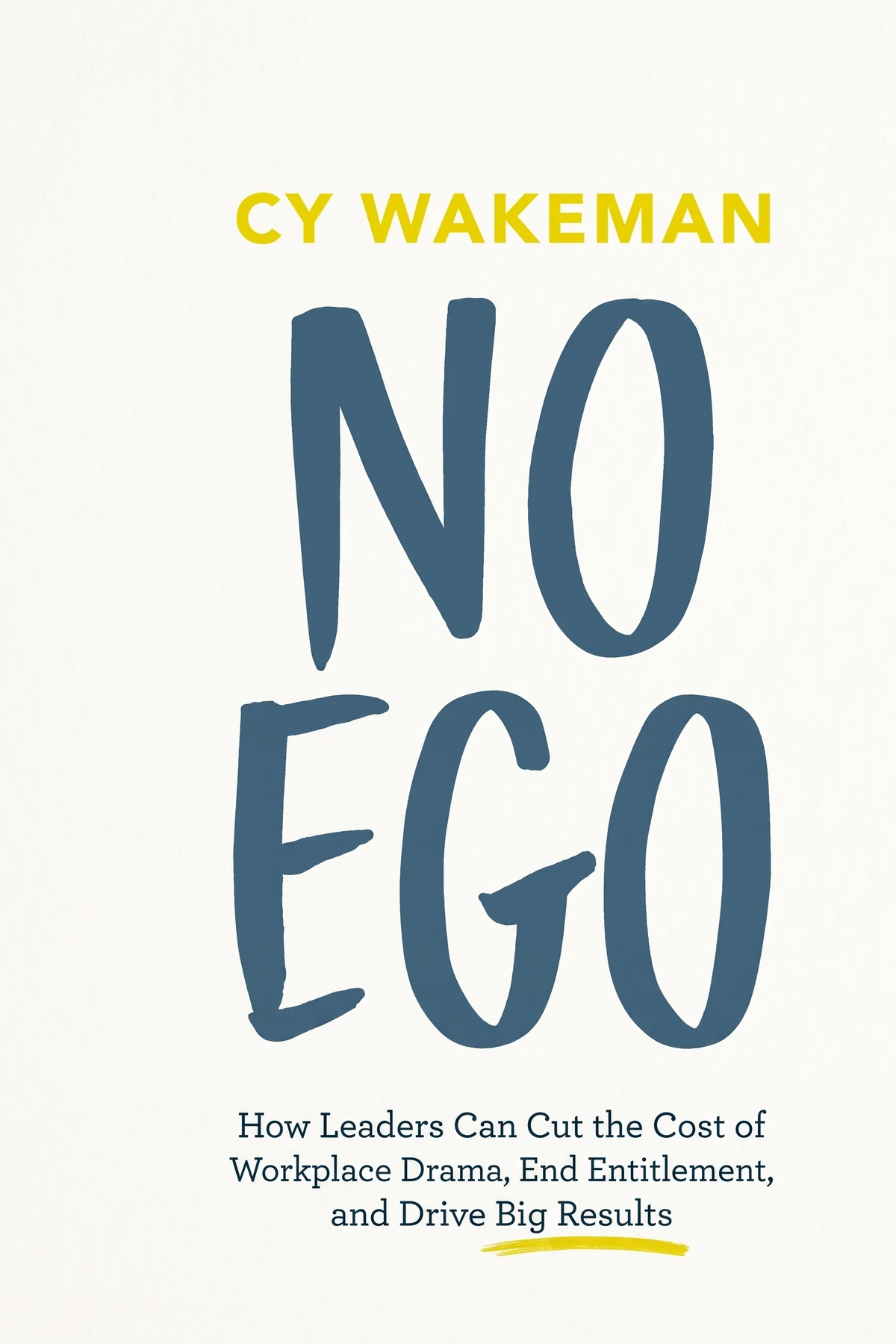
No Ego introduces Reality-Based Leadership, a method for removing workplace drama. Cy Wakeman explains how to foster accountability, bypass ego-driven narratives, and create a resilient, high-performing culture by focusing on facts.
1 min 34 sec
Have you ever walked through your office and felt like you were navigating a minefield of complaints, secret grievances, and constant demands for attention? Most managers feel this way at some point. We’ve been taught for decades that a ‘good’ leader is a servant leader—someone who listens to every concern, keeps their door open at all times, and ensures that every employee is happy and comfortable. But what if this traditional approach is actually the very thing fueling the chaos?
In the world of modern business, we are facing a crisis of what is known as emotional waste. This is the time and energy spent on office politics, venting, and resisting change. We often assume this is just part of the human condition in a professional setting. However, there is a different way to lead that doesn’t involve being an amateur therapist or a professional ego-coddler. This is the core premise of Reality-Based Leadership.
Instead of focusing on making people feel good in the moment, great leaders help their teams stay grounded in what is actually happening. They shift the focus from the stories people tell themselves to the facts on the ground. This isn’t about being cold or indifferent; it’s about being effective. It’s about recognizing that the greatest gift you can give an employee is the tools to be resilient, accountable, and self-reliant.
As we explore these concepts, we’re going to look at why our current management tools are failing us and how we can replace them with strategies that actually drive results. We’ll learn how to identify the difference between the ego’s narrative and objective reality, and how to build a team that doesn’t just survive change but thrives because of it. It’s time to move beyond the drama and enter a workplace where results matter more than stories. Let’s look at how to get there.
2 min 22 sec
Discover why the traditional open-door policy might be the biggest drain on your company’s productivity and how venting fuels a culture of victimhood.
2 min 21 sec
Learn to identify the ways your ego distorts the truth and why most of our workplace suffering is caused by the stories we tell ourselves.
2 min 22 sec
Shift your leadership style from giving answers to asking the right questions that empower your team to solve their own problems.
2 min 24 sec
Understand why traditional engagement surveys might be misleading and how to filter your feedback to prioritize your most accountable employees.
2 min 32 sec
Explore the four pillars of accountability and the five stages of development that turn a group of individuals into a high-performing team.
1 min 20 sec
As we wrap up our look into the world of Reality-Based Leadership, the throughline is clear: our biggest obstacle to success isn’t our competition, our budget, or our industry’s regulations. It is the emotional waste generated by the human ego. By allowing drama to go unchecked, we are essentially taxing our own productivity and draining the joy from our work lives.
Transforming your workplace requires a fundamental shift in your identity as a leader. You must let go of the need to be the hero who saves everyone from their frustrations and instead become the coach who demands self-reflection and personal responsibility. Remember that accountability is the antidote to drama. When you foster an environment where facts are prioritized over stories, you provide your team with the greatest form of empowerment possible: the ability to succeed regardless of the circumstances.
Start today by asking the hard questions. When drama knocks on your door, greet it with a request for facts. When someone asks for your ‘buy-in,’ remind them that their job is to commit. And most importantly, check your own ego at the door. Lead with transparency, stay grounded in reality, and watch as your team moves from the exhaustion of drama to the exhilaration of achievement. The path to a ‘No Ego’ workplace isn’t always easy, but the results—a culture of peace, innovation, and high performance—are undeniably worth it.
This book tackles the pervasive issue of workplace drama and the emotional waste that costs organizations billions in lost productivity. It challenges traditional management theories that suggest leaders should coddle employees or prioritize ego-driven happiness over measurable results. Instead, it offers a Reality-Based framework designed to cut through the noise of entitlement and victimhood. The promise of this approach is a workplace where employees are empowered to self-reflect, take total ownership of their outcomes, and adapt quickly to change. By shifting the leadership focus from soliciting buy-in and managing engagement to fostering accountability and sticking to facts, managers can transform toxic environments into productive, drama-free zones. This summary outlines the tools needed to help teams move past their internal narratives and focus on adding real value to their organizations.
Cy Wakeman is a New York Times best-selling author, leadership expert, and keynote speaker. She’s known for her innovative approach to workplace culture and leadership, and is the founder of Reality-Based Leadership, a consulting firm that focuses on eliminating drama and fostering accountability in the workplace. With her background in psychology and decades of experience in leadership development, Wakeman has become a sought-after voice for modernizing organizational practices.
Listeners describe this book as a fast-paced read that offers functional tips and leadership advice. They value its approach to eliminating workplace drama and its focus on individual accountability to drive real results. Listeners appreciate the various examples shared and think it is mandatory reading for executives, with one listener mentioning how effective it is for fostering a culture of accountability within large organizations.
Finally got around to reading Wakeman, and her reality-based framework is a breath of fresh air for any manager drowning in office politics. The central question—'What do you know for sure?'—is a total game-changer for redirecting unproductive conversations that usually spiral into gossip. In my experience, people often mistake their internal narratives for objective reality, which is exactly where the emotional waste starts to pile up. While her tone can be a bit sharp, the emphasis on radical accountability is exactly what most corporate cultures are missing these days. It’s a quick read that cuts straight to the chase about why traditional engagement strategies often fail to deliver bottom-line results. We've started using her techniques in our weekly syncs, and the reduction in 'venting' has already boosted our actual output significantly.
Show moreAfter hearing Cy speak on a podcast, I knew I needed this manual for my entire leadership team to help clear the air. The ice cream social anecdote alone is worth the price of admission because it perfectly illustrates how the ego distorts even the most benign management gestures into conspiracies. We’ve spent far too much time coddling entitlement in our department, and this book provided the exact script we needed to shift back to results. By focusing on facts rather than the 'stories' employees tell themselves, we’ve managed to reclaim hours of lost productivity every week. Frankly, it’s refreshing to read a business book that doesn't treat employees like fragile children who need constant emotional validation. It’s about empowerment through ownership, not through endless hand-holding and listening to complaints.
Show moreThis book should be required reading for anyone moving into a supervisory role for the first time. The concept of 'emotional waste' is something I hadn't seen quantified before, and seeing the data on how much time is lost to drama was eye-opening for our whole board. Wakeman’s approach to the open-door policy is controversial but absolutely necessary in today's entitlement-heavy culture. She teaches you how to be a facilitator of self-reflection rather than just a complaint department for your staff. Truth is, we are doing our employees a disservice when we don't hold them accountable for their own happiness and performance. This is the first management book I’ve read in years that actually offers a concrete way to drive big results through culture.
Show moreAs a middle manager in a high-stress environment, I found several useful tools here, though the repetition got a bit tiresome by the halfway mark. Wakeman is right that 'venting' is often just a fancy word for staying stuck in a victim mentality, and her questions are great for breaking that cycle. However, the book hammers the same 'accountability' drum on every page without much nuance for complex situations. I appreciate the focus on 'no-ego moments' and self-reflection, as it forces the leader to look in the mirror too. It's a solid 4-star read if you can ignore the slightly repetitive structure and focus on the practical application of her reality-based questions. Definitely helpful for anyone struggling with a team that loves to complain but hates to actually take action.
Show moreWakeman’s core argument is that the ego is an unreliable narrator, and honestly, that’s a lesson most of us need to hear in the modern workplace. The book is structured around practical mental processes designed to strip away the fluff and focus on what’s actually happening in the office. I particularly liked the section on filtering employee engagement surveys through the lens of accountability rather than just catering to the loudest voices. Why are we giving the same weight to the opinions of a chronic malcontent as we do to our top performers? It’s a radical shift, but it makes perfect sense if you want to build a resilient, high-functioning team. The writing is punchy and fast-paced, making it easy to finish in a single weekend.
Show moreLook, if you're tired of listening to people complain about things they have no intention of changing, buy this book and take notes. It's a no-nonsense guide to ending the cycle of workplace drama by forcing people to look at their own part in every conflict. While I don't agree with every single conclusion Wakeman draws—some of it feels a little too 'corporate' for my taste—the results speak for themselves. We’ve implemented the 'What do you know for sure?' technique, and it has drastically cut down on the gossip and speculation that used to derail our meetings. It’s not a warm-and-fuzzy book, but it is an effective one for getting things done without the usual emotional baggage.
Show morePicked this up for a work book club, and it sparked one of the most intense and productive discussions we’ve had in months. We’ve been struggling with 'buy-in' on a few new initiatives, and the chapter on resistance to change was particularly illuminating for our leadership team. By helping our staff recognize their own ego-driven resistance, we’ve been able to move past the drama and get back to serving our community. I appreciate how Wakeman emphasizes that our circumstances are just the context for success, not the barrier to it. It’s a challenging philosophy because it demands so much personal responsibility, but that’s also why it works so well. I'm excited to keep these practices going at the library to improve our overall morale.
Show moreCut the drama, get the results—that’s the bottom line here, and Wakeman delivers the roadmap to do it. The book is remarkably efficient, ditching the usual fluff found in management literature for hard-hitting questions that actually work. I’ve found that the more I use her reality-based tools, the more my 'emotionally expensive' employees either step up or move on, both of which are wins for the organization. There’s a lot of talk about empathy in business lately, but Cy reminds us that true empathy is helping someone find their power through accountability. It’s a quick, punchy read that provides a much-needed reality check for anyone in a position of power. Essential for building a culture that actually values performance over feelings.
Show moreThe irony is palpable throughout every single chapter of this book. For a work titled 'No Ego,' Cy Wakeman spends an awful lot of time being self-congratulatory and condescending toward the very people leaders are supposed to support. She makes a solid point about removing drama, but then she ruins it by suggesting that any employee who doesn't immediately 'jump' should probably just be shown the door. It feels like a relic of old-school, command-and-control management disguised as modern psychological insight. To be fair, the bit about not believing everything you think is decent advice, but I couldn't get past the 'my way or the highway' attitude. It’s a 160-page lecture that could have been a three-paragraph LinkedIn post for much better effect.
Show moreIf I could give this a zero-star rating, I would because the premise is fundamentally flawed and lacks any awareness of systemic issues or power dynamics. Wakeman argues that our suffering comes from our 'stories' and not our reality, which is a dangerous thing to say to people facing genuine workplace discrimination. It feels incredibly dismissive to tell someone that their unhappiness is a personal choice rather than a reaction to a toxic or oppressive environment. The author claims to be against ego, yet the entire book is a testament to her own perceived superiority over 'emotionally expensive' workers. I found the tone incredibly cold and lacking in basic empathy. It’s a 'leadership' book for people who don't actually like leading human beings or dealing with the reality of the human experience.
Show moreDeborah Gruenfeld
Mike Michalowicz
Hamilton Helmer

Margaret Heffernan
AUDIO SUMMARY AVAILABLE
Get the key ideas from No Ego by Cy Wakeman, plus 5,000+ more titles in English and Thai.







