
A Promised Land
Barack Obama
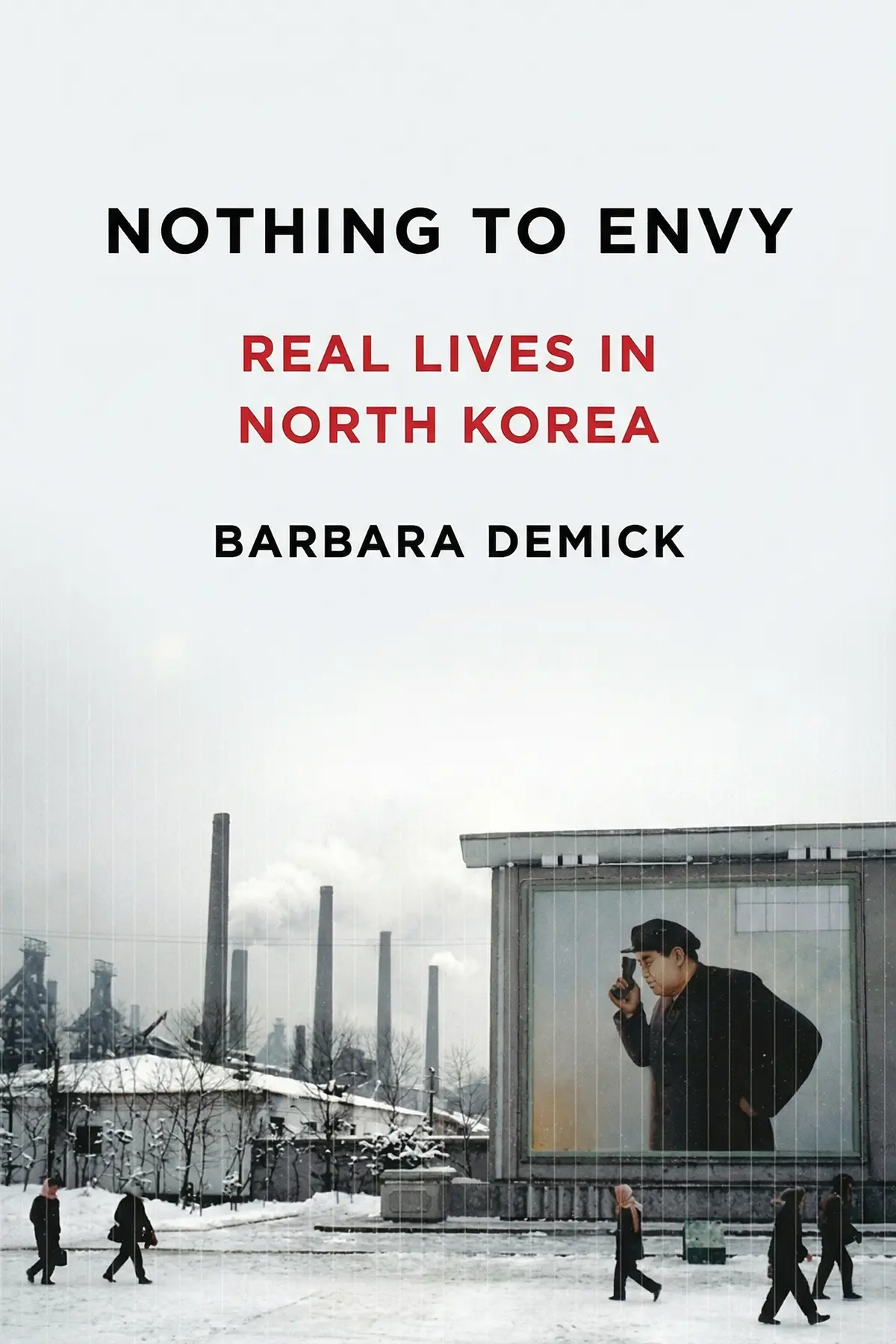
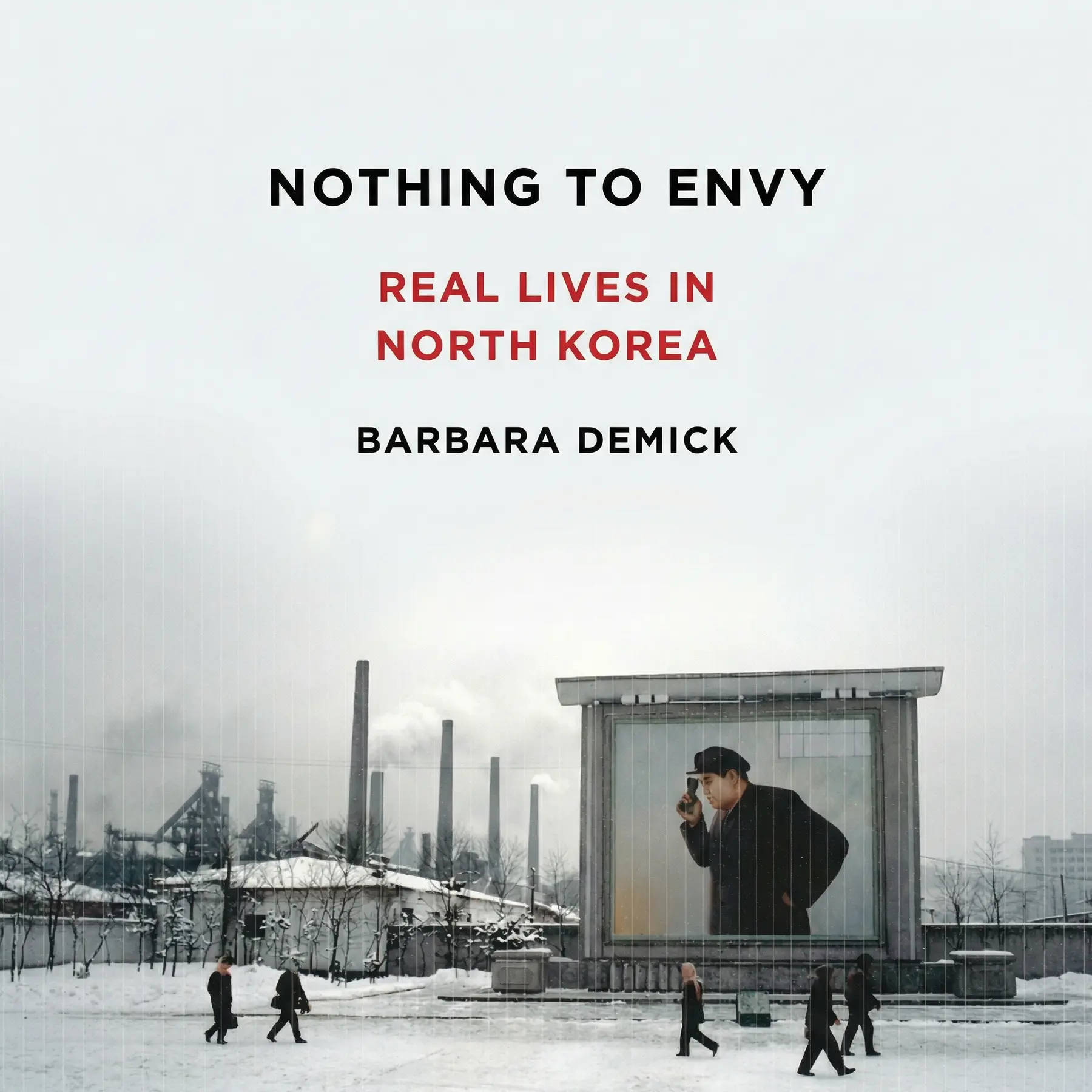
A harrowing exploration of life in North Korea, following the journeys of ordinary citizens as they navigate systemic oppression, a devastating famine, and the complex, dangerous path toward freedom and defecting.
1 min 49 sec
For most of the world, North Korea is a blank spot on the map, a dark patch visible from space at night, surrounded by the glittering lights of China and South Korea. But beneath that darkness lies a complex society where millions of people live, love, and struggle within the confines of the world’s most restrictive regime. The title of this narrative, taken from a common North Korean song, suggests that the citizens of this isolated nation have nothing to envy from the rest of the world. However, as we peel back the layers of propaganda, a very different picture emerges—one of profound hardship, remarkable resilience, and the slow awakening of a population to the reality of their situation.
This journey doesn’t just look at the grand political maneuvers of dictators or the terrifying specter of nuclear weapons. Instead, it focuses on the ground-level experience of being North Korean. We will explore how a person’s entire destiny is decided before they are even born, how the state attempts to replace family and religion with a singular devotion to a ‘Great Leader,’ and what happens when the state-provided safety net completely vanishes.
Through the stories of those who eventually fled, we gain a rare and intimate look at the ‘Arduous March’—the period of horrific famine in the 1990s that forced a loyal population to choose between their survival and the laws of their land. We will see the birth of a shadow economy, the breakdown of a socialist dream, and the terrifying risks individuals take to cross the border into China. Finally, we’ll look at what it means to start over in a world that is technologically and socially decades ahead of where you began. This is a story about the endurance of the human spirit in a place designed to break it, and the throughline of this summary is the transition from total state dependence to the desperate, necessary embrace of individual agency.
2 min 04 sec
Discover how a casual decision by foreign powers at the end of World War II created a permanent rift and set the stage for decades of conflict.
2 min 06 sec
In a society that claims total equality, learn about the hidden hierarchy that determines everything from your job to your dinner.
2 min 09 sec
Step into a world where state ideology replaces religion and every neighbor is a potential government informant.
1 min 54 sec
What happens when a state-dependent society loses its only provider? Explore the catastrophic fallout of the Soviet Union’s demise.
1 min 56 sec
In the face of starvation, ordinary people turned into criminals to stay alive, giving birth to a forbidden economy.
2 min 02 sec
Follow the journey of those who risked everything to cross the border, only to find new challenges in a world they didn’t recognize.
1 min 48 sec
Explore the current state of North Korea under Kim Jong-un and why the cycle of poverty and nuclear ambition continues.
1 min 41 sec
The stories of the people who survived and escaped North Korea reveal a truth that no amount of state propaganda can fully hide: the resilience of the human spirit is a force that can endure even the most crushing oppression. From the arbitrary division of the peninsula to the current era of nuclear standoffs, the ordinary citizens of the North have been the true victims of history. They have endured a hereditary caste system, a soul-crushing cult of personality, and a famine that forced them to rethink the very nature of morality.
Yet, through the darkness, we see the sparks of change. The rise of the black market and the desperate flight of defectors show that when the state fails to provide, the people will find their own way. They move from being passive subjects of a ‘Great Leader’ to active participants in their own survival. The throughline of this journey is the slow, painful reclamation of individual agency.
What this means for us is a deeper understanding of the cost of total control and the value of the freedoms we often take for granted. The transition for those who escape is not a simple ‘happily ever after’; it is a complex, often lonely process of learning to live in a world of infinite choice. But as the stories of Dr. Kim, Mrs. Song, and others show, the desire for truth and freedom is a fundamental human drive. As we look at the ‘black hole’ on the map, we must remember that it is filled with people whose lives are as vivid and significant as our own, and whose journey toward the light is one of the great untold stories of our time. The lesson of this narrative is that while a regime can control the lights and the laws, it can never fully extinguish the human heart’s longing for a better life.
This summary explores the hidden reality of the Democratic People's Republic of Korea through the eyes of those who lived there and eventually escaped. It charts the country’s history from its arbitrary division after World War II to the rise of the Kim dynasty and the implementation of the unique 'juche' philosophy of self-reliance. You will learn about the rigid 'songbun' caste system that dictates a citizen's entire life based on their perceived political loyalty, and how the state maintains control through constant surveillance and a pervasive cult of personality. The narrative also covers the tragic economic collapse of the 1990s, the resulting famine that claimed millions of lives, and the desperate measures—such as black-market trading and dangerous river crossings—that ordinary people took to survive. Finally, it examines the difficult psychological and social transition defectors face when they finally reach the modern world of South Korea, offering a profound look at the resilience of the human spirit under total control.
Barbara Demick is an acclaimed American journalist who serves as the bureau chief in Beijing for the Los Angeles Times. Her extensive and empathetic reporting on human rights issues in North Korea has earned her numerous prestigious honors, including the Overseas Press Club award, the Asia Society’s Osborne Elliott prize, and the American Academy of Diplomacy’s Arthur Ross Award.
Listeners find this work to be a captivating and expertly written account, offering an informed narrative that delivers deep perspectives on existence in North Korea. Furthermore, the extensive details on day-to-day living and contextual data provide a highly instructive experience. That said, reactions to the book's rhythm are varied, with some finding it poignant whereas others view it as terrifying. Finally, the tragic essence of these narratives is commonly recognized by all.
This book destroyed me in the best possible way. Demick provides a hauntingly authoritative account of life in North Korea, far beyond the political headlines we see on the news. I was particularly struck by the description of the '90s famine, where citizens were reduced to eating grass and tree bark just to survive. The tragedy is that these aren't just statistics; they are parents, children, and lovers. To be fair, it’s a heavy read that demands you step away occasionally to breathe, but the resilience of the human spirit shines through every page. It’s an essential piece of journalism that feels like a novel. The way she traces the defectors' lives from the industrial city of Chongjin to the neon lights of Seoul is masterfully done.
Show moreEver wonder what it's like to live in a place where your neighbors are paid to watch you? Demick peels back the layers of the Hermit Kingdom with surgical precision. The love story between Mi-ran and Jun-sang, conducted in total darkness to avoid detection, was both beautiful and utterly heartbreaking. It highlights how even under the most repressive regime, people still find ways to be human. Frankly, the level of indoctrination described is terrifying; the fact that children are taught they have 'nothing to envy' while starving is a bitter irony. This isn't just a history book. It’s a testament to survival against impossible odds. The research is deep, and the stories stay with you long after the final page.
Show moreBarbara Demick managed to turn years of investigative journalism into something that feels deeply personal. By focusing on ordinary people from one specific city, she makes the vast tragedy of North Korea feel manageable and immediate. Mrs. Song’s transformation from a true believer to a disillusioned defector was particularly compelling. You see the slow erosion of faith as the government's promises crumble alongside the economy. Look, if you want to understand the psychological toll of living under a god-like leader, this is the book. It’s an authoritative, deeply researched masterpiece that avoids the usual caricatures of the regime. The focus on the 'middle-class' North Koreans provides a unique perspective I hadn't encountered before.
Show moreWow. I’m speechless after finishing this. We often see North Korea as a cartoonish villain on the news, but this book reminds us that there are 25 million people there just trying to survive. The descriptions of the 'wandering swallows'—the homeless orphans—were particularly horrifying and hard to stomach. It makes you realize how lucky you are to have even the most basic freedoms. The irony of the title is a punch to the gut. It’s a short, powerful, and necessary read that I think everyone should experience at least once. Heartbreaking doesn't even begin to cover it. The resilience shown by these six individuals is nothing short of miraculous.
Show moreThe chapter on the famine—the 'arduous march'—is something I will never forget. Demick captures the quiet, slow-motion horror of a society collapsing in on itself while its leaders remain deified. It’s a horrifying look at how desperation can harden hearts, yet some people still managed to maintain their integrity. The transition from the North's black-and-white world to the neon lights of Seoul is handled with great sensitivity. I loved learning small details, like how traditional Korean dress was perceived or how people made 'cookies' out of grass and weeds. This is a brilliant, educational, and deeply humanizing book. It challenges everything you think you know about survival and loyalty.
Show moreAs someone who rarely reads non-fiction, I was completely captivated by the transition these people made into South Korean society. We often focus on the escape, but the struggle to adapt to a capitalist world where they are decades behind is just as fascinating. Demick’s narrative is both authoritative and accessible, avoiding dry academic language in favor of a compelling, character-driven approach. It’s a heartbreaking reminder of the millions still living in darkness. Not gonna lie, I cried more than once during the sections describing the loss of family members. It’s a powerful testament to the fact that no matter how much you try to crush the human spirit, it finds a way to endure. Exceptional work.
Show morePicked this up after seeing it on a 'must-read' list for anyone interested in modern history. The narrative follows six individuals, like Dr. Kim and Mrs. Song, providing an exceptional level of insight into a society built on total surveillance. Truth is, I found the first half slightly more engaging than the sections on life after defection. While their assimilation into South Korea is educational, the sheer horror of the Chongjin years is what really sticks with you. Demick’s writing is crisp and professional, never leaning too hard into sensationalism despite the naturally shocking subject matter. It’s a solid, informative look at a world most of us can barely imagine. I just wish the transition between the various characters' timelines was a bit smoother in certain chapters.
Show moreNot what I expected from a non-fiction title, in that it reads with the emotional flow of a great work of fiction. Barbara Demick has a gift for taking complex political realities and grounding them in the mundane details of daily life, like the lack of electricity or the value of a single egg. I appreciated how she followed the defectors across the border into China and eventually Seoul. My only minor gripe is that some of the historical context felt a bit dense in the middle sections, slowing down the narrative momentum. However, the portraits of the individuals are so vivid that you can’t help but root for them. It’s a moving, eye-opening experience that makes your own problems feel incredibly small.
Show moreAfter hearing so much about the regime, I finally dove into the actual human stories behind the propaganda. The book is incredibly moving, focusing on the intimate lives of six defectors rather than just the politics of the Kim family. Seeing the world through the eyes of Dr. Kim, who realized dogs in China ate better than doctors in the North, was a total paradigm shift. To be fair, the stories are so grim that I had to take several breaks while reading. The pacing is generally good, though the final chapters on their lives in South Korea felt a little rushed compared to the depth of the earlier sections. Still, it's a vital, educational work that humanizes a population we often forget.
Show moreLook, the subject matter is undeniably important, but the structure felt a bit repetitive in the middle chapters. While Demick is clearly an expert and her narrative is authoritative, the constant cycle of hardship, hunger, and surveillance started to blend together for me. That said, the individual stories—especially the clandestine courtship of the young couple—are undeniably compelling. It offers a rare glimpse into a black hole of information. Personally, I would have liked a bit more focus on the current regime’s changes, but as a historical account of the famine years, it’s undeniably effective. It’s a 3-star read for pacing, but the research and the bravery of the interviewees deserve much more. It's a tough but necessary slog.
Show moreBarack Obama
Masaji Ishikawa
William J. Bernstein
John Rawls
Ben Macintyre



James Shapiro
AUDIO SUMMARY AVAILABLE
Get the key ideas from Nothing to Envy by Barbara Demick, plus 5,000+ more titles in English and Thai.







