
14 min 34 sec
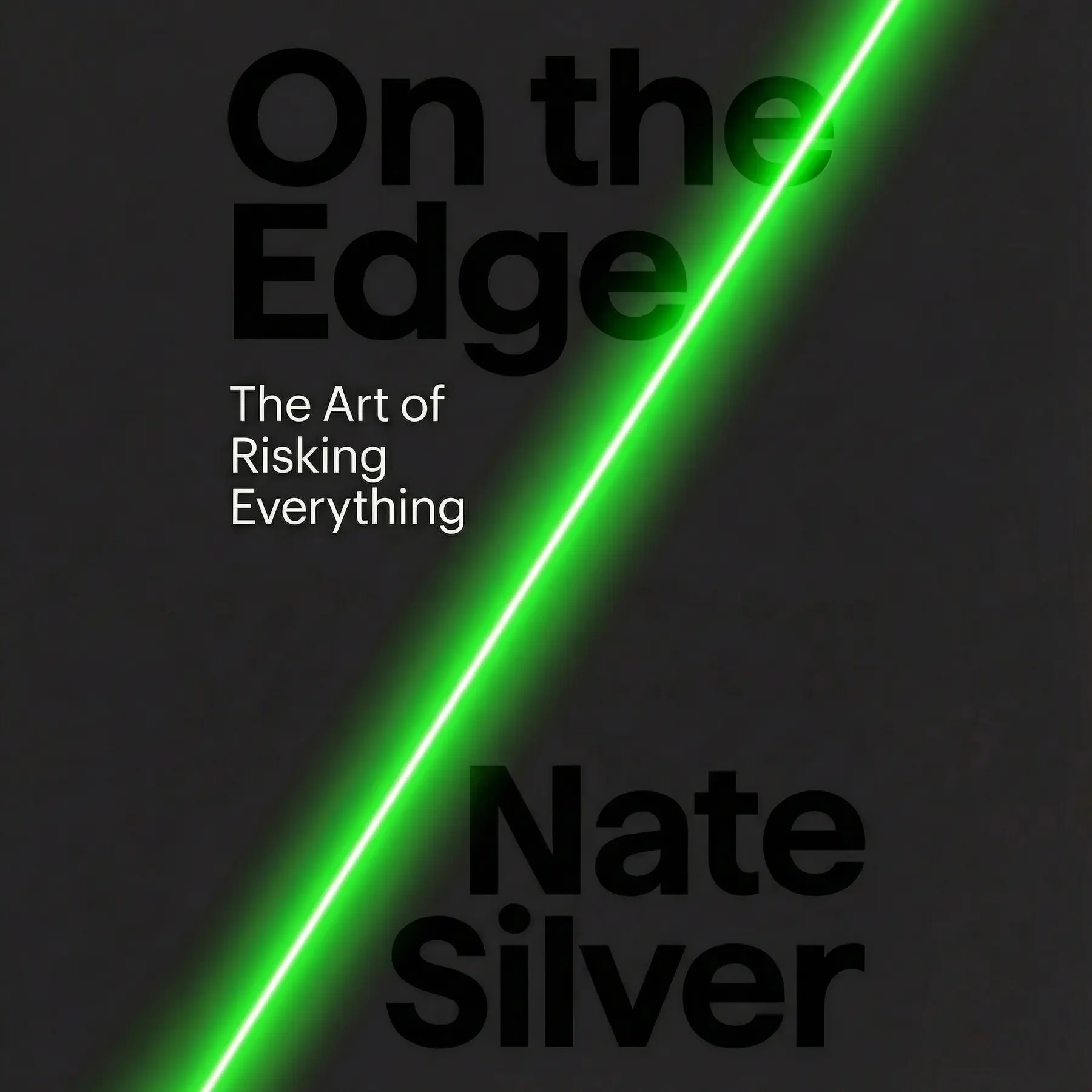
On the Edge: The Art of Risking Everything
By Nate Silver
Explore the high-stakes world of risk-taking with Nate Silver. This summary reveals the analytical strategies used by professional gamblers, tech moguls, and political forecasters to navigate uncertainty and win in an unpredictable world.
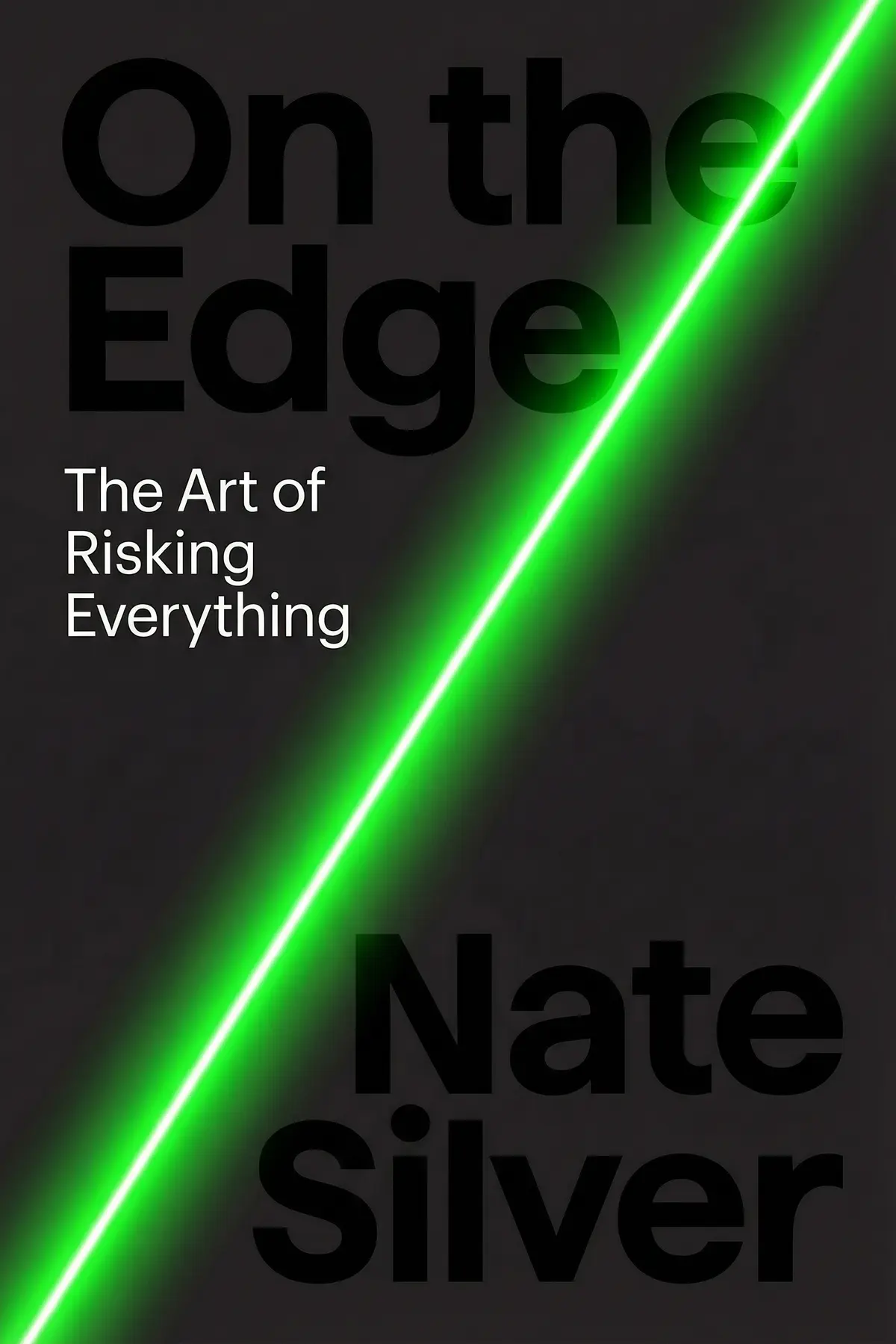
Table of Content
1. Introduction
1 min 37 sec
We live in an era that feels increasingly unstable. From sudden global health crises to volatile financial markets and seismic shifts in political landscapes, the feeling of standing on a precarious precipice is more common than ever. In such a world, the old ways of making decisions—relying on gut feelings, following the crowd, or simply hoping for the best—often lead to disaster. The question is: how do we actually handle risk when everything feels like it’s up for grabs? Is it possible to find a methodology for the unpredictable?
Nate Silver suggests that the answer lies in the minds of those who live on the edge by choice. He brings a unique pedigree to this inquiry, having navigated both the cold, mathematical reality of professional poker and the high-pressure world of national political forecasting. Through his lens, risk isn’t something to be feared or avoided at all costs. Instead, it’s a language to be learned and a tool to be wielded.
Over the course of this summary, we are going to explore the cognitive frameworks that separate elite risk-takers from everyone else. We’ll look at why a bet that seems like a losing one might actually be the smartest move you can make, and why the most common way people judge success is often fundamentally flawed. We’ll also meet two distinct types of thinkers: the analysts of the “River” and the institutionalists of the “Village,” and see how their conflicting worldviews shape everything from tech innovation to public policy. By the time we’re done, you’ll have a new throughline for understanding the chaos of the modern world—and more importantly, you’ll have the strategic blueprint for placing better bets on your own future. Let’s dive in.
2. The Power of Expected Value
1 min 58 sec
Discover why the best decisions aren’t always the ones that lead to an immediate win by mastering the fundamental math of risk and reward.
3. Thinking in Probabilities vs. Certainties
1 min 59 sec
Explore how the divide between black-and-white thinking and nuanced probability creates a massive advantage for those who can handle the gray areas.
4. The River and the Village
1 min 53 sec
Understand the two conflicting worldviews that shape our society: the analytical ‘River’ and the institutional ‘Village.’
5. Habits of Successful Risk-Takers
2 min 08 sec
Learn the three essential mental habits—strategic empathy, process orientation, and the ‘raise-or-fold’ mentality—that define elite performance.
6. The Value of Conscientious Contrarianism
1 min 45 sec
Discover why the biggest breakthroughs come from those who can identify exactly why the majority is wrong.
7. Mastering Selective Attention
1 min 43 sec
Learn how to filter out the noise and keep your focus on the ‘main thing’ in high-pressure situations.
8. Conclusion
1 min 31 sec
As we reach the end of our journey through the world of risk, the throughline becomes clear: success in an uncertain world isn’t about avoiding the edge; it’s about learning how to stand there with a steady hand and a clear mind. We’ve seen that the most effective decision-makers are those who trade emotional reactions for the calculated logic of expected value. They are the ones who understand that probability is a spectrum, not a binary, and that being “wrong” on a single outcome doesn’t necessarily mean their strategy was flawed.
We’ve explored the fundamental tension between the analytical, decoupling mindset of the River and the consensus-driven nature of the Village. By recognizing these two forces, you can better navigate the organizations you work for and the markets you invest in. You now have the tools of the elite: the strategic empathy to anticipate your rivals, the process-oriented discipline to weather short-term losses, and the courage to be a conscientious contrarian when the crowd has lost its way.
Ultimately, the art of risking everything is about mastery over oneself. It’s about knowing when to raise, when to fold, and most importantly, how to keep the main thing the main thing. The world will always be unpredictable, but by adopting the habits of the River, you can transform that unpredictability from a threat into an opportunity. Now, it’s time to take these insights and look at your next big decision. Don’t ask if you’re sure you’ll win. Ask if the bet is worth making. Then, trust your process and take the leap.
About this book
What is this book about?
Life is fundamentally a game of risk, yet most people struggle to navigate the thin line between calculated gambles and reckless choices. In this exploration of the world's most successful risk-takers, Nate Silver investigates the psychological and mathematical frameworks used by those who thrive on the edge of uncertainty. From the intense environment of high-stakes poker tables to the data-driven world of political forecasting, the narrative identifies a specific class of thinkers known as the River. This summary promises to equip you with the mental tools needed to thrive in a world that often feels chaotic. You will learn the importance of expected value, why process-oriented thinking beats outcome-focused reactions, and how to differentiate between a lucky break and a truly sound strategy. By understanding the divide between the analytical River and the socially-driven Village, you will gain a deeper perspective on how decisions are made in finance, technology, and government. Ultimately, it is a masterclass in honing your judgment to make better bets on your future, whether in the boardroom or your daily life.
Book Information
About the Author
Nate Silver
Nate Silver is a celebrated statistician and data analyst who transformed the landscape of modern political forecasting. He is the creator of the influential website FiveThirtyEight and the author of the New York Times bestseller The Signal and the Noise. Recognized for his remarkably accurate predictions in U.S. elections, Silver continues to provide deep analytical insights through his Substack newsletter, Silver Bulletin. His background uniquely blends professional poker experience with high-level statistical modeling.
Ratings & Reviews
Ratings at a glance
What people think
Listeners find the work highly absorbing, with every chapter offering substantial enjoyment and intriguing material. It earns praise for its insightful look at risk and decision-making and its robust discussion of game theory, while also being well-documented and educational. Listeners appreciate the wide variety of interviewees and find the book entertaining, with one listener noting it tackles a vital issue of our time. However, the writing quality receives mixed reviews; some find the style breezy while others suggest it is not well written.
Top reviews
Pong
What if you could view every major global challenge through the lens of a high-stakes poker game? Silver does exactly that, mapping out a fascinating ecosystem he calls 'The River,' populated by quantitative thinkers who thrive on uncertainty. I was captivated by the deep-dive interviews with everyone from professional sports bettors to AI researchers like Eliezer Yudkowsky. The way he breaks down the psychology of decision-making is both practical and deeply researched, making complex game theory concepts accessible to a general audience. While some might find the narrative a bit breezy, I appreciated the conversational tone and the insider access he provides to Silicon Valley’s biggest players. It’s a thought-provoking look at the essential issues of our time, particularly the existential risks surrounding AGI. Whether you're a gambler or a venture capitalist, there is a wealth of information here about how to handle the odds in a chaotic world. This is easily one of the most engaging books on strategy I've read in years.
Show moreLadawan
Truth is, Nate Silver writes exactly like he thinks—fast, slightly scattered, and obsessed with finding an edge where others see only noise. I found this to be an absolutely brilliant exploration of the 'gambler's mindset' applied to everything from sports to the future of humanity. The way he weaves together poker strategy with the risks of AGI is surprisingly seamless and kept me hooked through every chapter. I loved the diversity of people he interviewed; it’s not just the usual CEOs, but also professional bettors and niche experts who actually understand the odds. His concept of 'positive expected value' is a great mental tool for anyone looking to make better decisions in their personal or professional life. Some critics might find his tone a bit arrogant, but I think he’s just being honest about the level of skill required to win in these fields. This is an essential read for anyone who wants to understand the hidden mechanics of our modern, high-risk world.
Show moreRania
After hearing so much buzz about Nate Silver’s return to long-form writing, I was eager to see if he could recapture the magic of his previous work. This book is a substantial and engaging deep dive into the minds of people who play for keeps, whether at the poker table or in the boardroom. I especially appreciated the nuanced look at the SBF saga, which avoids the typical black-and-white moralizing in favor of a look at how 'expected value' calculations can go horribly wrong. The writing is energetic and the interviews are top-notch, though the middle 'Habits' section felt a little like a blog post that got expanded into a chapter. To be fair, Silver is at his best when he’s explaining the math behind the madness, rather than trying to define vague social groups. It is an informative and occasionally challenging read that forced me to reconsider my own aversion to risk. It’s not perfect, but it’s a vital contribution to the conversation about innovation and its consequences.
Show morePia
The chapter on professional slot machine players was a total eye-opener for someone like me who always assumed the house wins no matter what. Silver excels at finding these hidden pockets of rationality in places where most people see only luck or chaos. His exploration of venture capital as a 'Keynesian beauty contest' was equally illuminating, providing a sharp critique of the herd mentality that drives Silicon Valley investments. While the book is long, the short chapters and varied subject matter keep the momentum going through some of the denser statistical sections. I did feel that he was a bit soft on some of his more controversial subjects, but he does offer a cogent critique of how gamification can lead to addiction. In my experience, this is the kind of book you read slowly to digest the different mental models he presents. It’s a powerful discussion of game theory that manages to be both entertaining and deeply educational for anyone interested in decision-making.
Show moreEli
As someone who spent way too much time watching the FTX collapse in real-time, I found Silver’s insider-perspective on SBF to be the highlight here. He captures the weird, utilitarian logic of the Effective Altruism crowd perfectly, showing both the potential and the peril of that mindset. The book is definitely scattershot, but it works because Silver is such a curious and capable guide through these high-stakes subcultures. I enjoyed the stories about his own poker career, even if they bordered on a humblebrag every now and then. One minor complaint is that he sometimes neglects the role of luck or external funding in the success stories of people like Musk or Bezos. Still, the core message about the value of risk-taking in a stagnant society is incredibly relevant today. It's a breezy, well-written journey that feels very 'current' and avoids being too dry or academic. Definitely worth a read for anyone who enjoys books like 'Range' or 'Rationality'.
Show moreFrida
To be fair, the book's subtitle 'The Art of Risking Everything' is a bit of a misnomer since most of these people are actually obsessed with bankroll management. Silver shows that true risk-takers aren't just blind gamblers; they are calculated analysts who understand when the price is right to move. I picked this up wanting to learn more about prediction markets, and I was not disappointed by the depth of coverage provided there. The writing style is casual and easy to digest, which helps when he starts diving into more complex probability theories or AI alignment issues. I did find the SBF sections a bit repetitive after a while, especially since that story has been covered so extensively elsewhere. However, the overall package is a fascinating look at the subcultures that are currently shaping our technology and economy. It’s a great pick for generalists who want a speedy refresher on the major trends of the last decade. Silver remains one of the most interesting voices in data journalism for a reason.
Show moreCee
The dichotomy between the 'River' and the 'Village' provides a fascinating, if sometimes overly simplistic, framework for understanding modern power structures. On one hand, I love Silver's epistemically humble approach to statistics and his clear-eyed view of how professionals manage risk in high-pressure environments. On the other hand, the book often feels like it's trying to do too many things at once, jumping from poker rooms to AI doom scenarios without a strong connective thread. Personally, I found the chapters on gambling much more grounded and insightful than the later sections on Effective Altruism and Sam Bankman-Fried. Silver clearly identifies with the risk-takers, but he occasionally misses the mark by ignoring the safety nets that many of these 'disruptors' rely on. It’s a decent collection of essays, yet it lacks the cohesive punch needed to be a true classic. You'll definitely learn something new, but you might find yourself skimming through the more self-indulgent personal anecdotes.
Show moreManop
Wow, this was a massive undertaking that feels part memoir and part sociological study of the world's most aggressive gamblers and tech elites. There is no denying that Silver is an incredible interviewer who can get people to open up about their processes in ways other journalists can't. However, the tone often shifts between objective analysis and a weird 'me-against-the-world' vibe that gets tiring after three hundred pages. He spends a lot of time shadowboxing against a 'Village' establishment that he never quite defines clearly, making some of his arguments feel like they belong on a Twitter thread. The sections on sports betting and opening odds were the highlight for me, offering a genuine 'edge' in understanding how those markets function. Look, it’s a good book if you’re already interested in these subcultures, but it probably won't convert anyone who isn't already a fan of his style. It’s informative, but the lack of a central thesis makes it feel like a series of interesting detours.
Show moreRapee
Finally got around to finishing this, and I’m walking away with very complicated feelings about Silver's worldview. The information is presented well and the research is undeniably thorough, yet I can't help but feel that he’s preaching to the choir. If you already like the Silicon Valley ethos and enjoy gambling metaphors, you’re going to love this book. For the rest of us, his defense of 'The River' can feel a bit elitist and disconnected from the realities of most people's financial lives. He analyzes the psychology of risk-takers brilliantly, but he often ignores the systemic advantages that allow them to fail without consequences. To be fair, the section on AI risk was genuinely terrifying and much better articulated than most mainstream media coverage on the topic. It’s a mixed bag of brilliant insights and frustrating blind spots. I don’t regret the time spent reading it, but I’m not sure it changed my perspective as much as 'The Signal and The Noise' did.
Show moreElias
I picked this up because I’m a fan of Silver’s data-driven approach, but the execution here is surprisingly messy and unfocused. While I enjoyed his earlier work, this feels like a loosely connected series of name-dropping anecdotes masquerading as a grand theory of risk. The narration on the audiobook is particularly distracting, with strange pauses and bizarre impressions that really pull you out of the experience. Frankly, he spends way too much time defending his elite 'River' friends like SBF and Thiel without offering enough critical pushback. It’s a shame because there are flashes of brilliance when he sticks to the math of poker, but those moments are buried under layers of humble-bragging. If you’re looking for a tight analysis of game theory, you might be disappointed by how much of this feels like a Twitter feud in book form. It’s an okay read for a plane ride, but it lacks the intellectual rigor I expected.
Show moreFeatured in
Readers also enjoyed
A Splendid Exchange: How Trade Shaped the World
William J. Bernstein

Adults in The Room: My Battle With Europe’s Deep Establishment
Yanis Varoufakis
1929: Inside the Greatest Crash in Wall Street History--and How It
Andrew Ross Sorkin
23 Things They Don’t Tell You About Capitalism
Ha-Joon Chang
A Little History of Economics
Niall Kishtainy
AUDIO SUMMARY AVAILABLE
Listen to On the Edge in 15 minutes
Get the key ideas from On the Edge by Nate Silver, plus 5,000+ more titles in English and Thai.
- 5,000+ titles
- Listen as much as you want
- 7-day free trial
- Cancel anytime







