
22 min 42 sec
On the Fringe: Where Science Meets Pseudoscience
On the Fringe explores the elusive boundary between mainstream science and pseudoscience. It examines how fringe ideas arise, why they persist, and how they have historically shaped our understanding of the natural world.
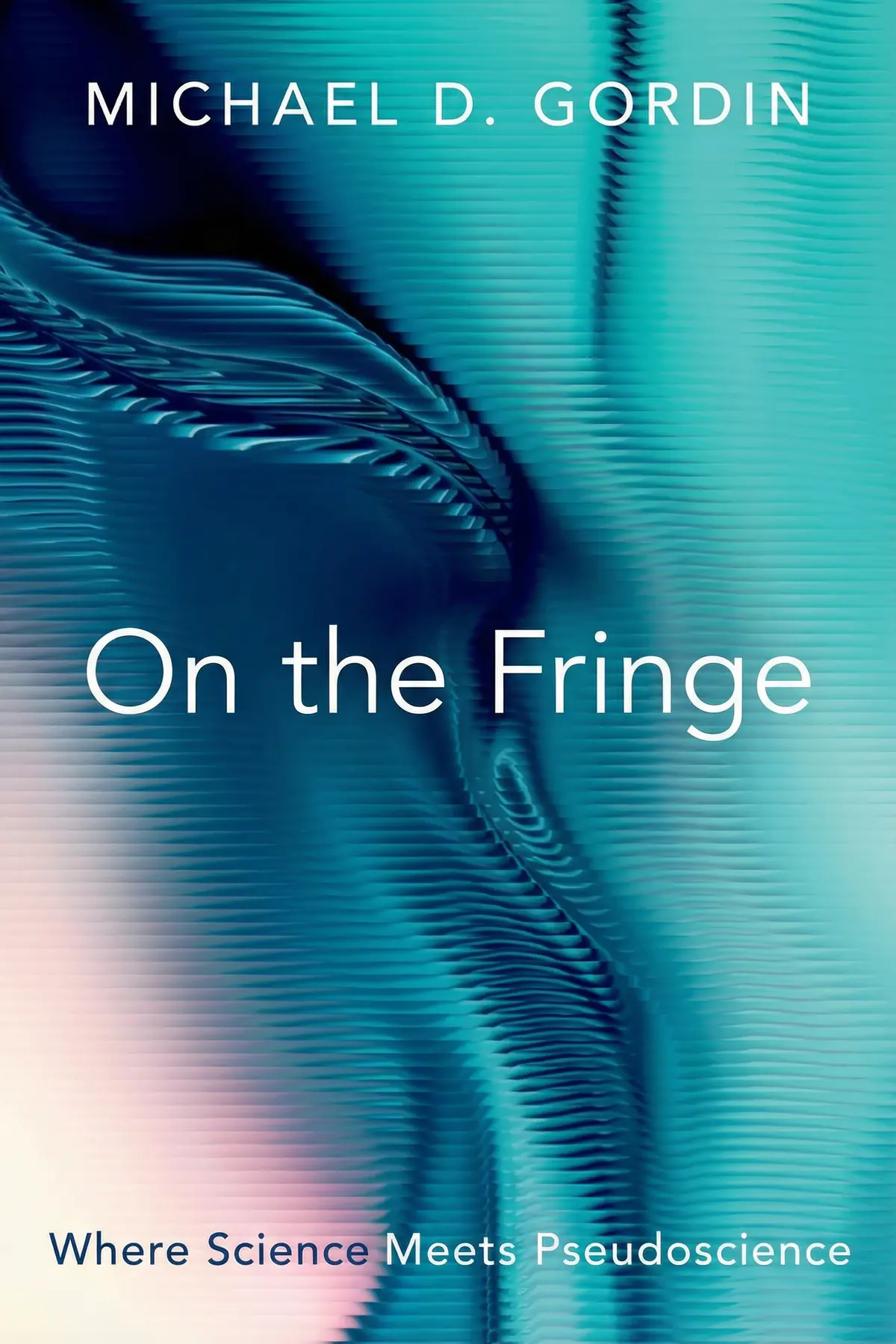
Table of Content
1. Introduction
1 min 45 sec
We live in an era where the word “science” carries immense weight. It is the gold standard for truth, a badge of authority that we use to settle debates, design policies, and understand our place in the cosmos. But for every established scientific fact, there seems to be a shadow—a “pseudo” version of that knowledge that mimics its language but lacks its rigor. We think of things like astrology, Bigfoot, or the idea that the Earth is flat, and we instinctively label them as fringe. But have you ever stopped to wonder exactly where that line is drawn? Who gets to decide what is a “real” science and what is just a convincing imitation?
In this exploration of Michael D. Gordin’s work, we are going to dive deep into the messy, often contentious boundary between the mainstream and the margin. This isn’t just a journey through strange beliefs; it’s an investigation into the very nature of human knowledge. You’ll find that the distinction between science and pseudoscience isn’t a permanent wall, but rather a shifting fence that has been moved back and forth throughout history.
Through the throughline of the “demarcation problem,” we will see how science defines itself by what it excludes. We will look at how yesterday’s mainstream theories become today’s fringe doctrines, and how political power can turn legitimate research into a tool for ideology. By the end of this summary, you won’t just know why certain ideas are considered “fringe”—you’ll understand how the existence of the fringe is actually a sign of a vibrant, albeit imperfect, scientific culture. Let’s begin by looking at the struggle to define science in the first place.
2. The Challenge of Setting Boundaries
2 min 54 sec
Defining what counts as legitimate science is a philosophical puzzle that has eluded a perfect solution for centuries, despite its massive impact on law and education.
3. When Mainstream Science Becomes Vestigial
2 min 51 sec
Science is a living archive where today’s cutting-edge breakthroughs may eventually become tomorrow’s discarded fringe doctrines through a process of gradual rejection.
4. The Intersection of Science and Political Power
2 min 38 sec
Scientific truth is often caught in the crosshairs of ideology, leading powerful regimes to promote fringe theories that align with their political agendas.
5. The Rise of Counterestablishment Science
2 min 33 sec
Some fringe movements are born out of a deep-seated distrust of mainstream institutions, leading followers to see themselves as the true guardians of hidden knowledge.
6. The Persistent Allure of Parapsychology
2 min 43 sec
The study of the paranormal occupies a unique space on the edge of science, often attracting serious researchers who hope to find a physical basis for the inexplicable.
7. The Strategic Use of Denialism
2 min 48 sec
Unlike most fringe ideas, denialism doesn’t aim to build a new theory but rather to systematically dismantle scientific consensus to protect specific interests.
8. Why the Fringe is Inevitable in Modern Science
2 min 42 sec
The very structure of the scientific profession, with its intense competition and drive for innovation, naturally generates fringe theories as a byproduct of its success.
9. Conclusion
1 min 48 sec
As we have seen through this journey across the borders of knowledge, the line between science and pseudoscience is anything but a straight, clean stroke. It is a jagged, shifting boundary influenced by history, politics, and the inherent nature of human discovery. We have learned that what we dismiss as “fringe” today was often the mainstream of yesterday, and that our current “truths” are merely the best models we have—for now.
The throughline of the demarcation problem reminds us that while we may never find a perfect, universal formula to identify pseudoscience, the effort to do so is essential. It is the process of exclusion—of saying “this doesn’t meet our standards”—that gives science its power and reliability. However, we must remain vigilant. When fringe ideas are used as weapons for political control or as shields for corporate interests, they lose their status as harmless curiosities and become significant threats to our collective well-being.
The most important takeaway is this: the fringe is an inevitable byproduct of a healthy, competitive scientific environment. To live in a world with science is to live in a world with pseudoscience. Our task is not to fear the fringe, but to understand it. By recognizing the tactics of denialism and the patterns of counterestablishment thinking, we can navigate the modern world with a more critical eye. We can appreciate the wonder of the unknown while firmly grounding our decisions in the methods that have proven to work. In the end, science is not just a collection of answers—it is the ongoing, courageous commitment to asking the right questions and holding our answers to the highest possible light.
About this book
What is this book about?
This exploration into the world of marginalized ideas tackles the difficult question of what truly separates science from pseudoscience. While we often think the line is clear, history suggests it is remarkably porous. The book introduces the “demarcation problem,” a philosophical challenge to find a single, universal rule for scientific validity. By traveling through historical examples like astrology and alchemy, and modern controversies like flat-Earth theories and climate denialism, the narrative reveals that the label of pseudoscience is often used as a tool to define the boundaries of legitimate knowledge. Beyond just debunking myths, the promise of this summary is to help you understand the internal mechanics of science itself. You will see how political climates, such as those in the Soviet Union or Nazi Germany, can warp scientific consensus, and how the professionalization of the scientific career has inadvertently created a space for fringe doctrines to flourish. Ultimately, it offers a more nuanced way to view the adversarial, ever-evolving landscape of human inquiry and how we can protect public discourse from truly harmful misinformation.
Book Information
About the Author
Michael D. Gordin
Michael D. Gordin is a distinguished scholar serving as the Rosengarten Professor of Modern and Contemporary History at Princeton University. In addition to his teaching role, he is the director of the Society of Fellows in the Liberal Arts. Gordin is an accomplished author whose work focuses on the history of modern science. His notable publications include Scientific Babel, The Pseudoscience Wars, and Red Cloud at Dawn.
Ratings & Reviews
Ratings at a glance
What people think
Listeners find that while perspectives differ on whether the book offers a final method for pinpointing pseudoscience, the majority appreciate the accessible and lucid breakdown of fringe movements. They particularly value the effective categories used to separate vestigial and hyperpoliticized sciences, with one listener remarking that the work's concise length is a "pleasant surprise" for such a multifaceted topic. Additionally, audiences find the investigation into "counter-establishment" groups to be a helpful framework for making sense of current conspiracy theories. Furthermore, they mention that the writing provides a structured overview that aids in navigating the subjective aspects of scientific consensus.
Top reviews
Nan
The chapter on 'vestigial science' really changed how I view older, discredited theories. It’s refreshing to see an author acknowledge that today’s 'fringe' was often yesterday’s mainstream consensus. Gordin’s prose is incredibly tight, which is a relief because these topics can get bogged down in academic jargon easily. This isn't some three-hundred-page doorstopper; it’s a lean, efficient exploration of the boundaries of human knowledge. I particularly liked how he handled the concept of the 'counter-establishment.' It helps explain why modern groups feel like they are the ones doing the 'real' work. While he doesn't offer a magic bullet to stop the spread of misinformation, his categories make the chaos much easier to sort through. It is a brilliant, short read.
Show moreThitima
Picked this up because I’ve always been fascinated by how smart people end up believing in things like Flat Earth or parapsychology. Most books just mock these people, but Gordin takes a more sophisticated, historical approach that actually respects the complexity of the problem. His breakdown of hyperpoliticized science—like the chilling examples of Soviet genetics—shows just how dangerous things get when the state decides what is true. This little book packs a massive punch for its size. It’s less about debunking and more about understanding the architecture of belief systems. Frankly, if you want to understand the modern anti-vax movement, you need to understand the 'scientific' facade they build. Highly recommended for any skeptics or history buffs.
Show morePloy
Finally got around to reading this for my history of science seminar, and it’s a remarkably dense but readable 100 pages. Gordin manages to weave together alchemy, phrenology, and even string theory into a narrative about where we draw the line between 'real' and 'fringe.' I found the discussion on 'Jewish physics' versus 'Aryan physics' particularly haunting and relevant. It shows that science isn't just about data; it’s deeply embedded in culture and politics. To be fair, the book leans quite heavily into a rationalistic framework, which might annoy some readers looking for more philosophical depth. However, for a quick primer on the demarcation problem, you really can’t do much better than this Oxford publication. It’s concise and clear.
Show moreMilk
As someone who deals with climate-change denialism in my professional life, I found Gordin’s distinction between denial and fringe science incredibly useful. He argues that deniers aren't trying to build a new science but are simply trying to cast doubt, which is a subtle but vital point. The way he describes 'counter-establishments'—groups that mimic the structure of journals and conferences—perfectly explains why it's so hard to convince people they're being misled. They have their own experts and their own language. The writing style is light and engaging, almost conversational. My only real complaint is that I wanted more on the psychological 'why' behind these movements. It’s a great taxonomy, but it lacks a bit of the 'soul' of the believers.
Show moreAim
Wow, this was a punchy little read that didn't waste a second of my time. Gordin is a master at taking high-level academic concepts and making them accessible to a general audience without dumbing them down. He tackles the 'demarcation problem'—the difficulty of defining what science is—and shows that it might actually be an impossible task. This subjectivity is what makes the fringe so persistent. I loved the mention of string theory as a borderline case; it makes you realize that even elite scientists struggle with these boundaries. It’s an essential read for anyone frustrated by the 'sheeple' rhetoric on social media. It won't give you the tools to win an argument with a flat-earther, but it will help you understand why you're losing it.
Show moreFilm
Look, I enjoyed the historical context on 'Aryan physics' and Lysenkoism, but I left the book feeling a bit adrift at the end. The author provides these wonderful categories like 'vestigial' and 'hyperpoliticized' science, yet he concludes that there isn't really a solution to the problem. It feels a bit like a cop-out to say that the only way to get rid of pseudoscience is to get rid of science itself. I was hoping for more practical advice on how to actually delineate between truth and fiction in an age of misinformation. The chapter on parapsychology felt particularly weak compared to the others, lacking the same historical rigor. It’s a decent overview for a student, but maybe a bit too academic for a casual reader looking for debunking tips.
Show moreNoi
Ever wonder why pseudoscience seems to be winning the internet lately? Gordin’s book tries to answer that by looking at how fringe movements mimic the structures of the scientific establishment. While I appreciated the brevity—Oxford’s short-form style is always a win—I found the tone a bit too detached and empiricistic. It felt like he was observing these movements under a microscope without ever really getting into the heads of the people involved. The section on creationism was interesting, but it didn't tell me much I hadn't already heard in other science communication books. It’s a helpful way to sort your thinking, but don't expect it to change your worldview or provide a definitive method for debunking. It’s just okay.
Show moreViroj
After hearing a lot of hype about Gordin’s work, I expected more of a 'how-to' guide for identifying fake science in the wild. Instead, this is more of a historical survey that looks at how the definition of science has shifted over time. It’s interesting to learn that alchemy was once the height of intellectual thought, but how does that help me deal with modern conspiracy theorists? The book is quite short, which is a double-edged sword. It’s a quick read, but many of the fascinating topics—like the suppression of genetics under Stalin—get only a few pages of attention. I think it’s a good starting point for a university student, but seasoned skeptics might find it a bit basic for their needs.
Show moreAnna
Gotta say, the distinction between fringe science and outright denial was the highlight of this book for me. Most people lump anti-vaxxers and flat-earthers into the same bucket, but Gordin shows that their motivations and methods are actually quite different. However, the book as a whole felt somewhat disjointed. One minute we’re talking about the deep history of phrenology, and the next we’re jumping into modern ESP. The transition between chapters wasn't always smooth. It’s a solid enough primer if you need to understand the 'counter-establishment' framework, but it lacks the depth of a more focused study. I appreciate the light tone, but sometimes it felt a bit too breezy for such a heavy subject matter. It’s a middle-of-the-road recommendation from me.
Show moreAstrid
Not what I expected given the fascinating subject matter and Gordin’s reputation as a historian. I found the book to be overly rationalistic and frankly a bit dry despite its short length. It spends so much time categorizing these movements—vestigial, hyperpoliticized, etc.—but fails to really explain why people are so drawn to them emotionally. I’m more interested in the 'why' of the matter than a simple taxonomy of errors. To be fair, the section on Nazi science was informative, but it felt like a repeat of stuff I’ve read in better-developed history books. It didn't provide any new insight into how to handle the modern explosion of conspiracy theories. If you want a list of definitions, this is fine, but it’s not particularly deep.
Show moreReaders also enjoyed

Alien Earths: The New Science of Planet Hunting in the Cosmos
Lisa Kaltenegger
A Life Decoded: My Genome: My Life
J. Craig Venter
A Planet of Viruses
Carl Zimmer
A Short History of Nearly Everything
Bill Bryson
AUDIO SUMMARY AVAILABLE
Listen to On the Fringe in 15 minutes
Get the key ideas from On the Fringe by Michael D. Gordin, plus 5,000+ more titles in English and Thai.
- 5,000+ titles
- Listen as much as you want
- 7-day free trial
- Cancel anytime







