
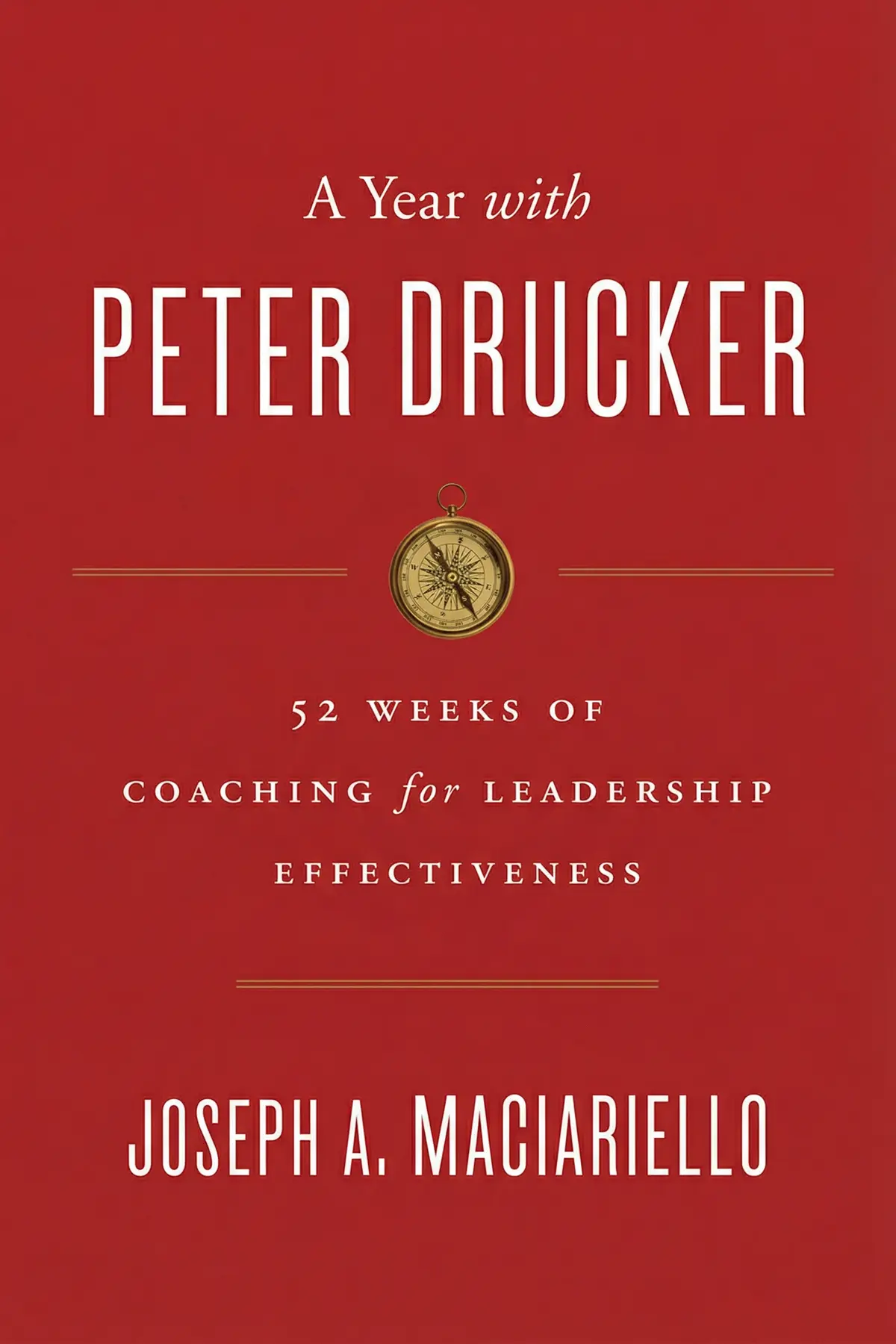
A Year with Peter Drucker: 52 Weeks of Coaching for Leadership Effectiveness
Joseph A. Maciariello
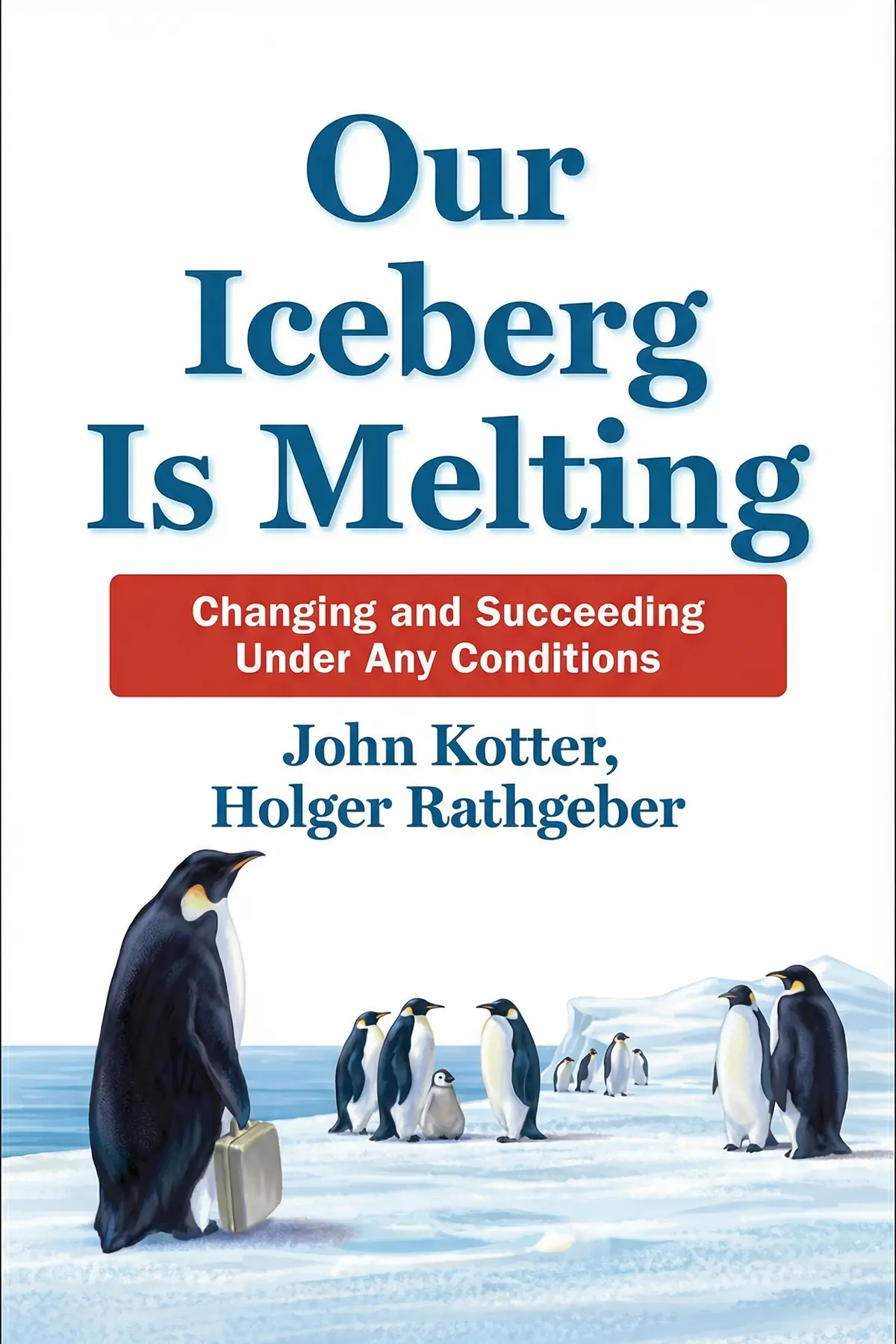
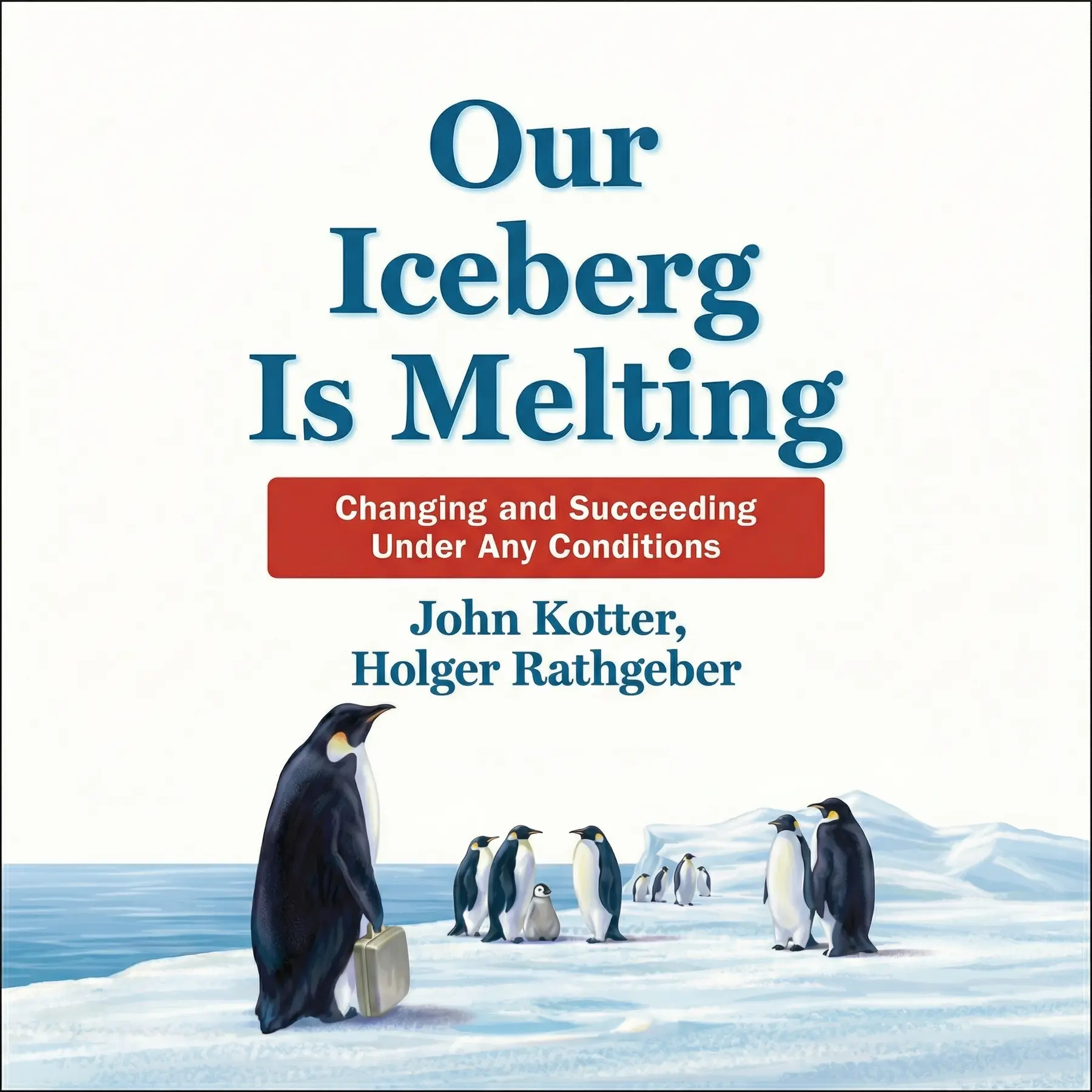
A compelling fable about a penguin colony facing the destruction of their home, illustrating John Kotter’s renowned eight-step process for leading successful organizational change and overcoming deep-seated resistance.
1 min 33 sec
Change is often described as the only constant in our lives, yet for most people and organizations, it remains one of the most frightening experiences imaginable. We tend to cling to the familiar, even when the foundations of our ‘familiar’ world are beginning to crack. If you have ever felt the weight of a shifting market, a sudden technological disruption, or a crisis within your own team, you know that the hardest part isn’t just seeing the problem—it’s convincing everyone else to move. In the classic business fable Our Iceberg Is Melting, leadership experts John Kotter and Holger Rathgeber use a colony of emperor penguins to illustrate the delicate art of change management.
This isn’t just a story about birds in Antarctica; it is a meticulously crafted framework for human behavior and organizational survival. Through the journey of these penguins, we are introduced to the eight-step process that Kotter has pioneered to help leaders navigate through the fog of uncertainty. We will follow a small group of birds as they face the ultimate catastrophe: their home is melting, and if they don’t change how they live, their community will vanish.
As we walk through this narrative, we’ll explore how to wake people up from complacency, how to gather a team of diverse thinkers, and how to keep momentum alive when the initial excitement fades. The lessons here are universal. Whether you are leading a massive corporation or trying to shift the culture of a small local group, the path from realization to transformation remains the same. Let’s dive into the icy waters of the Antarctic to see how a group of penguins can teach us everything we need to know about thriving in a world that never stands still.
2 min 11 sec
Discover how a single observant individual can see a disaster coming long before the rest of the group notices a single crack in their foundation.
1 min 55 sec
Learn why a lone leader can never change a culture alone and how to pick the right mix of personalities to lead the way.
1 min 57 sec
Explore the moment when the team realizes that survival isn’t about fixing the old home, but about finding an entirely new way to live.
2 min 00 sec
See how strategic communication can break through the noise and address the fears of those who are most resistant to change.
1 min 54 sec
Witness how a young kindergartner uses creative thinking to solve a logistical nightmare that threatened to derail the entire mission.
1 min 47 sec
Understand why celebrating small victories is the fuel that keeps a long, difficult journey from falling apart midway.
1 min 52 sec
Learn why the most dangerous moment for any project is right after the first major success, and how to avoid the trap of early victory.
1 min 50 sec
Discover how the colony turned their terrifying ordeal into a point of pride, ensuring they would never be caught off guard by a melting iceberg again.
1 min 35 sec
As we conclude the story of Louis, Fred, Alice, and the rest of the colony, the message is clear: change is never easy, but it is always possible when approached with a clear strategy and a courageous heart. The melting iceberg is a metaphor for any situation where the status quo is no longer viable. Whether it’s a shift in your industry, a personal crisis, or a global upheaval, the eight-step framework provided by John Kotter and Holger Rathgeber offers a reliable map through the chaos.
To apply these lessons in your own life, start by identifying your ‘guiding coalition.’ Who are the Freds in your life who see the problems before anyone else? Who are the Alices who can help you push through resistance? And who are the Buddys who can help you communicate your vision to others? Remember that you don’t have to be a Louis—the perfect, calm leader—to make a difference. You just need to be willing to listen to the truth, assemble the right team, and keep moving forward even when the path is difficult.
The most important takeaway is that complacency is the true enemy. The penguins’ iceberg didn’t melt overnight; the warning signs were there for those who were willing to look. By fostering a culture that values observation, innovation, and small victories, you can ensure that you and your organization are never caught off guard. Change doesn’t have to be a disaster to be survived; it can be the catalyst that leads you to a better, more vibrant way of living. So, take a look at your own iceberg today. Is it solid, or are there cracks beginning to show? If the ice is thinning, don’t wait for it to shatter. Gather your team, find your vision, and start your journey toward a new horizon.
Our Iceberg Is Melting uses a simple but profound story to tackle one of the most difficult challenges in the professional world: change management. When a colony of Antarctic penguins discovers their ancestral home is literally falling apart, they must abandon their old ways of thinking to survive. Through the eyes of characters like the observant Fred and the steady leader Louis, the book demonstrates how to move from complacency to action. The story provides a clear, actionable roadmap for any leader or team member facing upheaval. By breaking down complex management theories into a relatable narrative, it explains how to build a coalition, communicate a new vision, and anchor change into a group’s culture. It promises to show readers that even the most rigid traditions can be adapted when survival is on the line and the right leadership framework is applied.
John Kotter is a management thought leader, a Harvard Professor and a New York Times best-selling author of twenty books that have been published in over 150 languages. Viewed by many as the authority on leadership and change, his books include Leading Change, A Sense of Urgency and Accelerate. Holger Rathgeber is an author and a global manager. Originally from Frankfurt, Germany, he now lives in New York, where he works for Beckton Dickinson – a leading medical technology company. He has co-authored two books with John Kotter: Our Iceberg is Melting and That’s Not How We Do It Here!
Listeners find this title charming and simple to digest, featuring an engaging narrative that clarifies intricate scenarios. Additionally, the work functions as an intensive lesson in successful change management, proving especially useful for university administrators and change-focused leaders. They value its informative nature, with one listener mentioning how it translates theory into practical applications, and consider it stimulating, with one review emphasizing its insights on spearheading organizational transformation.
Picked this up during a mandatory leadership workshop, and frankly, I was pleasantly surprised by how much I enjoyed it. The story of Fred and his melting iceberg provides a simple yet profound framework for understanding the resistance people feel toward change. Instead of dense academic jargon, Kotter uses these penguins to illustrate the eight steps of successful transformation. I found the practical nature of the advice incredibly helpful for our department’s recent restructuring. It’s a crash course in leading through uncertainty without being overwhelming. Some might call it simplistic, but in my experience, that’s exactly what makes it stick. It forces you to think about how you’re communicating the urgency of a situation to your team. A great tool for anyone in a leadership role.
Show moreNot what I expected from a Harvard professor, but the simplicity is its greatest strength. The book is a delightful read that manages to humanize the cold, hard data of change management. I finished it in about an hour and immediately started seeing my colleagues as different penguins from the story. It makes you realize that most resistance isn't malicious; it's just fear of the unknown. The way the authors explain the need for a 'guiding coalition' through the council of penguins is brilliant. I’ve recommended this to several other leaders in my network. It’s an easy, thought-provoking way to rethink how we handle transitions in the workplace. Sometimes you need a simple story to see a complex problem clearly.
Show moreWow. I wasn’t expecting a book about penguins to change the way I look at my startup. We were definitely in the 'melting iceberg' phase and didn't even know it. This book was a wake-up call to stop ignoring the obvious signs of a changing market. The advice about finding a 'volunteer army' and generating short-term wins is exactly what we needed to hear right now. It’s simple, it’s fast, and it works. If you’re leading a team through a rough patch, just buy this book. It’s the best hour you’ll spend on your business this year. Highly educational and surprisingly deep.
Show moreThis book is a masterclass in simplicity. Kotter and Rathgeber have taken the complex world of organizational psychology and made it accessible to everyone. Whether you are a CEO or an entry-level employee, the lessons about adaptability and teamwork are universal. I particularly enjoyed the focus on empowering others to act. It’s easy to get bogged down in the details of a project, but this story reminds you to focus on the big picture. It’s a thought-provoking perspective on how we deal with fear and change. The penguin characters are memorable, and the 8-step process is easy to remember. Highly recommended for anyone looking to improve their leadership skills in a practical, real-world way.
Show moreAs someone who usually avoids business fables, I actually found some genuine value here. We used this as a teaching tool for university administrators, and the conversation it sparked was worth the price of admission. It distills complex organizational theories into a narrative that everyone can follow, regardless of their background or seniority. The character archetypes, while a bit stereotypical, are recognizable in almost every office setting. You have your visionaries like Fred and your naysayers like NoNo. Truth is, managing a campus-wide change is exhausting, and having a common language to discuss our 'iceberg' made the process slightly less painful. It isn't a literary masterpiece, but as a practical guide for leading change, it delivers exactly what it promises.
Show moreEver wonder why your team resists every new initiative? This book provides a surprisingly clear answer through its simple narrative. While some might find the penguin story a bit cheesy, the underlying strategy is pure gold for anyone navigating a shifting environment. It turns abstract change management theory into something tangible and actionable. We are currently facing a major software migration, and the 'making it stick' chapter gave us a lot to think about. It’s not just about the technical change; it’s about the culture. I give it four stars because it’s a bit repetitive, but the educational value is definitely there for new managers who need a quick framework for success.
Show moreFinally got around to reading this classic business book, and I can see why it has lasted so long. The authors do a great job of explaining why communication and buy-in are more important than the actual plan itself. In my experience, most projects fail because people don't understand the 'why,' and the penguins illustrate that perfectly. It’s a very quick read—perfect for a busy executive. I liked how it broke down the 8 steps into phases like 'set the stage' and 'make it happen.' It’s a great way to start a conversation about organizational culture without being too academic. A bit simplistic? Maybe. Effective? Absolutely. It serves as an excellent crash course for leaders.
Show moreAfter hearing so much hype about Kotter’s 8-step process, I finally sat down with this book. Look, the core message is vital for any business, but the delivery is a bit hit-or-miss for me. The story moves quickly and the principles are sound, yet the tone occasionally feels a bit too juvenile for a professional setting. I appreciated the emphasis on 'short-term wins' and 'creating urgency,' but I didn't love the way some of the female characters were portrayed. It felt a little dated and sexist in that regard. It’s an okay primer if you’re new to management theory, but don't expect it to solve all your organizational woes overnight. Good for a quick flight read, but nothing more.
Show moreFrankly, this felt like a glorified PowerPoint presentation stretched out into a thin book. If you have ever read 'Who Moved My Cheese?', you have already read this book, just with different animals. The authors try to be cute with the penguin characters, but it often comes across as condescending to an adult audience. Do we really need a fable about birds to understand that our industry is changing? The 8-step process is solid, but you can find it in a much more professional format elsewhere. To be fair, the illustrations are nice, but I struggled to take the 'penguin language' seriously during our corporate retreat. It felt like a waste of money for something so derivative and poorly written.
Show moreThe horror of being forced to read this for work cannot be understated. My VP bought hundreds of copies and expected us to treat it like a bible. It is incredibly insulting to be told to 'be more like a penguin' while our actual jobs are being outsourced. Beyond the ridiculous premise, the book is surprisingly sexist—the female characters are either nagging or emotional caricatures. It’s just another trendy business fable designed to make employees compliant during layoffs. I’d rather read a technical manual than sit through another 'penguin' brainstorming session at the local Embassy Suites. If your boss hands you this, start polishing your resume. It's a soul-destroying waste of paper that treats adults like children.
Show moreJoseph A. Maciariello


Deborah Gruenfeld
Mike Michalowicz
Hamilton Helmer

Margaret Heffernan
AUDIO SUMMARY AVAILABLE
Get the key ideas from Our Iceberg Is Melting by John Kotter, plus 5,000+ more titles in English and Thai.







