

A Biography of Loneliness: The History of an Emotion
Fay Bound Alberti
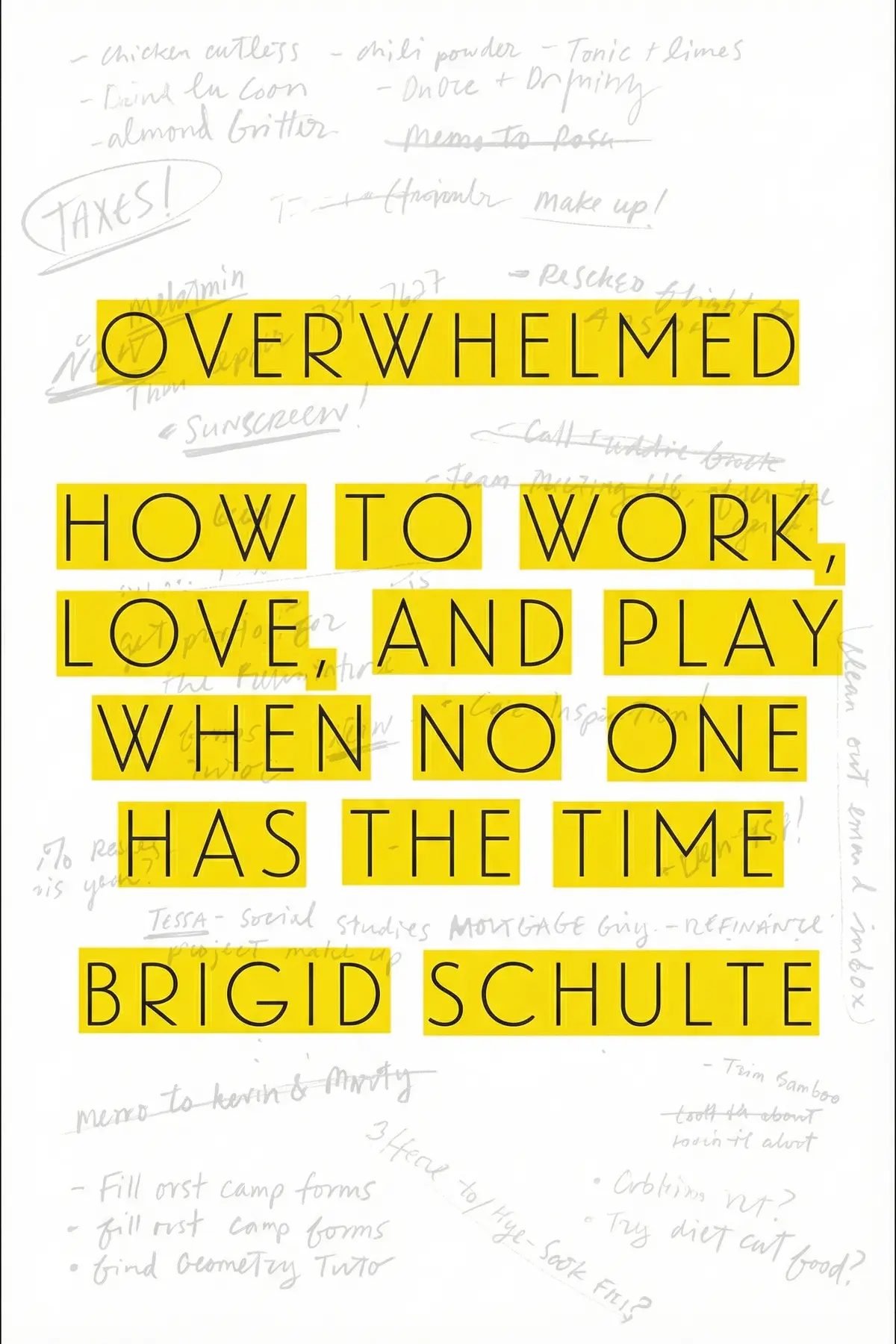
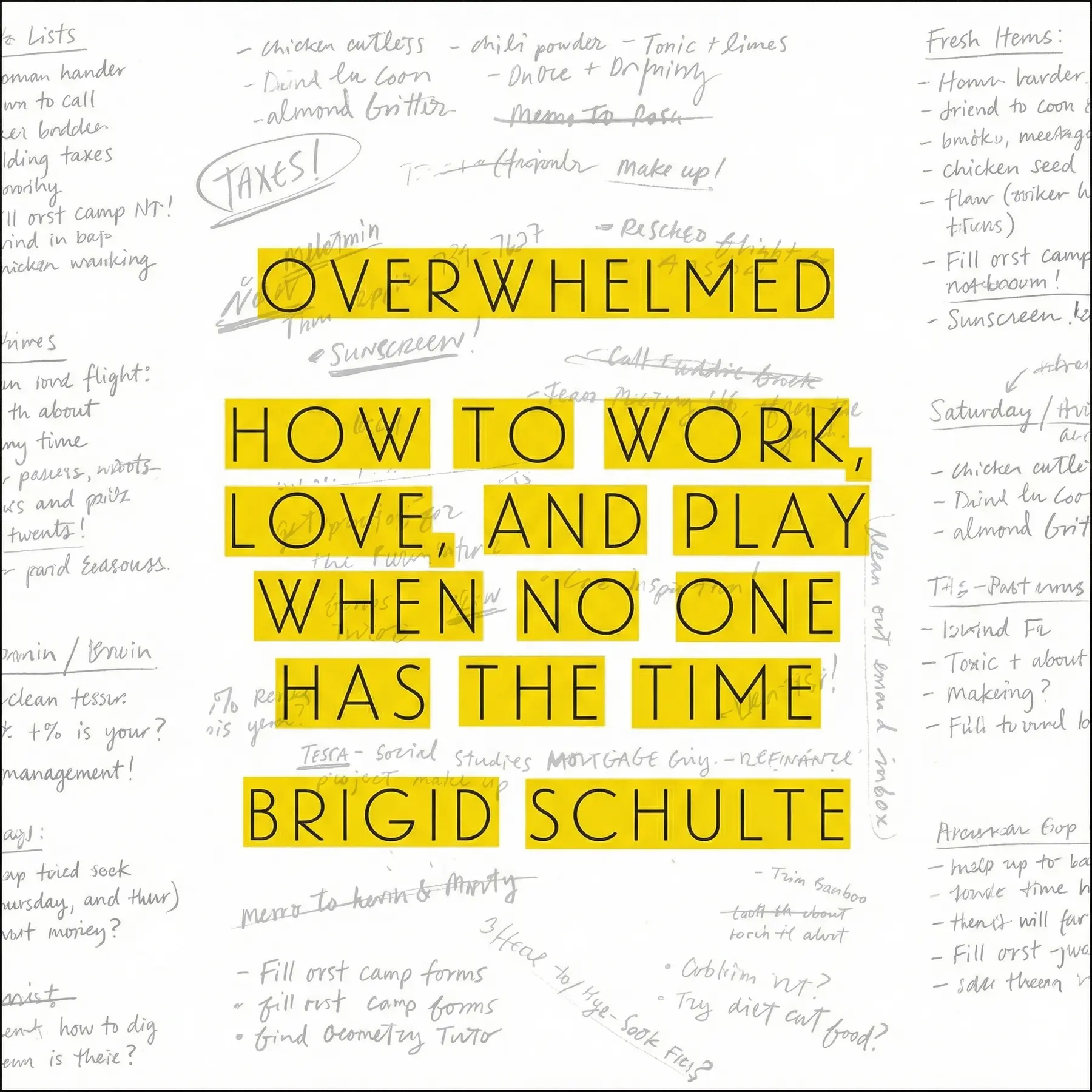
Brigid Schulte explores the modern epidemic of busyness, examining how outdated gender roles, industrial-era work habits, and chronic stress affect our brains and happiness while offering pathways toward a more balanced life.
1 min 56 sec
Have you ever looked at your calendar and felt a sudden, sharp tightening in your chest? That feeling of a never-ending to-do list, where the moment you finish one task, three more appear to take its place, is a hallmark of the modern era. We often think of this as a personal failing—that if we were just a bit more organized or woke up an hour earlier, we could finally get ahead of the curve. But as Brigid Schulte explores in her work, this sense of being completely underwater is actually a systemic issue, woven into the very fabric of our society, our workplaces, and our homes.
In this exploration of her book, Overwhelmed, we are going to look at the ‘cult of busyness’ that defines the twenty-first century. We often pride ourselves on being busy, wearing our stress like a badge of honor, but the cost to our health, our relationships, and our cognitive abilities is staggering. We will move through the historical shifts that brought us here, from the rigid structures of the Industrial Revolution to the digital tether of the smartphone era.
More importantly, we will look at the gendered nature of this pressure. Despite our progress in many social areas, deep-seated stereotypes about who should work and who should care for the home continue to weigh heavily on both men and women, creating a ‘time-poverty’ that feels impossible to escape. However, there is hope. By looking at successful companies that prioritize flexibility and nations that have rewritten the social contract, we can find a blueprint for a different way of living. This journey is about moving from a state of constant survival to a state of ‘flow,’ where leisure isn’t just a luxury, but a fundamental part of a life well-lived. Let’s dive into how we can reclaim our time and our sanity.
2 min 25 sec
Explore the staggering statistics behind our collective exhaustion and why mothers, in particular, find themselves with virtually zero minutes of free time in a typical day.
2 min 39 sec
Discover how a constant state of overwhelm physically alters your brain, shrinking your center for logic while expanding your center for fear.
2 min 38 sec
Trace the roots of our ‘work-first’ culture back to the 1700s and see how modern technology has only accelerated the pressure to produce.
2 min 19 sec
Uncover the hidden biases that punish men for being caregivers and women for being ambitious, keeping us trapped in outdated social roles.
2 min 35 sec
See how forward-thinking companies are proving that working fewer, more flexible hours can actually lead to better results and happier employees.
2 min 21 sec
Compare the American experience with countries like Denmark to see how government intervention can dismantle gender bias and boost national happiness.
2 min 29 sec
Learn how to physically repair your brain and regain your focus by embracing the present moment and letting go of the impossible.
2 min 15 sec
As we reach the end of this journey through the world of being ‘Overwhelmed,’ it is important to remember the central throughline: our current state of perpetual busyness is not a natural law of the universe. It is a byproduct of historical accidents, outdated social norms, and corporate structures that haven’t caught up to the modern reality. We have seen how this constant pressure literally alters our biology, making us more fearful and less rational. We have explored how the ‘ideal worker’ and ‘ideal mother’ tropes continue to drain the time and energy of both men and women, often leaving them with zero minutes of true leisure.
But we have also seen the alternative. We know that businesses can thrive when they prioritize flexibility and trust over long hours. We know that nations like Denmark have proved that social support and gender equality lead to higher productivity and greater happiness. And we know that on an individual level, we have the power to protect our brains through mindfulness and by setting boundaries on our time.
The path forward requires a two-pronged approach. We must advocate for systemic change—for workplaces that value results over presence and for policies that support the reality of modern families. At the same time, we must take responsibility for our own mental well-being. Stop wearing your busyness as a badge of honor. Start saying no to the things that don’t matter so you can say yes to the things that do. Reclaim your right to leisure, not as a reward for hard work, but as a fundamental human need. The ‘Good Life’ isn’t found at the end of a completed to-do list; it’s found in the spaces between the tasks, in the moments of flow, and in the quiet of a focused mind. You don’t have to live your life on the edge of a breakdown. A calmer, more meaningful existence is within your reach, if you are willing to let go of the cult of the overwhelmed.
Overwhelmed dives into the frantic nature of modern existence, where the constant pressure to perform at work and at home leaves little room for rest. Journalist Brigid Schulte investigates why we feel so time-poor and explores the biological, historical, and cultural forces that keep us in a state of perpetual stress. The book promises a path out of the chaos. By examining flexible corporate models, progressive national policies like those in Denmark, and personal mindfulness practices, Schulte shows that a life of leisure and fulfillment is not only possible but necessary. It’s a guide to tearing down the old structures that no longer serve us and rebuilding a lifestyle focused on well-being and genuine connection.
Brigid Schulte is a journalist with The Washington Post, where she writes on work-life issues and poverty. She has closely examined the concept of work and leisure time in America, exploring the question of how we all can lead “The Good Life.” She has also written for Style and Outlook.
Listeners value the deep research and the expertly crafted mix of sociology and self-improvement strategies. They describe the writing as immersive and easy to follow, helping them reframe their outlook while offering useful guidance, especially for mothers balancing careers. Listeners are moved by its motivating message, and one listener specifically mentions how the book grants a sense of empowerment to live a real life.
This book changed how I view my weekends and my self-worth entirely. For years, I wore my 'busyness' like a badge of honor, thinking that a packed calendar meant I was successful. Schulte deconstructs this toxic mindset with such precision that you can’t help but re-evaluate every 'to-do' list you’ve ever written. The section on the importance of unstructured play for adults was a revelation for me; I realized I hadn't truly played in over a decade. While it’s a bit long and can feel repetitive toward the middle, the message is too vital to ignore. I’m now much more intentional about protecting my time from 'mental clutter' and work-related intrusions. If you feel like you're drowning in expectations, this book is the life raft you didn't know you needed.
Show moreAfter hearing the author on a podcast, I knew I had to read the full book to understand the 'overwhelm' phenomenon. It exceeded my expectations by providing a global perspective on how other cultures prioritize human connection over corporate output. The contrast between the US and countries like Denmark is both enlightening and deeply frustrating. Schulte doesn't just complain about the problem; she seeks out people who are successfully living differently and shares their secrets. Her writing is sharp and often funny, making a heavy subject feel much more approachable and less like a lecture. I especially loved the appendix, which summarizes the key takeaways into manageable chunks for those of us with limited reading time. This is essential reading.
Show moreWow, this was a dense but necessary read that gave me a whole new vocabulary for my daily stress. I finally understand why I feel so exhausted even on days when I haven't 'done' much—it's the mental load and the contaminated time. The way Schulte connects our personal struggles to broader policy failures is brilliant and keeps the book from feeling too individualistic. It provides a sense of empowerment by showing that we can make small changes to reclaim our leisure, even within a broken system. I loved the chapters on the history of work and how we reached this point of peak busyness. This book is a must-read for anyone who feels like they are running a race they can never win.
Show moreAs a working mother of three, I felt like Schulte was peering directly into my fractured, exhausted soul. The way she describes 'time confetti'—those tiny scraps of time we try to use for ourselves that are constantly interrupted—is the most accurate thing I’ve read in years. I’ve spent so much of my life feeling guilty for not being the 'ideal worker' or the 'perfect mom,' and this book finally gave me permission to breathe. It’s part memoir and part rigorous social science, which kept me turning pages even when the statistics about American work culture got depressing. Frankly, the comparison to Denmark’s social safety net made me want to pack my bags and move immediately. It’s an empowering read that challenges you to reclaim your right to play and leisure without the nagging sense of shame.
Show moreEver wonder why we're so obsessed with being busy in this country? Brigid Schulte explores this question with a perfect blend of personal vulnerability and hard data that makes for a compelling read. I particularly appreciated the deep dive into the 'Ideal Worker' myth and how it’s designed for a world that no longer exists. The book highlights how we’ve traded our well-being for a performance of productivity that doesn't actually make us more productive. My only minor complaint is that the author’s own domestic situation in the beginning was so frustrating to read about that I almost put the book down. However, the way she evolves and finds 'time serenity' throughout the narrative is ultimately quite inspiring. It’s a wake-up call for anyone who feels like their life is just a series of tasks to be managed.
Show moreSchulte does an incredible job of articulating the invisible labor that consumes so many of our lives. I picked this up during a particularly frantic month at work and found myself nodding along to every single page. The way she blends interviews with neuroscientists and sociologists ensures that her arguments aren't just anecdotal—they are backed by science. It was shocking to see the hard numbers on how much less leisure time women have compared to men, even when both work full-time. Some might find the level of detail a bit much, but I appreciated the thoroughness. It’s a highly readable piece of nonfiction that provides a necessary framework for understanding our modern 'time-poor' existence. I’ve already recommended it to several colleagues who are struggling with their own work-life balance.
Show moreFinally got around to reading this after seeing it on several 'must-read' lists for professionals. While Schulte’s research is undeniably thorough, I struggled with how much of the narrative centers specifically on mothers in high-pressure corporate roles. As a single man without children, I found the chapters on the ‘Ideal Mother’ myth interesting from a sociological perspective, but they didn't offer much for my own daily grind. The concept of 'contaminated time' is brilliant and certainly universal, yet the solutions felt gated behind a specific socioeconomic privilege. To be fair, the writing style is engaging and doesn't feel like a dry academic text despite the heavy data. It’s a solid 3-star read for me because it’s well-executed, even if the marketing makes it seem more universal than it actually is.
Show moreThe term 'time confetti' is going to haunt me for a long while because it describes my life perfectly. I’m constantly multitasking—checking emails at my kid’s soccer game or planning dinner during a conference call—and Schulte explains why this is so damaging. This book isn't just a self-help guide; it’s a serious critique of American corporate policy and social expectations. Truth is, the middle section drags a little bit with the historical data, but the payoff in the later chapters is worth it. I wish there were more concrete 'how-to' steps for those of us who can't just move to Denmark, but the shift in perspective is a great first step. It helped me realize that my stress isn't a personal failure, but a systemic one.
Show morePersonally, I think this book functions better as a sociological study than a practical handbook. The author spends a vast amount of time establishing the problem—which we all already feel—and less time on diverse, actionable solutions. If you are a mother in a high-stakes job, you will likely find this life-changing. If you are anyone else, you might find yourself sifting through a lot of irrelevant anecdotes to find the gems of wisdom. The research is definitely top-notch, and the writing is polished, as you would expect from a Washington Post journalist. Still, the irony of a book about being busy being this long was not lost on me. It’s an interesting look at our 'always-on' culture, but it could have been much tighter.
Show moreLook, the research is impeccable and Schulte is a gifted journalist, but this book was a slog for me. At over 300 pages excluding the massive appendix and footnotes, it ironically feels like it’s contributing to the very 'overwhelm' it tries to solve. My biggest gripe is the narrow focus on upper-middle-class families who have the luxury of debating flex-time or hiring help. What about the people working two service jobs who don't have 'time confetti' because they have no time at all? It feels like a very specific book for a very specific demographic of Martha Stewart wannabes and corporate climbers. The repetitive nature of the anecdotes made me start skimming by chapter eight. It’s not a bad book, but it lacks the intersectional perspective I was hoping for.
Show moreFay Bound Alberti
Daniel Goleman
Virginia Woolf
Tracy Rosenthal
Jessica Valenti

Johny Pitts
AUDIO SUMMARY AVAILABLE
Get the key ideas from Overwhelmed by Brigid Schulte, plus 5,000+ more titles in English and Thai.







