
13 min 18 sec
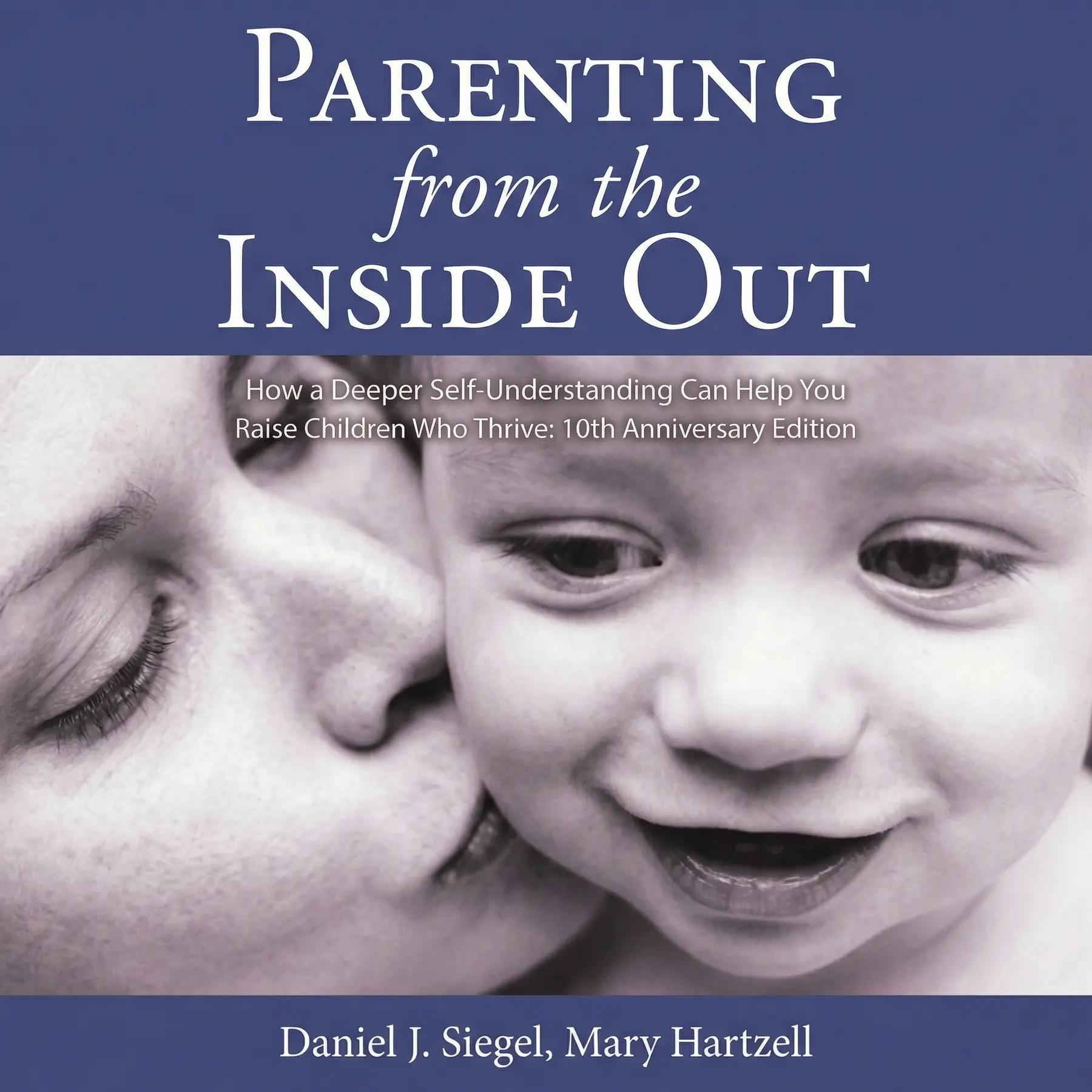
Parenting from the Inside Out: How a Deeper Self-Understanding Can Help You Raise Children Who Thrive: 10th Anniversary Edition
Explore how examining your own childhood and emotional history is the key to becoming a more mindful parent, allowing you to foster deep, secure connections that help your children truly flourish.
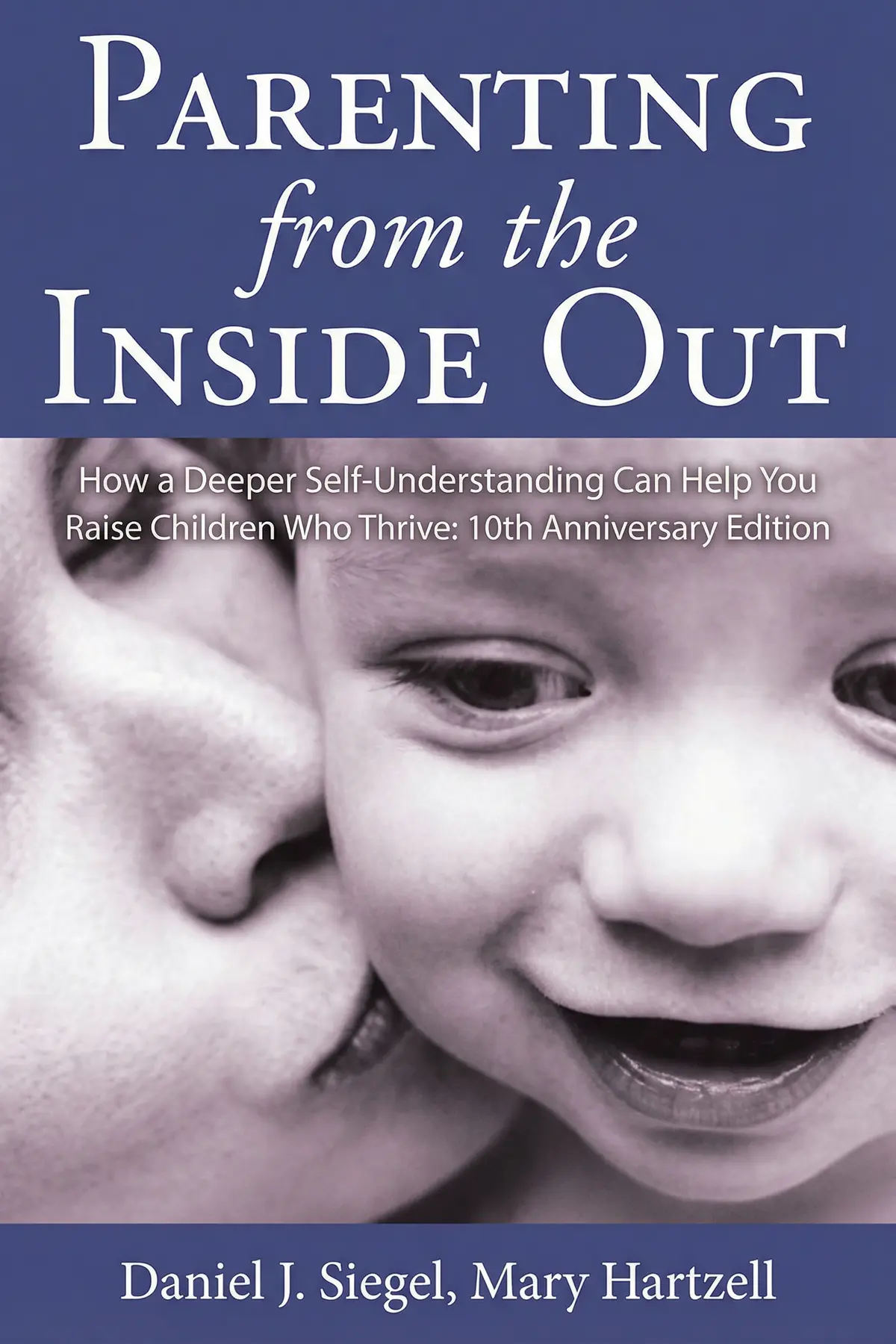
Table of Content
1. Introduction
1 min 36 sec
Every parent wants their child to thrive, to be happy, and to navigate the world with confidence. We often look for the right discipline techniques or the best educational toys to make this happen. But what if the most important factor in your child’s development isn’t something you do *to* them, but rather something you understand about *yourself*? This is the core philosophy behind Parenting from the Inside Out. It suggests that the relationship we have with our children is a mirror of the relationship we have with our own history.
The bonds we form with our children are the primary architects of their developing minds. Emotional resilience, social skills, and self-esteem are not just traits children are born with; they are cultivated within the safety of a secure, reciprocal connection. However, many of us carry invisible baggage from our own childhoods—unprocessed emotions or unresolved dynamics—that can get in the way of that connection. Without even realizing it, we might react to our children based on our past rather than their present needs.
In the following minutes, we will explore how a deeper understanding of your own internal narrative can unlock a more empathetic and mindful way of parenting. We’ll look at how to move away from automatic, knee-jerk reactions and toward a more flexible, reflective presence. By learning to truly attune to your child’s emotional world and navigating the inevitable ups and downs of family life with intention, you can create a secure base from which your child can explore the world. This journey isn’t about being a perfect parent; it’s about being a present one.
2. The Influence of Parental History
1 min 39 sec
Our early years leave lasting imprints that often dictate our parenting style. Understanding these internal narratives is the first step toward creating a healthier environment for the next generation.
3. Moving from Reaction to Reflection
1 min 42 sec
Parenting often triggers automatic, instinctive responses. Developing response flexibility allows us to pause and choose actions that actually meet our child’s needs.
4. The Art of Emotional Attunement
1 min 48 sec
Connection is built through the subtle process of feeling what your child feels. When children feel ‘felt,’ they develop a deep sense of security.
5. The Rhythm of Contingent Communication
1 min 52 sec
Effective parenting involves a continuous exchange of signals. This ‘ping-pong’ of interaction is how children learn they are valued members of a relationship.
6. Understanding Attachment Styles
1 min 47 sec
The security of a child’s attachment is the bedrock of their future resilience. We can cultivate this through the ABCs: Attunement, Balance, and Coherence.
7. The Importance of Rupture and Repair
1 min 47 sec
No parent is perfect, and conflict is a natural part of any relationship. What matters is the ability to reconnect and mend the bond after a misunderstanding.
8. Conclusion
1 min 07 sec
Parenting from the Inside Out invites us on a journey that is as much about our own healing as it is about our children’s upbringing. The central takeaway is that our internal world—our memories, our narratives, and our self-awareness—is the most powerful tool we have for raising healthy, happy children. By taking the time to reflect on our past and understand how it shapes our present, we move from being reactive to being reflective. We learn to see our children not as problems to be solved, but as individuals to be known and connected with.
As you move forward, remember that the goal isn’t perfection. It’s about presence. It’s about the small, daily moments of attunement and the courage to repair the connection when it breaks. By cultivating the ABCs of attachment—Attunement, Balance, and Coherence—you aren’t just improving your relationship for today; you are providing your child with the emotional architecture they need for a lifetime of resilience and meaningful connection. Start by being curious about your own story, and you will find that the door to a deeper bond with your child opens naturally from the inside out.
About this book
What is this book about?
Parenting from the Inside Out presents a transformative approach to raising children by shifting the focus from the child’s behavior to the parent’s internal world. The book suggests that our ability to connect with our children is fundamentally limited by our understanding of our own past. When we haven’t fully processed our childhood experiences, we risk falling into reactive, automatic patterns that can hinder our children’s emotional growth. By integrating the latest insights from neuroscience and attachment theory, the book offers a roadmap for self-reflection. It promises that by making sense of our own life stories, we can develop the emotional intelligence and mindfulness necessary to parent with intention. This journey involves learning to attune to a child’s inner life, mastering the art of empathetic communication, and understanding how to repair relationships when things go wrong. Ultimately, it provides the tools to build a secure foundation for a child’s lifelong resilience and happiness.
Book Information
About the Author
Daniel J. Siegel
Daniel J. Siegel is a renowned child psychiatrist and neuroscientist. He is celebrated for his work in interpersonal neurobiology and has authored several influential books, including The Whole-Brain Child, which explore how communication and relationships impact brain development. Mary Hartzell is a distinguished expert in early childhood education with four decades of experience. She has dedicated her career to helping parents build strong emotional connections and nurture resilience in their children.
Ratings & Reviews
Ratings at a glance
What people think
Listeners find this title offers profound insights into behavior and serves as a fantastic manual for raising children, especially for those new to parenting. Furthermore, the work is accessible and features practical exercises; one listener shared that it assisted them in processing their own early life events. They also value the focus on emotional intelligence, where one listener highlighted how it helps foster stronger connections with kids, while another mentioned its insights into interpersonal relationships. Nevertheless, opinions on the scientific material are divided, as listeners mention it is heavy on brain research.
Top reviews
Sirinat
This book is quite a journey into the self, proving that the way we were raised directly impacts how we show up for our own children. Instead of offering the usual surface-level tips, Siegel and Hartzell dive deep into the concept of a 'coherent narrative' of our own past. Truth is, I found myself reflecting on childhood wounds I hadn't thought about in decades, which helped me understand my current 'low road' reactions during toddler tantrums. The focus on emotional intelligence and interpersonal neurobiology is fascinating, though it requires a focused mind to digest. It’s not a quick fix, but it is a permanent one. If you want to bond more deeply and stop reacting on autopilot, this is the essential guide for doing the internal work required to be the parent your child deserves.
Show morePla
Picking this up as a first-time parent was the best decision I could have made for my family's future. It focuses heavily on metacognition—the ability to think about thinking—which has completely changed how I perceive my daughter's outbursts. Instead of seeing a 'bad' kid, I see a developing brain that needs my 'high road' presence to co-regulate. The authors do a fantastic job of explaining how our own unresolved issues can cause 'vaporlock' in our brains, making us unable to respond with empathy. It's heavy on the science, but that actually made me trust the advice more. I feel much better equipped to sort out my own childhood experiences so I don't pass those same patterns down to the next generation. Highly recommended for anyone who wants a more conscious relationship with their kids.
Show moreChanon
Finally got around to reading this after seeing it referenced in almost every other parenting book on my shelf. It lives up to the hype! The concept of the 'narrative' we tell ourselves about our past is so powerful. It helped me realize that I don't have to be a victim of my own upbringing. By making sense of my experiences, I can provide a secure base for my kids. The authors explain the psychobiology of the brain in a way that makes sense, even if it’s a bit technical at times. I found the sections on mindfulness and empathy especially relevant for today's high-stress world. It’s an excellent guide that encourages lifelong learning and personal growth. If you are willing to look inward, this book will absolutely change your parenting style for the better.
Show moreChloe
Wow. This is probably the most profound book on human connection I have ever read. It explains the 'why' behind our knee-jerk reactions in a way that is both scientific and deeply compassionate. I loved the emphasis on 'contingent communication'—it’s such a simple concept but so hard to master in the heat of the moment. The authors show us that we don't have to be perfect; we just have to be present and willing to look at our own stuff. It helped me sort out my childhood experiences in a way that felt healing rather than clinical. This should be required reading for all parents, especially those who didn't have the best role models growing up. It’s a beautiful blend of brain science and heart.
Show moreManika
Following up on 'The Whole Brain Child' with this one was a great move. While this is definitely more of a 'how-we' than a 'how-to,' the depth of understanding it provides is unmatched. It’s a bit more academic than Siegel’s later works, but the core message is so vital: your past doesn't have to be your child's future. The way they break down the 'high road' versus the 'low road' has become a common phrase in our household now. We use it to signal when we need a break before things escalate. It’s an emotional intelligence masterclass. Even if you find the brain research sections a bit heavy, the reflections and personal examples make it more than worth the effort. It truly helps you bond more deeply with your kids by first bonding with yourself.
Show morePairot
The reflections section at the end of this book is worth the price of admission alone. Frankly, if you're short on time, you could almost skip to the last few pages to get the gist of the authors' philosophy. They emphasize that parenting is a 'how-we' relationship rather than a 'how-to' list of rules. I loved the distinction between the 'high road' of rational processing and the 'low road' of emotional reactivity. It gave me a new vocabulary to use with my spouse when we’re feeling overwhelmed. My only gripe is that the 'Inside Out' exercises felt a bit too overwhelming to do all at once; they really should be broken down into smaller, more bite-sized chunks for busy families. Still, it’s a solid four-star read that offers a deep understanding of human behavior.
Show moreKomsan
As someone who has struggled with interpersonal relationships my whole life, this book provided a lightbulb moment. It isn't just a parenting book; it’s a manual for understanding why we act the way we do under stress. I specifically appreciated Chapter 8 on 'ruptures' and how to repair them. It’s so easy to feel like a failure when you lose your cool, but Siegel reminds us that the repair is actually where the strongest bonding happens. The sentence structure can be a bit dense, and it definitely isn't a light beach read. However, the 'Inside Out' exercises are incredibly revealing if you actually take the time to write out the answers. It helped me bridge the gap between knowing I should be patient and actually feeling patient.
Show moreSaowalak
In my experience, most parenting books focus way too much on the child's behavior and not nearly enough on the parent's internal state. This book flips that script entirely. It’s a deep dive into emotional intelligence and how our state of mind creates the environment for our children to thrive. I did find the writing a titch technical at times, which slowed down my progress. But the 'Digging Deeper' references are great for those of us who like to verify the science. It’s essentially a roadmap for moving from 'low road' reactivity to 'high road' connection. It’s not always an easy read, but the insight you gain into your own triggers is invaluable. I’d suggest reading it slowly, maybe one chapter a week, to really let the concepts sink in.
Show moreSiriphen
Ever wonder why certain parenting books feel like a chore to finish even when the advice is gold? That was my experience here. While the content regarding brain research and attachment theory is undeniably top-tier, the writing style is incredibly dry and academic. It felt more like reading a clinical research report than a guide for exhausted parents. I appreciated the gray science sidebars, but they often felt repetitive, restating the same points about 'contingent communication' without enough real-world illustrations. I’m giving it three stars because the 'Digging Deeper' sections are actually quite helpful if you have the patience to wade through the dense prose. It’s a bit of a slog, but the core message about making sense of your own life story is one every parent should probably hear at least once.
Show morePhichai
Gotta say, I am really disappointed with how this was put together. The information is solid, don't get me wrong, but the delivery is just so boring that I found my mind wandering every two paragraphs. They constantly 'tell' you that something is important—like having a secure attachment—but they rarely 'show' you what that actually looks like in a messy, real-life kitchen at 7:00 AM. It desperately needed a ghostwriter or a more aggressive editor to breathe some life into the text. As a psychologist, I even found the science sections a bit redundant and overly technical for a general audience. It feels like a missed opportunity to make life-changing research accessible. If you aren't an academic, you might find this nearly impossible to get through without falling asleep.
Show moreFeatured in
Readers also enjoyed



AUDIO SUMMARY AVAILABLE
Listen to Parenting from the Inside Out in 15 minutes
Get the key ideas from Parenting from the Inside Out by Daniel J. Siegel, plus 5,000+ more titles in English and Thai.
- 5,000+ titles
- Listen as much as you want
- 7-day free trial
- Cancel anytime







