

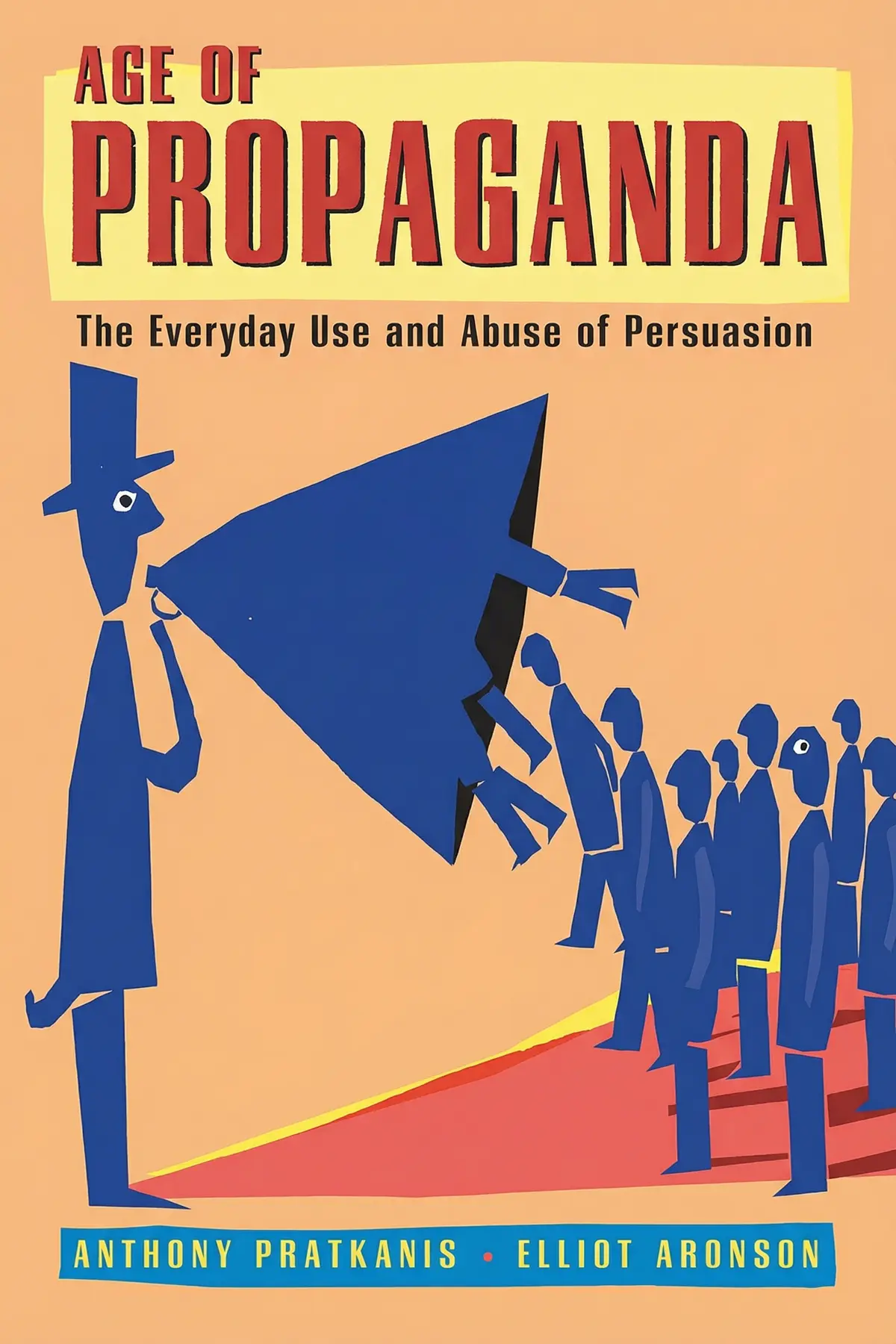
Age of Propaganda: The Everyday Use and Abuse of Persuasion
Anthony Pratkanis
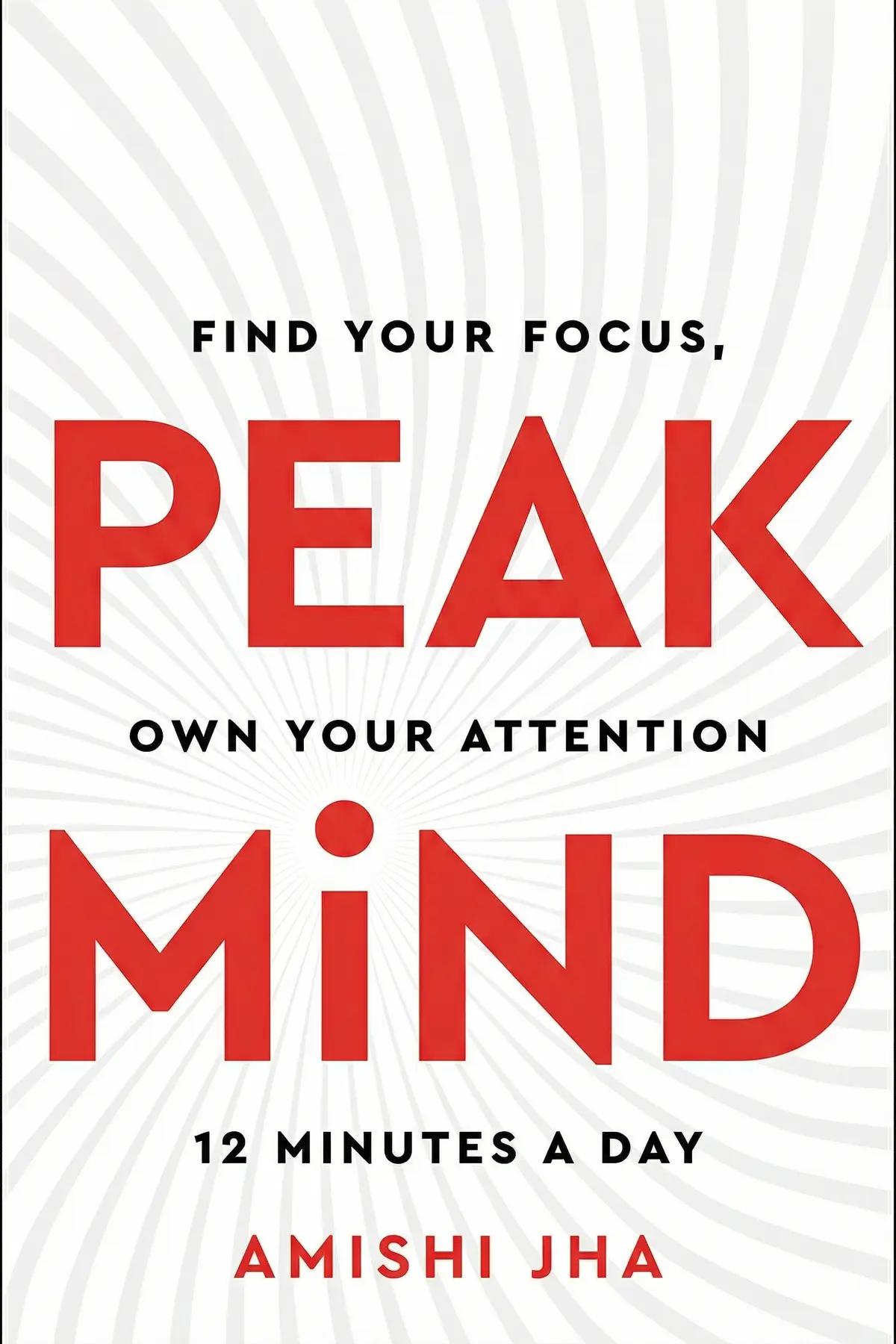
Discover how to regain control over your focus through neuroscience. Dr. Amishi Jha explains the three systems of attention and provides a research-backed, twelve-minute daily practice to achieve a peak mind.
1 min 46 sec
In an era of constant notifications, endless scrolling, and a relentless pace of life, it often feels like our attention is no longer our own. We find ourselves drifting through conversations, missing key details at work, or feeling mentally exhausted by the end of a day where we didn’t actually achieve much. But what if the problem isn’t a lack of willpower, but a misunderstanding of how our brains actually function? In Peak Mind, neuroscientist Amishi Jha takes us on a journey through the mechanics of the human mind to show us how we can reclaim our most valuable resource: our attention.
Imagine a high-stakes scenario where focus is a matter of life or death. Think of an elite responder tackling a massive wildfire in a remote wilderness. This person is highly trained, yet even they can fall victim to the traps of the mind. They might become so intensely focused on a single patch of flames that they fail to notice the wind shifting or a new wall of fire rising behind them. This isn’t a failure of effort; it’s a specific quirk of how human attention operates. When we narrow our focus too tightly, we lose the big picture. When we broaden it too much, we lose the details.
The central message of this book is that attention is not just one thing. It is a sophisticated suite of tools that we can learn to operate with precision. Dr. Jha reveals that through just twelve minutes of daily practice, we can actually change the physical structure of our brains, making them more resilient to the stresses and distractions of modern life. This summary will break down the three distinct systems of attention, explore why they break down under pressure, and provide you with the exact roadmap to building a peak mind. By understanding the ‘flashlight,’ the ‘floodlight,’ and the ‘juggler’ within you, you can move from a state of mental fog to a state of clear, intentional presence.
1 min 52 sec
Discover the mechanism that allows you to narrow your focus and why the ability to highlight specific information is the foundation of cognitive clarity.
1 min 48 sec
Explore the alerting system that keeps you safe and aware, and learn how to maintain a broad perspective without getting lost in the details.
1 min 47 sec
Learn about the internal manager that coordinates your goals and keeps you on track when life gets complicated and demanding.
2 min 05 sec
Understand why your brain naturally struggles to stay present and how your internal environment can sabotage your best intentions.
1 min 56 sec
See how your ability to focus directly impacts your ability to remember your life and why being ‘checked out’ leads to a hollow past.
1 min 50 sec
Learn the specific, research-backed method for training your brain and why consistency matters more than intensity.
1 min 38 sec
As we reach the end of this journey into the mechanics of the peak mind, the path forward is clear. We live in a world designed to capture and monetize our attention, but we are not helpless victims of the digital age. By recognizing that attention is a multi-faceted system—the flashlight that focuses, the floodlight that senses, and the juggler that manages—we gain the vocabulary to understand our own mental states. We can stop berating ourselves for being ‘distracted’ and instead begin the practical work of strengthening our cognitive muscles.
The most important takeaway is that mindfulness is not a mystical or religious pursuit; it is a form of elite mental conditioning. Whether you are a parent trying to be more present with your children, a professional seeking to excel in a high-pressure career, or simply someone who wants to feel more connected to their own life, the twelve-minute rule is your roadmap. It requires no special equipment—only the willingness to sit with yourself and practice the art of returning to the now.
Start small. Find a quiet spot today and spend just a few minutes observing your breath. Notice the sensations, notice the wandering of your mind, and practice the gentle return. As you do this, remember that you are doing more than just relaxing; you are literally rebuilding your brain. You are reclaiming your ability to focus, your power to remember, and your right to be fully present for your life. The fires of distraction and stress will always be there, but with a peak mind, you won’t be blinded by the flames. You will have the clarity and the presence to navigate whatever challenges come your way.
Peak Mind explores the hidden mechanics of human attention and why our focus so often fails us in critical moments. Drawing on years of neuroscientific research with elite performers—from military units to professional athletes—Dr. Amishi Jha reveals that our attention is not a single, monolithic entity but a complex set of three subsystems. These systems allow us to focus, stay alert, and manage complex tasks, but they are easily compromised by stress, threats, and low moods. The book offers a practical and scientifically proven solution to these distractions: mindfulness training. By committing to just twelve minutes of specific mental exercises five days a week, anyone can strengthen their brain's cognitive resilience. This isn't just about feeling calmer; it's about optimizing the brain's hardware to ensure we are present for our lives, capable of making better decisions, and able to form lasting memories even under high-pressure conditions.
Amishi P. Jha, a professor of psychology at the University of Miami, is an acclaimed neuroscientist and author. She is an expert on attention, mindfulness, and working memory, and has collaborated with a diverse range of organizations, from the US Military to the University of Miami Hurricanes.
Listeners find this book both educational and engaging, praising the way it translates intricate scientific ideas into accessible material. They appreciate the focus on enhancing attention, with one listener highlighting that it is backed by the latest research. Listeners characterize the book as inspiring and impactful, with one mentioning measurable improvements.
After hearing so much buzz about Amishi Jha’s research, I finally dove into Peak Mind, and the hype is justified. It’s rare to find a book that marries rigorous neuroscience with such an accessible, low-barrier-to-entry practice. Jha’s breakdown of the 'flashlight' versus 'floodlight' attention modes changed how I think about my daily focus entirely. I used to think I was just bad at concentrating, but she frames attention as a muscle that needs consistent training, not a fixed trait. The '12 minutes a day' requirement feels actually doable for a busy parent like me, unlike those hour-long retreats some gurus suggest. Truth be told, I was skeptical that such a short commitment would show results, but the clarity is noticeable after just two weeks. It's an uplifting read that doesn't just tell you to 'be present' but gives you the actual blueprints to get there. Definitely a must-read for anyone feeling chronically scattered in our notification-heavy world.
Show morePicked this up because my job in emergency services requires split-second decision-making, and the cognitive load can be paralyzing. Jha’s work with the military really shines through here; she understands high-stakes environments where 'just breathing' sounds like a luxury. The concept of 'mental downtime' being necessary for memory consolidation was a total lightbulb moment for me. I’ve been doing the 12-minute breath-tracking exercises for three weeks now, and I’m noticing a measurable shift in how I handle 'second arrow' reactions. Instead of spiraling when things go wrong, I’m able to observe the stress without letting it hijack the 'juggler.' It’s incredibly empowering to realize that focus isn’t just a gift you’re born with but a skill you can sharpen. The book is uplifting without being saccharine, and the research-backed approach makes it feel much more credible than your average self-help title. This is going to be my go-to gift for my colleagues this year.
Show moreWow. I’ve read dozens of books on productivity and meditation, but this is the first one that actually explained the 'how' of attention in a way that felt scientifically rigorous. Dr. Jha avoids the usual fluff and gets straight into how our brains actually function under pressure. The distinction between the flashlight (narrow focus) and the floodlight (broad awareness) is something I now use every day to check my internal state. The book is surprisingly uplifting because it proves we aren’t doomed to be distracted forever. We can actually thicken the cortex in areas linked to attention! Knowing there is measurable, physical change happening in my brain makes it much easier to stick to the 12-minute daily practice. This isn't just a book about being calm; it's a book about being sharp. If you want to own your attention and stop feeling like a victim of your environment, read this immediately.
Show moreDirect and powerful. Jha doesn’t waste time on mystical fluff; she treats attention like a high-performance system that needs maintenance. I love the '12 minutes, 5 days a week' rule because it’s a specific, measurable target. As a teacher, my attention is pulled in thirty directions at once, and this book gave me the tools to keep my 'floodlight' on without getting overwhelmed. The insight that stress and poor mood function as 'kryptonite' for our focus helped me identify why I have 'bad' brain days and how to mitigate them. It’s a very enjoyable read that feels both smart and practical. The analogies—like the 'mental pushups'—really help visualize what’s happening during meditation. If you feel like your focus is being fractured by the modern world, this book offers a legitimate, research-backed way to fight back. It’s easily one of the most effective books on mindfulness I’ve ever picked up.
Show moreEver wonder why your brain feels like it’s constantly short-circuiting during a long workday? Peak Mind offers a compelling scientific explanation for that mental fatigue. Dr. Jha identifies stress and 'threat' as the primary enemies of our focus—what she calls cognitive kryptonite. The writing is quite polished, though it leans into the academic side occasionally, which might slow down some readers. I particularly liked the 'don’t deploy before you deploy' concept, which highlights how we waste energy on future anxieties. While the core message isn't revolutionary if you've read about Vipassana or basic Zen meditation, the way she ties it to neurological 'strengthening' is fresh. I’m giving it four stars instead of five because some sections felt a bit repetitive, hammering home the same study results multiple times. Still, the practical exercises included are worth the price of admission. It’s a solid, evidence-based guide that moves beyond the typical 'woo-woo' vibes of mindfulness.
Show moreAs someone who has struggled with ADHD symptoms for years, I found the section on 'mind-wandering as a feature, not a bug' incredibly healing. Most books treat a wandering mind like a failure, but Jha explains it as an evolutionary survival tool. That shift in perspective changed everything for me. Now, when my focus drifts, I don't get frustrated; I just gently guide it back. The book is very informative and breaks down complex neurobiology into metaphors that actually stick. My only gripe is that it can be a bit dry in parts. The writing is definitely more 'scientist' than 'storyteller,' which makes it a slower read than your average beach book. But look, the results are what matter. I’ve started tracking my 'peak mind' sessions and I feel less reactive and more present during meetings. It’s a high-quality resource that provides a tangible path to better mental clarity.
Show moreThe chapter on memory was a total game-changer for me. Jha explains that we only remember what we pay attention to—which sounds obvious until you realize how little we actually 'attend' to our own lives. I realized I was 'deploying before I deployed' every single morning, living in a future state of stress instead of being present. The writing is clear and the '12 minutes' protocol is very well-supported by the research presented. While I did find some of the military anecdotes a bit long-winded, the underlying message is powerful. It’s an effective manual for anyone feeling overwhelmed by the digital age. I appreciated that she didn't promise instant results; she emphasizes that this is 'mental pushups' that require consistency. Not gonna lie, it’s hard to stay disciplined, but the book does a great job of explaining the 'why' behind the work. A solid addition to any productivity library.
Show moreThis book came highly recommended by a podcast host I follow, but frankly, it felt like a 300-page expansion of a really good long-form article. Don’t get me wrong; the science is fascinating, and Jha is clearly a leader in her field. However, if you’ve already read books by Jon Kabat-Zinn or Dan Harris, you won’t find many 'new' techniques here. The 'juggler' metaphor for the central executive system is helpful, but the text meanders through so many anecdotes that I found my own attention wandering—ironic, right? I also found the pacing a bit sluggish, especially in the middle chapters where the academic tone gets a little heavy. To be fair, if this is your first introduction to mindfulness, it’s a brilliant starting point. For seasoned practitioners, it might just be a reminder of what you already know. It’s okay, just not the life-changing revelation I was expecting based on the marketing.
Show moreFinally got around to reading this after seeing it everywhere. To be fair, the core concept is great—the idea that a tiny daily investment can yield massive cognitive returns is very appealing. But the execution felt a bit bloated. There’s a lot of repetition, and Jha uses five examples where one would have sufficed. It felt like she was trying too hard to prove the science instead of just letting the practice speak for itself. I also missed having a proper index in my copy, which makes it hard to go back and find specific exercises. Personally, I think you could get the same value from a 20-minute TED talk by the author. It’s not a bad book, and the 'juggler' analogy is quite clever, but it just didn't hold my interest for the full duration. Good for beginners, but potentially a bit tedious for everyone else.
Show moreNot what I expected given all the glowing blurbs on the cover. I received an ARC and found the entire rollout of this book to be confusing, with the publisher even questioning my early rating. Looking past the drama, the actual content is a bit of a letdown. It takes way too long to get to the 'meat' of the practice. Do we really need hundreds of pages to tell us that meditating for 12 minutes is good for us? The academic jargon is thick, and Jha spends a lot of time self-referencing her own studies. Frankly, the 'flashlight' and 'floodlight' metaphors felt a bit oversimplified compared to the dense scientific prose surrounding them. I found myself skimming large sections just to find the actual practical advice, which is buried under layers of anecdotes. If you want a quick guide on how to focus, look elsewhere. This felt more like a textbook trying to masquerade as a self-help bestseller.
Show moreAnthony Pratkanis

Richard Wiseman

Eckhart Tolle
AUDIO SUMMARY AVAILABLE
Get the key ideas from Peak Mind by Amishi Jha, plus 5,000+ more titles in English and Thai.







