

Acting with Power: Why We Are More Powerful Than We Believe
Deborah Gruenfeld
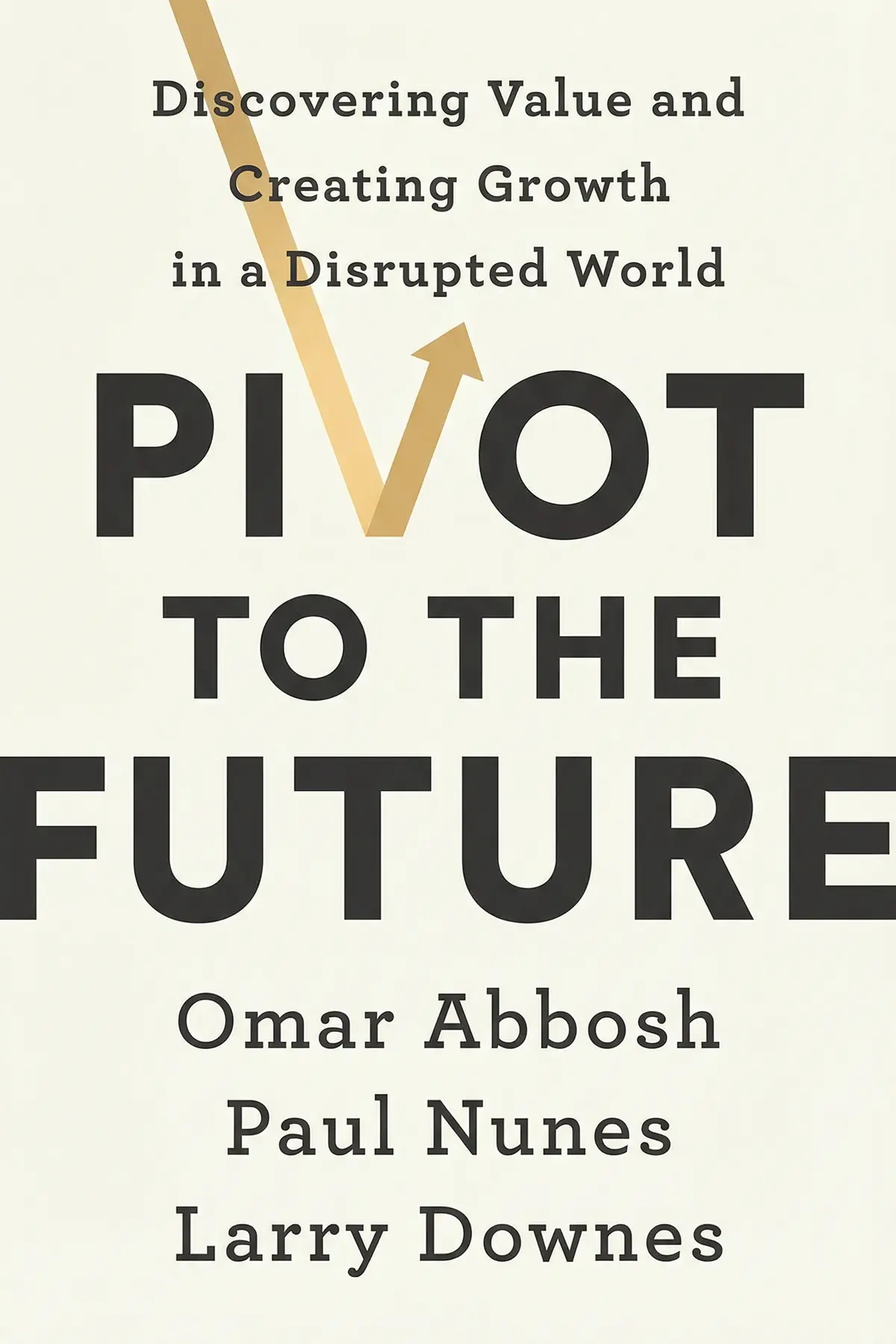
Pivot to the Future offers a comprehensive framework for navigating disruption by balancing legacy business stability with aggressive innovation, helping leaders unlock trapped value and achieve sustainable growth in a rapidly changing economy.
1 min 35 sec
The modern business landscape is no longer characterized by gradual shifts; it is defined by a relentless, accelerating pace of change. Industries that stood as pillars of the global economy for decades are now finding themselves upended in a matter of years. Whether it is the rise of artificial intelligence, the ubiquity of high-speed connectivity, or the sudden emergence of digital-first competitors, the message to established organizations is clear: adapt or vanish. Yet, transformation is notoriously difficult. Many companies treat innovation as a side project or a desperate reaction to a crisis, only to find that they have moved too late or in the wrong direction.
This is where the concept of the wise pivot comes in. It is not about a single, frantic change of course. Instead, it is a disciplined, ongoing strategy for navigating the complexities of a disrupted world. To succeed, a business must learn how to live in three different time zones at once. It must extract the remaining value from its legacy operations, push its current core business to its highest potential, and simultaneously plant the seeds for future growth in emerging markets. This summary will guide you through the frameworks necessary to make these shifts. You will see how leading companies have managed to stay relevant by seeing technology not as a threat, but as a tool to release value that has been trapped by outdated thinking. By the end, you will understand how to build a culture of continuous reinvention that keeps your organization ahead of the curve, no matter how fast the world changes.
2 min 39 sec
Discover how the gap between technological potential and current business practices creates hidden opportunities that disruptors often exploit before incumbents even notice.
2 min 45 sec
Explore a set of seven core strategies designed to help organizations stay hyper-relevant and operationally agile during periods of intense market volatility.
2 min 20 sec
Learn how to simultaneously manage the legacy, the core, and the future of your business to ensure a smooth transition between eras of growth.
2 min 35 sec
Understand why growing your current core while betting on the future requires a delicate balance of investment and patience.
2 min 33 sec
Examine how the management of assets, working capital, and human talent forms the financial foundation of any successful business transformation.
2 min 29 sec
Discover why the human element—leadership style and corporate culture—is the final and most crucial component in making a business pivot stick.
1 min 21 sec
The journey of pivoting to the future is not a destination you reach, but a state of being you adopt. As we have explored, the most successful organizations in the world are those that treat reinvention as a core competency. They don’t wait for a crisis to change; they are constantly looking for trapped value and finding ways to release it through technology and innovation. By mastering the wise pivot—balancing the old, the now, and the new—they ensure that they never lose the stability provided by their legacy businesses while never missing the growth provided by the future.
To apply these lessons, start by looking at your own organization through the lens of the three business stages. Are you investing enough in the ‘new’ to ensure your survival a decade from now? Are you optimizing your ‘now’ to fund that future? Remember that a pivot is supported by strong financial discipline and a culture that values its people as its most important asset. Transformation is difficult and often uncomfortable, but in a world of constant disruption, it is the only path to long-term success. The future belongs to those who are willing to pivot toward it today, making change a permanent part of their business DNA. As you move forward, keep the seven strategies in mind, stay hyper-relevant to your customers, and never stop looking for the next opportunity to reinvent who you are and what you do.
In an era where technology evolves faster than most organizations can react, traditional business models are constantly under threat. Pivot to the Future addresses this challenge by introducing the concept of the wise pivot—a strategic approach that allows companies to reinvent themselves without losing their core. The book explores how market leaders can identify trapped value, which is the gap between what technology makes possible and what current business practices actually deliver. Through detailed strategies and real-world examples, the authors outline how to manage three distinct stages of business simultaneously: the old, the now, and the new. Readers will learn how to optimize their current assets, scale their core operations, and invest in future-shaping technologies like AI and the Internet of Things. The promise of this book is a roadmap for continuous reinvention, ensuring that disruption becomes an opportunity for growth rather than a cause for decline.
Omar Abbosh is a business leader and former Chief Strategy Officer at Accenture, where he played a key role in driving digital transformation initiatives. With extensive experience in technology and strategy, he has helped major organizations navigate disruption and unlock growth opportunities. Paul Nunes is the Global Managing Director for Thought Leadership at Accenture Research and a leading expert on business strategy and innovation. He has co-authored several influential books, including Big Bang Disruption and Jumping the S-Curve. Larry Downes is a technology and strategy expert known for analyzing digital disruption and its impact on industries. His best-selling books include Unleashing the Killer App and Big Bang Disruption, both of which examine how emerging technologies reshape competitive landscapes.
Listeners find the book to be a fantastic read and a top-tier guide. They value the educational benefits, with one listener remarking that it offers profound perspective through real-world examples and business cases.
As someone with a background in engineering transitioning into consulting, I found this to be an indispensable guide to understanding modern corporate strategy. The book explains how to release "trapped value" using seven distinct strategies that range from hyper-relevance to workforce reinvention. I especially appreciated the deep dive into how AT&T upskilled their employees rather than just replacing them with new hires. It’s rare to see a business book that balances the human element so well with financial metrics and technological integration. The tone is authoritative yet accessible, making complex ideas about AI and blockchain feel manageable. Truly an excellent playbook for anyone trying to navigate the choppy waters of the digital age without sinking their core business.
Show moreThe chapter on workforce reinvention alone makes this book worth the price of admission for any HR leader or manager. The authors argue that your current employees are your greatest asset during a pivot, provided you invest in their digital literacy. Seeing how Mercedes-Benz used "cobots" to enhance human precision rather than replace workers was a refreshing take on automation. It’s an incredibly smart look at how to maintain stability while simultaneously chasing radical innovation. The writing is sharp and the structure allows you to jump between industry-specific case studies easily. I’ve already recommended this to several colleagues who are feeling the pressure of digital transformation. This is how you lead through uncertainty.
Show moreAfter hearing a colleague mention the "wise pivot" during a conference, I had to see if the book lived up to the hype. It does. The authors provide a brilliant framework for avoiding the "trap" of focusing only on what made you successful in the past. What stood out to me was the emphasis on creating value for all stakeholders, not just chasing quarterly profits. This long-term thinking is exactly what is missing from many modern corporate strategies. The examples of Comcast and CVS show that even "legacy" businesses can become tech leaders if they have the guts to reinvent themselves. This isn't just a book about technology; it’s a book about survival and leadership.
Show moreThis book provides a solid roadmap for any executive currently struggling with the rapid pace of technological disruption. The authors, all from Accenture, argue that companies must balance their legacy "old" businesses with the "now" and the "new" through a "wise pivot." While some of the advice feels like standard business consulting, the specific examples of companies like Reliance Jio and Netflix bring the concepts to life. I found the discussion of "trapped value" particularly enlightening because it forces you to look at your current inefficiencies as hidden opportunities. It's a dense read, but the playbook is practical enough to implement in real-world scenarios. If you are looking for a deep dive into how technology is reshaping industries, this is a great place to start.
Show morePicked this up on a whim and was pleasantly surprised by how much practical value is packed into these pages. The authors do a fantastic job of illustrating how disruption isn't a one-time event but a constant tide that you have to learn to surf. I loved the section on "asset-light" models; seeing how Apple stays agile by outsourcing manufacturing while controlling design was eye-opening. The book feels like a comprehensive playbook for the next decade of business. It moves quickly from theory to practice, which I appreciate as a busy professional with limited reading time. Truth is, most of us know we need to change, but we just don't know how to start the process without breaking what already works.
Show moreFinally got around to reading this, and the insights on "trapped value" are going to stay with me for a long time. It’s easy to see where you are losing money, but much harder to see where value is simply being "trapped" by old habits. The seven strategies are well-defined, though I found the section on data strategy to be the most compelling of the bunch. The authors explain how companies like AllLife create entirely new markets by looking at data in ways their competitors completely ignore. My only gripe is that it can feel a bit repetitive in the middle chapters. Still, for anyone in consulting or tech, this is an excellent playbook for navigating disruption.
Show moreEver wonder if a business book is just one long advertisement for a consulting firm’s internal services? While there is definitely a lot of good information here, the constant references to Accenture’s internal pivots got a bit repetitive after a while. The "old, now, new" framework is useful for visualizing growth, but it isn’t exactly a revolutionary concept in the strategy world. I would have liked more granular details on the failures mentioned rather than just the high-level success stories of giants like Google and Amazon. To be fair, the seven strategies provide a decent checklist for staying ahead, but the writing can be a bit dry. It’s a worthwhile read for the case studies, though I doubt it will change your entire worldview.
Show moreFrankly, "Pivot to the Future" is a bit of a mixed bag for me despite the clear expertise of the authors. On one hand, the "wise pivot" model is a fantastic way to categorize different stages of a company's lifecycle and investment priorities. On the other hand, the book glosses over just how difficult it is to change a corporate culture that resists innovation at every turn. They mention Sears and Amazon, but these are examples we have seen in every business book for the last five years. It’s a great read if you need a refresher on modern strategy, but don’t expect a magic bullet. I’d call it a solid 3.5, mostly for the clear-eyed look at data-driven markets.
Show moreTo be fair, the authors clearly know their stuff, but the book feels a bit dated even just a few years after publication. The pace of change they describe is so fast that even their "new" examples are starting to feel like the "now." I appreciated the breakdown of the wise pivot, but I wanted more on the actual failures. Why exactly did some companies fail to pivot even when they saw the wave coming? The book touches on leadership, but I wanted a deeper dive into the psychological barriers to change within a firm. It's a decent high-level overview, but it lacks the long shelf life I look for in truly classic business literature.
Show moreNot what I expected given the high praise I’ve seen in professional circles. The book feels like it’s written exclusively for CEOs of Fortune 500 companies, making much of the advice feel out of reach for smaller organizations. Most of the strategies, like "embedding technology at the core," are things we’ve been hearing for a decade now. I struggled to finish because the prose is quite heavy and leans far too much on "consultant-speak" that obscures the actual points. Personally, I found the lack of specificity regarding the actual hurdles of these pivots to be a major letdown. It’s more of a high-level manifesto than a usable guide for the average manager trying to innovate on the ground.
Show moreDeborah Gruenfeld
Mike Michalowicz
Hamilton Helmer

Margaret Heffernan
AUDIO SUMMARY AVAILABLE
Get the key ideas from Pivot to the Future by Omar Abbosh, plus 5,000+ more titles in English and Thai.







