
15 min 57 sec
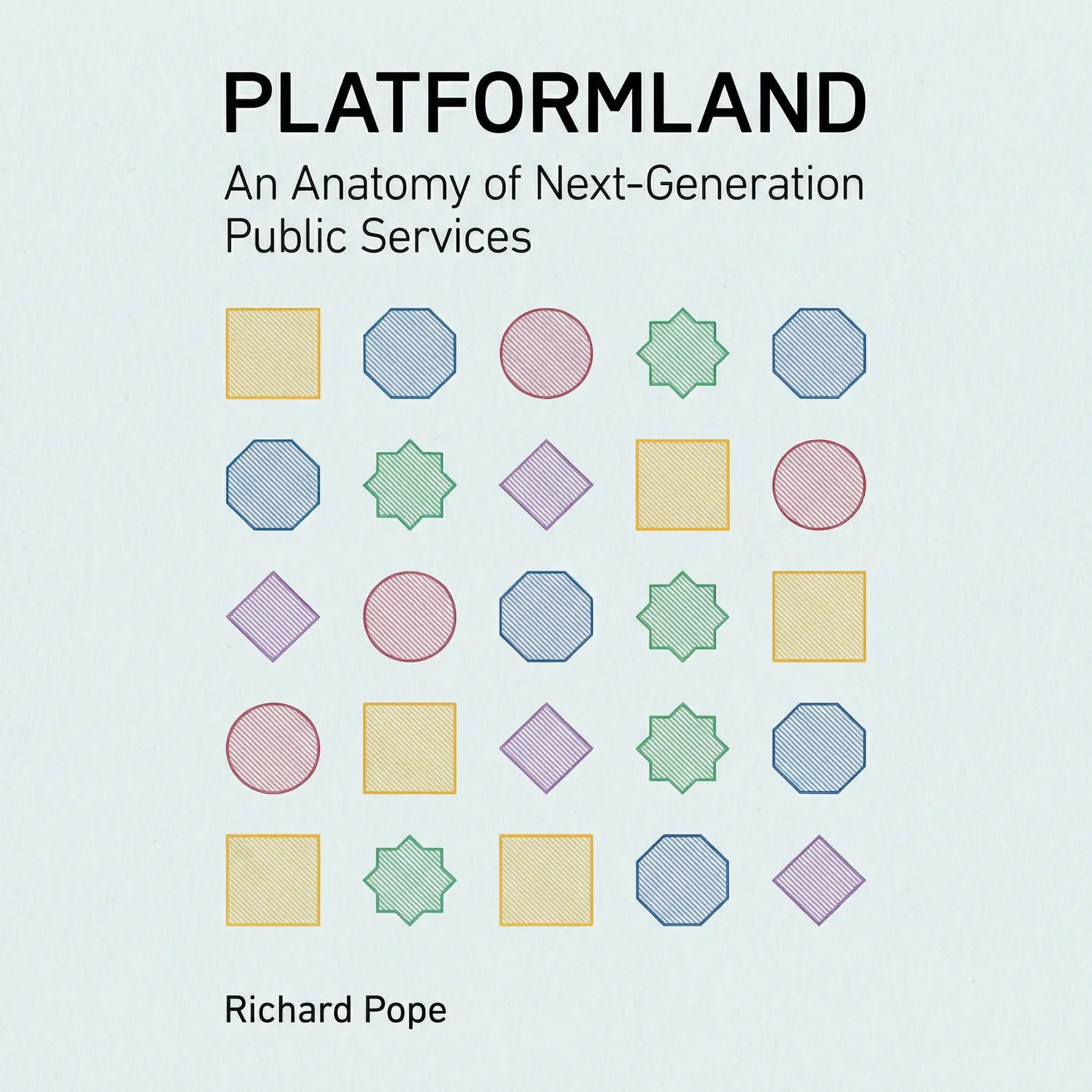
Platformland: An Anatomy of Next-Generation Public Services
By Richard Pope
Platformland examines the potential of digital transformation in public services, advocating for a human-centered approach that utilizes shared infrastructure, transparency, and smarter automation to reduce administrative burdens and strengthen democratic trust.
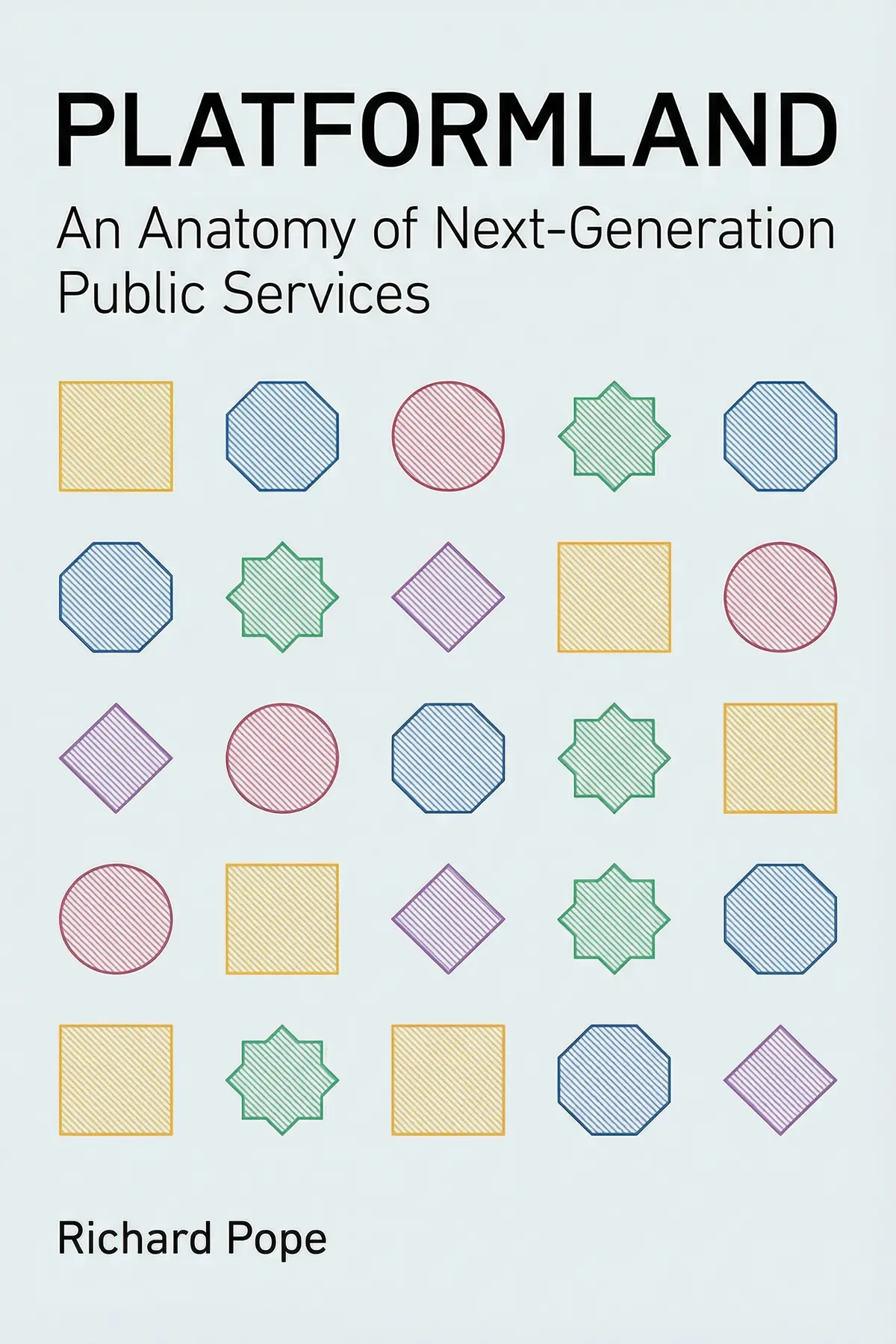
Table of Content
1. Introduction
1 min 39 sec
Think about the last time you used a truly modern digital service. Perhaps you ordered a meal, booked a ride, or transferred money across the world in seconds. These experiences are characterized by their speed, their intuitive design, and the way they seem to anticipate your needs. Now, contrast that with the last time you had to interact with a government agency. For many, that experience is the polar opposite—a tangle of confusing forms, redundant requests for the same information, and a sense that you are navigating a system designed in a different century.
In this exploration of how we interact with the state, we dive into the concepts presented by Richard Pope. We aren’t just looking at how to make websites look prettier; we are investigating a fundamental redesign of the public sector. The core throughline here is the transition from fragmented, bureaucratic institutions to what we call Platformland—a world where public services are built on shared infrastructure, are radically transparent, and are designed to respect the human being at the other end of the screen.
We will examine why simply putting a paper form online isn’t enough and how the ‘administrative burden’ actively prevents people from receiving the support they are legally entitled to. We’ll also look at the specific tools—like digital credentials and automated task lists—that can turn a frustrating maze into a helpful partner. Finally, we will consider the political and social stakes of this shift. If governments don’t step up to become the platforms of the future, private interests may fill the gap, potentially eroding the very democratic values these services are meant to uphold. This is a journey through the mechanics of a smarter, fairer, and more human-centered government.
2. The Hidden Weight of Administrative Burdens
2 min 47 sec
Government interactions often come with hidden costs that go far beyond time and paperwork, creating invisible barriers that can prevent the most vulnerable citizens from accessing vital support.
3. A Unified Foundation for Public Services
2 min 29 sec
Moving beyond disconnected departments requires a shared digital infrastructure that allows various government functions to work together as a single, cohesive platform.
4. Navigating Life Through Digital Loops
2 min 35 sec
Next-generation public services should move away from static websites toward dynamic tools that help citizens track their past, present, and future interactions.
5. The Evolution of Personal Credentials
2 min 23 sec
Digital credentials offer a way to prove who we are and what we are entitled to without sacrificing our privacy or carrying around stacks of sensitive paperwork.
6. Humanity, Transparency, and the Battle for Control
2 min 48 sec
Building trust in digital systems requires more than slick design; it demands radical transparency and a commitment to keeping public services in public hands.
7. Conclusion
1 min 16 sec
The journey through the concepts of Richard Pope’s work brings us to a clear conclusion: the digital transformation of government is not a technical challenge to be solved by IT departments, but a democratic necessity to be led by visionary policy. We have seen how the ‘administrative burden’ acts as a silent tax on those who can least afford it, and how a shift toward shared infrastructure and modular components can dismantle these barriers. By focusing on life-event-driven design—utilizing accounts, journals, and task lists—we can create a public sector that finally feels as modern and responsive as the best private-sector tools.
However, the ultimate success of this vision depends on trust. This trust is earned not through slick interfaces, but through radical transparency and ‘showing the seams’ of how power is exercised in the digital age. We must be vigilant against the creep of corporate intermediaries and ensure that the ‘platform’ of government remains a public utility. The future of our civic life depends on our ability to build systems that are as efficient as they are empathetic, and as automated as they are accountable. As we move forward, the goal is simple: a state that is invisible when it should be, present when it’s needed, and always, unswervingly, on the side of the people it serves.
About this book
What is this book about?
Have you ever wondered why booking a flight is seamless while applying for government assistance feels like navigating a labyrinth? This exploration of the digital public sector looks at the invisible hurdles, known as administrative burdens, that prevent citizens from accessing the help they need. It moves beyond simple digitization, which often just recreates old bureaucracies on a screen, and instead proposes a foundational shift in how governments build and share technology. The promise of this work is a future where public services are proactive, personalized, and efficient. By focusing on shared digital components—like unified credentials and transparent data tracking—governments can move away from siloed departments toward a cohesive platform. This transition isn't just about better software; it's about reclaiming public power from corporate interests and ensuring that technology serves as a tool for empathy, accountability, and democratic health.
Book Information
About the Author
Richard Pope
Richard Pope is a digital strategist and designer with extensive experience in public sector technology and policy. He played a key role in the development of GOV.UK and has worked on various digital transformation projects across government and public services. He’s passionate about the intersection of technology, governance, and public service, advocating for transparency and accountability in digital systems.
Ratings & Reviews
Ratings at a glance
What people think
Listeners value the methodical and hands-on strategy Richard Pope applies to digital governance, effectively mixing intricate policy concepts with concrete advice for building public systems. Additionally, they describe the author's "government as a platform" concept as inspiring and insightful, emphasizing technology's potential to improve transparency and public confidence in democracy. The inclusion of robust, practical examples is also noted, as one listener points out that the work's "textbook-ish feel" serves as an asset for experts, while another commends the relevant look at past cases like Girobank.
Top reviews
Prim
Richard Pope has written the UK’s answer to Jenifer Pahlka’s Recoding America, and it is every bit as essential for the modern policy toolkit. He moves past the tired 'digitize everything' mantra to explore how the very architecture of our services determines the health of our democracy. The transition from the early days of GDS and GOV.UK to a future of 'composite services' is mapped out with remarkable clarity. Frankly, the way he explains Conway’s Law—how organizational silos create messy user experiences—is the best I’ve ever read. It is a dense, thoughtful work that treats public administration as a design challenge rather than just a budgetary one. I found the 'journals-accounts-task lists' framework especially applicable to my own work in local government. This isn’t just about making websites look better; it’s about rebuilding the social contract for a digital age. Essential reading for anyone who believes technology can actually make the state more human.
Show moreSatit
Ever wonder why interacting with your local government feels like stepping back into 1995? Platformland answers that question while providing a rigorous roadmap out of the mess. Pope’s argument that technology and policy are 'one and the same' is a powerful wake-up call for leaders who still view IT as a back-office function. I was particularly struck by the concept of 'seamful' design. Instead of hiding the complexity of the state, we should show the 'seams' to foster trust through transparency. This is a bold departure from the standard Silicon Valley 'frictionless' obsession. The writing is sharp, and despite the dry subject matter, the author’s passion for democratic accountability shines through. It made me reconsider the entire purpose of a digital credential not just as a tool, but as a 'social object.' If you work in the public sector, buy this for your boss immediately.
Show moreNiphon
Software is politics now—that’s the core message that stuck with me after closing this book. Richard Pope masterfully explains how the 'boring' bits of administration, like APIs and data registries, are actually the front lines of social justice. By removing administrative burdens through proactivity, we can actually help the people who need it most. I appreciated how he balanced the technical legacy of Unix philosophy with the human need for 'life event' design. The book feels like a masterclass in how to join up the fragments of a broken bureaucracy. Not gonna lie, I’ve already highlighted half the chapters. It’s a visionary look at how the state can behave toward its citizens in the 2020s. We need more thinkers who understand that a well-designed form is a democratic act.
Show moreChiw
As someone who has spent years navigating the ‘administrative burden’ of social services, Pope’s ideas on proactivity and composite services felt like a breath of fresh air. The concept that a government should only ask for information once is so simple, yet we are so far from it. This book provides the technical and philosophical blueprint to get there. It’s refreshing to read a 'tech' book that actually understands the messiness of human life and policy. The author's use of real-world examples from Australia and Finland shows that this isn't just theory—it's happening. The writing style is professional yet accessible, avoiding the jargon that usually kills books on public administration. It’s a hopeful look at how we can use automation to empower citizens rather than just cutting costs. Truly a must-read for the next generation of civil servants.
Show moreBird
The chapter on 'seamful' design completely flipped my perspective on what 'user-friendly' should actually mean in a democratic context. Usually, we are told that everything should be invisible, but Pope argues that we need to see the work of the state to trust it. This book is a brilliant exploration of how to design for 'life events' like births and weddings rather than just for departmental silos. The focus on 'journals' to track government activity is a simple but revolutionary idea for transparency. In my experience, most books on digital transformation are either too vague or too technical, but this hits the sweet spot perfectly. It is structured like a textbook but reads like a manifesto. Richard Pope has provided a coherent vision that every government department should be studying right now.
Show moreRung
After hearing Pope speak on a podcast, I was worried the book might just be a collection of GDS war stories, but it is so much more than that. This is a foundational text for the next decade of public service design. He manages to make the 'dry' aspects of administration—like data registries and unique identifiers—seem genuinely exciting and vital for our future. The 'strategy' boxes are particularly helpful, providing a clear path for anyone trying to implement these ideas in a resistant organization. It’s a book that demands to be interacted with, not just read. I finished it feeling both challenged and inspired about the potential for technology to foster democratic trust. If we want public services that actually work for people in the 2020s, we have to start building Platformland.
Show moreChon
While the vision presented here is undeniably optimistic, I found myself wanting a bit more depth on the specific cybersecurity risks inherent in centralizing foundational data. Pope makes a compelling case for digital IDs and the 'once-only' principle, but the constitutional hurdles in countries like the UK are massive. To be fair, the book is incredibly practical, and the 'textbook-ish' structure actually helps in navigating the more complex theories. I loved the inclusion of the Girobank history—it provides a timely reminder that these challenges aren't entirely new. The 'patterns' at the end of each chapter are pure gold for practitioners. It does feel a bit repetitive with the same few country examples (Estonia, India, etc.), but that’s likely because they are the only ones doing this correctly. A solid, insightful guide that bridges the gap between high-level policy and boots-on-the-ground engineering.
Show moreNaomi
Finally got around to this after seeing it recommended on several 'best of' lists for public sector workers. The book does a fantastic job of breaking down the 'Government as a Platform' concept pioneered by Tim O'Reilly into something actionable for the current decade. I think the real strength lies in the focus on 'digital social objects' and credentials. It’s a nuanced take on how we can share data without sacrificing privacy. My only gripe is that it glosses over some of the structural and bureaucratic constraints that make these changes so hard to implement in the first place. The tech is the easy part; the culture is the mountain. Still, Pope’s insights into GDS’s history provide a realistic grounding for his theories. It’s a balanced, thoughtful, and highly necessary contribution to the field of civic technology.
Show morePawinee
Look, this is a dense read, but the structural layout with recommended patterns at the end of each section makes it incredibly practical for anyone in the field. I particularly enjoyed the analysis of the Universal Credit system—it’s a rare look at how digital design can save a failing policy. Pope is right to argue that we need a digital ID, even if that remains a political third rail in many countries. The book is very focused on Anglo-American contexts, which limits its scope slightly, but the lessons on API control and 'once-only' data are universal. It’s an optimistic take on the future of the state that doesn’t ignore the hard work of implementation. A very strong four stars for its clarity and utility.
Show moreLeah
To be fair, I expected something a bit more narrative-driven, but what I got was essentially a very high-quality manual for digital civil servants. The truth is, if you aren't already working in policy or UX design, parts of this will feel incredibly dry. Pope is clearly an expert, and his work with the Government Digital Service is legendary, but the 'strategy' sections at the end of chapters felt a bit formulaic after a while. I also felt the ending was quite abrupt; it lacked a final 'blue sky' vision for where AI fits into all this beyond just automation. That said, the case studies on Universal Credit were fascinating. It’s a good book for a specific audience, but it might be too specialized for the casual reader looking for a tech-thriller vibe. It’s more of a reference guide than a cover-to-cover page-turner.
Show moreReaders also enjoyed

Age of Anger: A History of the Present
Pankaj Mishra
A Different Kind of Power: A Memoir
Jacinda Ardern
Age of Propaganda: The Everyday Use and Abuse of Persuasion
Anthony Pratkanis
A Higher Loyalty: Truth, Lies and Leadership
James Comey


A Promised Land
Barack Obama
AUDIO SUMMARY AVAILABLE
Listen to Platformland in 15 minutes
Get the key ideas from Platformland by Richard Pope, plus 5,000+ more titles in English and Thai.
- 5,000+ titles
- Listen as much as you want
- 7-day free trial
- Cancel anytime







