

A Biography of Loneliness: The History of an Emotion
Fay Bound Alberti
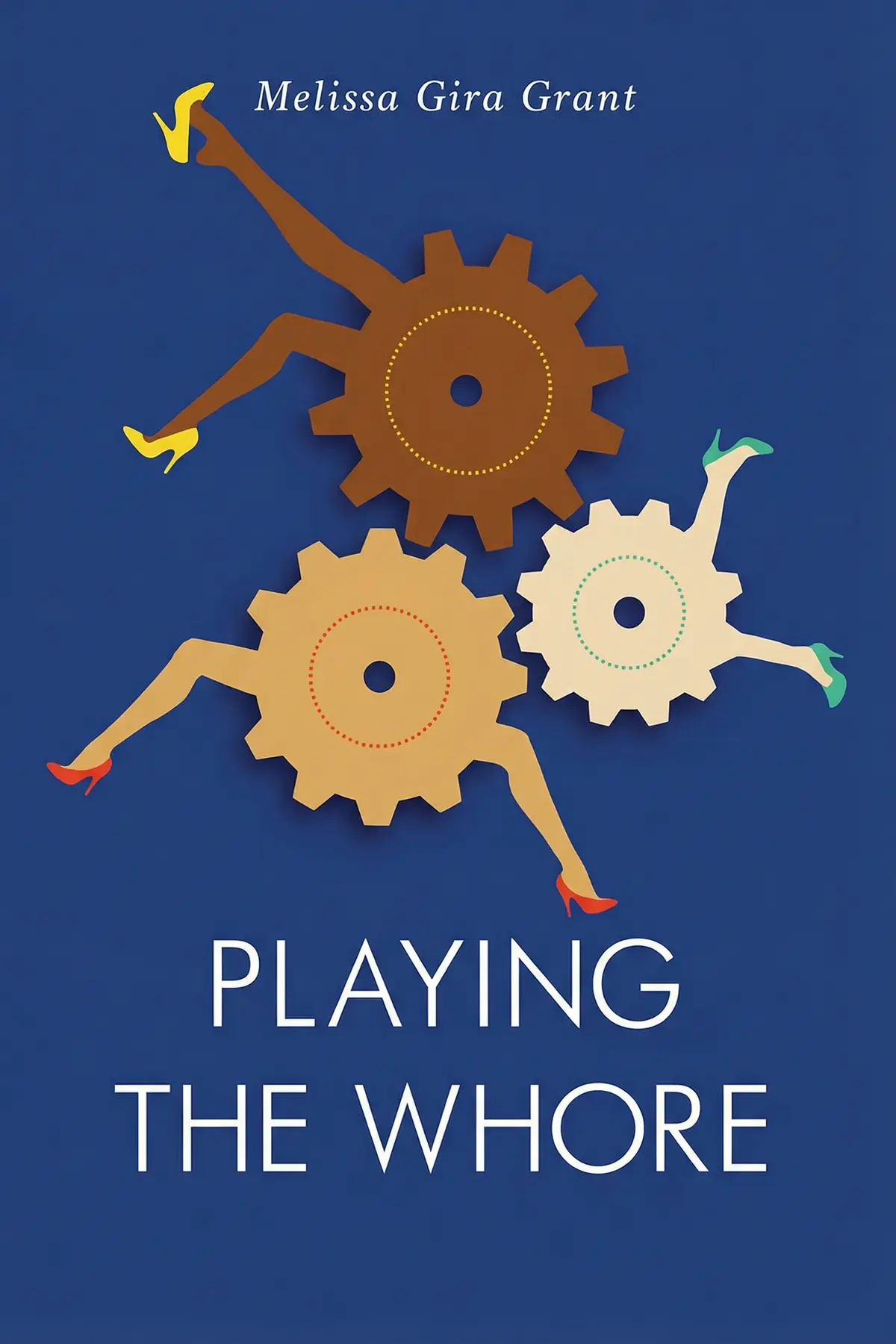
Melissa Gira Grant dismantles common myths about sex work, arguing it should be treated as labor rather than a moral failing. She calls for decriminalization to ensure safety and basic human rights.
1 min 38 sec
When we hear the word “whore,” it is almost never used in a way that implies dignity or professional respect. For centuries, the act of trading sex for money has been shrouded in a thick layer of moral judgment, often dismissed as a desperate last resort or a societal sickness. We frequently hear it called the oldest profession, yet it remains one of the few jobs where the worker is treated as a problem to be solved rather than a person with agency. This narrow view has profound consequences. It pushes real people—individuals with families, goals, and rights—into the margins of society, where they are forced to operate without the safety nets that most of us take for granted.
The heart of this discussion isn’t just about sex; it’s about work, power, and the right to exist in public space without fear. Our collective discomfort with sexuality has created a environment where the law often does more harm than good. When we prioritize our own moral comfort over the actual safety of workers, we create a vacuum where abuse and exploitation can thrive. We are going to step away from the traditional narratives of “rescue” and “shame” to look at the world through the eyes of the sex workers themselves.
Over the course of this summary, we will explore the complex relationship between those in the trade and the systems designed to manage them. We’ll look at why the police are often viewed as a threat rather than a resource, how international movements are beginning to recognize the legitimacy of this labor, and why the laws we think are helpful might actually be making the streets more dangerous. By the end, you’ll see why challenging the status quo is the only way to truly advocate for the human rights of everyone involved in the work of sex.
1 min 59 sec
Discover why the very institution meant to provide safety often becomes the primary source of danger and harassment for those working in the sex industry.
1 min 57 sec
Explore how policy decisions made without the input of sex workers often lead to laws that prioritize moral optics over actual safety.
1 min 51 sec
Trace the history of the sex workers’ rights movement and learn how international organizations are beginning to view the trade as legitimate labor.
1 min 42 sec
See how the criminalization of the sex trade forces a dangerous double standard regarding health and safety equipment.
1 min 50 sec
Analyze why society is often more concerned with the visibility of the sex trade than the actual well-being of the people involved.
1 min 57 sec
Uncover the diverse realities of sex work that contradict the ‘helpless victim’ stereotype and highlight worker independence.
1 min 35 sec
As we wrap up our look at the work of sex work, the throughline becomes clear: the greatest threats to those in the industry are not inherent to the act of sex itself, but are the products of a society that refuses to acknowledge their labor. When we use words like “whore” to dehumanize and marginalize, we create the very conditions that lead to violence and exploitation. By treating sex work as a criminal or moral problem rather than a labor issue, we provide a cover for police misconduct and allow for laws that make the workplace more dangerous.
The stories of empowerment, from the independent digital creators to the activists fighting for legal recognition, show us that this is a community of resilient individuals who are demanding the right to safety and dignity. They aren’t asking to be ‘saved’ by people who don’t understand their lives; they are asking for the same protections that any other worker expects. They want the right to carry condoms without being arrested, the right to advertise without being doxed, and the right to call for help without being judged.
Moving forward, the challenge for all of us is to listen. The most effective way to support those in the sex trade is to support their autonomy. This means advocating for the decriminalization of the work and recognizing that sexual liberation must include the rights of those who work in the industry. By shifting our perspective from one of moral judgment to one of human rights and labor equity, we can help create a world that is safer and more just for everyone. Remember, the goal isn’t just to change the law; it’s to change the way we see the people who are simply trying to make a living in a complex world.
What does it truly mean to navigate the world as a sex worker? In this deep dive, we explore the often-ignored reality of those working in an industry that society prefers to keep in the shadows. Rather than viewing sex workers as victims in need of saving or criminals in need of punishment, this analysis reframes the conversation around labor rights and bodily autonomy. The promise of this exploration is a radical shift in perspective: seeing sex work not as a moral tragedy, but as a profession populated by individuals who deserve the same legal protections and respect as any other worker. By examining the failures of current policing and the unintended consequences of well-meaning legislation, we uncover why the current system often puts the very people it claims to protect at greater risk. From the streets of New York to the legal landscapes of Sweden, this journey challenges the stigma surrounding the word “whore” and advocates for a world where sexual liberation includes the right to trade sex on one’s own terms.
Melissa Gira Grant is an accomplished writer and journalist who brings a lived perspective to her advocacy, having formerly worked as an exotic dancer. She is a dedicated defender of human rights, focusing specifically on the autonomy and safety of those in the sex industry. Her expertise has led her to collaborate with various gender equality organizations and sex work support groups. Grant’s insightful commentary and reporting have been featured in major global publications, including The New York Times and The Guardian.
Listeners find this work highly informative, with one review pointing out the author’s obvious firsthand perspective. Additionally, the book earns praise for its clear prose and citation quality, with one listener noting its well-researched content. Listeners also appreciate the pacing, with one describing it as persuasive. Finally, they value its relevance, with one review mentioning how the historical context grounds the otherwise sensational topic.
Grant manages to strip away the sensationalist lens that usually clouds discussions about the sex industry. Instead of the typical 'victim or vixen' tropes, we get a nuanced look at labor rights and the systemic policing of women's bodies. The truth is, her perspective as an insider provides a level of depth that many academic texts lack. I was particularly struck by how she reframes 'whorephobia' as an economic tool rather than just a social prejudice. It’s a slim volume but incredibly dense with ideas that will stick with you long after you put it down. While some parts feel a bit more like a collection of essays than a single narrative, the overarching theme of autonomy is powerful. This should be required reading for anyone claiming to be a feminist in the modern age. It's not just about sex; it's about who gets to define work in a capitalist society.
Show moreHistorical context is usually where these kinds of books get dry, but Grant uses it to ground the sensationalism of modern headlines. She traces the evolution of 'the prostitute' as a social construct from the 19th century to now, showing how the label is used to police all women. Not gonna lie, I was skeptical about her claims regarding Pompeii and the antiquity of the trade, but her point isn't about the existence of sex-for-money. It's about how we've turned a specific group of workers into a 'problem' to be managed by the police. The pacing is quick, almost like a series of long-form journalism pieces. Even if you don't agree with every one of her conclusions, you can't deny the clarity of her prose. It’s a well-researched polemic that treats its subjects with a dignity they are rarely afforded in public discourse.
Show moreMelissa Gira Grant provides a perspective that is desperately missing from the mainstream feminist conversation. She completely upends the 'fallen woman' narrative by insisting that we view sex work through the lens of labor rights rather than morality. The book is educative in the best way possible, forcing you to look at the 'police-industrial complex' and how it profits from the marginalization of sex workers. I loved how she handled the 'yuck factor,' basically telling the reader that their personal discomfort shouldn't dictate someone else's legal rights. It’s a bold, unapologetic book that doesn't care if it makes you uncomfortable. For anyone who has only ever heard the 'rescue' side of the story, this is a necessary and eye-opening antidote.
Show moreThe section on the Cambodian 'rescue' industry was easily the most compelling part of this entire book. Grant brilliantly dismantles the 'savior' complex of NGOs that often leave women in worse positions than they found them. Personally, I found her argument that sex work is a performance of intimacy—not unlike the work of a therapist or a nanny—to be a total game-changer. She avoids the trap of glamorizing the industry, instead focusing on the mundane realities of labor and the 'yuck factor' that fuels bad policy. To be fair, her tone can get a bit sharp and dismissive toward those who disagree with her, which might alienate some readers. Yet, the research she brings to the table regarding the 'talking crime' of solicitation is vital. It’s a quick read but demands significant mental energy to process.
Show moreFew books challenge your gut reactions as effectively as this one does. I went in with a lot of preconceived notions about the 'dangers' of sites like Craigslist, but Grant’s analysis of the 'Peephole' and online autonomy really made me reconsider. She argues that these platforms actually provided a layer of safety that the 'rescue' industry fails to acknowledge. Of course, her dismissal of the grieving parents in the following chapter felt unnecessarily cold and was hard to stomach. It’s that kind of emotional friction that makes the book both important and difficult. She refuses to give you the easy, 'soft' narrative that makes non-sex workers feel comfortable. The writing is punchy, aggressive, and deeply informed by years of activism. If you want a book that confirms your biases, look elsewhere.
Show moreThink of this less as a memoir and more as an intellectual biography of an activist movement. Grant doesn't rely on 'trauma porn' to get her point across; she refuses to perform the 'reveal' that so many readers expect from former sex workers. Instead, she treats her readers like adults, focusing on the intersection of labor, technology, and the law. I found her discussion of the New Zealand model to be enlightening, even if I wish she had delved deeper into the specific legislative outcomes. The prose is sophisticated, but Grant has a way of making complex sociological concepts feel accessible. There’s a certain 'insider knowledge' here that you just won't find in a book written by a detached academic. It’s a persuasive call for the decriminalization of survival, grounded in the reality of the 21st-century economy.
Show moreAfter hearing the buzz around this book on various blogs, I finally picked it up and was impressed by how readable it actually is. Grant avoids the dense jargon that usually kills these kinds of political texts. She makes a very clear case for why solicitation is essentially a 'talking crime' and how criminalization creates the very dangers it claims to prevent. I did find her treatment of other feminists to be a bit uncharitable at times, which made the book feel somewhat insular. But the historical context she provides—especially regarding the shift from 'whore' to 'prostitute'—is masterfully done. It’s a persuasive, fast-paced read that manages to be both an activist's handbook and a serious piece of social criticism. Definitely worth your time if you're interested in labor politics.
Show moreI really wanted to love this, but the editing left me feeling a bit adrift. Grant is clearly brilliant, and her points about the role of the state in criminalizing survival are provocative. However, the book lacks a cohesive structure, often leaping from one polemic to another without a clear bridge. Look, I agree with her core premise that sex workers should lead the conversation about their own lives. But the refusal to engage in traditional debate makes the book feel like it's preaching to the choir rather than building a bridge for skeptics. The chapter on the history of the term 'prostitute' was fascinating, even if the lack of formal citations in some sections made me want to double-check her sources. It’s a valuable perspective, but the execution is just a little too scattered for a five-star rating.
Show moreWhile the central message is vital, the writing style in this collection is a bit hit-or-miss for me. At times, Grant is incredibly sharp, particularly when she's discussing how police use 'stings' to harass workers rather than protect anyone. Other times, she wanders aimlessly into lyrical elegies for red-light districts that feel out of place in a political manifesto. Truth is, the book could have used a much stronger editorial hand to weave these disparate threads together. I appreciated the citations of sociologists and ethnographers, which lent the book some much-needed weight. However, the tone fluctuates between 'Wonkish Academic' and 'Angry Activist' so quickly it can give you whiplash. It’s still a 3-star read because the perspective is so rare, but it’s definitely a flawed work.
Show moreFrustrating is the only word I can find for my experience with this text. Grant makes sweeping generalizations about 'anti-prostitution feminists' without ever quoting them directly, which feels intellectually dishonest. The lack of proper references and evidence was a massive disappointment for a book that purports to be a serious political intervention. Frankly, her assertion that sex work is no more dangerous than cutting cuticles or diapering babies ignores the staggering rates of violence and trauma inherent in the industry. She spends so much time castigating the public’s curiosity while providing very little concrete data to support her own claims. By lumping together every form of sexual labor, from high-end escorting to street-based survival, she renders the term 'sex work' almost meaningless. It feels more like a collection of rants than a coherent argument.
Show moreFay Bound Alberti

Daniel Goleman


Virginia Woolf
Tracy Rosenthal
Jessica Valenti

Johny Pitts
AUDIO SUMMARY AVAILABLE
Get the key ideas from Playing the Whore by Melissa Gira Grant, plus 5,000+ more titles in English and Thai.







