
14 min 58 sec
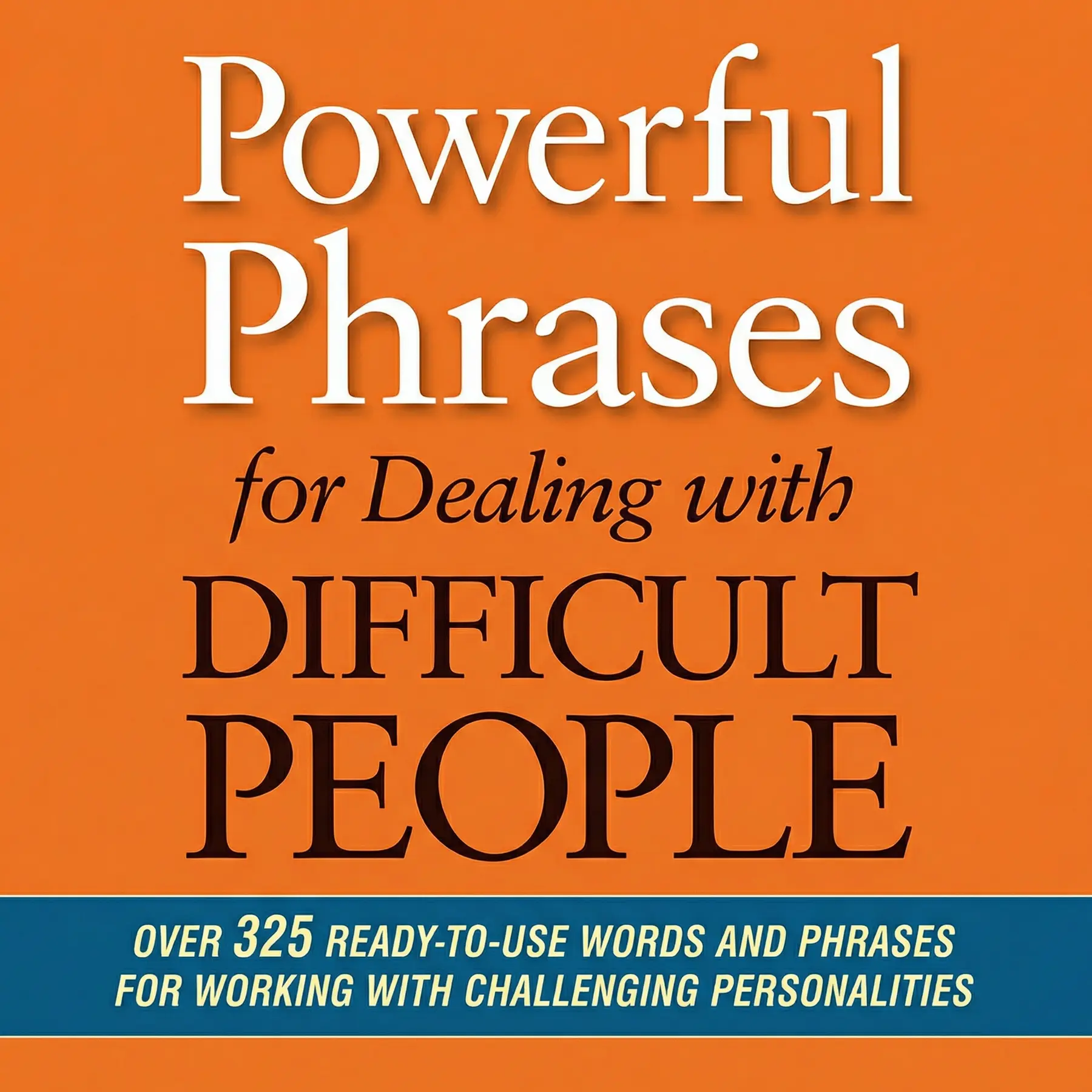
Powerful Phrases for Dealing with Difficult People: Over 325 Ready-to-use Words and Phrases for Working with Challenging Personalities
Discover a practical five-step method for managing workplace conflict. This guide explains how to use specific phrases and nonverbal cues to transform difficult professional interactions into productive, respectful resolutions.
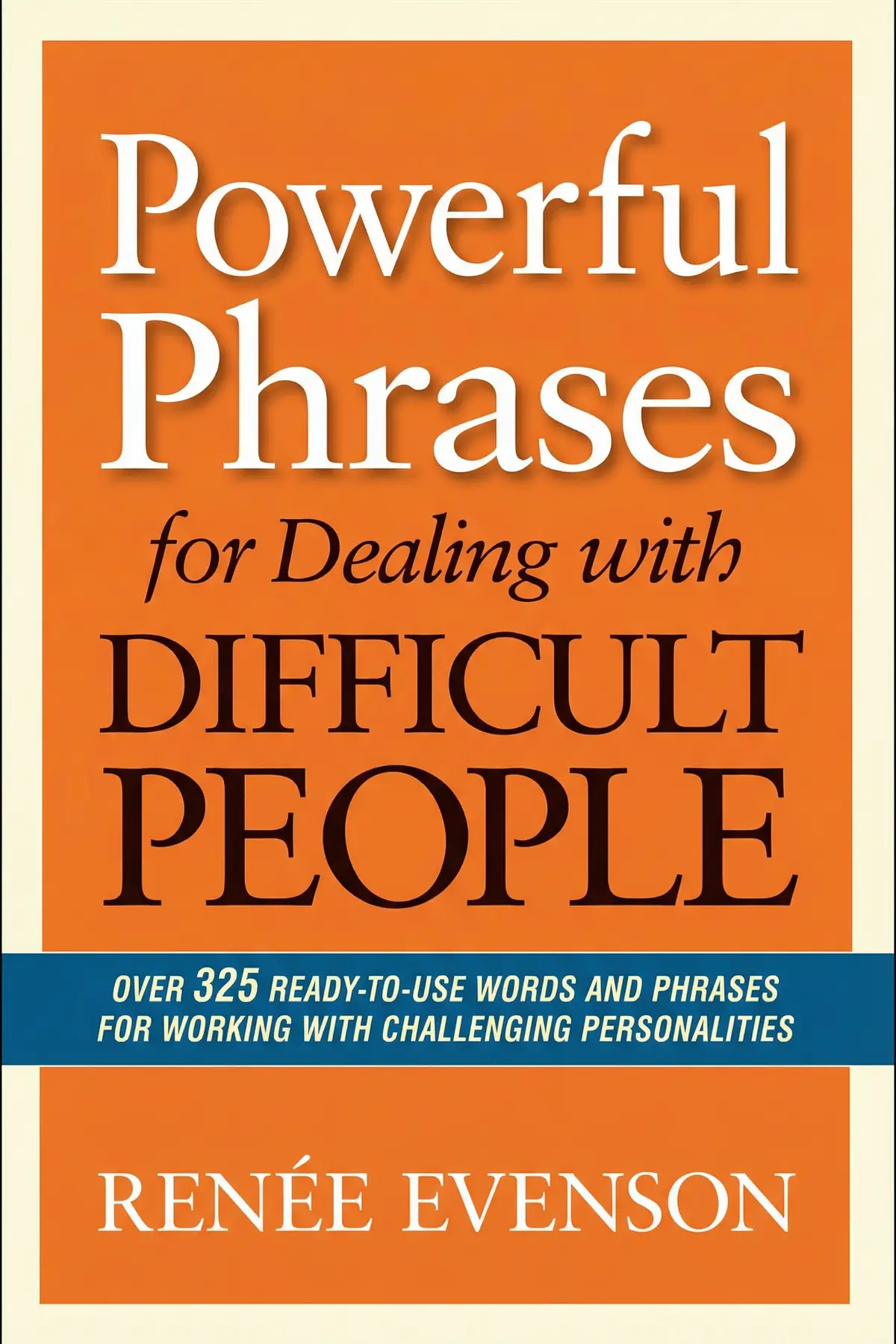
Table of Content
1. Introduction
1 min 25 sec
Every workplace has them: the individuals who seem to thrive on tension or simply lack the self-awareness to realize they are causing a stir. You might deal with a coworker who consistently takes credit for your hard work, a supervisor who seems impossible to please, or a colleague who monopolizes every meeting with their own agenda. These difficult personalities can turn a productive workday into an exhausting battle of wits. However, the secret to surviving and even thriving in these environments isn’t just about patience; it is about having a tactical plan.
In this summary of Renée Evenson’s work, we are going to explore a structured approach to interpersonal conflict. This isn’t just a collection of vague advice; it’s a specific, actionable toolkit designed to help you navigate the messiest human interactions with professional poise. We will walk through a five-step process that allows you to move from initial frustration to a lasting resolution. Along the way, we will identify the specific phrases that can de-escalate an argument and the body language cues that speak louder than your words ever could.
The throughline of this guide is that communication is a skill that can be practiced and perfected. By the time we finish, you will see that you don’t have to be a victim of someone else’s difficult behavior. Instead, you can become the person who sets the tone for the entire office, transforming potential blowups into opportunities for better understanding and mutual respect.
2. The Linguistic Foundation of Conflict
2 min 02 sec
Small shifts in how you start a sentence can determine whether a coworker listens to you or immediately begins building a defensive wall.
3. Categorizing the Phrases of Resolution
2 min 19 sec
Specific categories of language, from phrases of understanding to reconciliation, provide a roadmap for steering any difficult conversation toward a positive end.
4. Mastering the Silent Conversation
2 min 08 sec
Your words only tell half the story; understanding the nuances of body language and tone is essential to ensuring your message is received as intended.
5. The Strategic Five-Step Blueprint
1 min 57 sec
Navigating a clash requires more than just a good attitude; it requires a repeatable process that moves systematically from thought to resolution.
6. Navigating Power Dynamics and Toxicity
1 min 55 sec
While the standard rules of engagement work for most, handling difficult bosses or workplace bullies requires a more nuanced and sometimes firm approach.
7. Taking Accountability When You Are the Cause
1 min 44 sec
Conflict resolution is a two-way street; learning how to handle accusations against yourself is just as important as knowing how to confront others.
8. Conclusion
1 min 28 sec
Managing difficult people is not about changing their personalities; it is about changing the way you interact with them. As we have explored, the key to professional harmony lies in a combination of linguistic precision, nonverbal awareness, and a structured strategic process. By replacing accusatory ‘you’ statements with descriptive ‘I’ phrases, you lower the barriers to communication. By aligning your body language with your intent, you ensure your message is clear and sincere. And by following the five steps of conflict management—thinking, understanding, defining, solving, and resolving—you ensure that no problem is left to fester.
What this really means is that the power to improve your work life is already in your hands. You don’t have to wait for a difficult boss to become a better leader or for a lazy coworker to become a go-getter. By using the powerful phrases and tactics we’ve discussed, you can steer almost any interaction toward a productive outcome. The next time you feel that familiar rise of frustration during a meeting or a tense encounter in the breakroom, remember the pause. Take a breath, choose your words carefully, and lead the way toward a resolution. This approach doesn’t just solve problems; it builds a reputation for you as a calm, capable, and highly effective professional.
About this book
What is this book about?
Interpersonal friction in the workplace is almost inevitable, yet few professionals are taught the specific linguistic and psychological tools needed to handle it effectively. Whether it is a coworker who steals credit, a boss who micromanages, or an office bully, these challenging personalities can disrupt productivity and drain emotional energy. This summary explores Renée Evenson's tactical approach to conflict resolution, offering a roadmap for navigating these high-stakes conversations with grace. The promise of this material is that conflict does not have to be destructive. By mastering a specific five-step process, you can address grievances while actually strengthening your professional relationships. You will learn the importance of 'I' statements, the power of nonverbal communication, and exactly which phrases to use to de-escalate a heated situation. Beyond just managing others, the material also provides a mirror for self-reflection, helping you handle moments where you might be the one causing the friction. By the end, you will have a comprehensive toolkit for maintaining a positive, professional environment regardless of who you have to work with.
Book Information
About the Author
Renée Evenson
Renée Evenson holds a degree in organizational psychology and has dedicated her career to the study of communication and conflict management. With over thirty years of experience in the field of customer service management, she is a seasoned expert in human interaction. She has written extensively on these topics, including well-known titles such as Customer Service Training 101 and Customer Service Management Training 101.
Ratings & Reviews
Ratings at a glance
What people think
Listeners find that the book offers excellent direction and coaches them on employing smart replies, with one listener noting its specific utility in professional environments. Furthermore, the material is accessible and impactful, as one listener characterizes it as among the top conflict resolution guides they have encountered. Nevertheless, the included examples get a varied reception—whereas some value the distinct portrayals, others feel the volume of scenarios is excessive. Feedback on the phrasing is also divided, with one listener admiring the practical, common-sense style while others consider it to be redundant.
Top reviews
Mai
Finally got around to reading this, and it’s basically a cheat sheet for office politics. As someone who usually freezes up during conflict, having specific phrases ready to go is a total lifesaver. Evenson breaks down the communication into bite-sized tactics that actually feel doable. I particularly liked the section on body language; I never realized how much my posture was signaling defensiveness before even opening my mouth. While some of the scripts feel a bit formal, you can easily tweak them to fit your own speaking style. To be fair, not every coworker is going to respond as perfectly as the examples in the text, but the five-step process provides a solid foundation. It gives you a sense of control in situations that usually feel chaotic. It’s a great reference to keep on your desk for those days when a colleague is being particularly difficult.
Show moreRatchanee
Wow, I wish I had read this five years ago when I first started my management role. Renée Evenson has a way of making complex interpersonal dynamics feel manageable. The book is incredibly easy to read and gets straight to the point without a lot of academic fluff. I’ve already started using the 'phrases of understanding' with my team, and the difference in tone during our weekly meetings is noticeable. Look, it’s not magic—you still have to do the hard work of having the conversation—but having a script takes the anxiety out of it. I especially liked the section on dealing with yourself when you're the one in the wrong. It’s refreshing to see a conflict book acknowledge that we aren't always the heroes of the story. Highly recommend this for anyone looking to sharpen their professional communication skills quickly.
Show moreSven
Picked this up after a particularly rough week with a micromanager. While it didn't solve all my problems, it definitely gave me some tools to navigate the tension. The 'phrases of compromise' were specifically helpful in moving our conversations from blame to problem-solving. I appreciate how Evenson emphasizes that you can't change people, but you can change how you interact with them. Truth is, the scenarios are a bit idealized, and I doubt every bully will back down just because I used a calm tone. But the book acts as a great mental rehearsal for difficult talks. It’s structured well enough that you can flip to the specific type of person you're dealing with—like credit-stealers or gossips—and get immediate ideas. It’s a practical addition to any professional’s bookshelf, even if some of the language feels a bit stilted at times.
Show moreSofia
As someone who has spent years in customer service, I had high hopes for these 'powerful phrases.' For the most part, Evenson delivers a very structured and practical guide. I found the five-step process—think, understand, define, solve, and agree—to be a helpful framework for organizing my thoughts before a confrontation. The advice on avoiding 'always' and 'never' is a classic for a reason; it really does prevent people from getting immediately defensive. My only real gripe is that it feels a bit repetitive after a while. You get the point pretty early on, but the book keeps looping back to the same themes. Still, the scripts for specific types of people like credit-stealers or gossips are quite useful as a starting point. It’s a solid resource that I’ll likely revisit when I need a refresher on professional diplomacy.
Show moreLily
This book is a solid, practical guide for anyone who feels paralyzed by office conflict. While some of the advice leans toward the basic side, the value lies in the structure it provides for conversations that usually feel messy and emotional. I particularly appreciated the 'phrases of compromise' which help steer a heated moment toward a productive resolution. To be fair, some of the suggested non-verbal cues—like the nose-wiping signal for brown-nosers—are a bit strange, but the vast majority of the tactics are grounded in good common sense. In my experience, having a script makes it much easier to stay calm when a coworker is being unprofessional. It's an easy read that serves as a great confidence booster for those of us who tend to avoid confrontation. Not every scenario is perfectly realistic, but the foundational 'I' statements and the emphasis on validation are skills everyone should have in their professional toolkit.
Show moreSatit
Not what I expected given the glowing reviews I've seen elsewhere. The book is somewhat limited in its scope, presenting very specific, narrow scenarios that rarely happen exactly that way in real life. I felt like I was reading a collection of scripts for a middle school play. To be fair, the section on nonverbal communication was interesting, and the core idea of 'I' statements is sound, but it wasn't enough to make this a must-read. The repetition is the biggest issue; once you understand the five-step process, you've basically read the whole book. The chapters on different 'types' of difficult people just repeat the same formula over and over again. It also largely ignores the issue of reprisal or what to do if your boss is truly unethical. It’s a very surface-level look at a very deep problem, though it might be helpful for someone completely new to office dynamics.
Show moreBird
After hearing several people recommend this for workplace conflict, I decided to give it a shot. It’s a solid 3-star book, essentially serving as 'Conflict Resolution 101.' If you've never been to a corporate soft-skills training, this will be eye-opening, but for most seasoned professionals, a lot of this will feel like common sense. I did find the distinction between dealing with a coworker versus a boss to be a valuable addition. However, I'm skeptical about some of the 'reconciliation' phrases—they might feel a bit forced in a cold office environment. Gotta say, the five-step process is easy to remember, but the book assumes that the other person will always be reasonable if you just use the right words. Real life is rarely that clean. It's a decent starting point for those who struggle with assertiveness, but it lacks the depth for truly complex human interactions.
Show moreKwan
The scenarios in this book belong in a fantasy novel, not a corporate office. I was looking for tactical advice to handle a hostile manager, but instead, I got a series of hypothetical dialogues where the antagonist magically sees the light after a single 'I' statement. Frankly, if I told my current boss 'I feel distracted when you interrupt me,' he would laugh me out of the room. It reads like a therapy session for a functional relationship, completely ignoring the power dynamics of a toxic workplace. The book assumes your 'difficult person' is just a misunderstood friend, rather than someone actively trying to undermine you. It’s also incredibly repetitive, hammering the same five steps into every chapter until you’re skimming just to find something new. If you’ve ever held a job for more than six months, you already know the basics of professional communication. This offers nothing more.
Show morePracha
Ever wonder what it's like to argue with a cardboard cutout? That is exactly how the 'difficult' characters in this book feel. Evenson sets up these straw-man arguments where the resolution is always neat, tidy, and frankly, delusional. There’s an example about someone having bad breath where the solution is just 'oh, I have a bad tooth,' which is just absurd. Life isn't a scripted HR training video. While the core idea of 'seeking first to understand' is valid, there are much better books on the market that handle these nuances with more depth. I’d suggest Crucial Conversations if you actually want to learn how to navigate high-stakes emotions. This one is far too simplistic for anyone dealing with actual workplace bullies or unethical behavior. It lacks the grit needed for real-world conflict.
Show moreAhmed
Who actually talks like this in a real office setting? I found the tone of this book to be almost patronizing. The 'powerful phrases' often come across as weak and overly apologetic. In a high-stakes corporate environment, saying 'I feel distracted when you interrupt me' doesn't make you look like a leader; it makes you look like a victim. People in hostile work environments don't care about your feelings, and this book fails to acknowledge that harsh reality. It reads like a therapy session for people who are afraid of any form of directness. I wanted strategies for redirecting focus back to work assignments, but instead, I got instructions on how to coddle bullies. The scenarios are incredibly naive, with every conflict resolving in a polite handshake. It’s just not how the world works. Save your money and buy something more realistic.
Show moreFeatured in
Readers also enjoyed
AUDIO SUMMARY AVAILABLE
Listen to Powerful Phrases for Dealing with Difficult People in 15 minutes
Get the key ideas from Powerful Phrases for Dealing with Difficult People by Renée Evenson, plus 5,000+ more titles in English and Thai.
- 5,000+ titles
- Listen as much as you want
- 7-day free trial
- Cancel anytime







