
9 min 07 sec
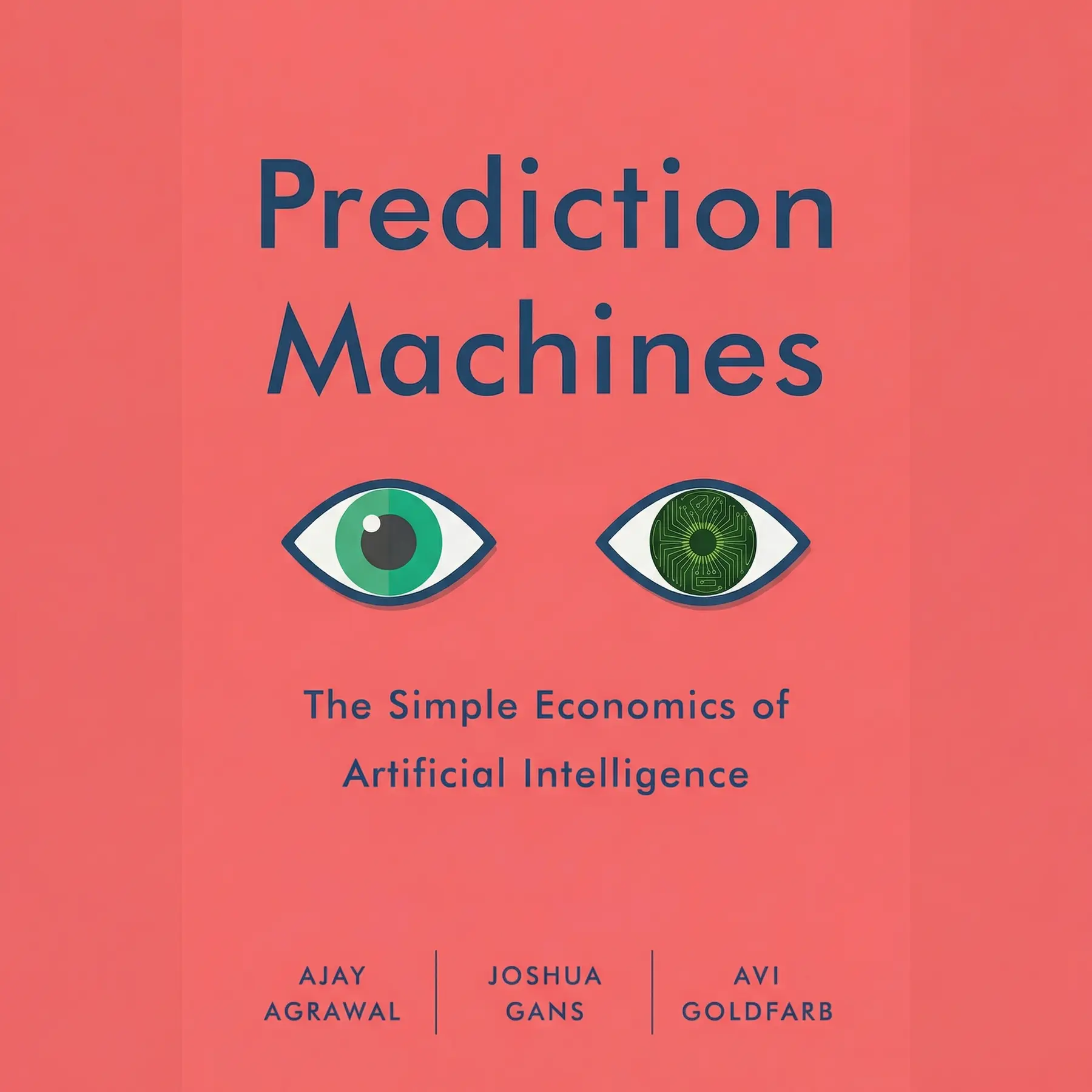
Prediction Machines: The Simple Economics of Artificial Intelligence
Prediction Machines explores how the falling cost of artificial intelligence allows businesses to transform uncertainty into predictive data, ultimately reshaping how human judgment and machine-driven insights work together to drive economic value.
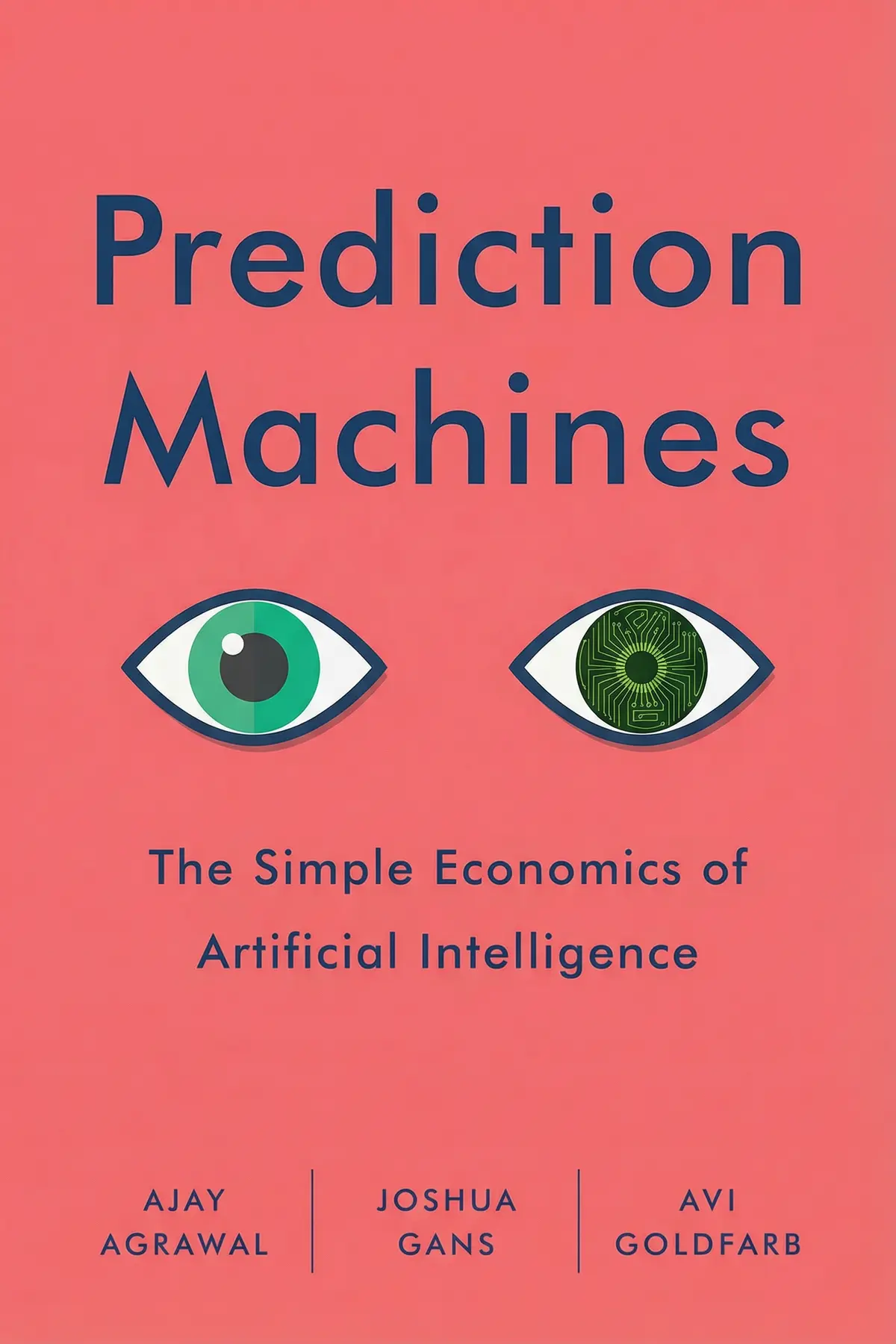
Table of Content
1. Introduction
1 min 36 sec
Think back to how families used to solve debates or finish homework assignments. Usually, parents were the ultimate source of knowledge, or perhaps a heavy encyclopedia sat on a shelf. If a child asked for the capital of Delaware, it might take a moment of searching or a bit of mental recall. Today, that entire process has been replaced by a near-instantaneous response from a digital assistant. Before you can even process the question, a voice informs you the answer is Dover. This shift isn’t just a fun technological trick; it represents a fundamental change in how information is accessed and used.
We are currently living in an era where artificial intelligence is woven into the fabric of our daily routines, from the products recommended to us online to the safety features in our vehicles. However, if we want to understand the true impact of this technology, we need to look past the sci-fi imagery and view it through a different lens. The core of this revolution isn’t about machines gaining a soul or mimicking every aspect of human thought. Instead, it is about one very specific, very powerful economic shift: the radical drop in the cost of prediction.
In the following sections, we are going to explore why this matters. We will look at how artificial intelligence functions as a prediction machine, how it transforms the way we make decisions, and how humans and machines can work together to achieve results that neither could manage alone. By the end, you’ll see how these shifts are not just changing tech companies, but are rewriting the rules for every industry on the planet.
2. The Economic Transformation of Prediction
2 min 08 sec
Discover how the plummeting cost of making accurate guesses is turning traditional industries upside down and making data the most valuable currency.
3. Defining the Predictive Revolution
1 min 59 sec
Unpack the technical shift from basic statistics to deep learning and why accurate forecasting is the secret to modern business security.
4. The Strategic Division of Labor
2 min 13 sec
Learn why human intuition still holds the upper hand in strategy and judgment, even as machines take over the heavy lifting of data analysis.
5. Conclusion
1 min 11 sec
In summary, the rise of artificial intelligence is fundamentally an economic story. It is the story of how prediction has become a cheap, accessible commodity that is changing the way we solve problems and make decisions. We’ve seen how AI acts as a prediction machine, filling in missing information with incredible speed and accuracy, and how this shift is moving us away from old-school statistics toward the dynamic world of machine learning.
But perhaps the most important takeaway is that AI doesn’t replace the need for human input; it changes it. As prediction becomes cheaper, the value of human judgment—the ability to decide what to do with those predictions—actually goes up. The most successful organizations of the future will be those that learn to pair machine precision with human intuition. As you move forward, look for the gaps in your own field where prediction could lower costs or increase certainty, and remember that the true power of these machines is realized only when they are guided by human values and strategic oversight. The predictive revolution is already underway; the question is how you will choose to lead through it.
About this book
What is this book about?
This summary dives into the core economic argument of artificial intelligence: that AI is essentially a tool that lowers the cost of prediction. While many view AI as a mysterious force, the authors explain it through the lens of simple economics. By reducing the price of making accurate guesses about the unknown, AI changes how we approach everything from credit card security to medical diagnoses. The book promises to demystify the technology and provide a framework for decision-making in a world where data is abundant. You will learn how to distinguish between what machines do best—processing massive amounts of information to find patterns—and what humans must still provide: judgment and the weight of values. It offers a blueprint for how businesses can reorganize their labor and strategy to take advantage of these shifts. By understanding that AI is a prediction machine, leaders can better navigate the transition from traditional business models to data-driven, automated systems that thrive on high-speed, high-accuracy foresight and optimized human-machine collaboration.
Book Information
About the Author
Ajay Agrawal
Ajay Agrawal is an expert in the economics of innovation and serves as the academic director of the Rotman School’s Centre for Innovation and Entrepreneurship. Joshua Gans is an authority on business strategy and technical innovation, holding the Jeffrey Skoll Chair at the Rotman School. Avi Goldfarb focuses on the intersection of AI and healthcare and is recognized for his research on how technological breakthroughs influence society and business. All three authors are distinguished professors at the University of Toronto’s Rotman School of Management.
Ratings & Reviews
Ratings at a glance
What people think
Listeners find that this book offers a helpful economic perspective for grasping artificial intelligence, even if perspectives on the depth of content diverge, with some listeners describing the analysis as perhaps too simplistic. Most value the writers' primary argument that AI decreases the expense of prediction, allowing organizations to better define the line between machine output and human choice. Furthermore, they commend the intuitive layout and engaging stories, with one listener observing that the authors successfully emphasize the core principles of the tech instead of dense technicalities. They also point out that the convenient chapter recaps make the strategy-focused material feel manageable and clear.
Top reviews
Oat
Finally got around to reading this after hearing several colleagues quote the "AI reduces the cost of prediction" line. It lives up to the reputation. The most valuable takeaway is the distinction between prediction and judgment. While machines can forecast outcomes with terrifying accuracy, humans are still the ones who have to decide what to do with that information. This book provides a robust economic framework that moves past the sci-fi tropes of "robots taking our jobs." Instead, it suggests a more nuanced reality where roles are redefined and the value of human intuition actually increases as data becomes cheaper. I loved the no-nonsense style. It’s a strategy book for people who actually want to understand the economics of the future without the fluff.
Show moreTern
Ever wonder why certain AI projects fail despite having great data? This book explains the "why" better than anything else I've read. Agrawal, Gans, and Goldfarb have created a masterclass in applying economic principles to modern technology. They argue that as prediction becomes ubiquitous, the "judgment" components of our jobs become more valuable, not less. This is a refreshing take compared to the usual doom-and-gloom narratives about automation. The writing is incredibly clear and the structure is logical, making it accessible even if you don't have a PhD in economics. I specifically enjoyed the discussion on how better predictions lead to entirely new business models, like Amazon shipping items before you even buy them. It’s a must-read for the digital age.
Show morePan
After hearing the authors speak on a podcast, I knew I needed the full text. This book provides the language we need to talk about AI in the boardroom. Instead of getting bogged down in the "black box" of technology, it focuses on the inputs and outputs of decision-making. The division of labor between human intuition and machine precision is handled with great nuance. I found the anecdotes about medical imaging and facial recognition particularly helpful for explaining these concepts to my team. The truth is, most AI books are either too technical or too philosophical, but this one hits the sweet spot of being actionable and grounded in reality. It’s a foundational text for anyone involved in digital transformation or corporate strategy. Highly recommended.
Show moreAnthony
As a business owner trying to cut through the AI hype, I found this framework incredibly grounding. The authors don't bother with technical jargon about neural networks; instead, they treat AI as a simple drop in the price of prediction. This shift in perspective is powerful because it helps you identify exactly where machine learning can replace human labor and where human judgment remains indispensable. To be fair, some sections felt a bit like a textbook. However, the clear summaries at the end of each chapter made it easy to digest. It is an essential strategy read. I appreciated the anecdote about the chess machine sacrificing its queen, which perfectly illustrated why machines still lack context. It's a solid, no-nonsense guide for any manager.
Show moreFilm
The chapter on trade-offs really changed my perspective on how to implement machine learning in my own workflow. It’s rare to find a book that looks at AI through the lens of economics rather than computer science. By framing AI as a tool for reducing uncertainty, the authors make the technology feel manageable rather than mystical. Personally, I found the "prediction by exception" model to be the most practical framework in the book. It highlights how humans can focus on the outliers while machines handle the routine tasks. My only gripe is that it feels a bit dated in its optimism regarding how quickly these shifts would occur. Still, for anyone in management, the insights on how prediction affects strategy are worth the price of admission alone. It's clear and concise.
Show morePrasarn
Wow, this was a lot more insightful than the dry title suggests! It’s basically a textbook for the AI age, but without the boring homework. The authors do a great job of breaking down complex economic theories into something a manager can actually use. I particularly liked how they emphasized that prediction is just one part of a decision. You still need data, judgment, and action to see results. Gotta say, the chapter summaries are a lifesaver for busy professionals who need to skim. It isn't particularly funny or entertaining, but the clarity of the arguments makes up for the lack of "fluff." It’s a solid framework that helps you see the forest for the trees in a very noisy and confusing industry.
Show moreAnong
Truth is, I was skeptical about another AI book, but the economic lens here is genuinely fresh. It isn't about the "how" of AI, but the "so what." By focusing on the falling cost of prediction, the authors help you see how the boundary between machine efficiency and human judgment is shifting in ways that will fundamentally alter our corporate hierarchies. I liked the "prediction by exception" concept, though I wish they spent more time on the difficulty of getting clean data in the real world. The book is very well-organized and easy to navigate. It does feel a little repetitive at times, and the tone is definitely academic. If you want to understand the future of work and how to stay relevant, start here.
Show moreNarumon
Is this the definitive guide to AI strategy? Maybe for a beginner, but I found it a bit repetitive after the first fifty pages. The central premise—that AI is just cheap prediction—is brilliant and it honestly changes how you look at the industry. However, the authors spend the rest of the book hammering that same point over and over again through various business scenarios that eventually start to feel like they are padding the word count. It’s organized like a textbook, complete with helpful summaries, which I appreciated, but the prose is quite dry and lacks any real humor. While the anecdotes about bank fraud were interesting, I wanted more depth on the "how-to" part of business integration. It’s a solid read that offers a good foundation but lacks a certain spark.
Show moreAkira
Picked this up hoping for some technical insights into machine learning, but it’s definitely more of a business strategy manual. Look, if you want to know about algorithms, this isn't for you. But if you want to understand why your CEO is obsessed with "data-driven decisions," then it’s a decent primer. The book is very sober and realistic, which I liked, avoiding the typical hype. However, the "spherical cow" problem is real—it simplifies the world a bit too much for my liking by ignoring the importance of learning by doing. It’s an easy read, maybe too easy, and I finished it in a single afternoon. Good for a flight or a commute, but don't expect it to change your life if you are already tech-savvy.
Show morePridi
Not what I expected given all the praise I’ve seen on LinkedIn. This book assumes a "perfectly spherical cow" version of reality where the only thing holding us back is data volume. Frankly, the authors gloss over the messy details of implementation, like feature engineering and the massive ethical hurdles that come with automated decisions. If you are a manager looking for high-level buzzwords, you might enjoy the repetition. However, for anyone actually working in the field, it feels incredibly dumbed down and lacks any original technical content. It paints a rosy picture of self-driving cars that ignores the real-world resource constraints we face every day. I felt like I wasted my time waiting for a deeper dive that never actually arrived.
Show moreReaders also enjoyed

Adults in The Room: My Battle With Europe’s Deep Establishment
Yanis Varoufakis
21 Lessons for the 21st Century
Yuval Noah Harari
AI 2041: Ten Visions for Our Future
Kai-Fu Lee
AUDIO SUMMARY AVAILABLE
Listen to Prediction Machines in 15 minutes
Get the key ideas from Prediction Machines by Ajay Agrawal, plus 5,000+ more titles in English and Thai.
- 5,000+ titles
- Listen as much as you want
- 7-day free trial
- Cancel anytime







