
17 min 36 sec
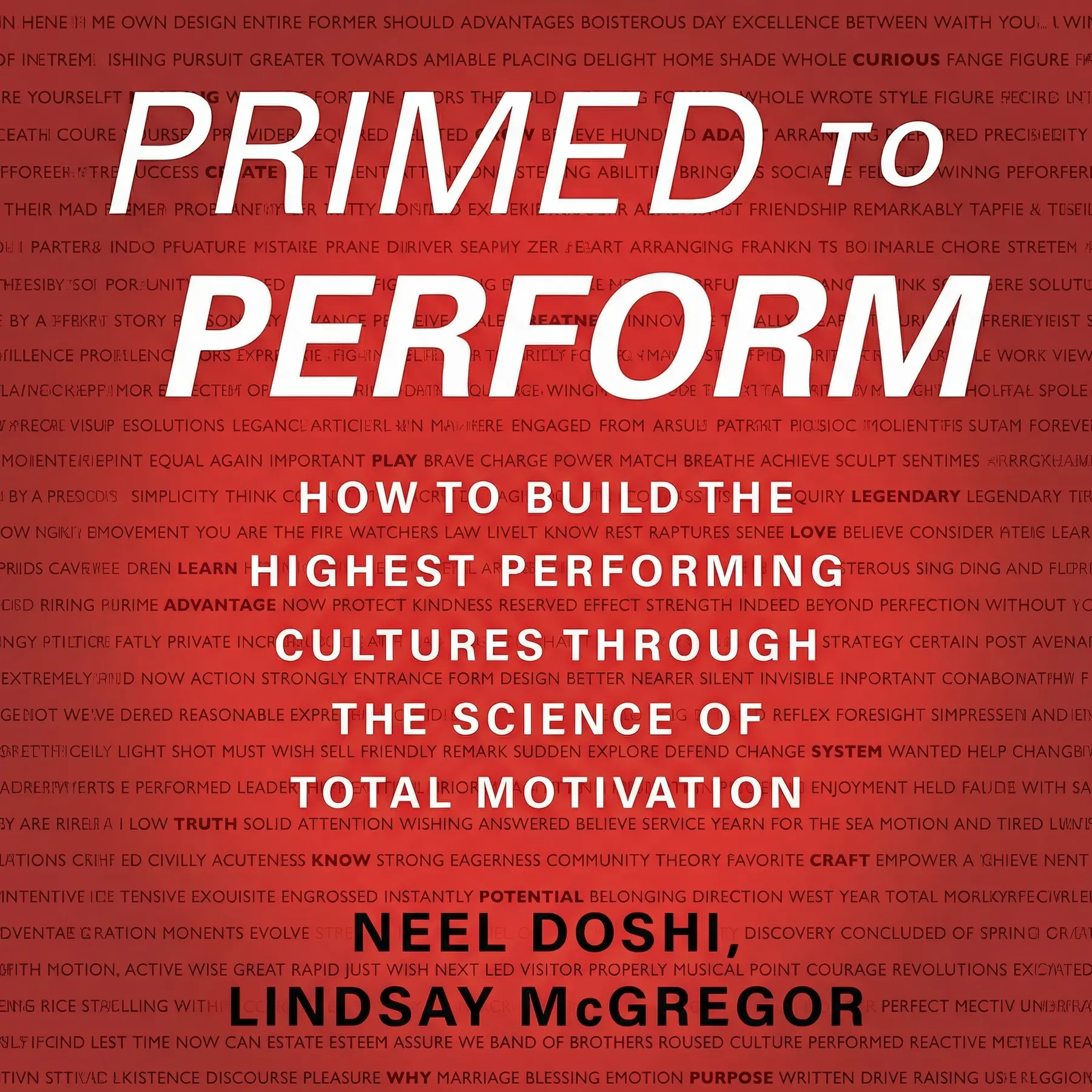
Primed to Perform: How to Build the Highest Performing Cultures Through the Science of Total Motivation
Explore the science of high-performance culture by understanding the six motives that drive human behavior. Learn how to foster creativity and adaptability while avoiding the traps of pressure and inertia.
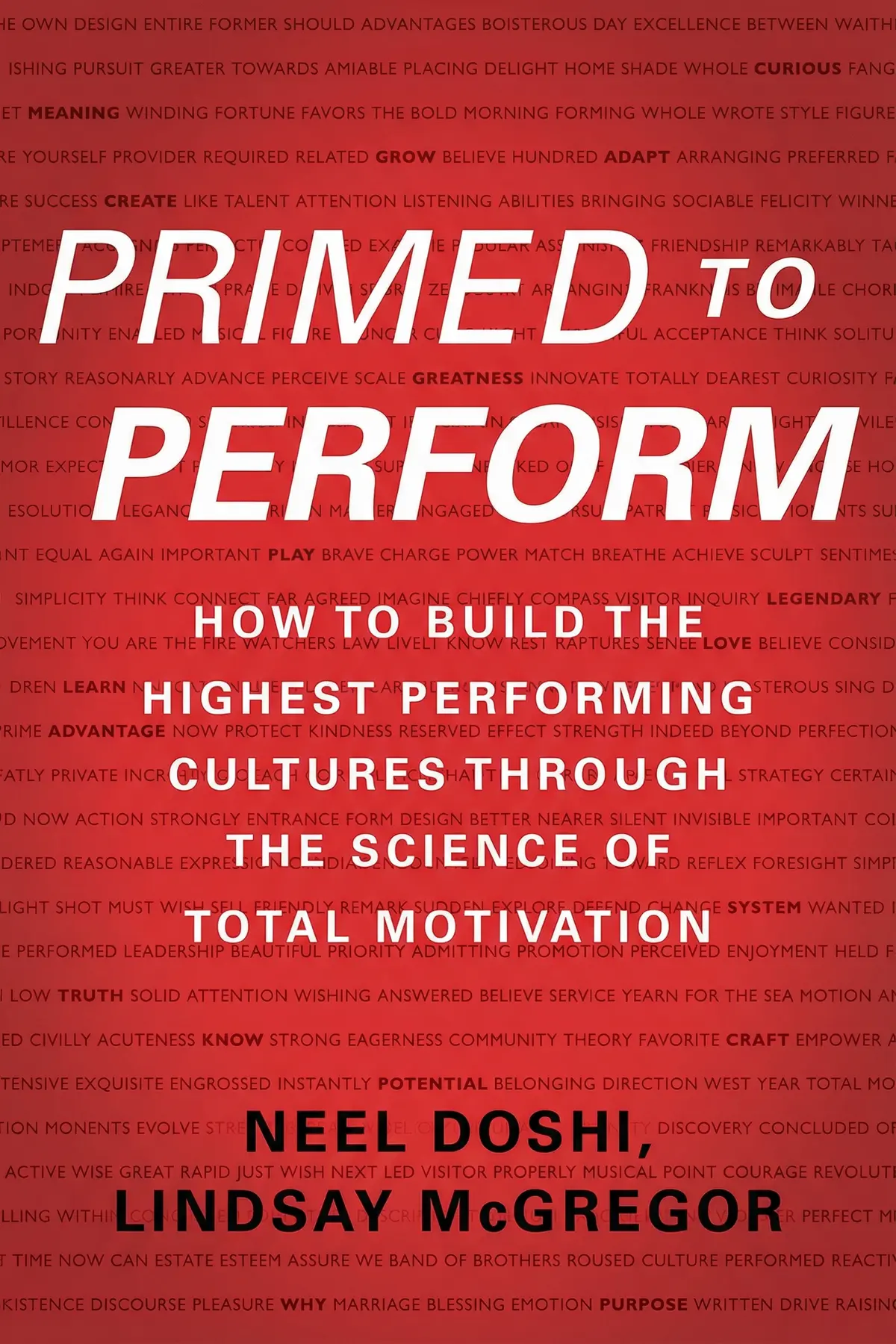
Table of Content
1. Introduction
1 min 50 sec
Think about the last time you were truly ‘in the zone.’ Maybe you were working on a difficult project at the office, or perhaps you were deep into a personal hobby like gardening or coding. In those moments, time seems to vanish. You aren’t checking the clock, and you certainly isn’t thinking about your salary. You are simply focused on the task at hand because it feels right. Now, contrast that with a day where you’re just watching the minutes tick by, doing the bare minimum to avoid getting in trouble with your boss.
What is the difference between these two states of being? It all comes down to motivation. But here is the twist: not all motivation is created equal. In fact, many of the tools we use in the modern business world to ‘motivate’ people—like bonuses, performance reviews, and strict deadlines—might actually be making our teams less effective. This is the central premise of Neel Doshi and Lindsay McGregor’s work. They argue that high performance isn’t something you can demand; it is something you have to cultivate by understanding the deep-seated psychological needs of your employees.
In this exploration of organizational culture, we are going to look at the science of why people work. We will dive into a concept called Total Motivation, or ToMo, which provides a mathematical way to measure the health of a company’s culture. We’ll see why ‘play’ is actually the most serious business tool at your disposal, and how the ways we design jobs and promotion paths can either spark genius or lead to total stagnation. If you’ve ever felt like your organization is capable of more, but you can’t quite put your finger on what’s holding it back, this journey into the mechanics of human performance will provide the clarity you’ve been looking for. We aren’t just talking about making people happier at work; we’re talking about building a culture that is primed to perform in an unpredictable world.
2. The Three Pillars of Direct Motivation
2 min 12 sec
Discover the three powerful internal drivers that lead to peak performance and why the most impactful motivator might be simpler than you think.
3. The Hidden Dangers of Indirect Pressure
2 min 07 sec
While rewards and deadlines seem like effective tools, they often act as ‘indirect’ motives that can silently erode your team’s creativity.
4. Balancing Tactical and Adaptive Performance
1 min 51 sec
Success requires more than just following a plan; it requires the agility to change course when the unexpected happens.
5. Measuring Culture with the ToMo Metric
1 min 55 sec
Learn how the Total Motivation framework allows organizations to turn the ‘soft’ concept of culture into a hard, actionable data point.
6. The Leader as a Cultivator of Motivation
2 min 00 sec
High-performance leadership is less about command and control and more about creating the conditions for curiosity and shared goals.
7. Designing Jobs for Maximum Impact
1 min 51 sec
The structure of a daily role can either stifle a person’s drive or turn their work into a source of continuous inspiration.
8. Cultivating Identity and Fair Growth Paths
1 min 56 sec
Building a sense of belonging and rethinking the ‘corporate ladder’ are the final steps in creating a sustainable high-performance culture.
9. Conclusion
1 min 54 sec
As we wrap up our journey through the science of Total Motivation, it is worth reflecting on a cautionary tale known as the ‘Cobra Effect.’ In colonial India, the government wanted to reduce the number of cobras in Delhi. Their solution was simple: they offered a cash bounty for every dead cobra brought to them. At first, it seemed to work. But soon, enterprising citizens realized they could make more money by breeding cobras in private farms, killing them, and then collecting the bounty. When the government realized what was happening and cancelled the program, the breeders released their now-worthless snakes into the wild. The result? The cobra population was higher than when they started.
This story is a perfect metaphor for what happens when we try to manage performance through indirect motives like economic rewards and pressure. We think we are solving a problem, but we are actually creating a system that encourages people to ‘game’ the results. We lose sight of the actual goal—performance—and replace it with the pursuit of the reward.
Building a culture primed to perform requires the courage to move away from these ‘cobra’ incentives. It requires a shift toward fostering play, purpose, and potential. It means designing jobs that empower people, leadership that inspires curiosity, and an identity that makes every employee feel like they are part of something bigger than themselves.
Your actionable takeaway is this: start by looking at your own work or the work of your team through the lens of the six motives. Where is the pressure coming from? Where is the joy? By making small, intentional changes to reduce the ‘why’ of pressure and increase the ‘why’ of play, you can begin the transformation. Remember, culture isn’t something that happens to you; it is something you build, one motive at a time. When you get the motivation right, high performance doesn’t just become possible—it becomes inevitable.
About this book
What is this book about?
Have you ever wondered why some organizations thrive in chaos while others crumble under the slightest pressure? The answer lies not in their budgets or their technology, but in their culture. Primed to Perform investigates the psychological mechanics behind why we work and how those reasons dictate our level of success. Authors Neel Doshi and Lindsay McGregor introduce the concept of Total Motivation, or ToMo, a framework that explains how three direct motives—play, purpose, and potential—drive high performance, while three indirect motives—emotional pressure, economic pressure, and inertia—destroy it. This book provides a roadmap for leaders who want to move beyond the outdated carrot-and-stick approach to management. It explains the critical difference between tactical performance, which is about following a plan, and adaptive performance, which is about diverging from the plan when the situation changes. By focusing on job design, leadership styles, and organizational identity, the book promises to show you how to build a workplace where employees aren't just showing up for a paycheck, but are genuinely inspired to solve problems and innovate.
Book Information
About the Author
Neel Doshi
Neel Doshi and Lindsay McGregor have more than 20 years of experience helping companies develop high-performance cultures. They are also the co-founders of Vega Factor, a company that helps firms create high-performing, adaptive cultures.
Ratings & Reviews
Ratings at a glance
What people think
Listeners find the writing accessible and firmly rooted in scientific data, presenting a clear and straightforward model for evaluating motivation. They also value its utility, with one listener remarking that it should be required reading for all companies. Furthermore, the book is commended for its perspective on performance, and one listener even highlights it as a fascinating story.
Top reviews
Emily
Picked this up after a colleague wouldn't stop raving about the ToMo framework, and it lived up to the hype. The authors successfully bridge the gap between academic psychology and the messy reality of the modern workplace. By breaking down motivation into six distinct categories—play, purpose, potential versus pressure and inertia—they provide a roadmap that feels both scientific and actionable. I particularly appreciated the emphasis on adaptive performance, which is so often ignored in favor of rigid tactical execution. Truth is, most culture books are just fluff, but this one relies on hard data to prove its points. My only minor gripe is that the middle sections can feel a bit dense with case studies you might have heard elsewhere. Still, it’s a powerful tool for anyone looking to build a team that actually enjoys their work while delivering results.
Show moreMaria
This is far from your typical 'feel-good' leadership fluff that lacks substance or measurable metrics. Neel Doshi and Lindsay McGregor have done their research, standing on the shoulders of giants to demystify how culture actually works. I was fascinated by the 'Cobra Effect' examples and how poorly designed incentives can actually destroy the performance they were meant to boost. The book challenges the pervasive pay-for-performance paradigm, suggesting that money alone often leads to a drop in actual impact. Instead, focusing on the work as its own reward creates a 'blue ocean' society where everyone wins. It took me a while to get through because I kept stopping to take notes in my phone. If you want a blueprint for a happier, more productive culture that focuses on the human soul, get this book.
Show moreHarper
As someone who has managed teams for a decade, I found this book incredibly grounding and surprisingly scientific. It moves culture away from the realm of fuzzy consultants and into something that can be measured and steered effectively. The concept of 'adaptive performance' really resonates with me, especially the analogy of modern sports squads that shift roles on the fly. We’ve spent too long focusing on tactical execution while ignoring the underlying spirit that allows people to solve complex problems. By focusing on play and purpose, we can build organizations that flourish even in volatile markets. This isn’t just some feel-good pontification; it’s backed by case studies from GM to Microsoft. It’s an essential guide for anyone who wants their employees to feel cared for and truly appreciated. I’ll be recommending this to everyone in my professional circle immediately.
Show moreElise
Wow, I never realized how much 'emotional pressure' was actually tanking our department’s productivity until I read these chapters. The authors explain complex theories of work culture in very simple, relatable terms that make you want to take action. I loved the breakdown of the three demotivating factors: emotional pressure, economic pressure, and inertia. It’s a fascinating story of how different organizations have shifted their results by simply changing their internal focus. When employees find fulfillment through play and a sense of belonging to something greater, the financial metrics follow naturally. I kept my notes app open the entire time I was reading because there were so many gems to capture. This book doesn't just tell you what's wrong; it gives you a lens to see your workplace in a whole new light. Truly an insightful and empowering read for any professional.
Show moreKanokwan
Ever wonder why some teams flourish while others just stagnate despite high pay and fancy perks? This book provides a clear and easy-to-understand framework for thinking about what truly drives human behavior in professional settings. The distinction between direct and indirect motivators is a game-changer for anyone in a leadership position. I found the sections on 'play' as the highest-octane motivator to be especially insightful and immediately applicable to my own department. However, the book does suffer slightly from being a bit repetitive toward the end, where it starts rehashing concepts like the Dunbar number. It feels like a shorter, punchier version would have been even more effective for busy executives. Despite that, the scientific grounding makes it a mandatory read for organizations trying to move beyond 'command and control' styles.
Show morePornpimon
Finally got around to reading this, and it really challenged my assumptions about how to incentivize my direct reports. We often think that economic pressure is the best way to get results, but this book proves that it usually backfires. The authors argue that play, purpose, and potential are the real drivers of high-performing, adaptive teams. I appreciated the practical approach, specifically the Tomo team survey which we actually ended up trying with my group. Our results were eye-opening and gave us a specific baseline to work from as we move forward. Some of the writing is a bit dry, and it takes some effort to stay engaged through the heavier data sections. Nevertheless, the insights into how to foster a culture of satisfaction are well worth the mental investment for any manager.
Show moreEnd
The framework presented here offers a much-needed measurable structure for company culture, which is often treated as something intangible. I really enjoyed the first third of the book, which dives deep into the science of why we work. The idea that performance drops when the reward is the only thing motivating people is something I’ve seen happen firsthand. It’s fascinating to see it explained through the lens of direct and indirect motivators with such clarity. I did feel like the book got a bit scattered in the final sections, jumping between different psychological concepts. It didn't always feel like a straight line from theory to practice, which was a little frustrating. Even so, the core message is vital and the ToMo metric is a fantastic tool for any leader’s toolkit. It’s a solid four-star read for its originality in the first half.
Show moreYuwadee
Frankly, I thought this would be another boring business manual, but it’s actually a fascinating story well-grounded in hard science. The authors do a great job of explaining why 'play' isn't just about having a ping-pong table in the breakroom. It’s about the work itself being the reward, which is a concept that too many modern corporations have forgotten. I found the case studies to be quite engaging, even if I had heard bits and pieces of them before in other contexts. The writing style is accessible, though some sentences are a bit long-winded and could have used a tighter edit. My biggest takeaway was the importance of potential and how it can be a massive driver for long-term retention. It’s a strong, practical book that provides any company with the tools they need to perform better. Definitely worth a spot on your shelf.
Show moreSamart
Not what I expected given the hype, though the core concept regarding total motivation is genuinely brilliant. This feels like a great 100-page book that was unfortunately stretched into a 300-page volume to fit a traditional publishing format. The first section regarding the ToMo factor and how it influences adaptive performance is absolutely solid and worth the price alone. Sadly, the subsequent chapters lack that same depth and fail to provide a cohesive set of practical instructions for driving change. It covers a lot of familiar ground, touching on things like the Dunbar number and various communities of practice without adding much new flavor. I’d recommend reading the first third and then skimming the rest for the specific case studies. It’s a decent entry in a crowded field, but it lacks the consistent punch I was hoping for.
Show moreFort
To be fair, the research is clearly there, but the delivery felt incredibly dry and bloated for my taste. I’ve seen some of these stories, like the Pygmalion effect or Toyota’s production lines, in a dozen other business books already. It felt like a rehash of Team of Teams or other popular leadership titles without offering enough unique utility. While the 'Total Motivation' framework starts strong, the book quickly loses its way in an uncohesive set of different topics. They point out everything that is wrong with modern corporate culture but don’t give enough 'how-to' pointers to fix it. If you are new to the world of organizational psychology, you might find this fascinating, but seasoned leaders may find it repetitive. It just didn't provide the depth of substance I needed to actually transform my organization’s current dominant motivators.
Show moreReaders also enjoyed
Acting with Power: Why We Are More Powerful Than We Believe
Deborah Gruenfeld
All In: How Great Leaders Build Unstoppable Teams
Mike Michalowicz
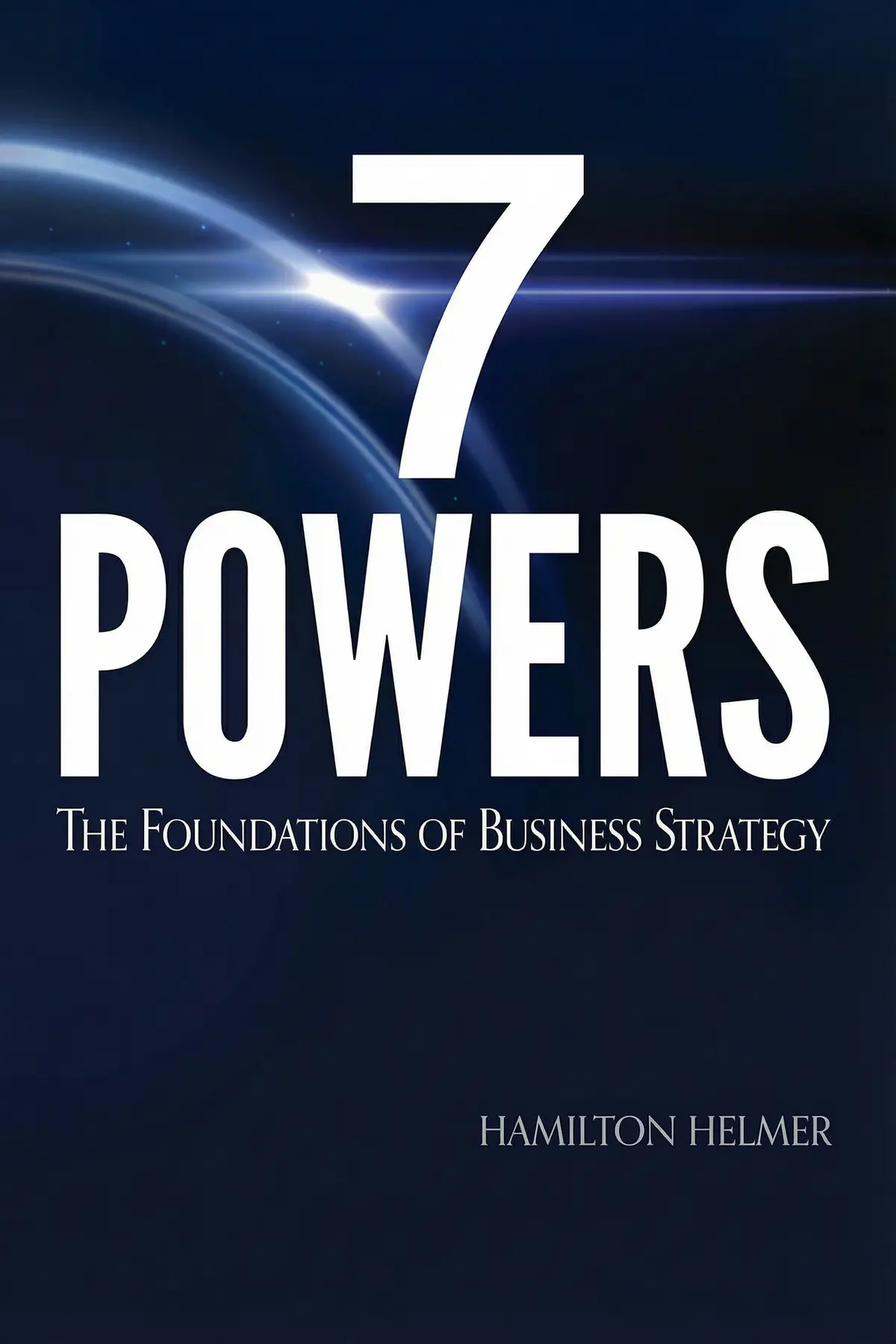
7 Powers: The Foundations of Business Strategy
Hamilton Helmer

A Bigger Prize: How We Can Do Better Than the Competition
Margaret Heffernan
AUDIO SUMMARY AVAILABLE
Listen to Primed to Perform in 15 minutes
Get the key ideas from Primed to Perform by Neel Doshi, plus 5,000+ more titles in English and Thai.
- 5,000+ titles
- Listen as much as you want
- 7-day free trial
- Cancel anytime







