
A Liberated Mind: How to Pivot Toward What Matters
Steven C. Hayes
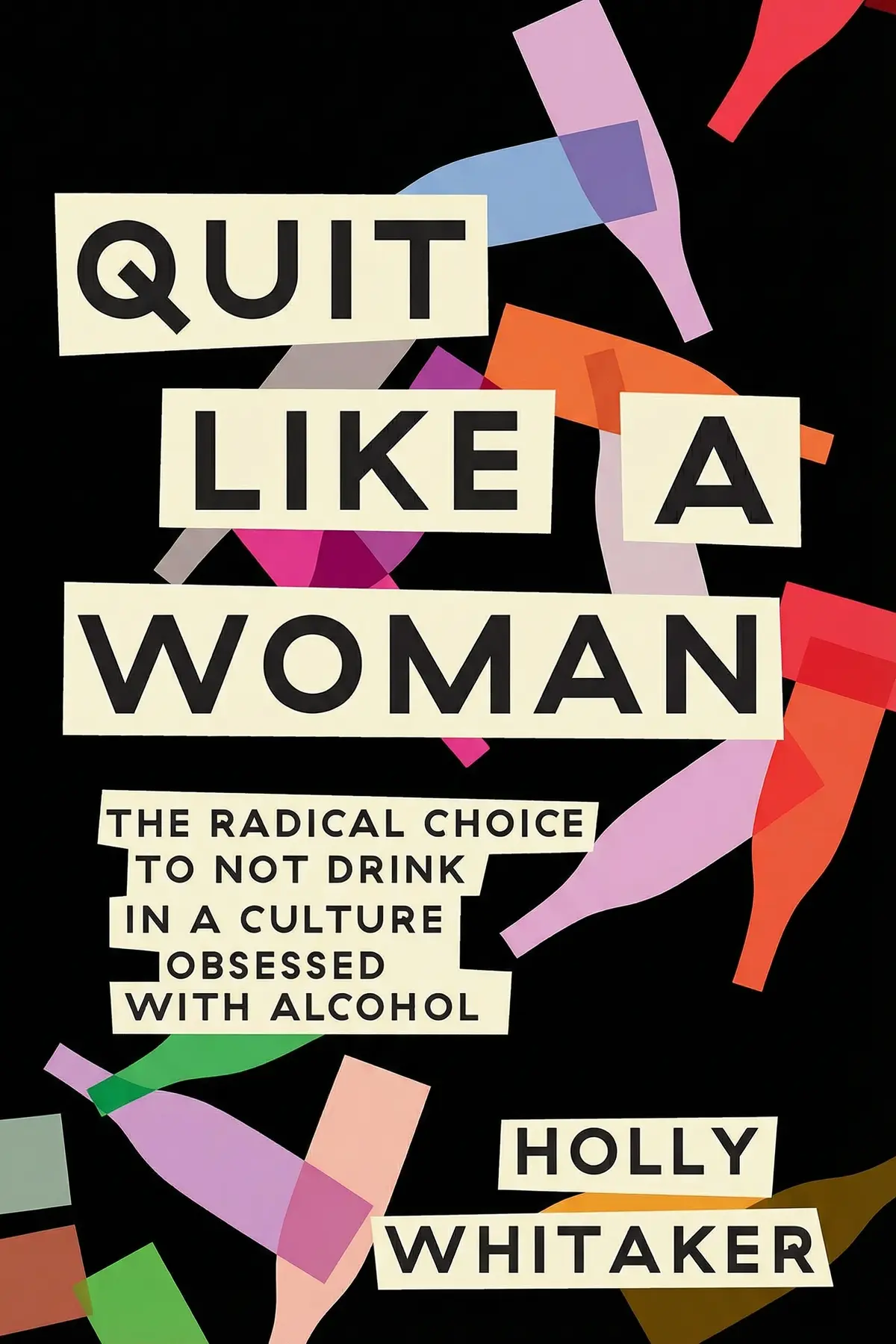
Quit Like a Woman explores the intersection of gender and alcohol addiction, offering a feminist framework for sobriety that challenges corporate marketing and traditional recovery models to help women reclaim their power.
2 min 15 sec
Imagine a woman who seems to have mastered the modern world. She lives in a vibrant city, holds a prestigious, high-earning position at a booming startup, and surrounds herself with a circle of motivated, creative peers. On the surface, her life is a testament to wellness and success; she’s the person you see at the local yoga studio or picking up a cold-pressed green juice before a busy day. This was the life of Holly Whitaker. But behind this curated exterior was a reality defined by secret drinking, carrying small bottles of liquor in her purse, and slipping away from her professional responsibilities to consume alcohol in isolation. This wasn’t just a personal struggle; it was a symptom of a much larger, systemic issue that Whitaker eventually recognized after she chose the path of sobriety.
When Whitaker stepped away from the bottle, she didn’t just find clarity; she found a deep-seated sense of injustice. She observed a startling trend: while alcohol-related issues were rising across the board, the impact on women was disproportionately devastating. Between 2002 and 2012, rates of alcohol addiction among women nearly doubled, and the rate of alcohol-related deaths for women spiked by 67 percent in the following decade—far outstripping the increase seen in men. This led to a profound realization. In a society that places immense, often conflicting pressures on women, alcohol is marketed as the ultimate coping mechanism. It is sold as liberation in a glass, a way to unwind from the very patriarchal structures that keep women feeling small.
Whitaker’s core argument is that drinking is not a form of empowerment, but a barrier to it. By numbing ourselves, we lose access to our true strength and our collective ability to challenge the status quo. To quit drinking, then, is not an act of deprivation or a sign of weakness. Instead, it is a radical, feminist act of reclaiming one’s own life and power. This summary will guide you through Whitaker’s framework for understanding addiction, critiquing the traditional recovery industry, and building a life of vibrant, conscious presence. It’s an invitation to stop settling for a dulled existence and to start living with the volume turned all the way up.
2 min 50 sec
Discover why the traditional binary of ‘normal’ versus ‘addicted’ is a misleading construct designed to protect the interests of the liquor industry rather than your health.
2 min 36 sec
Explore the internal battle between the primal midbrain and the rational neocortex that makes it so difficult to simply ‘willpower’ your way to sobriety.
2 min 20 sec
Critically examine why male-centric models like Alcoholics Anonymous can be counterproductive for women seeking to build confidence and reclaim their identity.
2 min 47 sec
Learn the foundational pillars of a feminine-centric recovery that focuses on self-care, resilience, and the evolving nature of personal growth.
3 min 12 sec
From ‘mothering yourself’ to reclaiming the concept of fun, discover actionable ways to replace drinking habits with life-affirming rituals.
1 min 21 sec
In the end, the journey Holly Whitaker describes is about far more than just putting down a glass. It is a profound reclamation of self. Alcohol acts as a weight that keeps women from rising to their full height, and the society that encourages its use often does so to keep those same women compliant and numb. By questioning the false labels of the recovery industry and the toxic marketing of the liquor industry, we can begin to see drinking for what it really is: a barrier to our own evolution.
True sobriety is not a state of lack, but a state of abundance. It is the brave choice to experience your life exactly as it is, with all its challenges and all its beauty. By mothering yourself, creating meaningful rituals, and addressing the root causes of your pain, you can build a foundation of strength that doesn’t rely on any external substance. You are not broken, and you do not need to be ‘fixed’ through shame or powerlessness. You are already whole. The path of quitting like a woman is about uncovering that wholeness and letting it shine. As you move forward, carry the knowledge that your presence is your power. Every day you choose to be conscious and present is a day you are winning back your life. Embrace the adventure of your own existence, and see just how far you can go when nothing is holding you back.
This exploration of sobriety moves beyond the traditional binary of 'alcoholic' or 'normal' to examine how alcohol serves as a tool of suppression for women. By dissecting the biological impact of ethanol and the social pressures that encourage consumption, the book reveals how drinking culture prevents women from reaching their full potential. It argues that modern drinking habits are not just a personal choice but a systemic issue fueled by profit-driven industries and patriarchal expectations. The promise of this work is a path toward radical self-care and authentic living. Rather than focusing on shame or the loss of a social lubricant, it frames sobriety as an act of rebellion and a return to one’s true self. Through a combination of neurological insight and compassionate lifestyle strategies, it provides a blueprint for breaking the cycle of dependency and building a life that doesn't require an escape. It is a guide for anyone looking to live more consciously and powerfully in a world that constantly encourages us to numb out.
Holly Whitaker is a New York Times best-selling author and a recovering alcoholic. She is the visionary founder of Tempest Inc., a sobriety project that provides innovative recovery resources. Whitaker is widely recognized for her pioneering work in developing recovery methods that prioritize empowerment and move away from traditional, male-dominated frameworks, specifically tailoring the journey of sobriety to the unique needs and experiences of women.
Listeners consider this work a premier resource for sobriety, highlighting its deep research and actionable guidance. Furthermore, they find it empowering as it clarifies the connection between alcohol and culture while sharing a genuine personal narrative. Listeners also value the book’s sincerity and feminist viewpoint, which effectively challenges established societal conventions.
Finally got around to reading this, and frankly, it’s the shift in perspective I desperately needed. Whitaker doesn't just talk about 'not drinking'; she deconstructs why we think we need to drink in the first place, exposing the predatory nature of 'Big Alcohol.' The way she frames alcohol as a toxic poison marketed specifically to women through a 'pink-washed' lens is eye-opening and deeply empowering. I felt like I was being deprogrammed from decades of social conditioning that equates wine with self-care. While her personal story is definitely rooted in a specific kind of privilege, the core message about reclaiming your power from an industry that profits off your numbness is universal. It’s a fierce, feminist manifesto that makes you want to build a life you don’t need to escape from. The practical advice on building a toolkit is exactly what I needed.
Show moreThis book completely shifted my internal landscape regarding my nightly glass of wine. I never considered myself an 'alcoholic,' but Holly’s argument that alcohol is inherently addictive for everyone—not just a broken few—hit me like a ton of bricks. Her writing is sharp, witty, and unapologetically feminist, which is a breath of fresh air in a recovery world that often feels dated and masculine. Truth is, I stopped seeing my sobriety as a 'loss' and started seeing it as a radical act of rebellion against a society that wants women quiet and sedated. The tools she provides are practical, though I do agree some are a bit high-end. Still, the mental shift alone is worth the price of the book. It’s easily one of the most transformative things I’ve read this year, and I feel more authentic than ever.
Show moreWow, just wow. I’ve read a lot of quit-lit, but nothing has resonated quite like this. Holly Whitaker manages to weave together her messy, relatable personal story with a scathing indictment of how our culture normalizes a literal poison. She makes a convincing case that we shouldn't have to hit 'rock bottom' to decide that we deserve better than a liquid that causes cancer and anxiety. I loved the focus on trauma-informed care and the acknowledgment that recovery isn't one-size-fits-all. It’s empowering to see someone speak so candidly about the intersection of social justice and sobriety. This isn't just a book about quitting booze; it's a guide to waking up to your own life and understanding the 'why' behind our drinking culture. It's fresh, empowering, and absolutely necessary for anyone questioning their relationship with the bottle.
Show moreI'll admit, I opted for the audiobook and it was an incredible experience; hearing Holly’s own voice added so much authenticity to her story. This book is a radical departure from traditional recovery literature. It doesn't ask you to admit you are powerless; it asks you to realize how powerful you actually are. I felt deeply seen in her descriptions of social anxiety and the pressure to drink to be 'fun.' While some critics point out the cost of her methods, I think the mindset shift she offers is actually free. It’s about choosing yourself over a substance that's designed to keep you small and quiet. This is essential reading for the modern woman who is tired of the 'Mommy Wine' culture and wants to reclaim her health and her time. Simply life-changing.
Show moreEver wonder why we hold opioid manufacturers accountable while celebrating the companies that sell us 'Mommy Juice'? Whitaker asks the hard questions that the alcohol industry would rather we ignore. I found her critique of the AA model particularly compelling, especially her point that asking marginalized people to 'surrender their ego' might be counterproductive. In my experience, the first half of the book is a 5-star masterpiece of cultural criticism. The second half dips a bit into 'navel-gazing' territory, and her grudges against old grade-school bullies felt a bit petty for a book on spiritual enlightenment. Nonetheless, the core message is vital. She isn't just telling you to quit; she's teaching you how to live. It's about building a foundation of meaningful recovery that focuses on acquiring power rather than diminishing what little we have.
Show moreAfter hearing so much hype, I finally dived in and I’m mostly impressed. Whitaker is a talented writer who knows how to pace a memoir-style narrative with educational bits. I especially liked the part where she dismantles the idea that sobriety is a 'boring' sentence, instead framing it as a luxury and a privilege. Not gonna lie, some of the science felt a little shaky and 'woo-woo' toward the end—like the bits about chakras and the misspelling of 'yoke' as 'yolk' in the yoga section—but the emotional resonance stayed strong. I would recommend this to any woman who feels like their relationship with wine is 'fine' but deep down knows it’s holding them back. It’s a call to action to stop playing small and start taking up space. It's not perfect, but it's important.
Show morePicked this up during a month-long break from drinking and it was exactly the companion I needed. The way Whitaker describes the 'Big Alcohol' machine is genuinely terrifying and makes you look at every liquor ad with a newfound skepticism. I did find the second half a bit repetitive, and she definitely has a chip on her shoulder regarding her past relationships and her brief encounter with AA. However, the first several chapters are some of the best writing on addiction I’ve ever encountered. It’s a mix of a feminist manifesto and a practical toolkit. Just be prepared for a very specific, high-society vibe that might not click with everyone's reality. If you can get past the 'Rome and spas' of it all, there is real substance here that can change your life.
Show moreThe chapter on Big Alcohol and the cultural history of drinking was absolutely brilliant and well-researched. I loved the first half where she challenges the 'alcoholic' label and points out that the substance itself is the problem, not just the person. However, the second half of the book felt like a massive pivot into a very expensive, 'California-esque' lifestyle that simply isn't accessible to most people. To be fair, not everyone can afford multiple yoga certifications, international trips to Rome, or a $500+ sobriety school. It started to feel less like a guide for everyone and more like a luxury lifestyle brand for a very specific demographic. I still think the insights on the patriarchy of AA are worth reading, but the 'extreme mothering' section was a bit much for me. It felt like parenting advice for people who don't actually have to worry about the grocery bill.
Show moreLook, I appreciate what Holly is trying to do here by offering an alternative to the 12-step world. The way she breaks down the 'sobriety is a business' aspect while simultaneously promoting her own pricey Tempest school is a bit ironic, though. I found the sections on yoga and meditation helpful, but the constant references to luxury self-care felt a bit tone-deaf to the average person struggling with bills. It’s hard to prioritize 'extreme mothering' when you’re working two shifts just to make ends meet. That said, her writing is engaging and the way she reframes alcohol as 'rocket fuel' is a great mental tool. It's a good book if you can filter out the L.A. fluff and focus on the sociological insights. It’s definitely not a one-size-fits-all solution, but there’s enough wisdom here to make it worth a read.
Show moreAs a health professional, I went into this with high hopes, but the lack of clear citations really bothered me throughout. Whitaker makes a lot of bold scientific claims about trauma being 'unprocessed energy' or addiction being a 'chakra dysfunction,' yet the bibliography is a chaotic mix of reputable journals and lifestyle blogs like Man Repeller. Personally, I found the tone to be quite polarizing; she oscillates between being deeply vulnerable and oddly condescending toward anyone who doesn't subscribe to her specific brand of 'enlightened' recovery. It’s frustrating because she offers a valid critique of traditional 12-step programs, but replaces them with a model that requires significant financial resources. If you aren't a single woman with a high-paying job and a lot of free time for five-hour baths and expensive essential oils, you might find this more alienating than helpful.
Show moreSteven C. Hayes
Leanne Maskell

AUDIO SUMMARY AVAILABLE
Get the key ideas from Quit Like a Woman by Holly Whitaker, plus 5,000+ more titles in English and Thai.







