

Acting with Power: Why We Are More Powerful Than We Believe
Deborah Gruenfeld
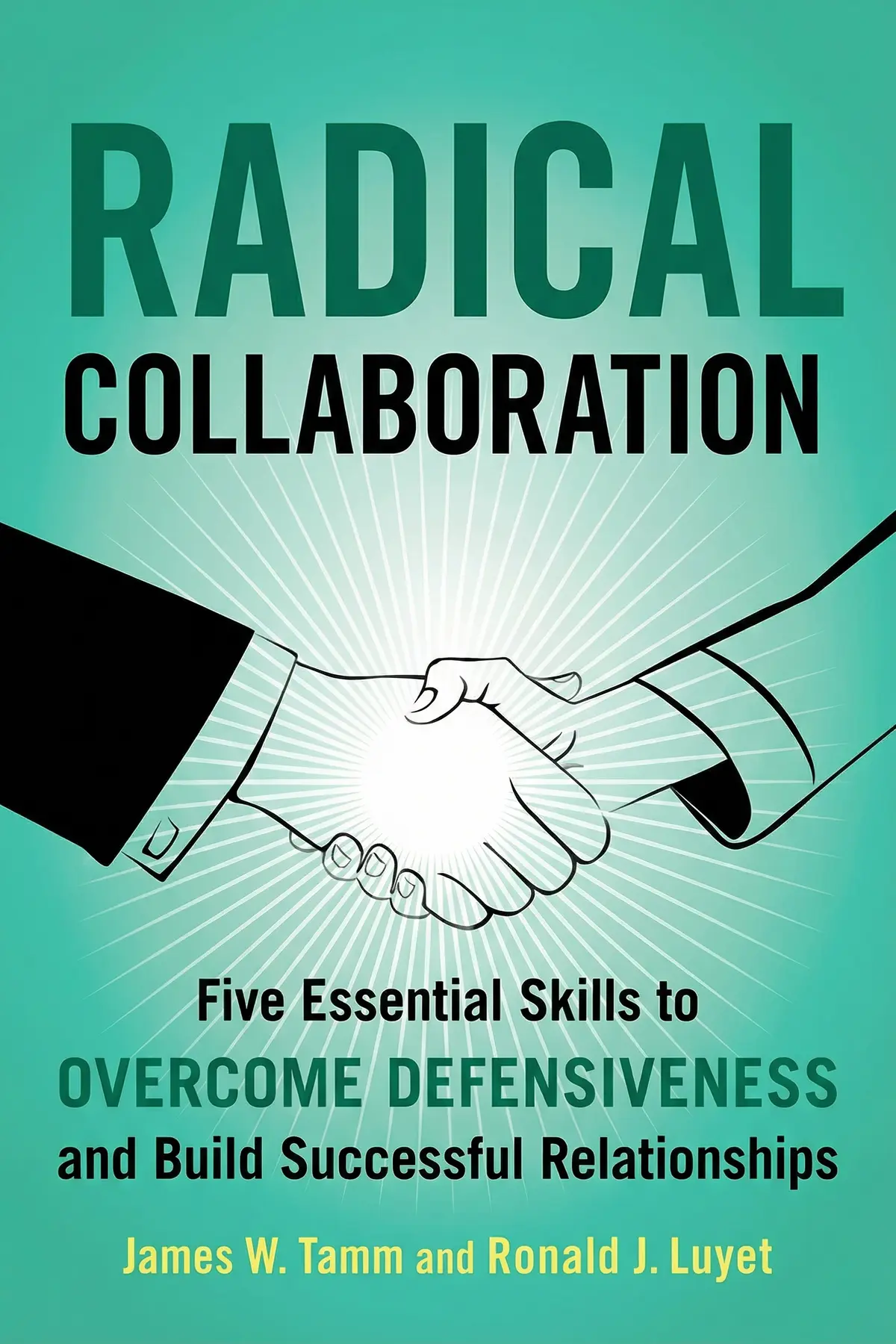
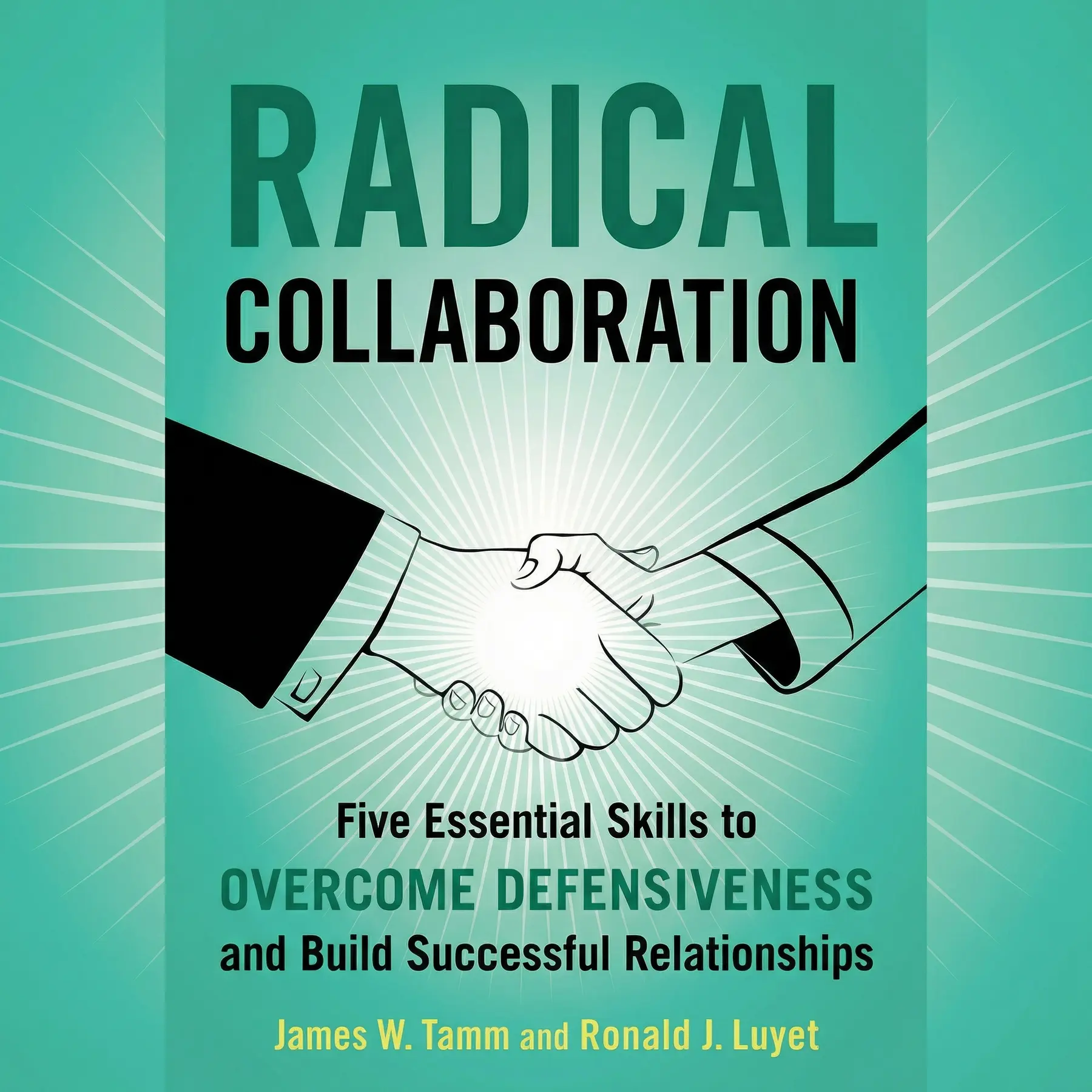
Radical Collaboration explores five essential skills for building high-trust relationships and high-performance teams. It provides a roadmap for moving from defensive, competitive environments to cooperative, open cultures through intentionality and self-awareness.
2 min 12 sec
When we look at the monumental success stories of our time—the empires built by figures like Steve Jobs, Bill Gates, or Elon Musk—there is a common tendency to romanticize the idea of the ‘lone genius.’ We imagine a single visionary working in isolation, changing the world through sheer force of will. However, if we pull back the curtain on any major achievement, a different story emerges. Success in the modern world is rarely a solo act. Instead, it is the result of intricate, often messy, and deeply demanding collaborations.
The reality is that our ability to work with others has become our most valuable professional currency. This isn’t just a philosophical observation; it’s backed by hard data. Research published in the Harvard Business Review highlights a staggering shift: over the last two decades, the time managers and employees spend in collaborative activities has surged by more than fifty percent. We are spending more time than ever in meetings, on shared documents, and in team-based problem-solving sessions.
Yet, while the quantity of collaboration has increased, the quality often lags behind. Many of us find ourselves trapped in cycles of defensiveness, misunderstanding, and hidden agendas. We want to work together, but our psychological instincts often pull us toward competition and self-protection. This is where the concept of Radical Collaboration comes in. It suggests that effective partnership isn’t just about being ‘nice’ or getting along. It is a rigorous, intentional practice involving five specific skills that allow us to overcome our natural defensiveness and build relationships based on transparency and mutual benefit.
In this summary, we will explore these five pillars. We’ll look at how to shift your mindset from a defensive posture to a cooperative one, how to use radical honesty to clear the air before problems fester, and how to navigate the complex social dynamics of control and inclusion. By the end, you’ll have a roadmap for turning even the most challenging workplace relationships into productive, high-trust partnerships. Let’s explore how to move beyond the myth of the individual hero and master the art of working together.
2 min 44 sec
Success begins with the internal intention you bring to every interaction. Learn why staying in the cooperative Green Zone is the key to unlocking creative solutions.
2 min 50 sec
Discover how ‘speaking the first truth first’ can prevent small misunderstandings from ballooning into major organizational crises.
2 min 37 sec
Listening is more than just staying silent while others talk. Learn the ‘tell-me-more’ approach to building deeper professional connections.
2 min 33 sec
Stop the blame game. Discover why taking full responsibility for your choices is the most empowering move you can make in any partnership.
2 min 56 sec
Unlock the secrets of team compatibility by understanding the three core interpersonal needs that drive human behavior.
2 min 18 sec
Conflict is inevitable, but it doesn’t have to be destructive. Learn the first two steps of interest-based problem solving.
2 min 33 sec
Unlock stalemates by distinguishing between what people say they want and what they actually need. Plus, the importance of a solid contingency plan.
2 min 30 sec
Move from brainstorming to a final agreement using the iterative ‘straw design’ process. Learn how to refine ideas without the pressure of perfection.
2 min 07 sec
The journey toward becoming a radical collaborator is not a one-time event, but a continuous practice of self-awareness and intentionality. In our interconnected, fast-paced world, the old habits of the ‘Red Zone’—defensiveness, secrecy, and self-centered competition—are increasingly becoming liabilities. They slow down innovation, drive away talent, and create environments of chronic stress. By contrast, the ‘Green Zone’ skills we’ve explored today provide a competitive advantage that is difficult to replicate.
We have seen that collaboration starts with a mindset: the intentional choice to seek mutual gain. It is sustained through radical truthfulness, where the ‘first truth’ is spoken early to keep trust high and communication clear. It is deepened through empathic listening, where we seek to truly understand the needs of others rather than just waiting for our turn to speak. It is anchored in self-accountability, the empowering realization that our choices, not our circumstances, define our success. And finally, it is structured through an interest-based approach to conflict, where we move past fixed positions to find creative, iterative solutions that satisfy everyone’s underlying needs.
If you want to put these ideas into immediate action, start with a simple, collaborative brainstorming session the next time your team faces a hurdle. Before anyone speaks, give everyone a few minutes to write down their own thoughts and interests. This small step ensures that every voice is heard and prevents the most dominant personalities from setting the agenda.
Collaboration is indeed radical because it requires us to go against some of our most basic defensive instincts. It asks us to be vulnerable, to be honest, and to take responsibility even when it’s uncomfortable. But the rewards—higher productivity, deeper trust, and more resilient relationships—are well worth the effort. As you move forward in your career, remember that you don’t have to be a lone genius. The most successful people aren’t the ones who work the hardest in isolation; they are the ones who have mastered the art of bringing out the best in everyone around them.
In an era where professional success is inextricably linked to our ability to work with others, the traditional models of competition and individual achievement are no longer sufficient. This summary delves into the principles of Radical Collaboration, a framework designed to transform how individuals interact within organizations. It identifies the psychological barriers that often lead to defensiveness and conflict, offering a set of practical skills to bypass these hurdles. The promise of this work is a shift from the 'Red Zone'—a state of high stress, self-interest, and suspicion—to the 'Green Zone,' where trust, honesty, and mutual gain flourish. By mastering five core competencies, readers learn how to navigate difficult conversations, listen with deeper intent, and take full responsibility for their professional circumstances. Whether you are leading a global corporation or working in a small team, these strategies provide the tools necessary to foster a culture of inclusion, manage inevitable disagreements with grace, and build the kind of sustainable partnerships that drive modern innovation.
James W. Tamm is a veteran expert in conflict resolution with over forty years of experience. A former California judge and law professor, he has specialized in creating collaborative work environments and is currently the principal of Business Consultants Network Inc. Ronald J. Luyet is a cofounder of the Green Zone Culture Group, an organization dedicated to helping companies foster collaborative environments. A senior consultant with the Business Consultants Network, he has also coauthored Where Freedom Begins: The Process of Personal Change.
Listeners find the content highly accessible and value the pragmatic strategy it offers for working together. Furthermore, the guide provides distinct illustrations and assists listeners in navigating their own personality characteristics, serving as a valuable tool.
Wow, what a deep dive into the mechanics of human connection. Radical Collaboration manages to turn the abstract concept of "working together" into a literal step-by-step roadmap. I was particularly struck by the section on the five essential skills, specifically how openness serves as a foundation for everything else. The level of detail in the negotiation and problem-solving sections is remarkable. If you’ve ever felt like your relationships at work are a series of defensive posturings, this will hit home. It’s insightful, useful, and something I’ll keep on my shelf for years. The case studies bring the concepts to life in a way that feels authentic rather than staged.
Show moreAfter hearing about the “Green and Red zones” at a professional development seminar, I felt compelled to grab the full text. It’s a very practical manual for anyone struggling with team dynamics. Truth is, the distinction between those zones is a game-changer for identifying when a conversation is turning toxic. While some chapters felt a bit like they were dragging, the core advice on moving past defensiveness is worth the cover price. It provides a clear, actionable plan that goes beyond theoretical fluff. I especially appreciated the emphasis on how our own internal attitudes dictate the success of external collaborations. It's not just about managing others; it's about managing yourself first.
Show morePicked this up to help with my tendency to get defensive during team meetings. Radical Collaboration offers a very specific, detailed plan for overcoming those reflexive walls we build when things get tense. In my experience, the authors do a great job of breaking down personal character traits that either foster or destroy a collaborative environment. It’s an easy read, but that doesn't mean it’s light on content. The focus on "collaborative intention" versus "adversarial intention" is a powerful framework. I do think it could have been shorter, as some of the examples are stretched a bit thin. Still, for anyone whose daily work revolves around complex human relationships, the practical tips here are quite valuable.
Show moreThe chapter on self-accountability is where things finally clicked for me. Most business books focus on how to fix the other person, but Tamm and Luyet force you to look at your own contribution to the conflict. It’s a refreshing approach to professional development. The writing is straightforward and the examples are clear enough to implement immediately. I’ve started using the brainstorming techniques they suggested, and it has definitely helped balance the power dynamics in our project groups. Sometimes the tone feels a bit dated, yet the underlying psychology is sound. It’s a helpful resource for anyone looking to refine their personal toolkit and improve how they navigate high-stakes negotiations.
Show moreEver wonder why some teams just click while others seem to be in a constant state of friction? This book provides a lot of answers through its framework of "Radical Collaboration." I found the actionable advice on inviting stakeholders to brainstorm particularly effective. It’s a simple shift, but it prevents one person from dominating the conversation. The authors highlight how being globally interconnected requires a higher level of empathy and conflict resolution skill than we used to need. My only gripe is that it can feel a bit like an extended version of a Blinkist summary at times. It’s definitely useful, though perhaps a bit redundant if you’ve already read a lot of similar management literature.
Show moreFrankly, it's a solid addition to any mediator’s library. As someone who facilitates a lot of group sessions, I’m always looking for ways to get people to stop being defensive and start being honest. The tools here for preparing, negotiating, and reviewing collaborations are top-notch. There’s one specific tool that reminded me of systemic constellation work, which was an unexpected but welcome surprise. It helps participants show up in a way that is more genuine and less performative. Even if you aren't a professional facilitator, the strategies for building awareness of "the other" are incredibly helpful. It’s a practical, no-nonsense guide to making relationships work better in a high-pressure environment.
Show moreAs someone who struggles with conflict resolution, I found the practical roadmap here quite refreshing. This isn't just a book of vague theories; it’s a detailed plan for fixing broken communication. The authors give you the exact questions to ask and the specific mindset you need to adopt to move forward. Not gonna lie, I was skeptical of the "five skills" at first, but the depth with which they are explored is impressive. The focus on taking the pulse of every party involved ensures that solutions are actually sustainable. It’s easy to read and filled with clear examples that make sense in a modern workplace context. I recommend it for anyone looking to improve their professional character traits.
Show moreThis book initially struck me as a bit simplistic because the core pillars—like self-accountability and awareness—seem like common sense at first glance. However, looking closer reveals a surprising amount of depth in the execution. The authors don't just tell you to be open; they provide five specific questions to navigate professional difficulties that I found incredibly helpful for real-world application. I’ve already used the "what's the meaning for you?" prompt in a recent meeting, and it actually shifted the tone of the room. To be fair, the writing style is quite dry and can feel repetitive in the middle sections. It’s a solid read that offers great tools if you can push through the occasional slog of management-speak.
Show moreFinally got around to finishing this after it sat on my nightstand for three months. I first encountered these ideas in a workshop years ago and wanted to revisit the source material. Look, some parts are quite boring and repetitive, which made it hard to stay engaged for long stretches. That said, the "Red Zone" concept is absolutely vital for understanding why so many corporate projects fail before they even start. The authors provide a wealth of information, but a tighter edit would have made this a much stronger book. It’s a decent reference guide, but I found myself skimming the middle sections to get to the actual tools and questions.
Show moreNot what I expected from a professional management book, and unfortunately, not in a good way. While the concepts of the Green Zone are interesting, the tone is all over the place. Honestly, I found it really jarring to read an oddly aggressive sentence about someone’s mother being a "bitch" in what is supposed to be a serious text on collaboration. It felt unprofessional and took me completely out of the learning experience. The "five skills" mentioned throughout the book are fine, but you can find better explanations of self-awareness and accountability elsewhere without the weirdly hostile phrasing. I struggled to finish it because the presentation was so off-putting. It’s a pass for me.
Show moreDeborah Gruenfeld
Mike Michalowicz

Hamilton Helmer

Margaret Heffernan
AUDIO SUMMARY AVAILABLE
Get the key ideas from Radical Collaboration by James W. Tamm, plus 5,000+ more titles in English and Thai.







