

20 min 25 sec
Radically Happy: A User's Guide to the Mind
This guide provides a practical framework for achieving lasting contentment by blending ancient Tibetan Buddhist wisdom with modern psychological insights. It reveals how to cultivate presence, gratitude, and compassion to find true, radical well-being.
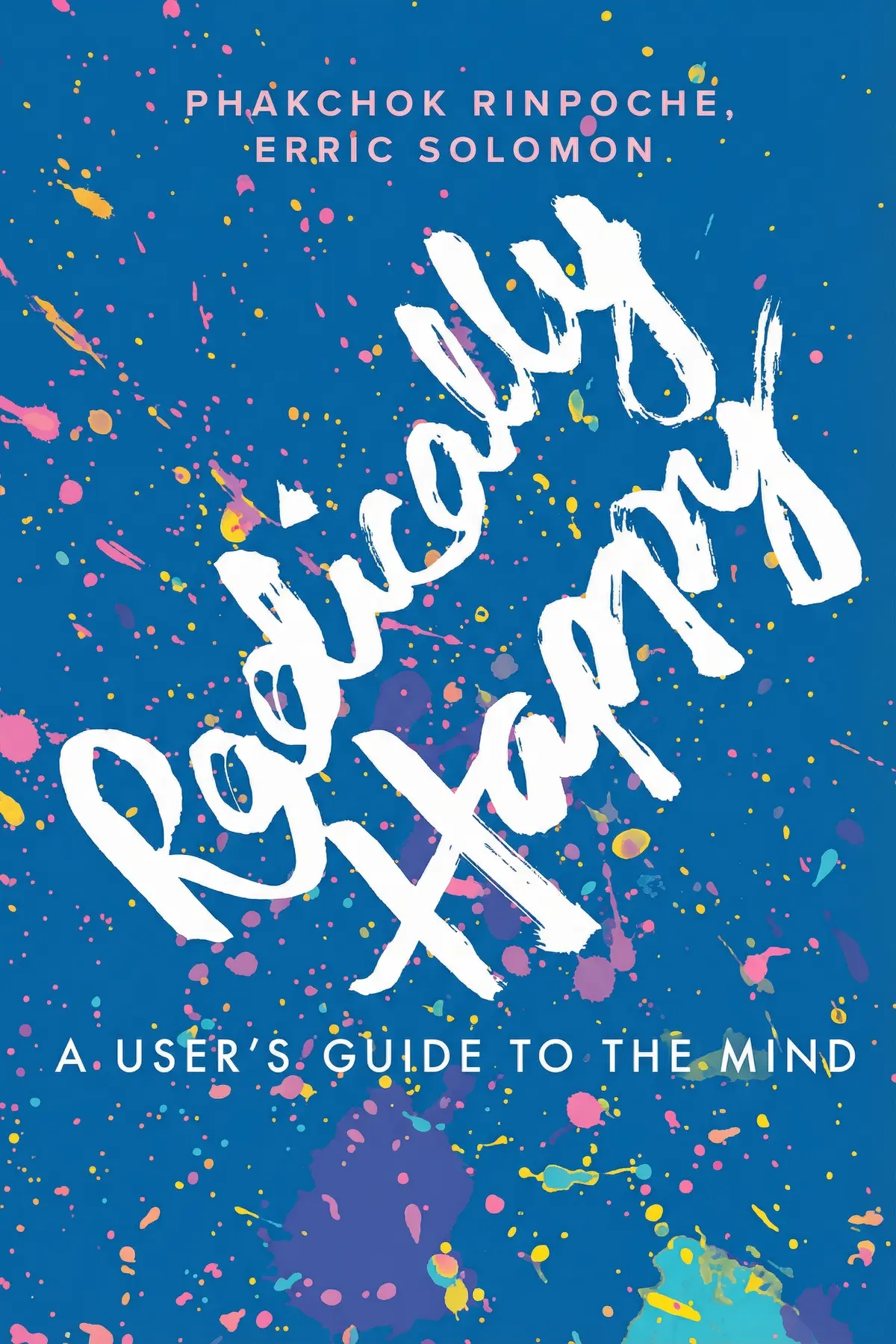
Table of Content
1. Introduction
2 min 08 sec
Imagine for a moment that you’ve finally achieved everything you thought you wanted. Perhaps you’re living in your dream home, driving a luxury vehicle, or holding the job title you’ve spent a decade chasing. In our modern world, we are conditioned to believe that these external achievements are the blueprints for a joyful life. We tell ourselves that once we reach a certain milestone, the stress will vanish and a permanent state of bliss will take its place. Yet, for most of us, that sense of satisfaction is frustratingly short-lived. We reach the mountain peak only to find our eyes immediately drifting toward the next, higher summit.
This cycle of seeking happiness in external things is a trap that leaves us feeling perpetually restless. We are, quite frankly, poor at predicting what will actually make us happy in the long run. We mistake fleeting pleasure for lasting fulfillment. But what if there was a different way to experience life? What if happiness wasn’t something you had to find out there in the world, but something you could generate from within, regardless of what’s happening in your bank account or your social life?
This is the core promise of the teachings shared by Phakchok Rinpoche and Erric Solomon. They introduce us to a concept they call radical happiness. Unlike the ordinary happiness that depends on good weather or a promotion, radical happiness is a steady, internal sense of well-being. It is a quiet dignity that remains intact even when life becomes difficult or chaotic. This journey isn’t about escaping the world or ignoring your problems. Instead, it’s about training your mind to engage with reality in a completely new way.
Over the course of this summary, we will explore a practical path toward this state. We’ll look at why our brains get stuck in cycles of worry and how we can break those habits. We’ll discover how to transform our relationships by recognizing our deep connection to others. Most importantly, we’ll learn specific, actionable techniques to anchor ourselves in the present moment. By the end, you’ll have a roadmap for moving beyond temporary highs and toward a grounded, unshakeable sense of peace.
2. The Fallacy of External Circumstances
1 min 54 sec
Discover why major life events, whether positive or negative, often fail to change our long-term happiness levels as much as we expect.
3. Transcending the Inner Puppy
1 min 54 sec
Learn how to stop impulsively reacting to every passing thought and start observing your mind with the calm focus of a lion.
4. Engaging the Disruptive Mind
1 min 54 sec
Treat your chaotic thoughts like a restless party guest by giving your mind a specific task to focus on during meditation.
5. The Antidote to Social Comparison
1 min 53 sec
Break the habit of measuring your life against others by consciously focusing on the abundance already present in your day.
6. Integrating Mindfulness into the Daily Grind
1 min 48 sec
Discover how to maintain your inner peace outside of quiet rooms by using everyday triggers as cues for short mental breaks.
7. The Illusion of the Solitary Self
1 min 45 sec
Explore how recognizing our deep interdependence with others can transform our sense of isolation into a feeling of belonging.
8. Expanding the Circle of Kindness
1 min 35 sec
Strengthen your emotional resilience by practicing a meditation that visualizes the vast network of care that supports your life.
9. Softening the Judging Mind
1 min 37 sec
Learn to bypass your brain’s instant prejudices to find common ground and joy even with the most difficult people in your life.
10. The Path to Inner Dignity
1 min 50 sec
Move toward the ultimate state of radical happiness by learning to observe your thoughts without clinging to them.
11. Conclusion
2 min 07 sec
As we reach the end of our exploration into the path of radical happiness, it’s worth reflecting on the journey we’ve taken. We began by debunking the myth that our joy depends on our bank accounts or our social status. We saw that even the most extreme life events—like winning the lottery or suffering a tragedy—eventually give way to our natural baseline. This realization pointed us toward the true source of well-being: the mind itself.
We learned that finding peace requires us to stop being like the dog that chases every stone and start being like the lion that remains centered and observant. By using simple techniques—like focusing on our breath or creating mental space—we can cultivate ‘basic happiness’ in the present moment. We then expanded our focus to include the people around us, recognizing that our lives are woven into a vast, interconnected web of kindness and mutual support. This shift from isolation to connection brings ‘interconnected happiness,’ which we can strengthen by actively wishing for the well-being of others, even those we find difficult.
Ultimately, all these practices lead to ‘radical happiness’—a state of inner dignity that comes from knowing your own mind. This isn’t a destination where you’ll never feel sad or angry again. Rather, it’s a way of relating to those feelings so they no longer control you. It’s the realization that there is a quiet, vast space of awareness within you that remains untouched by the storms of life.
To begin applying this today, consider starting with ‘warmhearted mini-breaks.’ Several times a day, just for a few moments, pause and wish for the happiness of all beings. Imagine a warm light radiating from your heart and touching everyone in the world. As you inhale, think of everyone being free from pain; as you exhale, send them joy. This small act of mental generosity is the seed of a transformed life. By training your mind in presence and kindness, you are not just seeking happiness—you are becoming the very source of it.
About this book
What is this book about?
The book explores the concept of radical happiness—a deep, unshakeable sense of well-being that persists regardless of external circumstances. It posits that while most people seek happiness in material wealth or status, these provide only temporary satisfaction. Instead, the authors guide the reader through a series of mental exercises rooted in Tibetan Buddhist tradition but tailored for a modern, secular audience. The promise of the book is a practical roadmap to emotional freedom. By combining ancient wisdom with contemporary psychological insights, it teaches how to move from basic happiness, characterized by being present, to interconnected happiness, which stems from warm relationships, and finally to radical happiness. This ultimate state allows individuals to remain centered and dignified even in the face of life’s inevitable challenges. It is less about achieving a perfect life and more about cultivating a resilient, compassionate mind.
Book Information
About the Author
Phakchok Rinpoche
Phakchok Rinpoche is a master in the Tibetan Buddhist tradition and carries the title of Khenpo, representing a long heritage of spiritual leadership. He shares his knowledge of meditation with students at various global universities. Erric Solomon, once a prominent tech executive in Silicon Valley, now serves as a meditation instructor. He facilitates retreats and seminars across a diverse range of locations, including temples, corporate offices, and prisons throughout the United States and Europe.
Ratings & Reviews
Ratings at a glance
What people think
Listeners find this work to be an excellent manual for attaining a joyful mindset, offering deep Buddhist wisdom paired with straightforward meditation drills that are notably useful for novices. Listeners characterize the book as lovely, clear, and a pleasure to experience. They value its approachability, with one listener pointing out its step-by-step instructional format, and consider the content to be both accessible and full of perspective.
Top reviews
Orathai
Picked this up because the cover caught my eye, but the content inside is what actually kept me turning the pages. It is rare to find a self-help book that feels like an art piece while providing actual, actionable advice for your mental health. The collaboration between a tech executive and a Tibetan master creates a grounded perspective that does not feel overly mystical or disconnected from modern reality. I loved how the vibrant illustrations broke up the text, making the profound Buddhist concepts feel much more approachable for someone who usually gets overwhelmed by dense philosophy. To be fair, some of the exercises are quite similar to things you will find in other mindfulness guides, but the presentation here is far superior. It is a step-by-step roadmap to finding a bit more peace in a chaotic world without needing to move to a remote cave.
Show moreTum
Wow, this was exactly the mental reset I needed during a particularly stressful month at work. The way Phakchok Rinpoche explains complex concepts like interconnectedness makes them feel intuitive and immediately applicable to daily life situations. I particularly appreciated the step-by-step format because it takes the intimidation factor out of meditation. Usually, meditation feels like a chore for my busy brain. The truth is, I have tried many different apps and books, but the friendly tone here really resonated with my personal struggle to stay present. It is much more than just a book. It is a vibrant, colorful companion that encourages you to be kinder to yourself while navigating the complexities of modern existence. Even if you only do a few of the exercises, you will likely find yourself reacting to small frustrations with a lot more grace than before.
Show moreVimolwan
As someone who has always struggled with anxiety, this book offered a perspective on radical happiness that felt both challenging and incredibly hopeful. It is not about ignoring problems or being fake-positive, but about developing a resilient heart that can handle whatever life throws at it. The collaboration between the two authors works surprisingly well, with the Rinpoche providing the soul and Solomon providing the relatable context for a modern audience. I have been practicing some of the shorter mindfulness techniques during my morning commute, and I have already noticed a shift in my overall stress levels. The beautiful, colorful pages make it a pleasure to pick up every day, almost like a ritual in itself. It is a profound yet accessible roadmap for anyone who feels stuck in their own head and wants to find a way out into the light.
Show moreJun
After hearing about the George Vaillant study on happiness, I was curious to see how a Buddhist perspective would bridge that gap. This book does a fantastic job of merging scientific curiosity with ancient practices in a way that feels incredibly relevant to our current burnout-prone society. The authors emphasize that happiness is not just an internal state, but something nurtured through our interconnectedness with others and the world around us. Not gonna lie, I was initially skeptical about the Silicon Valley influence, but Erric Solomon provides a practical bridge that makes the Rinpoche’s teachings feel much more achievable. The layout is colorful and engaging, though I do think the subtitle implies a bit more neuroscience than what is actually provided in the text. Still, it is a beautiful guide for anyone looking to recalibrate their internal compass and lead a more compassionate life.
Show moreNong
The vibrant illustrations make the experience really luscious, turning what could have been a dry instructional manual into a joyful journey. I have read many spiritual guides, but the way this book is structured—blending ancient wisdom with modern lifestyle tips—is truly unique and refreshing. The short cuts mentioned throughout are surprisingly effective for snapping out of a negative spiral, especially when you are stuck in traffic or dealing with a difficult colleague. In my experience, the exercises are easy to follow, although I agree with some other reviewers that there are perhaps too many to tackle all at once. It is better to treat this as a long-term project rather than a weekend read if you want to see real changes in your mindset. My only minor gripe is that some of the tech analogies felt a little forced, but they do not detract from the powerful overall message.
Show moreKob
Ever wonder what happens when a Tibetan lama and a tech entrepreneur write a book together? The result is a surprisingly balanced guide that manages to be both deeply spiritual and highly practical for those of us living in a digital-heavy world. Radically Happy does not just tell you to be happy; it provides a structural framework for understanding how our minds habitually create suffering. Personally, I found the sections on the warmth of relationships to be the most moving, reinforcing the idea that our happiness is tied to how we treat others. While the design is arguably the best part of the physical book, the text holds its own by offering clear, jargon-free explanations of Buddhist philosophy. It is an excellent choice for beginners, though I think even seasoned meditators will appreciate the reminders to keep things simple and lighthearted.
Show moreJong
Direct and insightful, this book manages to distill complex traditions into something that feels very manageable for the average person. The authors do a great job of explaining that happiness is a skill we can actually train, rather than just a lucky accident. I loved the emphasis on how our thoughts influence our reality. The anecdotes provided a lot of aha moments for me. To be fair, the sheer number of exercises can be a bit much. I found myself skipping a few just to keep the momentum of the reading going. However, the ones I did try were very effective at grounding me in the present moment. This is a beautiful volume that I will likely keep on my nightstand for a long time, dipping back into it whenever I need a reminder to breathe and reconnect.
Show moreTom
This book is undeniably gorgeous, yet I found myself struggling to actually finish it because of the sheer volume of activities included. While the authors present a compelling case for 'radical happiness' through Buddhist wisdom, the constant prompts for meditation and reflection felt a bit like homework after a while. I agree with other readers who mentioned this would almost work better as a daily calendar or a workbook rather than a linear narrative you read cover-to-cover. Frankly, the insights from the Rinpoche were the highlight for me, as they offered a deep look into the mind's mechanics that felt very authentic. However, the Silicon Valley tone sometimes clashed with the spiritual depth, making the overall experience feel slightly disjointed at times. It is a solid resource for beginners, but more seasoned practitioners might find it a bit repetitive if they have already read extensively on mindfulness.
Show moreKom
Finally got around to this after seeing it on a friend's shelf, and while it is a decent read, it did not quite change my life. The book is undeniably gorgeous to look at. This definitely helps when you are trying to focus on mindfulness, yet the advice felt a bit too familiar to me. If you have spent any time on meditation apps or listening to popular psychology podcasts, you will recognize many of the themes here. Gotta say, the exercises are well-explained, but there are so many of them that it can feel a little overwhelming to figure out where to start. It is definitely a high-quality production, but I think the radical part of the title might be a bit of an exaggeration. This is good for a gift or for someone just starting their journey, but maybe not the deep dive some might be looking for.
Show morePiyanart
Not what I expected based on the subtitle, which promised a user's guide but delivered mostly anecdotes and standard meditation tips. If you are looking for deep cognitive behavioral science or neurological data, you are definitely going to be disappointed by the lack of technical depth here. Instead, you get a lot of personal stories and very basic mindfulness exercises that have been covered in countless other publications over the last decade. Look, the book is visually stunning and the printing quality is top-notch, but the actual substance felt a bit thin for someone who is not a total novice to the genre. I found the tone a bit too 'self-help light' for my taste, and I was hoping for something more transformative or intellectually rigorous. It is a fine coffee table book for casual flipping, but it did not really challenge my perspective or offer any truly new insights into the human mind.
Show moreReaders also enjoyed
A Return to Love: Reflections on the Principles of a Course in Miracles
Marianne Williamson
Abundance: The Inner Path to Wealth
Deepak Chopra

Alcoholics Anonymous
Alcoholics Anonymous World Services
A New Earth: Awakening to Your Life’s Purpose
Eckhart Tolle
Aflame: Learning from Silence
Pico Iyer
A Force for Good: The Dalai Lama's Vision for Our World
Daniel Goleman
AUDIO SUMMARY AVAILABLE
Listen to Radically Happy in 15 minutes
Get the key ideas from Radically Happy by Phakchok Rinpoche, plus 5,000+ more titles in English and Thai.
- 5,000+ titles
- Listen as much as you want
- 7-day free trial
- Cancel anytime







