
23 min 27 sec
Available in:English
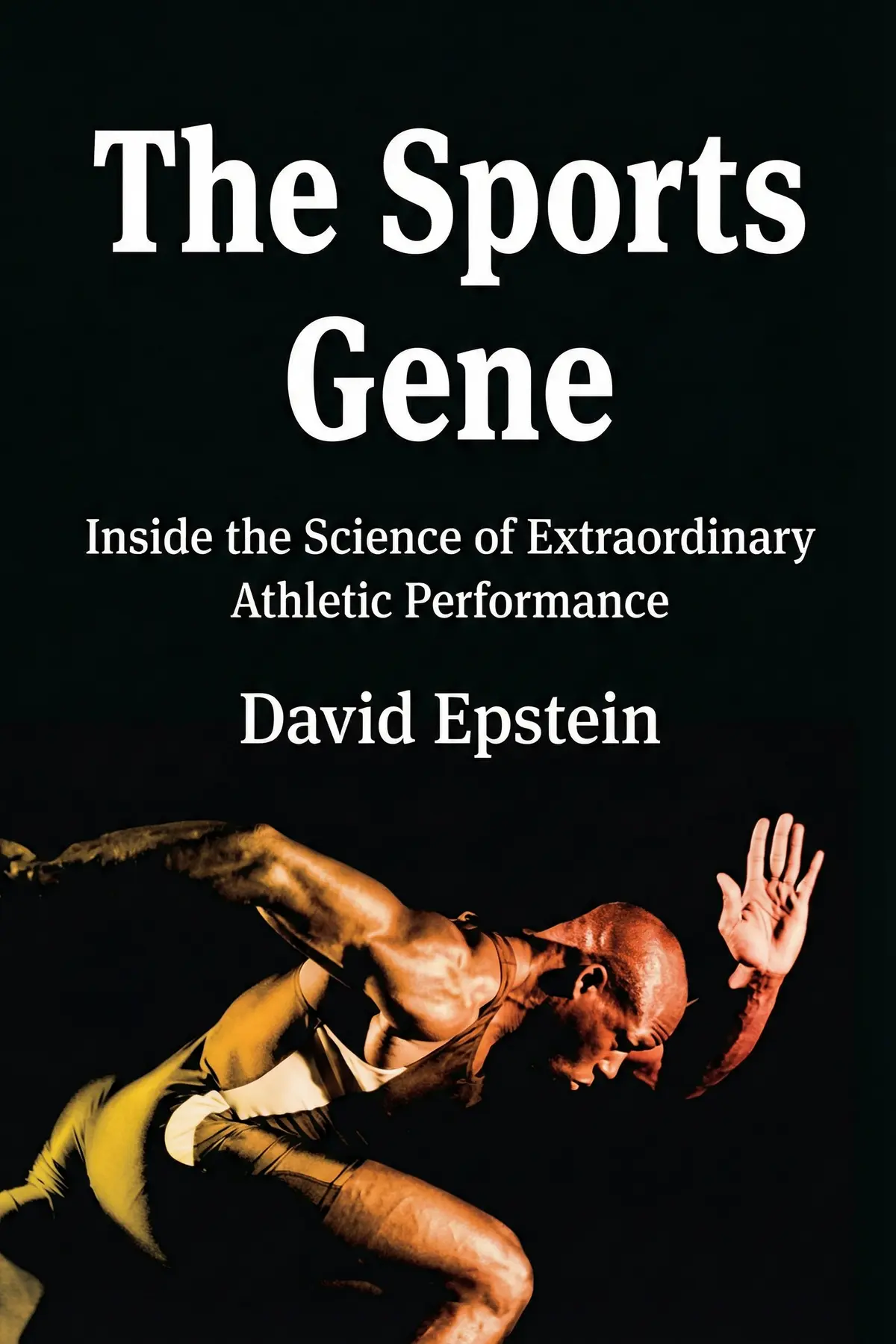
Range: Why Generalists Triumph in a Specialized World
Range explores why generalists, rather than specialists, are better equipped to succeed in a complex world by drawing on diverse experiences to solve problems and drive innovation across various fields.
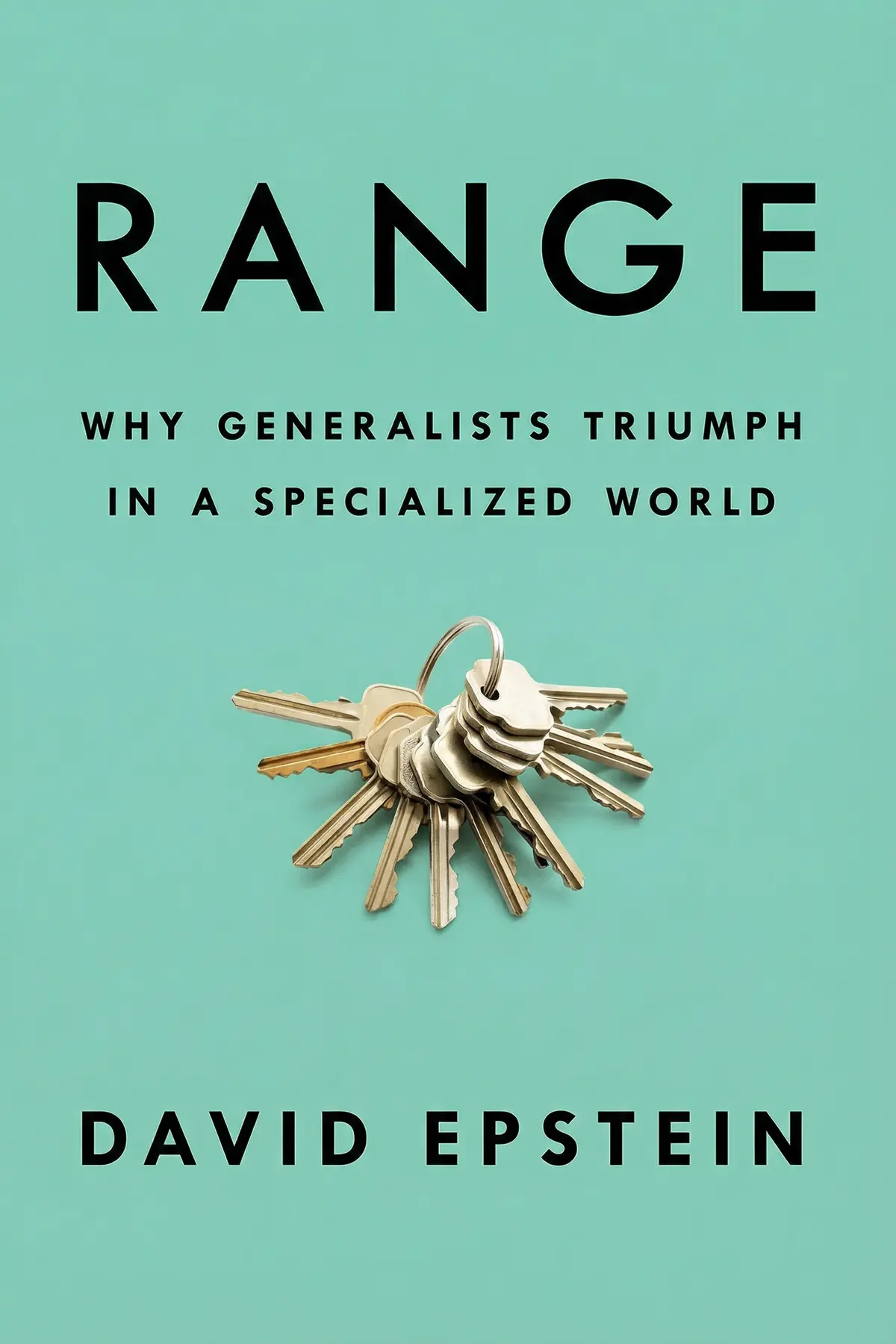
Table of Content
1. Introduction
1 min 47 sec
In our current era, there is an intense, almost frantic pressure to find your niche as early as possible. We are told that if we haven’t mastered a specific skill by the time we hit adulthood, we’ve already lost the race. We look at child prodigies—the musicians who perform at Carnegie Hall at age eight or the athletes who are scouted by professional teams before they can drive—and we assume their path is the only blueprint for greatness. This is the narrative of the specialist: the idea that narrow, deep focus from a young age is the secret to reaching the top of any field.
But what if that narrative is fundamentally flawed for most of the challenges we face in the twenty-first century? What if the very thing we are told to avoid—dabbling, experimenting, and changing our minds—is actually the most powerful tool in our arsenal? This is the central provocation of David Epstein’s Range. Epstein suggests that in a world that is increasingly complex and interconnected, it is the generalists who are best positioned to succeed. These are the people who take a circuitous path, gathering a wide array of seemingly unrelated experiences before finally settling on a direction.
Throughout this summary, we are going to explore why a broad foundation beats a head start. We’ll look at the difference between ‘kind’ learning environments, where specialization works, and ‘wicked’ environments, where it fails. We will discover why ‘slow’ learning is actually more durable than fast progress and why being a ‘late bloomer’ might just give you the edge you need to innovate. By the end, you’ll see that having range isn’t just about knowing a little bit about everything; it’s about having the conceptual tools to solve problems that specialists can’t even see. This is a journey through the science of performance and the art of living a wide, impactful life.
2. The Specialization Trap
2 min 32 sec
Early focus is often praised, but its benefits are limited to specific types of environments that don’t reflect the true complexity of modern life.
3. The Power of the Sampling Period
2 min 27 sec
Many of the world’s most successful people didn’t start early; they spent years exploring different fields before finding their true calling.
4. Thinking in the Abstract
2 min 28 sec
Modern life has fundamentally rewired our brains, making us better at conceptual connections but more prone to narrow thinking.
5. The Virtue of Slow Learning
2 min 25 sec
The most effective way to learn is often the most frustrating, involving ‘desirable difficulties’ that ensure long-term mastery.
6. The Danger of the Inside View
2 min 26 sec
Specialists are often blinded by their own expertise, leading to biased judgments and missed opportunities for better solutions.
7. Innovation Through Cross-Pollination
2 min 24 sec
Creative breakthroughs are rarely the result of narrow focus; they come from polymaths who connect disparate ideas.
8. The Hedgehog and the Fox
2 min 24 sec
Experts with a single, grand theory are often poor at predicting the future, while ‘foxes’ with diverse viewpoints are far more accurate.
9. Cultivating an Interdisciplinary Future
2 min 31 sec
To solve the biggest problems of tomorrow, we must move away from rigid silos and embrace a messy, experimental approach to growth.
10. Conclusion
2 min 03 sec
As we wrap up this exploration of David Epstein’s Range, the overarching message is clear: our obsession with early specialization is a narrow-minded approach to a wide-open world. While the Tiger Woods model of success—early start, focused practice, and single-minded intensity—works in ‘kind’ environments with predictable rules, it is a risky strategy for the ‘wicked’ reality of the modern age. Most of the challenges we face require the ability to connect disparate ideas, to pivot when the rules change, and to think across boundaries.
We’ve seen that the most innovative individuals often take a circuitous path. They sample different fields, embrace ‘desirable difficulties’ in their learning, and maintain an ‘outside view’ that prevents them from becoming trapped by their own expertise. They are the foxes, not the hedgehogs; they are the polymaths, not the narrow technicians. They understand that a broad foundation is not a sign of a lack of focus, but rather the essential infrastructure for eventual greatness.
The throughline of this summary is a call to action: give yourself permission to explore. If you are a parent, let your children dabble and play without the pressure to pick a ‘major’ at age ten. If you are a professional, seek out experiences and knowledge outside your immediate silo. If you are a leader, hire for breadth and curiosity rather than just a checklist of narrow skills.
Remember that the time you spend ‘sampling’—the jobs that didn’t work out, the hobbies that seem like distractions, the books you read that have nothing to do with your career—is not lost time. It is the very material that will allow you to innovate and thrive. Range is not about being a ‘jack of all trades and master of none.’ It is about becoming a master because you have the wisdom to draw from all trades. Stay curious, stay broad, and trust that your winding path is leading you exactly where you need to go.
About this book
What is this book about?
Range by David Epstein challenges the pervasive cultural myth that early specialization is the only path to elite performance. While we are often told to pick a lane as early as possible—think of child prodigies in golf or music—Epstein argues that this approach only works in predictable environments. In the messy, unpredictable 'wicked' world we actually live in, it is the generalists who thrive. The book promises a liberating perspective for anyone who feels like they are 'behind' or who has jumped between different careers and interests. It explains that a broad 'sampling period' isn't a waste of time; it is actually a vital foundation for developing deeper, more flexible expertise. By looking at examples from sports, science, art, and business, Epstein shows how breadth of experience fuels creativity and leads to more robust decision-making. Ultimately, the book provides a roadmap for navigating a specialized world by maintaining a wide-ranging, curious mind.
Book Information
About the Author
David Epstein
David Epstein is an award-winning journalist and author with wide-ranging expertise in science and sports. He’s worked for ProPublica and Sports Illustrated as a senior writer. His TED Talk on the science of athletic performance has seven million views and was shared by Bill Gates – the greatest endorsement of his work since Barack Obama bought his first book, The Sports Gene.
Ratings & Reviews
Ratings at a glance
What people think
Listeners view this work as essential reading, notably for those in university, featuring well-documented instances from many different areas and compelling anecdotes. Furthermore, the narration is articulate and absorbing, and listeners value the novel take on creative thinking, with one observer pointing out that playful improvisation is key to innovation. The title also delivers meaningful perspectives on schooling and personal growth, stressing the benefit of maintaining a diverse set of experiences.
Top reviews
Chon
Starting your career feels like a race, but Epstein suggests we might be running in the wrong direction entirely. As someone who constantly worries about being a 'jack of all trades, master of none,' this book felt like a personal vindication of my life choices. The comparison between Tiger Woods and Roger Federer is brilliant because it highlights how a sampling period allows for better long-term matching. I was particularly struck by the idea that early specialization is often a premature optimization that limits our ceiling. The writing is incredibly clear and persuasive, making complex psychological studies feel like page-turning adventures. For any college student feeling pressured to pick a lane too soon, this is mandatory reading. It isn't just a self-help book; it’s a well-researched manifesto for the curious mind.
Show moreThitiwan
Wow, the storytelling in this volume is absolutely electric and kept me hooked from the very first page. I was fascinated by the MRI scans of jazz musicians, which showed how they suspend internal criticism during improvisation to allow for creative flow. This playful improvisation is clearly a key to innovation, yet our school systems seem designed to crush it out of us. Epstein makes a compelling case that our obsession with head starts and 10,000 hours of deliberate practice is actually making us more brittle. The prose is punchy and accessible, which is a rare feat for a book backed by so much data. It has completely changed how I think about my own hobbies and professional development. I’m now much more comfortable being a late bloomer in my field.
Show moreCholada
David Epstein provides a masterclass in challenging the 10,000-hour rule that has dominated our cultural conversation for a decade. By highlighting polymaths like Duke Ellington and researchers who succeeded by switching fields, he proves that 'range' is an underrated competitive advantage. The book is incredibly well-researched, weaving together stories from art, science, and sports into a cohesive and inspiring argument. I specifically appreciated the insights on education and how 'slow learning' actually leads to better long-term retention. In a world that demands we specialize earlier and earlier, this book is a necessary corrective. It’s an innovative look at how we can all become more creative by embracing our diverse interests. This is easily one of the best non-fiction books I've read in years.
Show moreJom
After hearing so much hype, I finally got around to reading this, and it totally lived up to the reputation. The way Epstein links disparate fields—from Venetian orphanages to modern Silicon Valley—is nothing short of brilliant. He shows that being a generalist isn't about being mediocre at everything, but about having the analogies to solve problems others can't even see. I loved the advice to avoid 'premature optimization' and to keep our paths flexible for as long as possible. The writing style is engaging and down-to-earth, never becoming too academic despite the heavy research involved. It’s a fascinating look at self-development that encourages you to follow your curiosity wherever it leads. If you feel like you're 'behind' in life, read this book and you'll feel much better.
Show moreSomsak
Ever wonder why some people thrive in unpredictable situations while others crumble when the script changes? Epstein explores this through the lens of 'wicked' vs. 'kind' learning environments, and the distinction is absolutely eye-opening. In 'kind' domains like golf, feedback is instant and the rules never change, but life is rarely that tidy. This book argues that we need foxes—who know many little things—rather than hedgehogs who know one big thing. I loved the section on how 'outsider' knowledge solved problems that stumped specialized teams at InnoCentive. My only gripe is that the author occasionally cherry-picks examples to fit the narrative, ignoring specialists who are also happy. Still, the message about the value of quitting and pivoting is a breath of fresh air in our 'grit-obsessed' culture.
Show moreRapee
Picked this up after feeling 'behind' in my career, and it was the psychological balm I didn't know I needed. Epstein’s advice to compare yourself to yourself yesterday, rather than to younger people who aren't you, is something I will keep forever. The book does a great job debunking the 'Tiger Mom' approach to success by showing that most elites actually start late. I found the chapter on NASA and the dangers of using only pre-established templates to solve novel problems to be particularly chilling. It’s a powerful reminder that we need people who can see the forest for the trees. My only minor complaint is that the writing can be a bit 'People Magazine' at times with its celebrity focus. Nonetheless, the core message about the benefits of a broad experience base is vital for our modern world.
Show moreYanin
The section on Van Gogh's late-life success was probably my favorite part of the entire book. It’s easy to forget that one of history’s greatest artists was essentially a 'failed' preacher and salesman before finding his path. This book celebrates the 'quitter' as someone who is actually searching for a better match, which is a very empowering perspective. The truth is, most of us don't know who we are or what we're good at when we're eighteen. Epstein argues that we should embrace the trial-and-error process instead of fearing it as a lack of grit. While some of the military examples felt a bit dry, the overall impact of the book is profound. It’s a great read for anyone who has ever felt like a dilettante for having too many interests.
Show moreSuwit
To be fair, I think this book should be required reading for every HR manager and educator in the country. We are currently building a society of hedgehogs in a world that increasingly requires the flexibility of foxes. The author’s exploration of how specialists can become 'tunnel-visioned' to the point of disaster—like the cardiologists over-prescribing stents—was eye-opening. Learning about the 'sampling period' made me feel much better about my own non-linear career path. The book moves at a breakneck speed and manages to make even statistical trends feel personal and relevant. My only criticism is that I wish there was more about how to foster range in lower-income communities. Despite that, the central theme is incredibly relevant and very well-argued throughout.
Show moreBo
Frankly, I entered this with high hopes for a deep dive into neuroplasticity, yet the text mostly avoids the biological mechanics of the generalist mind. While the anecdotes about Van Gogh and the Challenger disaster are engaging, I found the book a bit repetitive by the middle chapters. It hits the same note—that breadth is good—without exploring the systemic hurdles that still punish generalists in the corporate world. To be fair, Epstein is a gifted storyteller, but the lack of focus on how to actually implement 'range' in a specialized economy left me wanting more. It's a solid 3-star read for the trivia alone, like the fact that Michelangelo left so many sculptures unfinished. However, if you're looking for a radical framework for social change or activism, you won't find it here.
Show moreDream
Look, I wanted to love this, but the narrative felt like a series of loosely connected anecdotes that didn't quite bridge the gap to actionable advice. The author spends a lot of time on sports and chess, which are interesting, but the transition to business and military applications felt a bit forced. I agree with the premise that specialization can lead to myopia, but the book ignores the reality of the job market. Most employers still hire for specific, narrow skill sets regardless of what this research says. It felt like a slog to get through the latter half because it became quite repetitive. While the 'sampling period' idea is nice in theory, it feels like a luxury for those who don't have to worry about immediate financial stability. It’s okay, but definitely not the groundbreaking masterpiece the blurbs suggest.
Show more

Readers also enjoyed
60 Seconds & You’re Hired!
Robin Ryan
Be the Unicorn: 12 Data-Driven Habits That Separate the Best Leaders from the
William Vanderbloemen
AUDIO SUMMARY AVAILABLE
Listen to Range in 15 minutes
Get the key ideas from Range by David Epstein, plus 5,000+ more titles in English and Thai.
- 5,000+ titles
- Listen as much as you want
- 7-day free trial
- Cancel anytime







