Notes on a Nervous Planet
Matt Haig
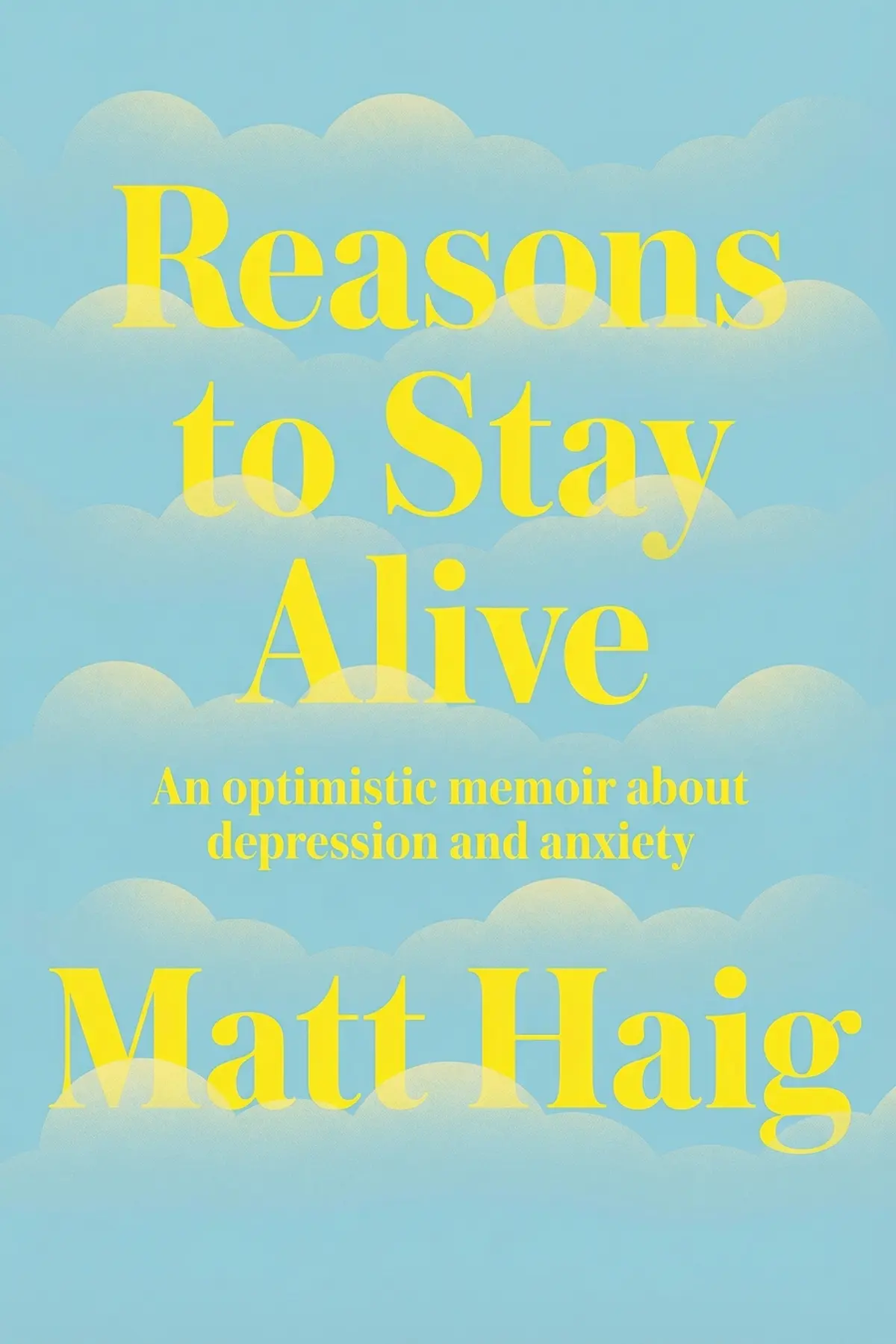
Explore Matt Haig's moving journey through severe depression and anxiety. This summary reveals how he found hope through literature, movement, and a shift in perspective, offering a roadmap for anyone seeking light in the dark.
1 min 44 sec
Imagine, for a moment, that the world you have always known suddenly becomes illegible. The people you love, the places you feel safe, and the future you once imagined all vanish behind a thick, suffocating fog of dread. This isn’t a hypothetical scenario; for Matt Haig, it was the reality of his mid-twenties. At an age when most people are beginning to find their footing in the world, Haig found himself in the middle of a Mediterranean paradise, yet his mind was an inescapable prison.
What followed was a journey that was as much about survival as it was about discovery. In this summary, we aren’t just looking at a medical history or a clinical list of symptoms. Instead, we are exploring a deeply personal throughline: the idea that even when the mind feels broken, there is a path back to wholeness. We’ll look at how Haig moved from the edge of a cliff in Ibiza to a life filled with purpose, family, and success as a writer.
Along the way, we will peel back the layers of what it means to live with depression and anxiety. We’ll talk about the silence that often surrounds male mental health, the surprising way that literature can act as a mirror for the soul, and the importance of redefining what ‘recovery’ actually looks like. The core message here is one of radical optimism. It’s an acknowledgment that while pain is real and often overwhelming, it does not have the final word. By the end of this journey, you’ll understand that the very sensitivity that makes depression so painful can also be the thing that makes life most beautiful. This is a story about finding the light in the dark, and more importantly, finding the reasons to keep moving toward it.
2 min 59 sec
Imagine being twenty-four, living in a Mediterranean paradise, and suddenly finding yourself unable to cross a room. This is the moment everything changed, sparking a descent into a world of unrelenting, invisible panic.
2 min 38 sec
Was the collapse truly a sudden event, or were the seeds planted decades earlier? By looking back at childhood fears, we discover that the mind often sends signals long before a total break occurs.
2 min 44 sec
Is depression just a chemical imbalance, or is it something deeper? We explore the conflicting theories of modern science and why there is no simple, one-size-fits-all solution for a broken spirit.
2 min 42 sec
Why is it so much harder to talk about a mind in pain than a broken leg? We examine the social stigma surrounding mental health and the deadly consequences of the pressure on men to ‘pull it together.’
2 min 53 sec
When your own thoughts become a hostile environment, where do you turn for sanctuary? Discover how books provided Matt Haig with the language, company, and purpose he needed to survive his darkest days.
2 min 45 sec
How do you reclaim a world that has shrunk to the size of a bedroom? Learn why ‘running toward the fear’ became the unexpected key to expanding Haig’s life and regaining his resilience.
2 min 49 sec
Could the very sensitivity that causes depression also be a secret advantage? We look at how historical figures and artists used their ‘thin skin’ to see the world with more clarity and compassion.
3 min 04 sec
What happens after the ‘breakdown’ is over? Discover why recovery isn’t a destination, but a daily practice of small habits, patience, and the understanding that it’s okay not to be okay.
2 min 01 sec
As we reach the end of Matt Haig’s journey, we are left with a powerful and necessary truth: the mind is a fragile thing, but the human spirit is remarkably resilient. We have seen how a young man went from the edge of a cliff in Ibiza to a life of fulfillment and creativity, not by ignoring his pain, but by walking through it. The throughline of this story is clear: your mental health does not define your worth, and your darkest moments do not dictate your future.
We have explored the physical reality of a breakdown, the hidden roots of anxiety, and the social pressures that keep so many people—especially men—suffering in silence. We’ve seen how literature can act as a bridge back to reality and how facing our fears can expand our world. Most importantly, we’ve learned that the sensitivity that makes us vulnerable to depression is often the same quality that allows us to experience the world with profound depth and empathy.
As an actionable takeaway, I encourage you to begin pinpointing what specifically improves your own mental headspace. Just as Haig found solace in running and reading, your ‘reasons to stay alive’ will be unique to you. Perhaps it’s a specific hobby, a certain person, or a daily ritual like walking in nature. Make a list of these things. When the fog of anxiety or depression rolls in, these items are your anchors.
Remember that recovery is never a straight line. There will be good days and there will be difficult ones. Be patient with yourself. Treat your mind with the same compassion you would offer a friend. The world needs your unique perspective, your sensitivity, and your voice. Stay for the books you haven’t read yet, the people you haven’t met, and the versions of yourself you have yet to become. There is always a reason to stay, and there is always hope for a brighter tomorrow.
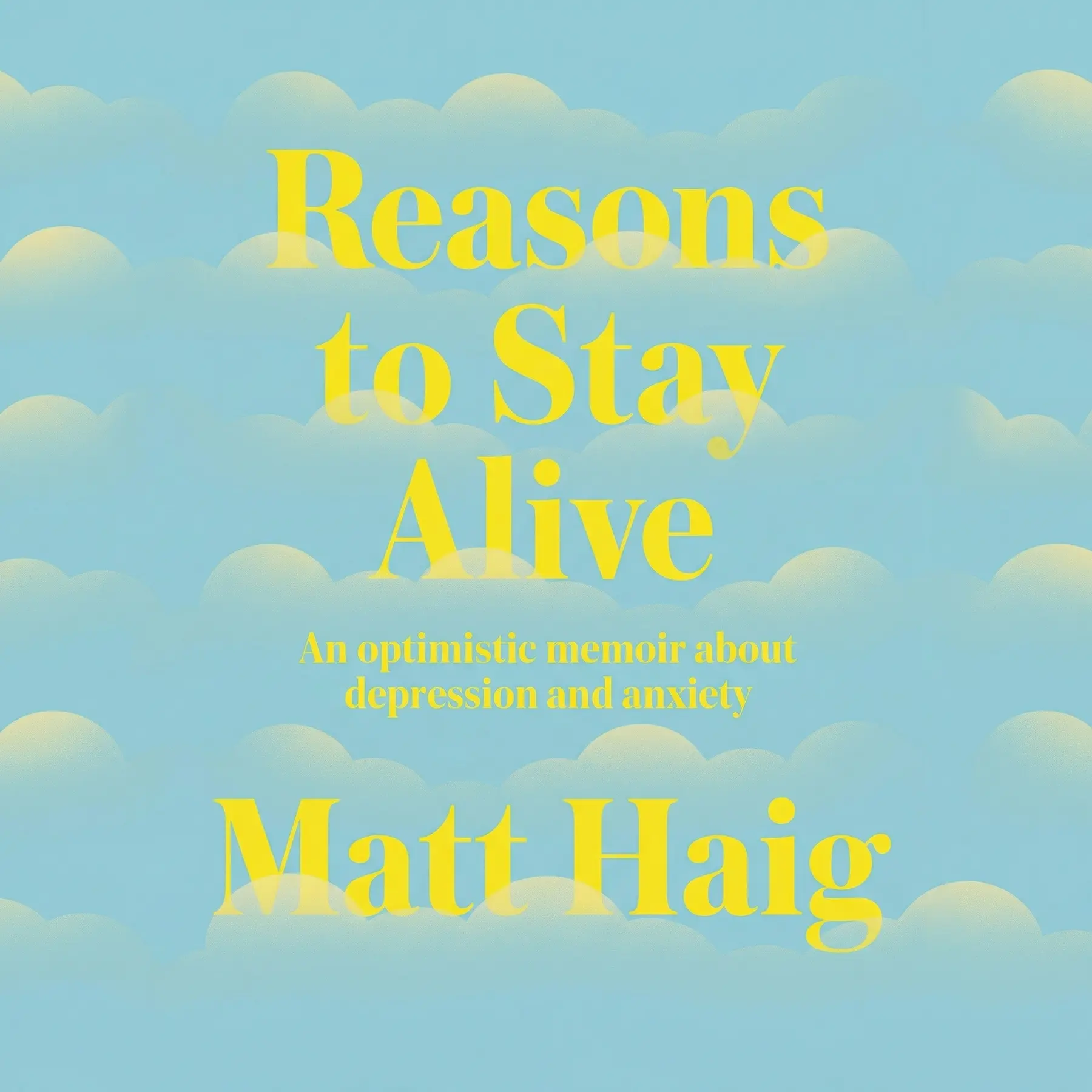
This summary provides an in-depth exploration of Matt Haig’s personal battle with a sudden and debilitating mental health crisis. It begins with his harrowing experience in Ibiza at age twenty-four, where a total breakdown forced him to confront the fragility of his own mind. Through a series of reflections, the narrative traces the roots of his anxiety back to childhood and examines the social and biological complexities of depressive disorders. Listeners will discover the methods Haig used to rebuild his life, from the solace he found in the pages of classic books to the physical benefits of running and the psychological breakthrough of facing his deepest fears. The summary also highlights the unique perspective that mental health struggles can provide, suggesting that sensitivity can be a source of profound empathy and creativity. Ultimately, it serves as a powerful testament to the idea that recovery is not a straight line, but a continuous practice of choosing life, one day at a time.
Matt Haig is the author of the widely acclaimed memoirs Reasons to Stay Alive and Notes on a Nervous Planet. He’s also the author of six best-selling novels for adults, including How to Stop Time, The Humans and The Radleys. He’s sold over a million books in the United Kingdom, and his work has been translated into over 40 languages.
Matt Haig
Matt Haig
Listeners find this work compelling and easy to digest due to its layout, with one listener noting how it makes complicated themes approachable. The prose is sincere and heartfelt, as one listener characterizes it as an unvarnished account of depression. Listeners value the perspective and practical guidance it offers, finding the content profoundly resonant and touching. They commend the author’s skill in articulating mental health challenges, with one listener noting that it assisted in pulling them from their most difficult moments.
Wow. Reading this felt like finally finding someone who could see the invisible flames. Matt Haig doesn't hide behind clinical psychobabble or medical jargon that makes you feel like a specimen under a microscope. Instead, he offers a raw, bleeding account of his journey with the "black dog" that is both terrifying and immensely hopeful. Personally, I found the lists of what he felt during his worst moments to be the most validating part of the entire experience. It’s a compelling look at the internal war where your head is on fire but the rest of the world just sees a normal person walking down the street. While it might not be a medical manual, it serves as a lifeline for anyone currently trapped in the swamp. It’s a beautiful, gutsy book.
Show morePicked this up during one of my darkest weeks and it felt like a hand reaching out of the darkness. Haig avoids the patronizing "just cheer up" attitude that we get from people who have never actually felt the floor fall out from under them. I loved how he broke everything down into simple formats, making it easy to digest when your concentration is completely shot. His "you are the sky" metaphor is something I now repeat to myself every time the clouds start to gather again. Gotta say, this is the first book that made me feel like my mental illness wasn't a personal failure or a sign of weakness. It’s a raw, beautiful, and necessary piece of writing for our current times.
Show moreFinally got around to reading this and I’m kicking myself for waiting so long. The way Matt Haig describes the physical sensation of depression—that feeling of being trapped in a body that won’t cooperate—is incredibly accurate. I particularly enjoyed the sections on bibliotherapy and how books themselves became a reason for him to keep going. Not gonna lie, I’ve started my own list of reasons to stay alive after finishing the final chapter. The formatting is brilliant because it recognizes that when you’re depressed, you can’t always handle long, dense paragraphs of text. It’s a heartfelt, manageable guide that reminds us that even when the darkness is total, the light is still there waiting. This should be required reading for everyone.
Show moreThis book saved me from a very dark place by proving I wasn't the only one staring out windows wishing for a "normal" life. Haig’s writing is like a conversation with a friend who has been to hell and back and isn't afraid to tell you what it looks like. I keep coming back to the "head on fire" imagery because it perfectly captures that invisible agony. It’s moving without being sappy, and the advice is practical rather than being stuck in theoretical psychobabble. For anyone who feels like a burden or like they are breaking apart, please read this. It’s a small gem that carries an enormous amount of weight and wisdom. It genuinely makes the world feel a little less lonely.
Show moreThe chapter on going to the grocery store hit me harder than any self-help book ever has before. Haig writes with a conversational style that makes these heavy, complex topics feel manageable rather than overwhelming. To be fair, I can see why some might find his approach a bit simplistic, but for me, the lists were exactly what I needed. He captures that specific anxiety of wanting to be "normal" like the people passing by your window while your own brain chemistry feels scrambled. Truth is, his description of Andrea's unwavering support made me cry because it’s so rare to see that kind of love depicted without being clichéd. It's a quick read, but the insight it provides into the sheer effort of existing is profound.
Show moreAs someone who has watched a loved one struggle, I found this perspective to be an absolute eye-opener. Haig explains the "swamp with whirlpools" feeling of anxiety mixed with depression in a way that finally made sense to my non-depressed brain. In my experience, the most valuable part was the list of things people say that they would never say to someone with a physical illness. We wouldn't tell someone with a broken leg to just "walk it off," so why do we do it with mental health? To be fair, some of the lists feel a bit like filler, but the emotional core of the book is undeniably strong. It provides a much-needed bridge of understanding between those suffering and those trying to help.
Show moreLook, this isn't a replacement for therapy, but it’s a damn good companion to have on your nightstand. Haig is gutsy for being so honest about his suicidal thoughts, a topic that most people are still too terrified to discuss openly. I appreciated that he didn't try to sugarcoat the journey or offer a "miracle cure" that works for everyone. My only minor gripe is that he occasionally generalizes his experience as the universal experience of all depressives. Truth is, every mind is a unique galaxy, and what worked for him might not work for someone else. Still, the message that you are not your thoughts is a powerful one that everyone needs to hear. It's a compelling and deeply human read.
Show moreAfter hearing so much about Haig’s work, I was surprised by how much I enjoyed the quick-fire list format. It makes the heavy subject matter feel manageable, which is crucial when your brain feels like it’s full of static. Frankly, some of the advice about "how to stop time" felt a bit like Instagram poetry, but the raw honesty of his breakdown in Ibiza kept it grounded. He tackles the stigma of mental illness head-on, comparing it to physical ailments in a way that is hard to argue with. While I don't agree with every single one of his conclusions about medication, his perspective is valid and deeply felt. This is a compelling, easy-to-read book that serves as a vital reminder that life is always worth it.
Show moreEver wonder why this book is everywhere? It’s because it’s incredibly relatable for anyone who has ever felt a bit "off" or overwhelmed by the modern world's demands. To be honest, I found it to be more of a collection of personal blog posts than a cohesive, profound exploration of clinical depression. It’s a series of reflections that are certainly touching, but they don't necessarily add anything groundbreaking to the existing mental health discourse. Look, if you’re new to the topic, this is a fantastic entry point because it’s easy to read and very moving. However, if you’ve been living with the "black dog" for decades, you might find the advice about yoga and running a bit repetitive and simplistic for such a complex disease.
Show moreNot what I expected given the massive hype surrounding this title on social media. While I appreciate Haig's honesty regarding his own struggles, I struggled with the underlying tone of privilege that permeates the narrative. He spent months recovering in Ibiza while being financially and emotionally supported, a luxury that most people battling depression simply do not have. Frankly, his skepticism toward medication feels a bit dangerous, especially when he compares SSRIs to placebos or "anesthetics" that dull life. For someone without a strong support system or financial safety net, these "reasons to stay alive" might feel incredibly shallow or out of reach. It’s an okay starting point for understanding depression, but it lacks the intersectional depth required for a truly universal conversation about mental health.
Show more


James Shapiro

Leanne Maskell



Ben Macintyre
AUDIO SUMMARY AVAILABLE
Get the key ideas from Reasons to Stay Alive by Matt Haig, plus 5,000+ more titles in English and Thai.