

19 min 36 sec
Reclaim Your Brain: How to Calm Your Thoughts, Heal Your Mind and Bring Your Life Back Under Control
Reclaim Your Brain explores the biological roots of emotional struggle, offering practical mindfulness techniques and neurological insights to help you restore cognitive balance and gain control over anxiety, distraction, and negativity.
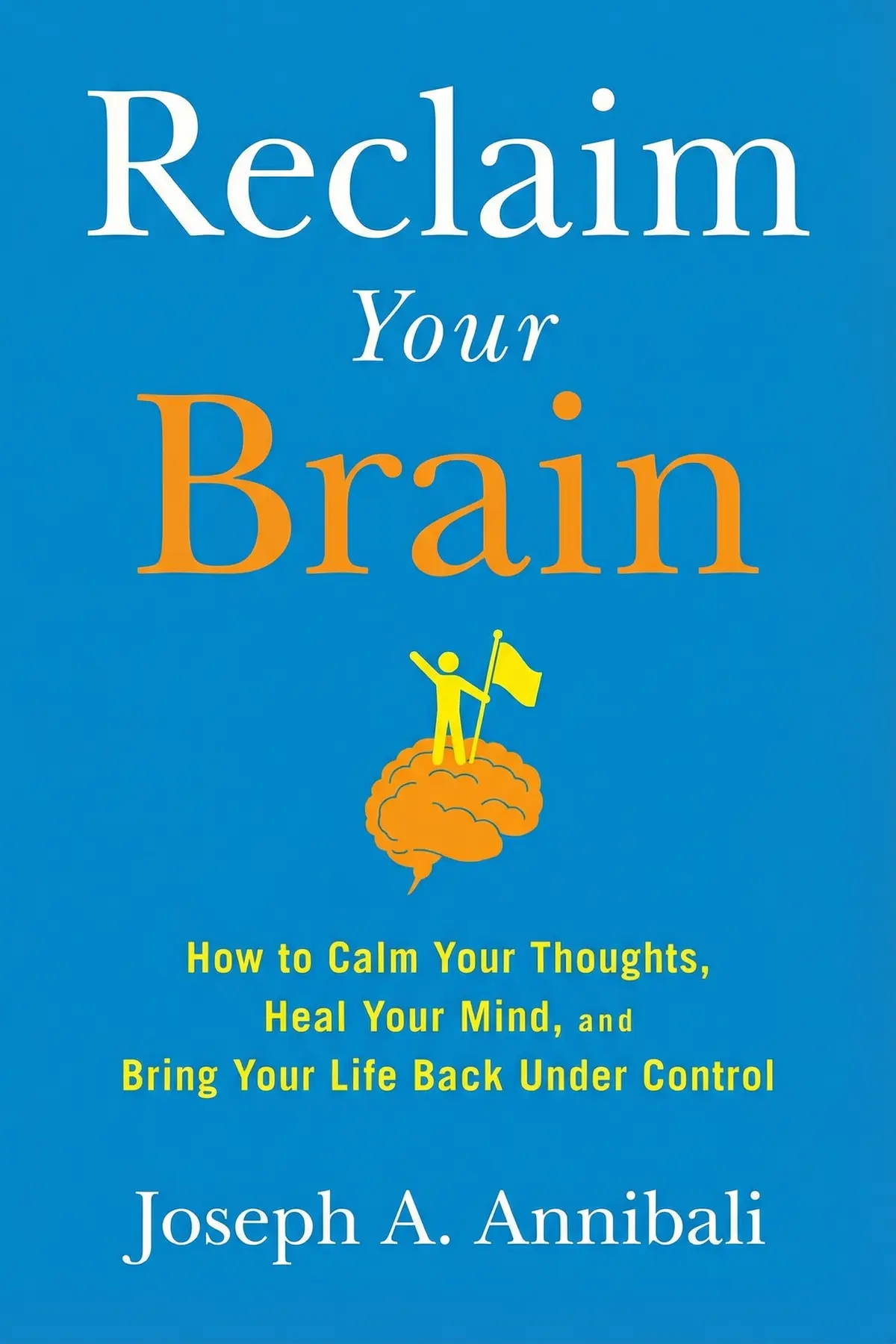
Table of Content
1. Introduction
1 min 39 sec
Imagine your mind as a high-performance vehicle. When everything is tuned correctly, you move through life with purpose, navigating turns with ease and maintaining a steady speed. But what happens when the engine starts to misfire? Perhaps you feel a constant, buzzing static in the background of your thoughts, making it impossible to focus on a single task. Maybe you find yourself driven by sudden, expensive impulses that leave you wondering why you made that choice in the first place. For many, the experience is more like a heavy fog—a persistent cloud of low mood or anxiety that colors every interaction.
If these experiences sound familiar, it’s likely that your brain is simply out of alignment. Our brains are incredibly sophisticated, yet they are also surprisingly delicate. Factors we often take for granted—like the quality of our sleep, the level of noise in our environment, or even stressful events from our past—can knock our internal chemistry off balance. When that happens, the result isn’t just a bad day; it’s a fundamental shift in how we perceive and interact with the world.
In the following discussion, we are going to explore a holistic approach to resetting your mental equilibrium. We will look at the biological tug-of-war happening inside your head and discover why some people need a room full of noise to concentrate while others need total silence just to breathe. We’ll also examine how the stories we tell ourselves can either keep us trapped in old patterns or set us free. By the end of this journey, you’ll have a clearer understanding of how to steady your thoughts, heal your mind, and truly reclaim your life from the chaos of an unbalanced brain.
2. The Dynamic Tension Between Reason and Emotion
2 min 10 sec
Discover the two primary regions of your brain that determine your emotional stability and learn why balance between them is the secret to a controlled life.
3. Navigating Individual Needs for Mental Stimulation
2 min 02 sec
Every person has a unique threshold for sensory input; understanding your specific ‘stimulation set point’ can explain your focus levels and social needs.
4. The Link Between Brain Imbalance and Compulsive Habits
2 min 17 sec
Explore how addictions often begin as a biological attempt to self-medicate and learn a powerful technique for building the willpower to change.
5. Cultivating Calm Through Intentional Awareness
2 min 15 sec
Learn how the ancient practice of mindfulness is backed by modern science to physically alter the way your brain processes stress.
6. The Biological Roots of Our Negative Outlook
1 min 58 sec
Understand why your brain is naturally wired to notice the bad more than the good and how our two hemispheres play a role in our mood.
7. Rewriting the Narrative of Your Life
2 min 04 sec
Discover how the stories you tell yourself can be misleading and learn the practical steps to edit your internal script for a better future.
8. Balancing the Scales in Your Relationships
1 min 50 sec
See how brain dynamics play out in your closest bonds and why achieving equality in your ‘roles’ is essential for lasting harmony.
9. The Physical Foundation of Mental Health
1 min 51 sec
Learn why it’s important to consider physical brain health, including history of injury, as a factor in your emotional and cognitive well-being.
10. Conclusion
1 min 30 sec
As we wrap up our exploration of the human mind, the central theme remains clear: a fulfilling life is built on a foundation of neurological balance. We have seen how the constant tug-of-war between the logical prefrontal cortex and the reactive limbic system shapes everything from our ability to focus to our deepest relationships. We’ve learned that our needs for stimulation are as unique as our fingerprints, and that many of our most difficult habits are actually misguided attempts to find stability.
But perhaps the most important takeaway is that you are not a helpless passenger in your own head. Through the practice of mindfulness, you can physically quiet the alarms of your amygdala. By writing down your thoughts and challenging your assumptions, you can rewrite the scripts that have held you back. And by fostering equality in your relationships and attending to your brain’s physical health, you create an environment where you can truly flourish.
The journey to reclaiming your brain is an ongoing process, not a one-time fix. It starts with the small, daily choice to be an observer of your own mind rather than a victim of its impulses. Whether it’s taking five minutes to breathe in silence, questioning a negative thought before you believe it, or seeking professional help for a long-standing issue, every step you take brings you closer to a state of equilibrium. You have the power to tune your mind, calm your thoughts, and bring your life back into your own hands. The path is there—it’s time to take that first step.
About this book
What is this book about?
Have you ever felt like your mind is a runaway train, fueled by anxiety, impulsive urges, or deep-seated negativity? Reclaim Your Brain addresses the common feeling of being overwhelmed by your own thoughts. It posits that many of our psychological struggles—from ADHD and addiction to depression and relationship friction—stem from a fundamental imbalance between the brain’s rational command center and its ancient emotional core. This guide promises to demystify the complex workings of the human brain, making neuroscience accessible and actionable. By understanding how different regions of the mind interact, you can begin to identify why you react the way you do. The book provides a roadmap for re-centering yourself through mindfulness, cognitive reframing, and intentional lifestyle shifts. It’s not just about understanding the 'why' of your mental state, but about mastering the 'how' of transformation. You will learn to quiet the internal noise, challenge the false narratives you tell yourself, and ultimately build a more stable, fulfilling life by bringing your neural circuitry back into harmony.
Book Information
About the Author
Joseph A. Annibali
Joseph A. Annibali is a prominent psychiatrist who serves as the chief medical officer at Amen Clinics, located near Washington, D.C. He is widely recognized as a leading expert in the clinical application of SPECT brain imaging. His specialized work includes utilizing this advanced technology to treat complex neuropsychiatric issues, particularly those associated with Lyme disease.
Ratings & Reviews
Ratings at a glance
What people think
Listeners find the book aids in boosting cognitive performance, with one listener noting that it offers renewed hope for those dealing with anxiety. Furthermore, the quality of the content earns high marks, as one listener highlights how it simplifies intricate subjects into plain language. Listeners also value the book’s clear and straightforward readability.
Top reviews
Kiattisak
Ever wonder why your mind feels like it's constantly racing on a treadmill that won't stop? Dr. Annibali provides a refreshing sense of hope for those of us struggling with chronic anxiety by breaking down neurobiology into terms that actually make sense. I found the section on brain capacity particularly enlightening because it didn't just tell me what was wrong, but explained the 'why' behind the chaos. The advice on supplements and mindfulness felt grounded rather than woo-woo. To be fair, some parts get a bit technical with the medical terminology, but the payoff is worth the effort. It’s a solid roadmap for anyone feeling overwhelmed by their own internal static. This book truly helped me understand that my struggles weren't a character flaw but a physiological hurdle.
Show moreChon
Wow. I didn’t realize how much I needed to hear that my 'negative' personality was actually just a series of brain patterns that could be unlearned. The information quality here is top-notch, and the author does a fantastic job of explaining the limbic system and the prefrontal cortex without making my eyes glaze over. It gave me a new sense of hope regarding my chronic anxiety. I’ve started using the techniques for rewriting my internal 'stories,' and the difference in my daily mood is palpable. It’s rare to find a book that balances medical expertise with such a compassionate, readable tone. Highly recommend for anyone feeling stuck in their own head. This is one I will definitely be referencing again.
Show morePot
The chapter on rewriting your negative stories was worth the price of admission alone. Many self-help books tell you to 'think positive,' but this one actually dives into how the brain constructs these false narratives based on past trauma or ADHD struggles. It’s eye-opening to see how a simple 'B' grade in high school can be twisted into a lifelong story of failure. Truth is, I’ve spent years believing things about my own cognitive abilities that simply aren't true. While the author does push brain scans quite a bit—which aren't accessible for everyone—the practical exercises for reframing your perspective are immediately applicable. It’s a very readable guide for the modern, over-stimulated mind. I appreciate the balance between clinical data and actionable advice.
Show moreSirirat
Finally got around to reading this, and the timing couldn't have been better given how much time I spend glued to my phone. Annibali’s discussion on how the internet and our constant influx of digital information over-stimulates the brain is incredibly relevant. We are living in an age of 'too much,' and this book acts as a much-needed manual for hitting the reset button. The writing is clear and avoids the dry, academic tone you might expect from a doctor. Frankly, the suggestions for calming a 'busy' brain are things I started implementing immediately. I do wish there was a bit more depth on the 'butterfly hug' technique mentioned briefly, but overall, it’s a great resource for mental clarity. A solid four stars.
Show moreDaranee
Picked this up during a particularly rough patch with my mental health, and it offered a level of clarity I haven't found elsewhere. Dr. Annibali has a way of making you feel seen without being clinical or cold. I especially appreciated the focus on how physical brain injuries or even sleep apnea can manifest as psychological issues. It shifts the blame away from 'character flaws' and puts the focus on organ health. My only gripe is that some of the treatment suggestions feel a bit out of reach for the average person who can't afford high-end testing. Regardless, the chapters on negativity helped me stop being so hard on myself. It's a very accessible read that I’ve recommended to several friends already.
Show moreNoppadol
This book is filled with case studies that make the science feel much more human and relatable. Seeing how different patients with depression or OCD responded to various treatments helped me understand the diversity of the human brain. Dr. Annibali doesn't offer a one-size-fits-all solution, which I appreciate. Instead, he explores a range of possibilities from mindfulness to medication to neurofeedback. Personally, I found the explanations of how the brain can 'misfire' to be the most helpful part of the book. It’s a well-written guide that helps you understand yourself and the people around you much better. A few sections are repetitive, but the core message is vital for anyone looking to improve their brain capacity and general well-being.
Show moreSara
As someone who prefers holistic approaches, I had mixed feelings about the heavy emphasis on prescription medications in some chapters. Don't get me wrong, the explanation of how the brain becomes overactive or underactive is fascinating and very well-explained. However, I felt like certain sections prioritized clinical interventions over the practical, daily methods I was looking for. Look, the info is quality and the case studies are engaging, but I wanted more 'do-it-yourself' techniques rather than suggestions to see a specialist for a scan. It’s a good foundational text, but it occasionally feels more like a pitch for a specific type of clinical practice than a standalone workbook. It’s useful, but I didn’t walk away with many brand-new tools.
Show moreOlivia
After hearing so much about this title, I was expecting a revolutionary breakthrough in neuroscience for the layperson. In reality, it’s a very competent summary of existing psychological concepts like mindfulness, cognitive behavioral therapy, and basic neurobiology. It’s not bad, and I certainly agree with the author’s stance on how our environment affects our mental health. But if you’ve already read a lot in this genre, you might find yourself skimming through familiar territory. The breakdown of complex concepts into basic terms is great for beginners, but it lacked that 'aha!' moment for me. It’s a useful discussion of how the brain works, just not necessarily a ground-breaking one. Good, but not essential if you're well-versed in the topic.
Show moreNatalie
To be fair, there is a lot of good information here, but the structure felt a bit disjointed. One minute we are talking about serious PTSD and the next we are being told to give ourselves a 'butterfly hug.' It’s a bit of a tonal rollercoaster. I did find the sections on how to calm an over-stimulated mind very practical, especially in our current digital age. However, I struggled with the sections that seemed to contradict what my own physician has told me regarding certain medications. It’s definitely a book you should read with a grain of salt and a conversation with your own doctor. It's informative, but definitely not a replacement for professional personalized care. It's an okay starting point for brain health.
Show moreSai
This book basically tells you that your brain is broken, and if you've ever touched a computer or taken a drug, you've made it worse. It feels incredibly reductive at times, boiling complex human experiences down to 'your brain is too active' or 'not active enough.' While the case studies are interesting, the solutions provided range from expensive brain scans to strangely simple advice like taking a specific supplement or meditating. I found the tone a bit condescending in places, as if every mental health struggle can be fixed with a few quick adjustments. Not gonna lie, I was expecting something more profound than a collection of anecdotes and standard CBT advice. It wasn't my favorite, especially considering the hype.
Show moreReaders also enjoyed
ADHD an A-Z: Figuring It Out Step by Step
Leanne Maskell


Alcoholics Anonymous
Alcoholics Anonymous World Services
AUDIO SUMMARY AVAILABLE
Listen to Reclaim Your Brain in 15 minutes
Get the key ideas from Reclaim Your Brain by Joseph A. Annibali, plus 5,000+ more titles in English and Thai.
- 5,000+ titles
- Listen as much as you want
- 7-day free trial
- Cancel anytime







