
16 min 07 sec
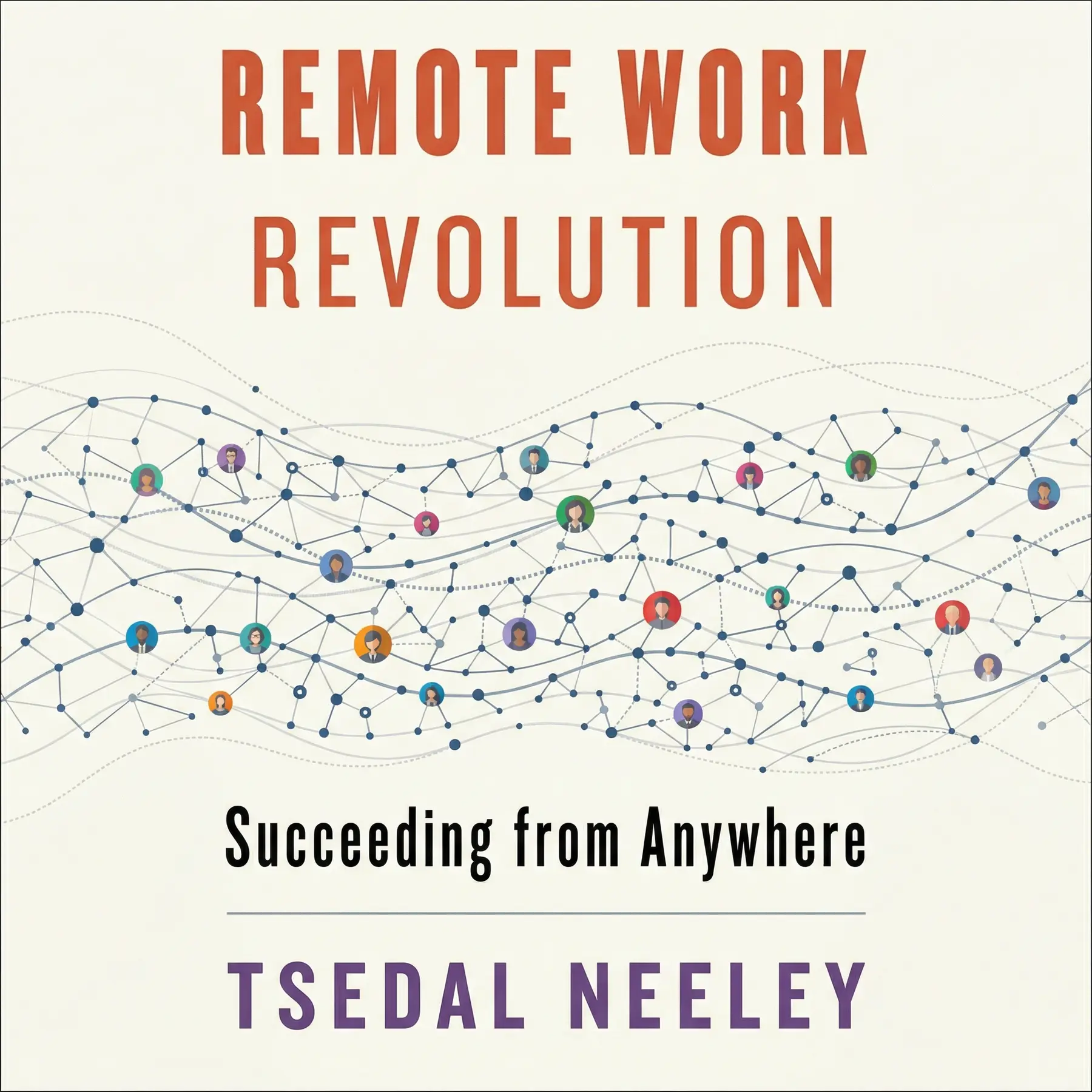
Remote Work Revolution: Succeeding from Anywhere
A deep dive into the strategies necessary for virtual success, Remote Work Revolution explores how leaders and employees can foster trust, maintain high productivity, and build strong cultures across digital divides.
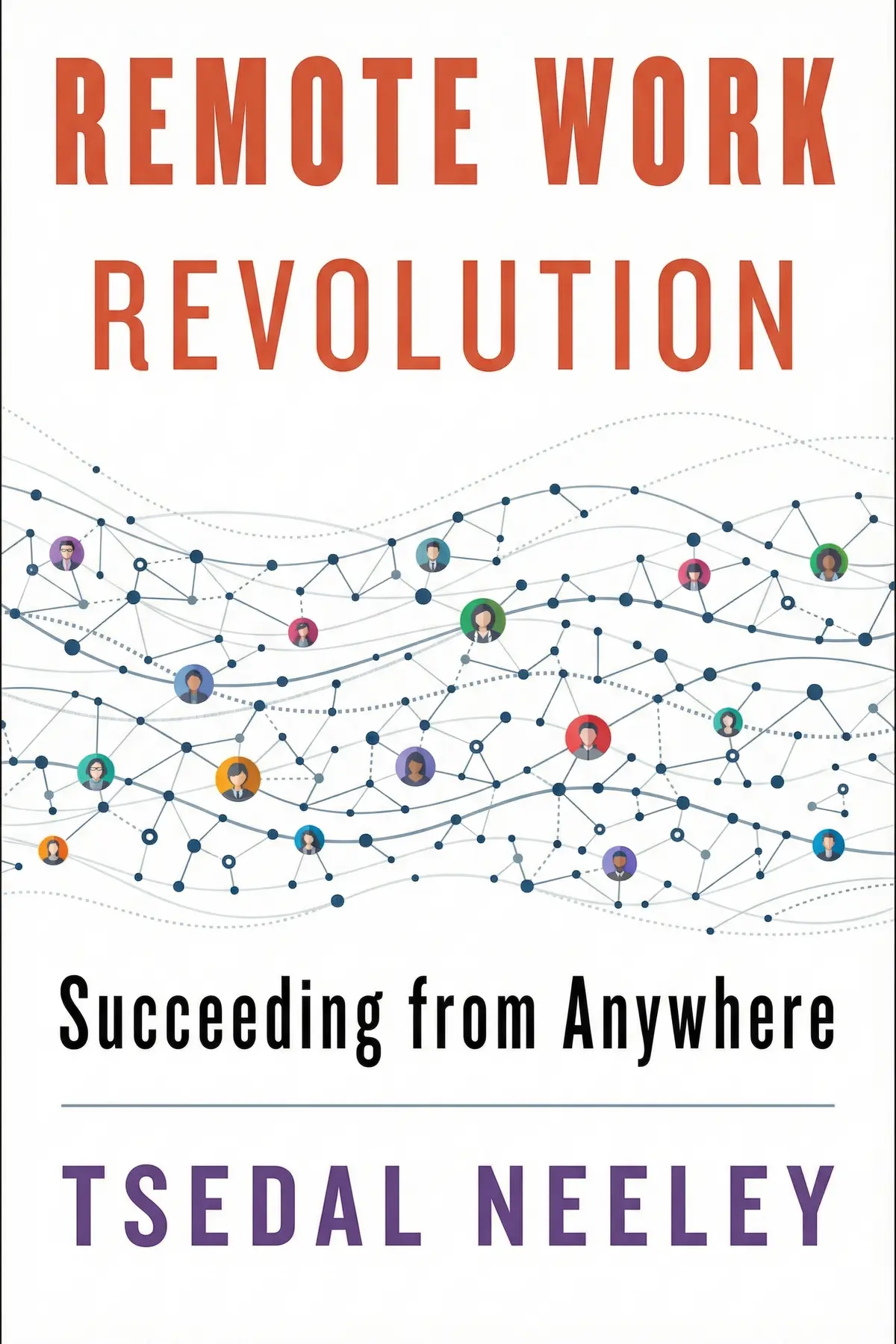
Table of Content
1. Introduction
1 min 33 sec
For decades, the traditional office was the undisputed center of the professional world. It was where culture was built, where deals were made, and where productivity was measured by physical presence. But recently, that foundation underwent a seismic shift. The transition to remote work wasn’t a slow evolution; it was a sudden revolution that forced millions of people to redefine their relationship with their jobs, their colleagues, and their leaders. While many initially celebrated the end of the daily commute, it didn’t take long for the cracks to show. How do you maintain a sense of belonging through a screen? How do you know if your team is actually working? How do you build trust with someone you’ve never met in person?
In Remote Work Revolution, Harvard Business School professor Tsedal Neeley provides a rigorous, evidence-based guide to answering these questions. The throughline of this exploration is the idea that remote work is not just a change of location, but a change of methodology. To succeed, we must move away from accidental interactions and toward intentional design. This summary will take you through the core pillars of virtual success, from the essential ‘launch’ phase of a team to the nuanced art of digital leadership. You will discover how to turn the perceived disadvantages of distance into strategic advantages, ensuring that your organization is ready to thrive in a world where work is something you do, not somewhere you go. Whether you are a manager trying to keep a distributed team on track or an employee looking to optimize your virtual career, these insights offer a clear path forward.
2. The Power of the Team Launch
2 min 14 sec
Establish a solid foundation for your virtual team by learning why initial alignment meetings are the secret to preventing future friction and long-term dysfunction.
3. Cultivating Trust Across the Digital Divide
2 min 12 sec
Explore the different layers of trust and discover how to build deep professional bonds without the benefit of face-to-face interaction.
4. Unlocking Productivity Through Autonomy
2 min 09 sec
Challenge the myth that remote work leads to slacking and learn why granting employees more control over their environment actually boosts results.
5. Choosing the Right Medium for the Message
2 min 18 sec
Master the art of digital communication by understanding the difference between high-richness and low-richness media in a professional setting.
6. Navigating Cultural and Language Barriers
2 min 14 sec
Discover how to lead global teams by reducing ‘psychological distance’ and creating an inclusive environment for diverse perspectives.
7. Redefining Leadership for the Virtual Age
2 min 14 sec
Shift your management style from physical oversight to emotional empowerment and learn how to foster psychological safety from a distance.
8. Conclusion
1 min 13 sec
The remote work revolution is not a temporary trend that will eventually revert to the old ways of doing things. It is a fundamental evolution of the workplace that offers unprecedented flexibility and access to global talent. However, as Tsedal Neeley points out in Remote Work Revolution, the benefits of this new era are not automatic. They must be earned through intentional design and a commitment to new ways of working. Success in the virtual world requires more than just the right software; it requires a culture of trust, a focus on results over surveillance, and a leadership style that prioritizes human connection over physical presence.
By implementing the strategies we’ve discussed—from the rigorous team launch and the careful selection of communication tools to the proactive bridging of cultural divides—you can build a team that is not only productive but also deeply connected. The transition to remote work is a journey of continuous learning. It requires leaders to be more empathetic, employees to be more autonomous, and everyone to be more intentional. As you move forward, remember that the distance between you and your colleagues is only as wide as you allow it to be. With the right mindset, the remote work revolution can be the catalyst for a more inclusive, efficient, and fulfilling professional life for everyone involved.
About this book
What is this book about?
The shift toward remote work wasn’t just a temporary reaction to a global crisis; it represented a fundamental transformation in how the modern world operates. However, moving from an office to a home environment isn’t as simple as opening a laptop. It requires a complete rethink of how we connect, collaborate, and lead. Remote Work Revolution provides a science-backed framework for navigating this new landscape, addressing the most common pitfalls of virtual teams, such as the erosion of trust, the fear of decreased productivity, and the challenges of managing global talent. The book promises a roadmap for anyone looking to bridge the physical gap between colleagues. It offers practical techniques for 'launching' teams effectively, selecting the right digital tools for the right tasks, and cultivating an environment where everyone feels seen and heard, regardless of their time zone. By following the insights shared by Tsedal Neeley, organizations can move beyond mere survival and enter a phase of sustained excellence, leveraging the flexibility of remote work to attract better talent and drive innovation.
Book Information
About the Author
Tsedal Neeley
Tsedal Neeley is a professor in the organizational behavior unit at Harvard Business School. She has dedicated her career to studying the effects of globalization on organizations and their employees. With a decade of experience working for companies like Lucent Technologies and The Forum Corporation, she brings a wealth of practical expertise to her research and writing.
Ratings & Reviews
Ratings at a glance
What people think
Listeners consider this book a worthwhile investment and value its original perspectives, with one listener specifically pointing out its evidence-based recommendations. Furthermore, the material is praised for being a practical manual for leading virtual groups, and listeners appreciate its relevant timing and logical structure. They also commend the writing's clarity; one listener mentions that key lessons are well demarcated, while another highlights its perceptive approach to relationship building.
Top reviews
Tom
As someone who has managed a distributed engineering team for five years, I found these frameworks incredibly validating and fresh. Professor Neeley has delivered a masterclass in organizational design for the modern era that moves beyond simple 'work from home' tips. The chapter on 'swift trust' vs. 'passable trust' was a revelation for our onboarding process, helping us understand how to build competence-based confidence quickly. It is a very quick read, yet it manages to touch on global cultural nuances and digital tool selection with surprising precision. Every leader struggling with the hybrid transition should buy a copy for their entire executive suite immediately. This is the definitive guide for succeeding from anywhere.
Show moreCharlotte
Picked this up after hearing Neeley on a podcast, and the book exceeded my expectations for a management guide. The way she breaks down the '60% design, 30% launch, 10% day-to-day' success formula is a total game-changer for how I plan my projects. In my experience, most team failures happen because we skip the prework, and this book provides the tools to fix that. It is rare to find a business book that is this well-organized while remaining grounded in actual academic research. Even if you think you’ve mastered the remote game, the insights on emotional trust and digital tool sequence will give you something to think about. This is a must-read for the modern leader.
Show moreChon
Finally got around to reading Neeley’s work, and the focus on intentionality is exactly what my department needed. Truth is, most managers assume remote teams just happen, but the '60-30-10' rule regarding prework and initial launches provides a much-needed wake-up call. I particularly appreciated the distinction between cognitive and emotional trust, as it gave me a vocabulary for why our Zoom socials felt so hollow. While some sections felt a bit dry, the evidence-based approach makes the advice feel far more reliable than your average LinkedIn thought-piece. It’s well-organized and timely, even if the case studies feel a little sparse in certain chapters. I'll be keeping this on my desk for the relaunch tips alone.
Show moreWittaya
Look, remote work requires much more intentionality than just opening a Zoom link, and that is where this book shines. The focus on establishing a common language and reducing psychological distance is essential for anyone working across international borders. I found the section on 'lean' vs. 'rich' media incredibly useful for deciding when to send an email versus scheduling a call. While some of the advice on social gaming sessions felt a little dated, the core message about trust remains powerful. It’s an organized, evidence-based guide that provides a great starting point for rethinking team dynamics. Not every chapter is a hit, but the high-level strategies are worth the price of admission.
Show moreTalia
Ever wonder why some virtual teams click instantly while others struggle through endless awkward silences? Neeley explores this through the lens of psychological safety and intentional team design, offering a roadmap that feels both professional and human. I loved the idea of the 'relaunch' to realign teams as conditions change, especially since my own team has felt aimless lately. The book is remarkably easy to digest, with key takeaways that are easy to implement during your next Monday morning sync. A few parts felt like they were written for a pre-pandemic world, but the overarching themes are still highly relevant today. It’s a solid 4-star resource for any remote lead.
Show moreIsabella
Is it just me, or is the title of this book slightly misleading? I picked this up expecting a tactical guide on optimizing remote workflows, but it’s almost entirely about relationship building and social presence. While I agree that emotional trust is vital, I was hoping for more 'revolution' and fewer reminders to share personal anecdotes during meetings. The content is well-structured and the lessons are clearly demarcated, making it easy to skim for the good bits. To be fair, the advice on avoiding videoconferencing fatigue is solid, but the book often gives off a vibe of CEOs expecting workers to go above their pay grade. It's a decent read, but not the definitive manual I wanted.
Show moreErn
The chapter on 'swift trust' changed how I view our quarterly project kick-offs, but the rest of the book felt a bit uneven. It provides some actionable insights for leaders, though I wonder how much of this applies to the average individual contributor just trying to get through their inbox. Gotta say, the emphasis on constant 'relaunches' seems a bit exhausting in a high-pressure corporate environment where time is already a scarce resource. I liked the discussion on bridging cultural differences in global teams, as that’s an area most remote guides completely ignore. Still, I wish there were more concrete examples of these strategies failing and being corrected. It’s a helpful framework, but it feels somewhat sanitized for a corporate audience.
Show moreSeksan
This book could have been a twenty-page PDF and lost absolutely nothing in translation. Frankly, the rhetorical redundancy is staggering; I felt like the same three points about psychological safety were being hammered home every ten pages. It reads more like an extended blog post than a scholarly deep dive into organizational behavior. If you are looking for specific, gritty case studies of how companies pivoted during the pandemic, you might find this a bit superficial and repetitive. I expected more from a Harvard professor, but it mostly felt like common sense dressed up in academic jargon. It’s not a total waste of time, but you can get the gist from a summary.
Show morePacharapol
Not what I expected given the hype surrounding Neeley's research. The book feels heavily skewed toward management, often suggesting policies that seem designed to keep workers tethered to their screens under the guise of 'connection.' For instance, the suggestion to use enterprise social media for social presence just feels like another way to increase the digital load on already burnt-out employees. There is a lot of fluff here, and the writing style is surprisingly repetitive for such a short volume. I didn't find the 'revolution' particularly revolutionary, as most of these tips have been circulating since 2020. You are better off reading 'Remote: Office Not Required' if you want a more practical perspective.
Show moreWin
Gotta be honest, I wanted to like this, but it felt like a repetitive lecture that refused to end. The book suffers from enormous rhetorical redundancy, saying in ten chapters what could have been articulated in one crisp journal article. I kept waiting for the 'revolutionary' part to kick in, but it was mostly just common-sense advice about being nice to your coworkers and setting clear goals. There are almost no specific, detailed case studies to ground the theories, making the whole thing feel strangely abstract. If you’ve worked remotely for more than six months, you likely already know 90% of what is in here. It's a disappointing, superficial stretch of a simple concept.
Show moreReaders also enjoyed
A Year with Peter Drucker: 52 Weeks of Coaching for Leadership Effectiveness
Joseph A. Maciariello

Acting with Power: Why We Are More Powerful Than We Believe
Deborah Gruenfeld
All In: How Great Leaders Build Unstoppable Teams
Mike Michalowicz
AUDIO SUMMARY AVAILABLE
Listen to Remote Work Revolution in 15 minutes
Get the key ideas from Remote Work Revolution by Tsedal Neeley, plus 5,000+ more titles in English and Thai.
- 5,000+ titles
- Listen as much as you want
- 7-day free trial
- Cancel anytime







