
18 min 07 sec
ReWork
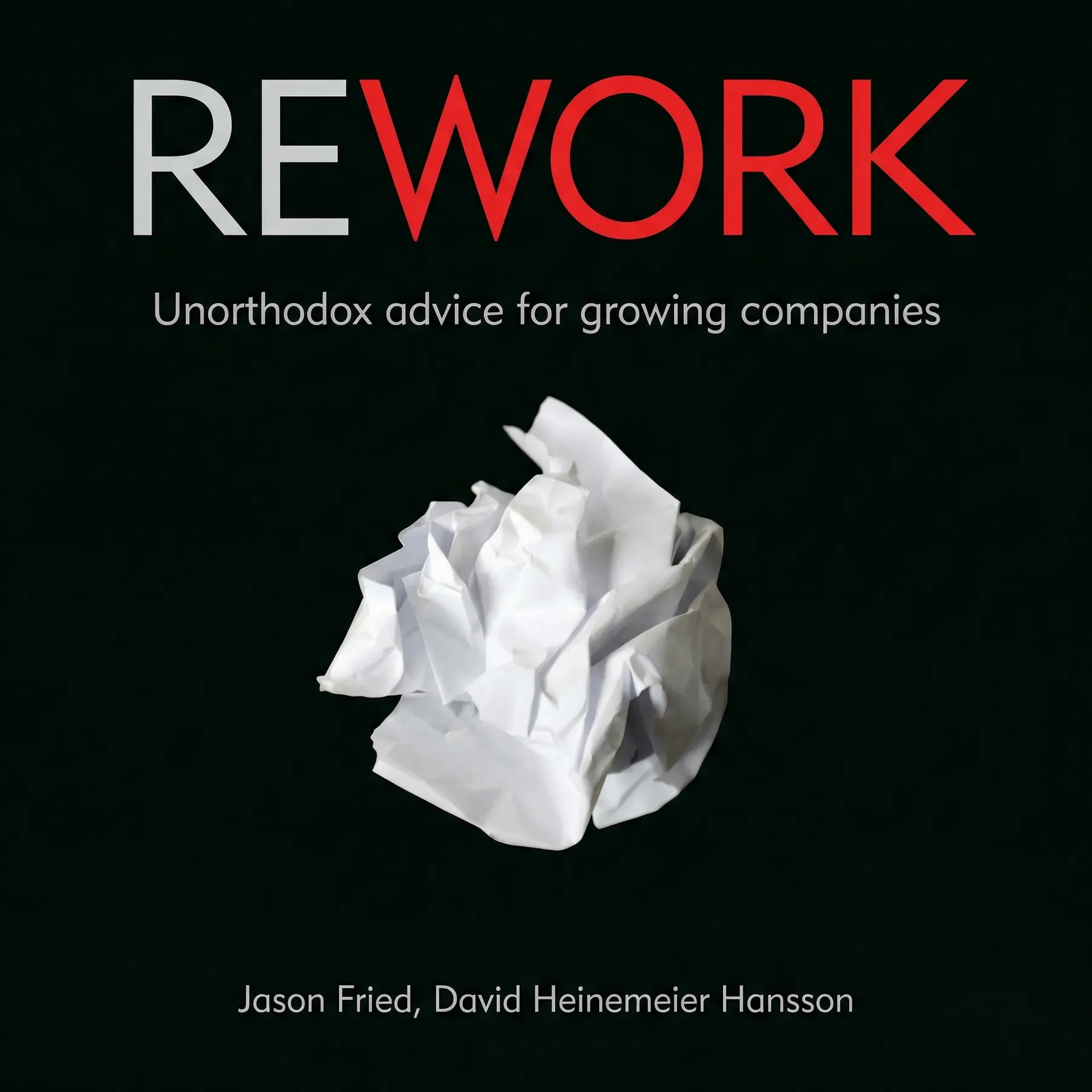
ReWork challenges traditional business wisdom, offering a lean, unconventional roadmap for entrepreneurs. It advocates for simplicity, speed, and authenticity, proving that you can build a successful company by doing less and being yourself.
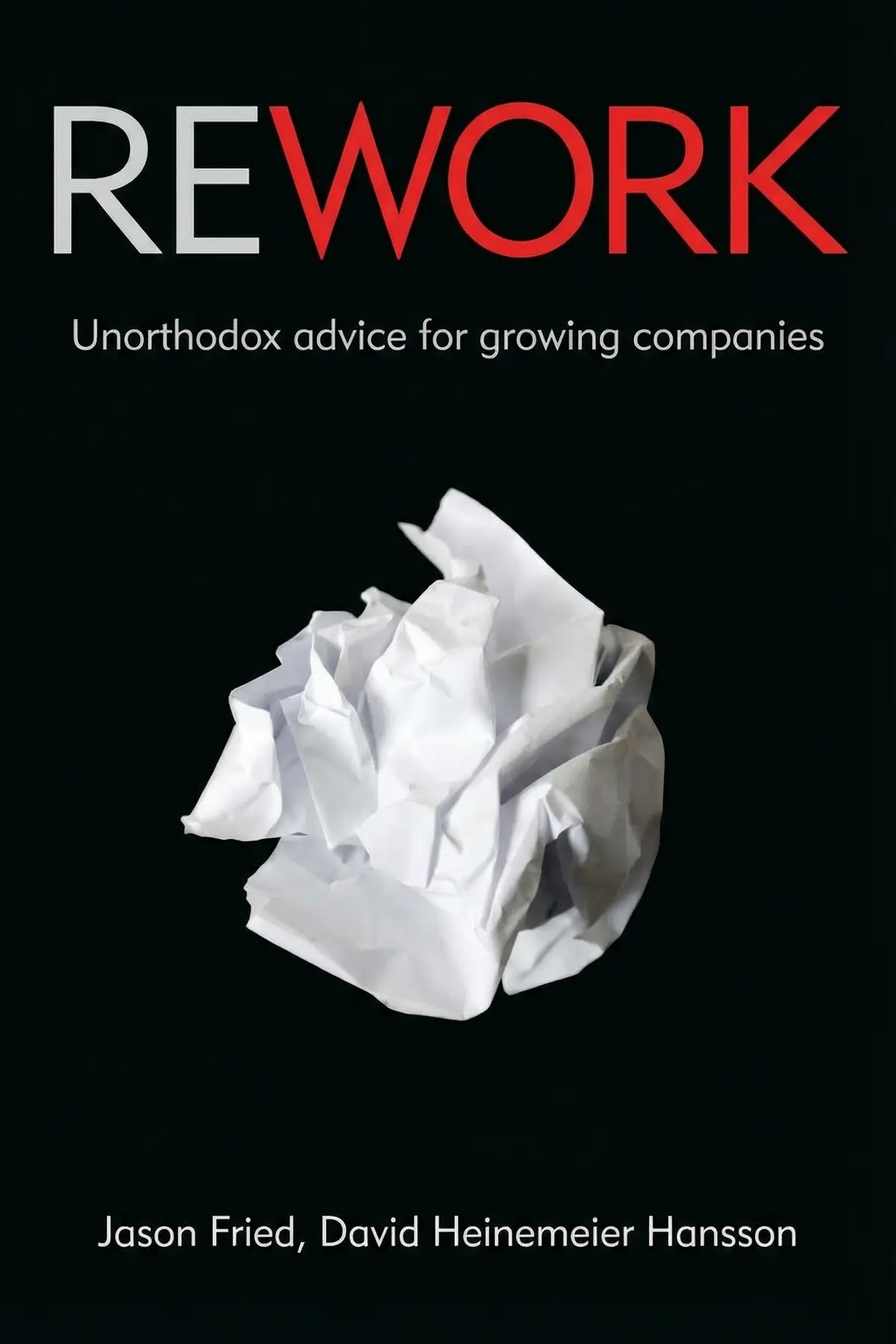
Table of Content
1. Introduction
1 min 44 sec
In the traditional world of business, we are often told that success requires a massive blueprint, a mountain of capital, and a relentless 80-hour work week. We’re taught to fear the competition and to hide our internal workings behind a wall of corporate jargon. But what if most of that advice is actually holding you back?
What we are exploring today is a radical departure from the status quo. The core philosophy here is that modern business doesn’t have to be complicated, and it certainly shouldn’t be a grind that consumes your entire life. Instead of building a sprawling empire, the goal is to build something lean, meaningful, and deeply personal. It’s about stripping away the distractions—the meetings, the five-year projections, and the unnecessary features—to find the actual heart of what you’re trying to create.
Think of this as a guide for the ‘un-entrepreneur.’ You don’t need an MBA or an office in Silicon Valley to make an impact. In fact, the very things that make you small are your greatest advantages. They allow you to be faster, more honest, and more creative than the giants you’re competing against. Throughout this summary, we’ll see how a shift in mindset can turn perceived weaknesses into strengths. We’ll look at why ‘doing less’ often leads to ‘achieving more,’ and why the most important thing you can do for your business is to be unapologetically yourself.
This isn’t just about starting a company; it’s about rethinking how we work and what we value. Whether you’re a solo freelancer or leading a team within a large corporation, these principles of simplicity and directness offer a clearer path forward. The throughline is simple: be real, stay lean, and start now. Let’s dive into how you can rewrite the rules of the game.
2. Launch the Core and Refine Later
2 min 04 sec
Forget the perfect business plan and the search for massive funding. Success starts by identifying the one thing your business cannot live without and getting it into the world immediately.
3. Inject Your Personality to Become Inimitable
1 min 58 sec
In a world of copycats, your only true competitive advantage is your own unique perspective and human touch.
4. The Strategic Strength of Staying Small
1 min 59 sec
Don’t rush to grow your headcount. Being small allows for the kind of experimentation and direct connection that big corporations can only dream of.
5. Curation is Better Than Collection
2 min 00 sec
The secret to a great product isn’t adding more; it’s knowing what to take away. Learn the art of the ‘no’ to keep your vision sharp.
6. Ditch the Jargon and Market Through Honesty
2 min 12 sec
Forget expensive advertising and corporate PR. Build a loyal following by speaking like a human and being transparent about your successes and failures.
7. Protect Productivity by Reducing Friction
2 min 19 sec
Long hours don’t equal high output. To truly get things done, you must eliminate interruptions and stop chasing perfection.
8. Hire for Pain and Trust Your Gut
2 min 08 sec
Don’t hire based on a resume or a desire to grow. Hire only when it’s absolutely necessary to solve a specific problem, and use real-world tests to find the right fit.
9. Conclusion
1 min 43 sec
As we reach the end of this journey, the message is clear: the most effective way to build a business is to simplify it. We’ve seen that you don’t need a massive staff, a pile of venture capital, or a complex five-year plan to succeed. In fact, those things often become the very obstacles that prevent you from being agile and authentic.
The path forward is about returning to the basics. It’s about finding the core of your idea and launching it before you think you’re ready. It’s about valuing your time enough to cut out the meetings and the feature-bloat that slow you down. It’s about realizing that being small is a superpower that allows you to be more human, more honest, and more responsive than any corporate giant.
But perhaps the most important takeaway is the shift in how we view work itself. Productivity isn’t a badge of honor earned through exhaustion. It’s a result of focus, boundaries, and the courage to say ‘no’ to the things that don’t matter. By building an environment based on trust and autonomy, you allow people to manage themselves and do their best work without being hovered over.
So, as you go back to your own projects and ideas, remember to trust your instincts. Don’t feel the need to emulate the way big companies operate just because it’s the ‘traditional’ way. Your uniqueness is your greatest asset. Keep your team lean, keep your product simple, and always stay close to your customers. Business doesn’t have to be a war or a grind; it can be a creative, profitable, and deeply fulfilling extension of who you are. The rules have changed—and now it’s your turn to rewrite them for yourself.
About this book
What is this book about?
ReWork is a manifesto for a new era of entrepreneurship. It strips away the complex jargon and bureaucratic hurdles of traditional business management, replacing them with a focus on agility and common sense. The book argues that many of the things we consider essential for a startup—long-range business plans, outside investment, and massive staffing—are actually obstacles that slow you down and dilute your vision. The promise of the book is that anyone with an idea and a laptop can start something meaningful. By focusing on the core of your product, staying small for as long as possible, and communicating with customers as a real human being rather than a corporate entity, you can build a sustainable and profitable business. It provides a toolkit for making faster decisions, maintaining high productivity without burnout, and standing out in a crowded market by embracing your unique perspective.
Book Information
About the Author
Jason Fried
Jason Fried is a co-founder of 37signals, a software company known for its streamlined collaboration tools. David Heinemeier Hansson is a partner at 37signals and the creator of Ruby on Rails, the influential programming framework used by platforms like Twitter and Hulu. Together, they also authored the bestseller Getting Real.
Ratings & Reviews
Ratings at a glance
What people think
Listeners find this book to be a vital resource for entrepreneurs, offering a wealth of usable tips and deep reflections. It reframes traditional commercial concepts and shifts viewpoints on how to execute them, all while being highly accessible. They enjoy the concise sections and clear language, with one listener remarking on its ability to transform complicated thoughts into small, manageable segments. Listeners portray it as a galvanizing experience that adds tremendous value to their lives.
Top reviews
Pooja
Finally got around to reading this, and it’s like a breath of fresh air compared to those dry, 400-page business tomes. The authors advocate for being a 'starter' rather than an 'entrepreneur,' which takes the intimidation factor out of launching a project. I loved the emphasis on staying small and focusing on the product instead of obsessive competitor tracking. To be fair, some of the advice feels tailored strictly to software developers, but the mindset shifts are universal. The short chapters make it incredibly easy to digest during a commute or a quick break. It honestly feels like the authors are sitting across from you at a bar, giving you the real talk you need to hear. If you are tired of pointless meetings and 'hustle culture' that leads to burnout, this is essential reading.
Show moreTakeshi
Wow, what a refreshing slap in the face for anyone currently stuck in the soul-crushing 9-to-5 grind or a bloated startup. ReWork cuts through the noise and tells you that you don't need a huge team, a fancy office, or massive funding to build something great. The concept of 'learning from successes' was a total paradigm shift for me. I’ve always been told to analyze my mistakes, but focusing on what went right feels much more actionable. The layout is beautiful, and the straightforward language makes complex organizational theories feel like simple choices. Not gonna lie, I finished the whole thing in one sitting and immediately started pruning my to-do list. It’s motivating, practical, and incredibly easy to implement.
Show moreGoy
After hearing the hype for years, I finally see why this remains a staple on business bookshelves across the world. It’s not just a book about work; it’s a book about reclaiming your time and sanity in an era of constant interruptions. The authors’ disdain for waste is palpable on every page, and it’s infectious. They break down the 'freemium' model and marketing in a way that feels achievable for a one-person shop. I especially liked the advice to speak and write simply, avoiding the jargon that makes most business communication so boring. Truth is, most business books are 300 pages of fluff around one good idea, but ReWork is 200 pages of solid, actionable insights. Highly recommended for anyone who wants to build something meaningful without losing their mind.
Show moreNuk
As someone who has run a small agency for a decade, I found the chapter on hiring 'managers of one' to be worth the price of admission alone. It’s a compelling argument for finding self-directed people who don't need constant hand-holding. The authors challenge the status quo by suggesting that we should actually 'do less' to be more effective. Frankly, the advice to ignore resumes and focus on actual writing skills in cover letters is something I started implementing immediately. I do think they oversimplify the difficulty of raising capital, as not every business can bootstrap from day one. However, the core message about protecting your long uninterrupted times to maximize productivity is spot on. It is a quick read that forces you to question every useless tradition you’ve inherited from corporate culture.
Show moreKasemsan
This book is basically the ultimate no-nonsense manual for people who are allergic to traditional corporate jargon and bloated bureaucracy. Fried and Hansson make a great case for 'de-commodifying' your product by injecting your own personality into it. I really resonated with the idea of being true to a type of customer rather than trying to please every single person who complains. Sometimes the authors come across as a bit boastful about their own success, but their results with Basecamp are hard to argue with. The suggestion to 'pick a fight' with a giant competitor is a fun, actionable marketing strategy. It’s refreshing to see a business book that doesn't demand you work 80 hours a week to be considered successful.
Show moreSofia
Short, punchy, and potentially polarizing for those who love their business plans and five-year projections. The authors essentially tell you to throw your long-term plans in the trash because they are just fantasies. In my experience, that’s a bit extreme, but the point about making tiny decisions instead of big ones is very practical. I loved the sections on 'teaching' your customers as a form of marketing rather than just buying ads. It creates a level of credibility that you just can't get from a press release. While the tone is a bit aggressive, the underlying wisdom about simplicity and focus is something every business owner needs to hear. It’s the kind of book you keep on your desk to flip through when you feel overwhelmed by clutter.
Show moreAisha
Gotta say, the section on hiring great writers changed my entire recruitment process for the better. The authors argue that if you're choosing between a few people for a position, hire the better writer because they communicate clearly and think logically. It’s such a simple, overlooked metric. I also appreciated the 'damage control' section about being open and honest with customers when things go wrong. Most companies try to hide their flaws, but this book suggests that vulnerability actually builds more trust. Some of the chapters felt a little too brief, almost like they were reaching for a word count, but the gems are definitely there. It's a quick read that will definitely make you rethink your daily workflow.
Show moreHiroshi
The chapter on meetings being toxic is brilliant, but other parts of the book felt a bit contradictory. For instance, they tell you to let your grand ideas cool off to see if they stick, but then say inspiration has an expiration date and you must act now. Which one is it? I appreciate the simple language and the lack of buzzwords, but sometimes the 'less is more' approach leaves you wanting more depth. The advice is definitely geared toward digital industries, so if you're in manufacturing or retail, take it with a grain of salt. It’s a good book for a quick kick in the pants, but don't expect a comprehensive business strategy. It’s more of a manifesto than a manual.
Show moreMo
Ever wonder why certain tech leaders seem so dismissive of traditional business school advice? This book explains that mindset perfectly. While I agree that meetings are often a waste of time, the authors' suggestion to just 'say no' to almost everything seems a bit unrealistic for someone just starting out. You can't always afford to turn away customers when you're trying to keep the lights on. To be fair, their perspective on hiring—only as a last resort—is a great cautionary tale for companies that grow too fast. The book is filled with 'out-of-the-box' wisdom that sometimes feels like it's trying too hard to be rebellious. It’s a great perspective, but it shouldn't be the only business book you ever read.
Show moreSun
Look, I wanted to like this because of the hype, but it felt like a collection of blog posts stapled together. The writing style is borderline arrogant, often presenting basic common sense as if it were some groundbreaking revelation. They tell you to 'learn from success' instead of failure, which sounds great on paper but offers zero help when you are actually struggling. Also, those crude drawings throughout the book felt like filler to justify the physical page count. Personally, I found the tone argumentative for the sake of being edgy rather than being genuinely helpful. It’s very much a product of its time, feeling a bit stuck in that early 2000s tech bubble mentality. If you’ve worked in a professional environment for more than a week, you probably already know half of this.
Show more
Readers also enjoyed
7 Powers: The Foundations of Business Strategy
Hamilton Helmer
Alibaba: The House That Jack Ma Built
Duncan Clark

A Bigger Prize: How We Can Do Better Than the Competition
Margaret Heffernan
AUDIO SUMMARY AVAILABLE
Listen to ReWork in 15 minutes
Get the key ideas from ReWork by Jason Fried, plus 5,000+ more titles in English and Thai.
- 5,000+ titles
- Listen as much as you want
- 7-day free trial
- Cancel anytime







