
13 min 58 sec
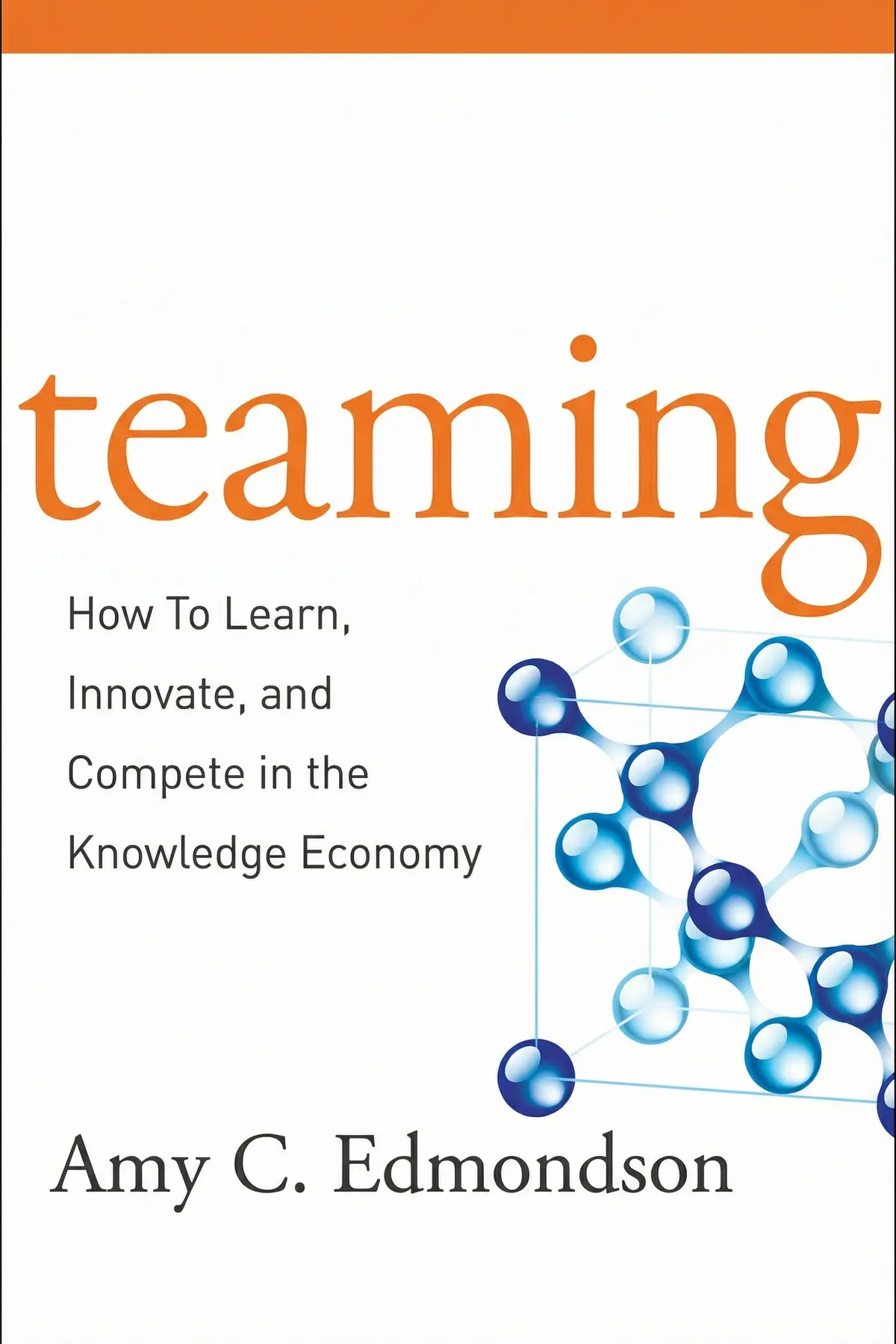
Right Kind of Wrong: The Science of Failing Well
A guide to reframing failure. Amy C. Edmondson explains how to distinguish between preventable mistakes and intelligent failures to foster innovation and psychological safety in any organization.
Table of Content
1. Introduction
1 min 17 sec
Think back to the last time you made a significant mistake at work. If you are like most people, your first instinct was probably a mixture of embarrassment, frustration, and perhaps a touch of fear. We are conditioned from a young age to view failure as the opposite of success—a sign of inadequacy or a lack of preparation. But what if that perspective is exactly what’s holding us back?
In Right Kind of Wrong, Amy C. Edmondson, a leading expert on organizational management, invites us to look at our errors through a different lens. She argues that failure isn’t just an occasional nuisance; it’s an essential engine for growth and innovation. The throughline of this exploration is the idea that not all failures are created equal. Some are preventable and should be minimized, while others are what she calls “intelligent failures”—the necessary price of discovery in an uncertain world.
Over the course of this summary, we will explore how to build a culture that doesn’t just tolerate failure, but actively uses it as a tool. We will look at why psychological safety is the bedrock of any successful team and how to categorize the spectrum of mistakes so that we can respond to them with wisdom rather than knee-jerk judgment. By the end, you’ll see how shifting your mindset from “avoiding mistakes” to “learning from experiments” can unlock the hidden potential within your organization and your personal life.
2. The Power of the Learning Mindset
2 min 19 sec
Discover why the modern business landscape requires a fundamental shift in how we process setbacks and why staying stagnant is the greatest risk of all.
3. Psychological Safety as a Strategic Asset
2 min 17 sec
Explore why the most innovative companies in the world prioritize emotional security and how leadership sets the tone for open communication.
4. Categorizing the Spectrum of Failure
2 min 19 sec
Learn to distinguish between negligence and discovery by understanding where a failure falls on the scale of blameworthy to praiseworthy.
5. Mastering the Art of Systematic Analysis
2 min 20 sec
Move beyond the emotional sting of a setback by implementing structured reviews and storytelling techniques that turn data into wisdom.
6. Embedding a Failure-Friendly Culture
2 min 20 sec
Learn how to weave the principles of intelligent failure into the very fabric of your organization, from performance reviews to daily rituals.
7. Conclusion
1 min 06 sec
As we reach the end of our journey through Right Kind of Wrong, the core message is clear: our biggest mistake isn’t failing, but rather failing to use our setbacks as a catalyst for progress. Amy C. Edmondson shows us that by cultivating psychological safety, we allow the truth to surface. By distinguishing between blameworthy errors and intelligent failures, we give ourselves and our teams the permission to be bold.
The path forward is one of intentionality. It requires us to set up systems like post-mortems and storytelling to catch the wisdom that often slips through the cracks of a busy workday. It asks us to be leaders who value curiosity over certainty.
So, as you step back into your daily life, ask yourself: where can you be more open about your own mistakes? How can you create a little more safety for the people around you to speak their truth? Remember, the goal isn’t to be perfect. The goal is to build a life and a career where every failure, no matter how painful, is the “right kind of wrong”—the kind that leads you exactly where you need to go. If you can master the science of failing well, there is no limit to what you can achieve. Thank you for listening to this BookBits summary.
About this book
What is this book about?
Most of us are conditioned to fear failure, viewing it as a sign of incompetence or a setback to be hidden. However, in Right Kind of Wrong, Amy C. Edmondson argues that our relationship with failing is actually the key to breakthroughs. She introduces the concept of intelligent failure—the kind of mistake that happens when we are exploring new territory and taking calculated risks. This book provides a framework for identifying which failures are blameworthy and which are praiseworthy, helping leaders and individuals build an environment where learning is prioritized over perfection. By focusing on psychological safety and systematic analysis, Edmondson shows how organizations like Pixar and Google turn setbacks into competitive advantages. It’s not about making more mistakes; it’s about making the right kind of mistakes and ensuring the lessons they provide aren't wasted. This summary provides a roadmap for transforming organizational culture into one that values growth, experimentation, and honest dialogue.
Book Information
About the Author
Amy C. Edmondson
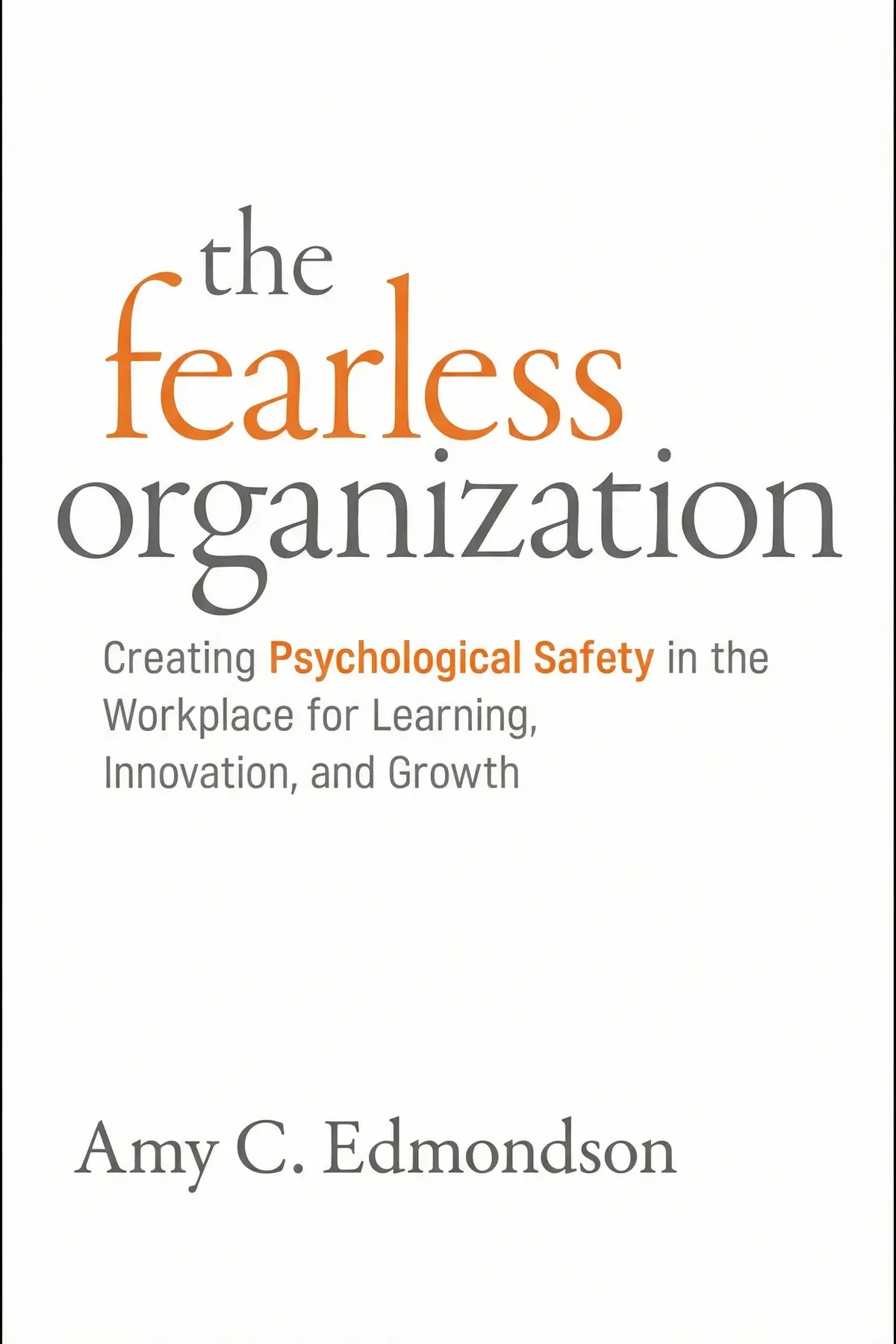
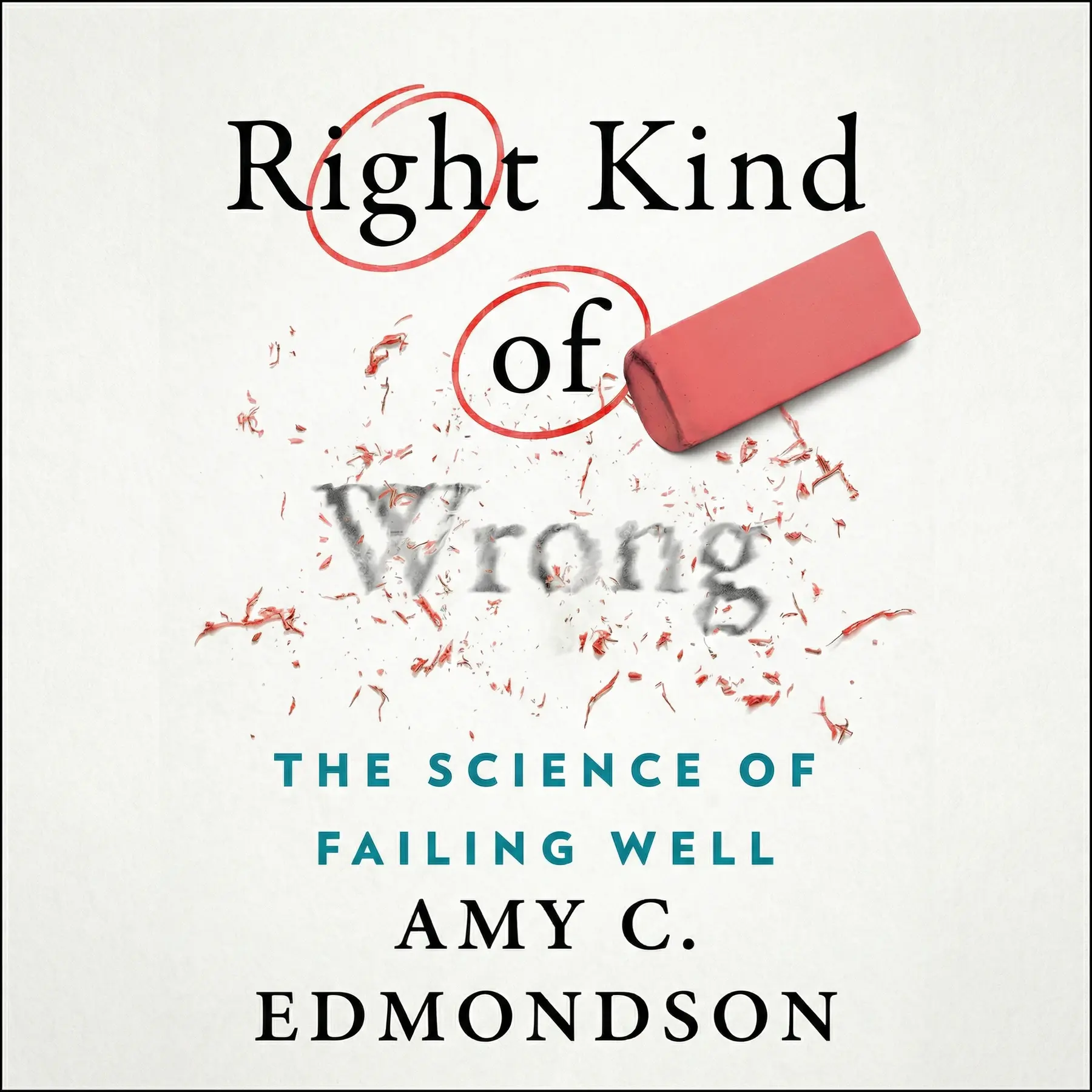
Amy C. Edmondson is the Novartis Professor of Leadership and Management at the Harvard Business School, where she has taught since 1996. She is the author of several influential books, including Teaming and The Fearless Organization.
Ratings & Reviews
Ratings at a glance
What people think
Listeners find the book highly insightful; one listener notes its effectiveness in clarifying the nature of failure, while another explains how it reimagines failure as a constructive tool for growth and learning. It is also praised for being very readable and offering a superb breakdown of different failures. Additionally, one listener mentions that the advice is simple to put into practice and follow.
Top reviews
Bird
Ever wonder why some mistakes lead to breakthroughs while others just lead to a pink slip? Most of us are taught from a young age to hide our blunders, yet Edmondson argues that this silence is precisely what creates catastrophic complex failures. By breaking down mistakes into three clear categories—basic, complex, and intelligent—she provides a vocabulary for growth. I particularly loved the section on 'intelligent failure' because it reframes the fear of the unknown into a hypothesis-driven experiment. It's about taking small risks where the downside is manageable but the learning potential is huge. While some sections felt a bit long-winded, the core message is vital for anyone working in a high-stakes environment. We need to stop punishing people for being human and start rewarding them for pulling the 'Andon cord' before things spiral out of control. This book truly transformed how I view my own professional setbacks.
Show moreSaovapa
As a leader in a fast-paced tech environment, I found the distinction between 'basic' and 'intelligent' failure to be incredibly useful for my team. We often lump all mistakes together, which creates a culture of fear that stifles innovation. Edmondson’s research shows that 'intelligent failures' are actually the fuel for progress, provided they happen in new territory and remain small enough to learn from. The writing is accessible and the anecdotes, while familiar to some, are framed in a way that makes them easy to implement. I’ve already started using the 'pre-mortems' suggested in the later chapters to help my team identify potential complex failures before they happen. It’s rare to find a business book that is both backed by rigorous Harvard research and genuinely easy to follow in a practical sense. If you want to build a truly fearless organization, this is a fantastic starting point for that journey.
Show moreNarongrit
Wow, this book actually makes me feel better about the messy process of innovation. I’ve always been a perfectionist, but Edmondson’s breakdown of 'intelligent failure' helped me realize that being wrong is often just the first step of being right. The way she reframes failure as a source of high-value information is brilliant and helped me shift my mindset immediately. I loved the examples of companies like Toyota and 3M that build 'slack time' and safety checks into their systems to prevent basic errors from becoming tragedies. It’s well-written, deeply researched, and feels very authentic to the struggles of modern work life. Even if you aren't a CEO, there is so much here about personal growth and resilience. The truth is, we are all fallible, and this book gives you permission to be human while still striving for excellence. I've recommended it to my entire department already because the message is just that important.
Show moreCameron
A person who never makes a mistake never tries anything new, and this book provides the framework to finally embrace that reality. The breakdown of failures into distinct types helped me realize that not all 'wrongs' are created equal. Some are preventable through better systems, like checklists in medicine, while others are the inevitable cost of moving into new territory. The writing is accessible and easy to implement, which is refreshing for a book written by such a high-level academic. I did find the middle chapters a bit repetitive, as the same points were hammered home through multiple case studies, but the core message never gets lost. The practical advice on creating psychological safety is worth the price of admission alone. It’s a fantastic guide for anyone looking to transform their relationship with failure and build a more resilient life. I feel much more equipped to handle the risks in my career now.
Show moreJiraporn
Finally finished the audiobook version, and I have to say the content is excellent even if the delivery is a bit dense. I ended up listening at 1.5x speed because the author tends to hammer the same points home through multiple case studies. That said, the breakdown of how to fail 'well' is the most practical advice I've encountered in years. It moves beyond the 'fail fast' cliché and gives you actual tools to distinguish between sloppy work and brave experimentation. The chapters on psychological safety are particularly strong, showing how nurses or pilots can save lives just by feeling safe enough to speak up. I did find some of the personal anecdotes about her own failures—like failing a calculus exam—a bit trivial compared to the corporate disasters she analyzes. Despite the fluff, the core framework is powerful enough to justify the read for anyone in management.
Show moreAroha
How do we move past the shame of failing? This is the central question Edmondson tackles, and she does it with a great mix of behavioral science and storytelling. I found the section on 'complex failures' to be the most eye-opening part of the book. It explains how small, seemingly insignificant errors can align like holes in Swiss cheese to create a massive disaster. It really made me rethink how I set up systems in my own small business. The book is very practical and provides clear steps on how to create an environment where people feel safe to pull the metaphorical 'Andon cord.' My only gripe is that it feels a bit like a 'repackaged' business school lecture at times. But for anyone looking to understand the mechanics of failure and how to turn setbacks into a competitive advantage, it’s a very worthwhile read. It certainly helps you understand failure more clearly.
Show moreBo
Picked this up after hearing a lot of buzz about psychological safety, but I found the actual content to be a bit of a mixed bag. To be fair, Amy Edmondson is clearly a master of her craft, and her breakdown of failures into basic, complex, and intelligent categories is helpful for any professional. However, the book feels quite repetitive by the time you reach the halfway mark. It often reads like a collection of case studies that have been recycled from every other business book on the market, like the Toyota Andon cord or 3M's innovation stories. While the insights are valuable for those new to the genre, seasoned readers might find it a bit thin on new theories. It's a solid, readable guide that would have probably worked better as a long-form article or a series of blog posts. Still, the emphasis on blameless reporting is a lesson many corporate leaders still need to hear.
Show moreWatcharin
Truth is, I expected more from a Harvard professor than a collection of case studies I’ve already read in every other business book on the shelf. The concept of psychological safety is her bread and butter, but this feels like a self-help version of her previous, more academic work. It is definitely readable and the 'intelligent failure' attributes are a handy checklist for any project manager. However, the book suffers from extreme repetitiveness and could have been summarized in about fifty pages. I also found her dismissal of the 'accountability vs. blamelessness' debate to be a bit hand-wavy. She claims it's not a choice between the two, but never really explains how to hold a negligent employee accountable without damaging the psychological safety of the group. It’s a fine introductory text, but don't expect it to revolutionize your understanding if you've already read 'The Fearless Organization' or similar titles.
Show moreAmara
The marketing for this book frames it as a 'revolutionary guide,' but I found it largely derivative of earlier organizational research. Frankly, the author spends a significant amount of time reminding the reader of her status as a Harvard professor without offering much in the way of fresh perspective. A large portion of the first half felt like a watered-down version of Charles Perrow’s 'Normal Accidents,' which she eventually cites, though it feels like she’s borrowing the heavy lifting. There is a frustrating amount of uncontextualized simplification, especially when she discusses large-scale disasters like oil spills. She treats many errors as simple mistakes when, in reality, they are the result of calculated risks that simply didn't pan out. I was hoping for a deep dive into the tension between accountability and a blameless culture, but she dismisses it as a false dichotomy without providing a real roadmap for implementation. It’s disappointing and repetitive.
Show moreOwen
In my experience, books that try to bridge the gap between academic research and self-help often fall into a trap of oversimplification, and this is no exception. Edmondson is clearly brilliant, but she spends far too much time reminding the reader that she is a Harvard professor while failing to address the very real tension between blamelessness and accountability. She dismisses the accountability concern as a 'false dichotomy' without actually exploring how a manager should handle a repeat basic failure in a high-stakes environment. Furthermore, the examples regarding Toyota and 3M have been done to death in almost every business school curriculum for the last twenty years. It’s not that the advice is bad; it’s just that it isn't 'revolutionary' like the jacket copy claims. If you are new to the world of organizational psychology, you might find this insightful. However, for me, it felt like a repetitive repackaging of old ideas.
Show moreReaders also enjoyed
7 Powers: The Foundations of Business Strategy
Hamilton Helmer

A Bigger Prize: How We Can Do Better Than the Competition
Margaret Heffernan
A Year with Peter Drucker: 52 Weeks of Coaching for Leadership Effectiveness
Joseph A. Maciariello
AUDIO SUMMARY AVAILABLE
Listen to Right Kind of Wrong in 15 minutes
Get the key ideas from Right Kind of Wrong by Amy C. Edmondson, plus 5,000+ more titles in English and Thai.
- 5,000+ titles
- Listen as much as you want
- 7-day free trial
- Cancel anytime







