Right Kind of Wrong: The Science of Failing Well
Amy C. Edmondson
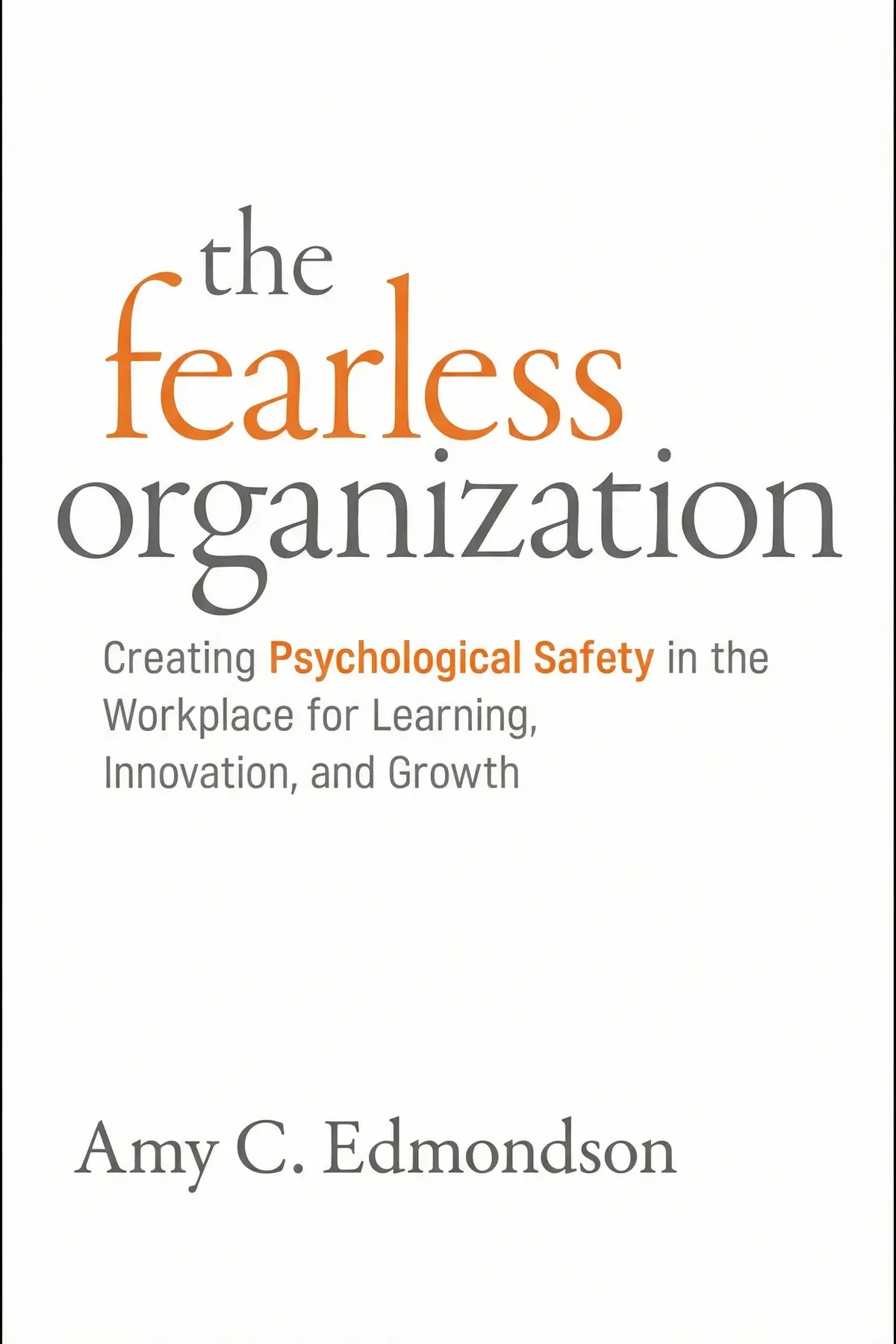
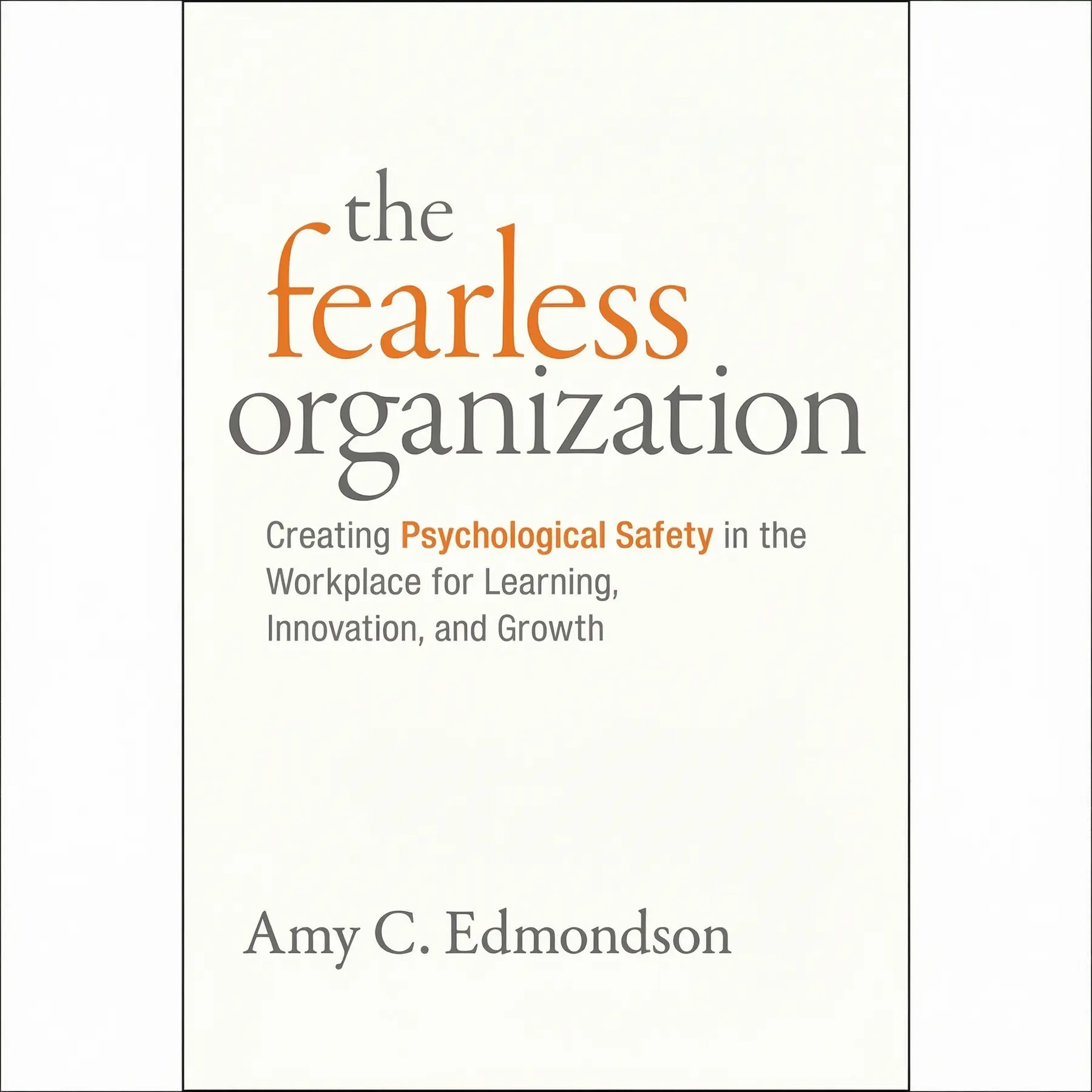
Explore the power of psychological safety with Amy C. Edmondson. Learn why creating an environment where employees feel safe to speak up is the ultimate key to innovation and long-term success.
2 min 07 sec
Think about the last time you were in a meeting and had a nagging doubt about a project’s direction. Did you speak up? Or did you find yourself carefully weighing the risks of looking like a contrarian? If you chose silence, you aren’t alone. In fact, you’re part of a widespread phenomenon that is currently stifling innovation in offices and boardrooms across the globe. We live in a world that prizes the knowledge economy, where the primary currency is the ability to solve complex problems and generate the next breakthrough idea. In this environment, it is no longer enough to just have high-performing individuals who work hard in their silos. Success today requires deep collaboration, constant experimentation, and the ability to pivot as fast as the market changes.
However, there is a silent enemy lurking in most organizations: fear. It is the fear of being judged by colleagues, the fear of appearing incompetent in front of a supervisor, and the fear of the repercussions of failure. When this fear takes hold, it acts like a literal brake on a company’s engine. People stop asking the questions that lead to better strategies, and they stop reporting the errors that could prevent a catastrophe. This is where the concept of psychological safety becomes revolutionary. It isn’t about being ‘nice’ or lowering performance standards; it is about creating a workspace where the truth can be told without punishment.
Over the course of this summary, we will dive into why psychological safety is the foundation of high-performance teams. We will explore the research of Amy C. Edmondson, who has spent decades studying how organizations learn and grow. We’ll see how global giants like Google discovered that safety was the single most important factor in their best-performing teams, and we will examine cautionary tales of famous companies that collapsed because their employees were too afraid to tell the truth. By the end of this journey, you will see that a fearless organization is not one where mistakes never happen, but one where mistakes are the fuel for growth. Let’s explore what it truly takes to inspire confidence and build a culture where everyone can bring their best, most honest self to the table.
2 min 05 sec
Discover why our natural desire to look smart and capable can actually prevent us from doing our best work and how we carry playground habits into the boardroom.
2 min 22 sec
Learn how the best teams actually report more errors than the worst ones and why Google found that safety is the number one predictor of success.
2 min 25 sec
Explore the catastrophic failures of Wells Fargo and Nokia to understand how using fear as a motivator can lead to ethical scandals and business obsolescence.
2 min 18 sec
Learn how top organizations like Pixar and Anglo American changed their perspective on failure and redefined the leader’s role to drive safety and innovation.
2 min 25 sec
Discover why humility is a leader’s greatest asset and how asking the right questions can unlock the hidden potential of an entire workforce.
2 min 33 sec
Learn how to respond to risks and mistakes in a way that encourages further growth, including why some companies throw parties to celebrate flops.
2 min 16 sec
Find out why you don’t need a fancy title to start changing your company’s culture and how small shifts in your daily interactions can create a ripple effect of safety.
2 min 06 sec
As we wrap up our exploration of the fearless organization, the central message is clear: the most successful organizations of the future won’t be the ones with the smartest people, but the ones with the safest people. In a world defined by complexity and rapid change, no single person can have all the answers. Success is a team sport, and psychological safety is the playing field. We have seen how silence is a natural but destructive habit that stems from our childhood desire to look good. We’ve discovered that high-performing teams actually talk *more* about their mistakes, and that some of the greatest corporate disasters in history were caused by a culture where truth was punished and fear was used as a motivator.
We’ve also learned that the role of a leader has changed. It is no longer about being the hero with all the solutions; it is about being the humble facilitator who asks great questions and appreciates the courage it takes for others to speak up. Whether it’s Pixar celebrating the ‘ugly’ early stages of a movie or Eli Lilly throwing parties for failed experiments, the goal is the same: to make it safe to fail so that it is eventually possible to win.
If there is one actionable takeaway to carry into your work tomorrow, it is to shift your mindset from ‘playing not to lose’ to ‘playing to win.’ When we play not to lose, we are governed by fear and a desire to protect our image. We stay quiet, we stay safe, and we stagnate. But when we play to win, we focus on the potential for growth. We accept that there will be stumbles along the way, but we view those stumbles as the price of admission for innovation.
Take the first step today. Ask a colleague for their honest input on a project. Admit a small mistake and share what you learned from it. Thank someone for challenging your perspective. By doing so, you aren’t just improving your own work life; you are helping to build a culture where everyone feels empowered to contribute, learn, and grow. A fearless organization isn’t a place where fear is absent; it’s a place where our collective purpose and curiosity are simply much stronger than our fear.
The Fearless Organization examines the critical role of psychological safety in modern business. It argues that in a knowledge-driven economy, the greatest inhibitor to growth is not a lack of talent, but a culture of fear that silences voices and hides mistakes. By looking at real-world case studies from tech giants to healthcare providers, the book reveals how psychological safety allows teams to collaborate more effectively, learn from failure, and adapt to change. Readers will discover the promise of a workplace where every employee feels empowered to contribute ideas, ask tough questions, and admit errors without fear of retribution. This summary provides a roadmap for leaders and team members to dismantle the barriers of silence and build a truly resilient, innovative, and courageous organization.
Amy C. Edmondson is a professor of leadership and management at the Harvard Business School. She’s been repeatedly ranked as one of the world’s most influential management thinkers by Thinkers50. She’s spent 20 years researching psychological safety, organizational learning, and leadership, and shared her expertise in publications such as the Harvard Business Review and the California Management Review. Edmondson is the author of Teaming and Teaming to Innovate, as well as the co-author of Building the Future and Extreme Teaming.
Amy C. Edmondson
Listeners find the book thoroughly researched, featuring contemporary case studies and a straightforward framework for building a healthy workplace culture. They view it as essential reading on a vital topic, with one listener mentioning its applicability to both the business and NFP sectors. The book's focus on psychological safety is highly praised, with one review emphasizing its role in helping staff feel secure enough to voice concerns and report problems. Although the quality of the writing is mostly appreciated, some listeners feel the material becomes repetitive.
Picked this up after hearing Edmondson's name in every HR meeting for a year. It lives up to the hype. The framework for psychological safety isn't just fluffy corporate speak; it's a rigorous, research-backed blueprint for making teams actually function. I loved the case studies—ranging from aviation disasters to hospital errors—showing how silence literally kills. Truth is, most of us work in environments where we bite our tongues, and this book identifies exactly why that happens. While it can get a bit academic at times, the clarity of the concepts provides a common language for leadership. This is a must-read for anyone in a commercial or non-profit setting who wants to build a culture where employees feel safe to raise red flags without fearing for their jobs. It is invaluable reading.
Show moreWow, this was exactly what our leadership team needed to read this quarter. We've struggled with a culture where people 'wait and see' before speaking up, and Edmondson breaks down the psychosomatic impact of fear in a way that truly resonates. The book provides a clear, actionable framework for leaders to invite participation and respond productively to failure. It’s not just for big tech companies like Google; it’s just as applicable to small non-profits. I especially appreciated the deep dive into how 'blameworthy acts' differ from 'productive failures.' It has changed the way I facilitate meetings and how I encourage my staff to take interpersonal risks. It’s a game-changer for organizational health. Every manager should have a copy on their desk.
Show moreAfter years of working in high-stress corporate environments, reading this felt like an epiphany. It gave a name to the invisible barrier that prevents innovation: fear of reprisal. The case studies are recent and highly relevant, providing a clear roadmap for both commercial and non-profit sectors to foster inclusion. I loved the emphasis on how psychological safety supports a culture of learning and growth rather than just 'getting along.' The truth is, most organizations are operating at half-capacity because their employees are too scared to be honest. This book is a crucial tool for any manager who wants to unlock their team's full potential. It’s deeply researched and incredibly timely for today's workforce. I cannot recommend it enough for those serious about growth.
Show moreFinally got around to reading this essential text for leaders. Edmondson does a masterful job of explaining how a culture of silence is a liability that can lead to total organizational collapse. The book is extensively researched, offering a clear framework that moves beyond the typical 'common sense' advice found in most management books. I found the section on how to respond to failure particularly enlightening—it’s about moving from blame to curiosity. Employees need to feel safe to report issues before they become disasters, and this book shows exactly how to build that trust. It’s an invaluable resource that I’ll be recommending to my entire department. It provides a real path toward innovation and engagement that feels sustainable.
Show moreAs a longtime fan of Amy Edmondson's TED talk, I was eager to see if she could sustain the momentum for an entire book. For the most part, she succeeds, though some sections feel like they are circling the same drain. The core message is powerful: psychological safety isn't about being 'nice,' but about being candid and experimental. I found the distinction between a 'fearless' and an 'over-protective' culture particularly helpful for my own management style. There are moments where it feels like a LinkedIn feed come to life, but the sheer volume of peer-reviewed data makes it impossible to dismiss as mere fluff. It’s a solid addition to the bookshelf, especially if you pair it with something more tactical like Kim Scott's work. It definitely clarifies the 'why' behind team success.
Show moreEver wonder why some highly intelligent teams still make catastrophic mistakes? Edmondson answers this by showing how the 'fear factor' shuts down the cognitive abilities of employees. I really liked how she uses historical disasters to prove her point, though the NASA and Nokia examples are starting to feel a bit overused in management literature. To be fair, her definition of psychological safety is the best I’ve encountered: the belief that the environment is safe for interpersonal risk-taking. It’s an informative read that reiterated a lot of what I suspected but couldn't quite articulate. My only gripe is that it could have been about fifty pages shorter without losing any of the vital substance. Still, the research is extensive and very recent.
Show moreNot what I expected, but in a good way. I thought this would be another soft-skills book filled with platitudes, but the level of research is genuinely impressive. Edmondson doesn't just say 'be nice'; she explains the structural necessity of candor in a VUCA world. Look, the book is a bit academic, which might put some people off, but the framework for creating a learning organization is invaluable. I’ve started implementing the 'inquiry-based' leadership techniques she suggests, and the shift in my team’s engagement is already visible. It’s a solid 4-star read because while the content is top-tier, the prose can be a little clunky and roundabout in the middle chapters. It requires some patience but offers a healthy organizational culture in return.
Show moreThis book is a bit of a mixed bag for me. On one hand, the concept of psychological safety is undeniably critical, and Edmondson is the undisputed pioneer in the field. On the other hand, I found the writing style a bit dry and unnecessarily repetitive. Dozens of case studies all point to the same 'common sense' conclusion: people work better when they aren't terrified of their bosses. Frankly, the James Damore/Google example felt a bit contradictory, praising a company for its research while ignoring the complexities of how they actually handle internal dissent. If you are new to the topic, start here. But if you've already read Radical Candor or The Five Dysfunctions of a Team, you might find yourself skimming a lot of familiar territory. It’s good, just not groundbreaking if you're already in this space.
Show moreGotta say, this book probably should have been a long-form article. While I think the main thesis is vital for the modern workplace, there is no reason it needed to be this long. Edmondson repeats herself constantly, hammering home the same few points across every single chapter. Personally, I preferred Radical Candor because it felt much more grounded in the day-to-day reality of managing people. The Fearless Organization is great if you need to convince a skeptical board of directors with peer-reviewed studies, but for a practitioner, it lacks the tactical 'nuggets' I was looking for. It’s a valid contribution to the field, but it’s definitely not a page-turner. Read the first three chapters and you've got the gist.
Show moreThe chapter on the Google Aristotle project was where I really started to lose interest. It felt like the author was relying on vague blog posts and overblown corporate PR rather than the rigorous evidence she promised earlier. Not gonna lie, I was disappointed by the lack of practical 'how-to' advice. While the theory is great, the book spends 90% of its time explaining the why and very little time on the how. It feels like a brilliant academic paper that was stretched into a full-length book to satisfy a publishing contract. If you’ve seen the TED talk, you’ve basically gotten the meat of the argument. It’s repetitive, uninspiring, and frankly, a bit of a slog to get through. I expected more from such a big name.
Show more
Hamilton Helmer

Margaret Heffernan
Joseph A. Maciariello
AUDIO SUMMARY AVAILABLE
Get the key ideas from The Fearless Organization by Amy C. Edmondson, plus 5,000+ more titles in English and Thai.