

A Short History of Nearly Everything
Bill Bryson
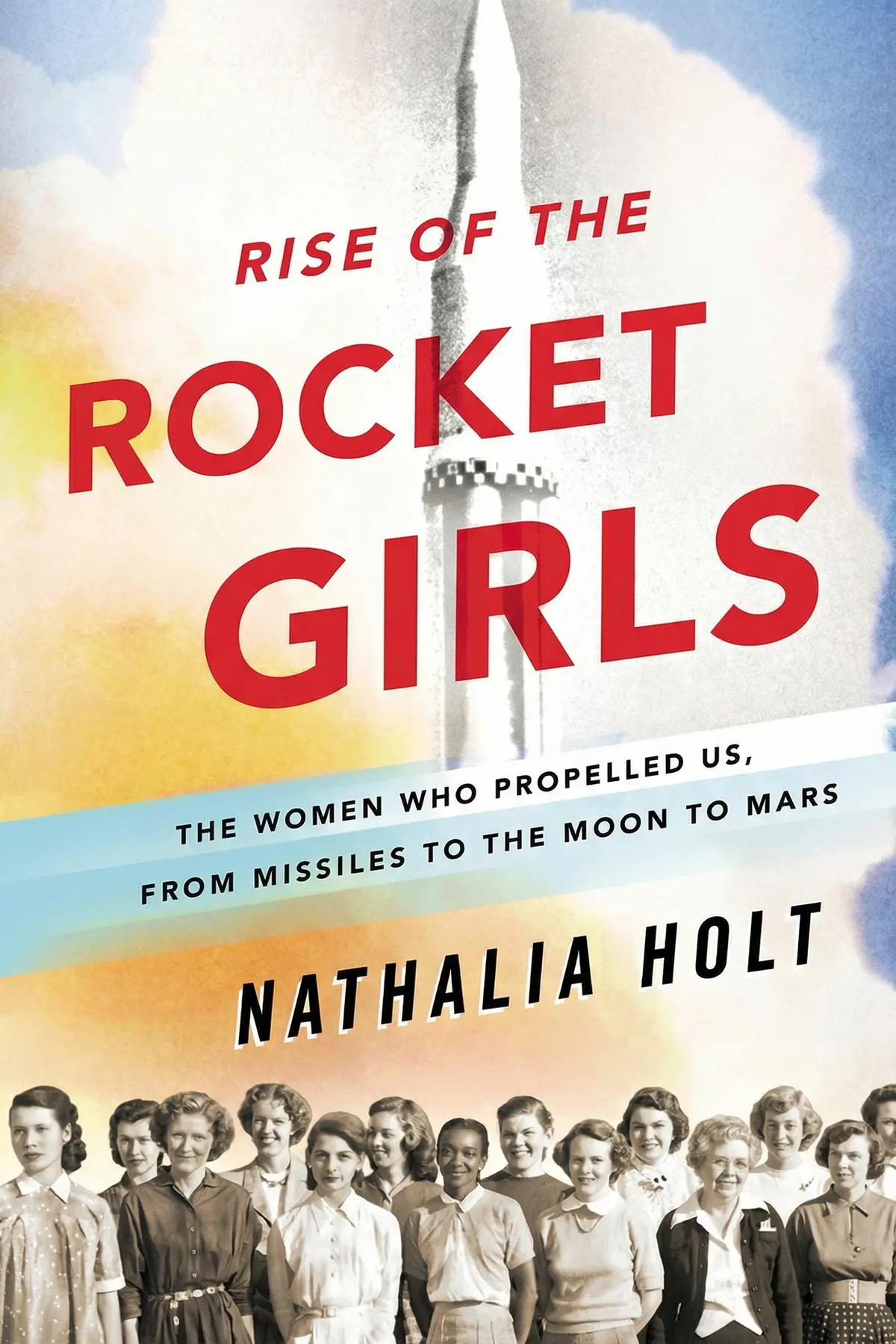
Explore the hidden history of the women who powered NASA's earliest missions. From calculating missile trajectories to guiding probes across the solar system, these mathematical pioneers redefined what it meant to reach for the stars.
1 min 32 sec
When we look back at the 1950s and 60s, the images that usually come to mind are of male astronauts in silver suits or rooms full of men in white shirts and narrow ties, staring intensely at monitors. But behind those iconic snapshots was a group of people whose names rarely made the headlines, yet whose minds were the very engines of the space program. These were the women of the Jet Propulsion Laboratory, or JPL. At a time when women were often steered toward domestic life or clerical work, these pioneers were breaking barriers in the most literal sense—breaking the bonds of Earth’s gravity.
This isn’t just a story about numbers and physics; it’s a story about the changing face of science and the resilience of a sisterhood that operated in the shadows. For decades, these women were the ones doing the heavy lifting by hand, filling notebooks with the complex math required to launch missiles, satellites, and eventually, interplanetary probes. They were the original ‘computers,’ a term that referred to a job title before it ever described a machine.
In the following minutes, we are going to explore how these women moved from the dusty canyons of Southern California to the far reaches of our solar system. We’ll see how they survived the skepticism of their era, how they outpaced the first electronic machines, and how their legacy continues to shape every mission NASA launches today. Their journey is a testament to the fact that while the men were the face of the space program, it was the women who provided the vital calculations that ensured everyone made it home. Let’s dive into the history of the women who truly propelled us into the future.
2 min 16 sec
Before digital chips and software, the world’s most complex equations were solved by hand. Meet the women who became the literal brains of the first jet engines.
2 min 07 sec
As the world plunged into war, the women of JPL shifted from theory to defense, helping create the propellants that would change military history.
2 min 07 sec
While building missiles for the Army, the women of JPL were secretly calculating the path to the stars using revolutionary launch techniques.
1 min 56 sec
When the Soviet Union took an early lead in the space race, the women of JPL were the ones who finally pushed America into orbit.
1 min 57 sec
As the first electronic computers arrived at NASA, they found themselves in a surprising competition with the faster, more reliable human women.
1 min 59 sec
Expanding the horizon meant calculating paths through the entire solar system, a task that required a new kind of mathematical bravery.
1 min 59 sec
Discover how the culture of JPL provided a rare sanctuary for women in science, eventually sparking a push for equal rights and professional titles.
1 min 53 sec
Even as the original ‘Rocket Girls’ reached retirement age, their influence remained vital, with some staying on to guide the next century of exploration.
1 min 34 sec
The story of the Rocket Girls is a reminder that history is often made by those who don’t seek the spotlight, but whose contributions are astronomical.
1 min 27 sec
In the end, the history of the Jet Propulsion Laboratory is much more than a timeline of successful launches and technological milestones. It is the story of a group of brilliant women who, through sheer mathematical talent and unwavering dedication, secured America’s place in the heavens. From the early days of JATO rockets in the dusty California canyons to the sophisticated interplanetary voyages of the Voyager and Juno probes, these women were the steady hand at the helm of discovery.
The ‘Rocket Girls’ performed a role that was, in many ways, an almost superhuman feat. They acted as the link between theoretical physics and the physical reality of spaceflight, calculating trajectories with a level of precision that remains impressive even in the age of supercomputers. They did this while navigating a society that often tried to limit their potential, proving that their intellect was as powerful as any rocket propellant.
As we conclude this summary of Rise of the Rocket Girls, let the throughline be clear: progress is a collaborative effort that often relies on those working out of the spotlight. The legacy of these pioneers is found today in every woman who leads a mission at NASA and every girl who realizes that she, too, can do the math. These women didn’t just calculate our way to the Moon and Mars; they changed the world by proving that the most complex problems in the universe can be solved if you have the right mind for the task. They were, and will always be, the women who propelled us into the future.
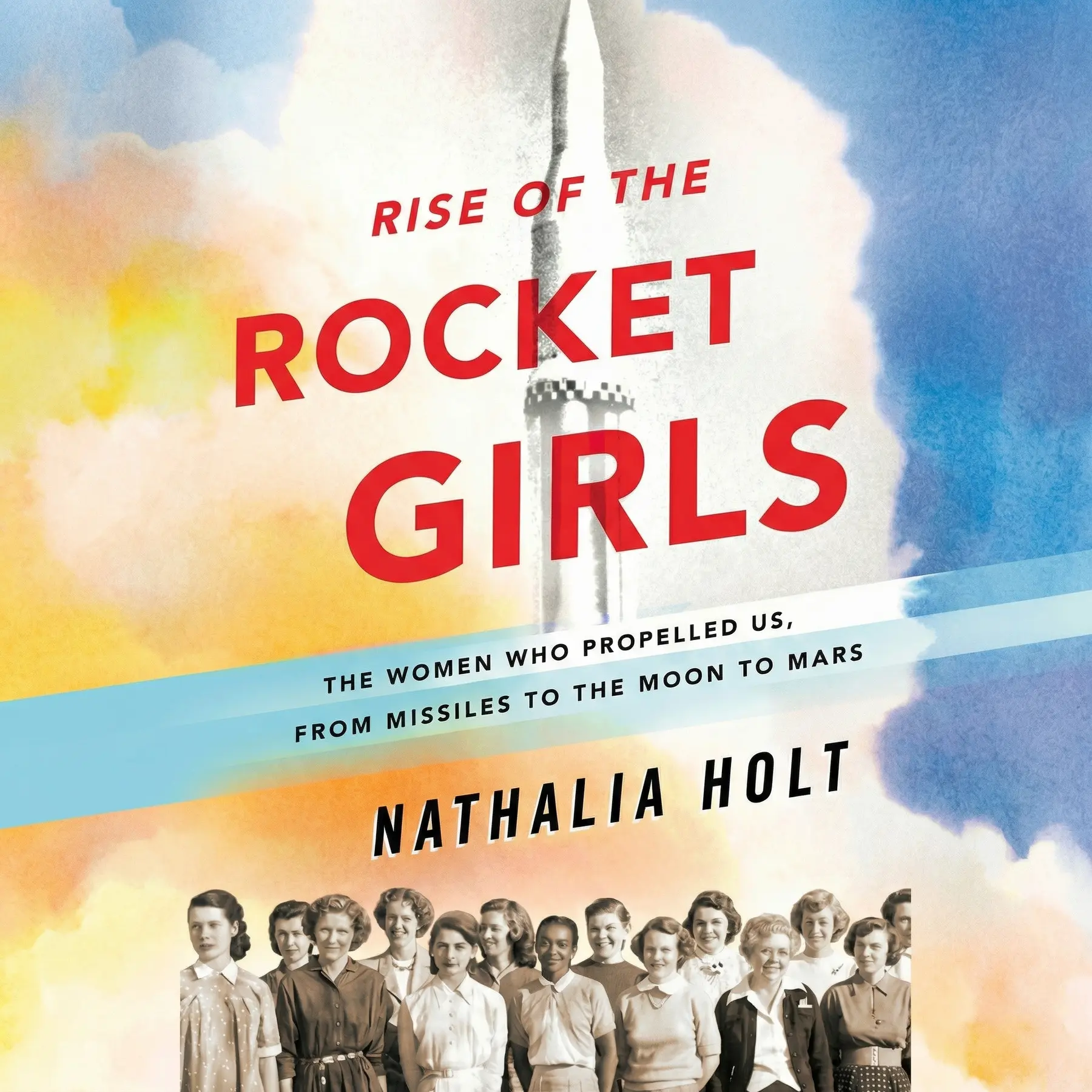
Rise of the Rocket Girls uncovers the essential, yet often overlooked, role of women at the Jet Propulsion Laboratory. Starting in the 1940s, a group of brilliant women known as computers performed the complex calculations necessary for jet propulsion and early rocketry before the age of digital machines. The book follows these trailblazers through the decades as they transitioned from the military-focused missile projects of World War II to the historic milestones of the Space Race. It highlights how their mathematical prowess made possible the launch of America's first satellite, the exploration of the Moon, and the ambitious Voyager missions to the outer planets. Beyond their technical achievements, the narrative explores the cultural shifts they navigated, proving that their intellect and determination were just as critical to the space program's success as the rockets themselves.
Nathalia Holt is a science writer whose work has appeared in major publications including the New York Times, the Los Angeles Times, Popular Science, and the Atlantic. She dedicated years to interviewing the women of the Jet Propulsion Laboratory to preserve their legacy. Holt is also the author of Cured: The People who Defeated HIV.
Listeners find this to be an exceptional non-fiction work that recounts the incredible narrative of female contributions to space travel, especially regarding their time at JPL. They value the book's commitment to historical precision and thorough research, noting how it explores diverse facets of space missions while emphasizing the ways these women fostered mutual support within STEM careers. Reactions to the prose itself are varied; while some find the writing to be high quality, others characterize it as terrible.
Wow, what a truly inspiring journey through the history of the space program. I was completely captivated by the lives of Barbara Canright, Helen Ling, and the other women who made JPL a success. This isn't just a book about math; it's a book about breaking barriers and proving everyone wrong. Holt writes with a genuine passion for her subjects that is contagious. I loved how the book highlighted the ways these women encouraged and mentored each other, creating a legacy that continues at JPL today. Not gonna lie, I teared up a few times reading about their struggles and eventual triumphs. It’s a comprehensive, beautiful tribute to the unsung heroes of the stars. Every young woman interested in a STEM career should have a copy of this on her shelf. It’s proof that with enough determination and a sharp pencil, you can literally change the world.
Show moreFinally got around to reading this, and it was worth the wait. "Rise of the Rocket Girls" is a masterclass in narrative non-fiction. The level of historical accuracy is impressive, yet it never feels like a dry lecture. Instead, Nathalia Holt weaves together the personal struggles of these women with the high-octane excitement of the space race. I especially appreciated the deep dive into how they handled the transition to digital computers—it was a "learn or get left behind" moment, and they rose to the challenge beautifully. Some critics point to the descriptions of clothes as a flaw, but personally, I think those details helped bring the era to life. It gave the story a vivid, cinematic quality. This book is a fantastic celebration of intelligence and perseverance. It’s easily one of the best history books I’ve read this year.
Show moreThis book is a gem for anyone who loves space exploration or hidden history. While many people are familiar with "Hidden Figures," the story of the women at JPL in California is just as vital and equally gripping. I was hooked from the very first chapter. Holt’s ability to take complex mathematical concepts and explain them through the daily lives of these "computers" is a rare talent. The book covers so much ground, from the early days of missile testing to the grand tours of the outer planets. To be fair, it’s a long read, but the pacing is excellent. I felt like I really got to know these women—their fears, their triumphs, and their incredible brilliance. It’s an amazing story of women supporting women to reach the stars. If you’re looking for a book that is both educational and deeply moving, this is it. Five stars all the way!
Show moreThe story of the "human computers" at JPL is one that absolutely needed to be told. Holt does a fantastic job showing how these women weren't just colleagues, but a genuine support system for one another in a male-dominated world. I loved the details about how they navigated the "no-maternity-leave" era by helping each other get rehired after having children. It’s a powerful testament to their resilience. While the author does spend a lot of time on their personal lives and clothing—which some might find distracting—I felt it added a layer of humanity that made the history feel more "lived-in." Truth is, these women were pioneers who paved the way for modern software engineering. Seeing their names finally recognized alongside the famous male engineers was moving. It’s not a perfect book, and the writing can be a bit flowery at times, but the inspiration I took from their grit far outweighed the minor stylistic gripes.
Show moreAs someone who isn't a science geek, I was worried this would be too dry or technical to enjoy. Not the case at all! Nathalia Holt keeps the focus on the human element, making the complex history of rocket science accessible to a general audience. The way she traces the lab’s growth from a group of "suicide squad" hobbyists at Caltech to a cornerstone of NASA is just brilliant. I appreciated learning about the specific missions, like Explorer 1 and the Voyager probes, through the eyes of the women who calculated the trajectories. Gotta say, the blatant sexism they faced was infuriating to read about, but it made their successes even sweeter. My only real complaint is that the timeline gets a bit muddled in the later chapters as more characters are introduced. Still, it’s a wonderful read for anyone interested in space exploration or the hidden history of women in America.
Show moreThe level of research that went into this volume is staggering. Holt spent years interviewing the surviving "computers" and digging through archives, and it shows in the depth of the narrative. Using oral histories as a primary source gives the book an authentic voice that you don't always get in academic non-fiction. I found the transition from hand-calculating to using the first giant IBM machines particularly fascinating. It highlights a pivotal moment in technological history that we often take for granted today. In my experience, some readers might find the focus on the women's domestic lives a bit much, but I think it serves to illustrate the total lack of work-life balance expected of them. My rating is a strong four stars because, despite a few pacing issues in the second half, the book successfully restores these women to their rightful place in the annals of space flight.
Show moreNot what I expected, but in a mostly good way. I thought this would be a textbook about math, but it’s actually more like a group biography. It’s fascinating to see how the culture at JPL evolved from the 1940s through the 70s. These women were basically the original pioneers of the modern workforce, balancing high-level physics with the social pressures of the time. To be fair, the author’s tendency to describe every outfit and hairstyle did get a little old after the first hundred pages. However, the payoff is worth it when you realize just how much these women contributed to missions like the moon landing and Mars exploration. The writing is clear and easy to follow, making it a great weekend read. It’s an eye-opening look at the early days of NASA and a great reminder that space travel wasn't just built by men in white shirts and skinny ties.
Show morePicked this up after seeing it on a few "Women in STEM" lists, and I have mixed feelings. On one hand, the history of the Jet Propulsion Laboratory is fascinating, and I loved learning how these "human computers" transitioned from hand-written math to early IBM programming. However, the book suffers from serious info-dumping issues. To be fair, Holt clearly did her homework, but the sheer volume of mundane backstories made the middle section a slog. I also found the constant references to their physical appearances—like the calluses and pucker marks on their hands—to be unnecessary filler. Look, the core story is inspiring, but the organization is messy. It oscillates between dense scientific reporting and weirdly superficial personal details. It’s an important contribution to the history of space exploration, yet I can’t help feeling that a more focused editor could have turned this into something much more impactful.
Show moreEver wonder who was actually doing the math before NASA had silicon chips? This book answers that question by profiling the incredible women at JPL. I opted for the audiobook, and while Erin Bennett is usually a solid narrator, her delivery here felt a bit robotic, especially during the chapter transitions. The content itself is a bit of a rollercoaster. Some chapters are gripping, showcasing the high-stakes pressure of the Cold War and the Space Race, while others get bogged down in what the women ate for lunch or their dating lives. Personally, I found the technical evolution from FORTRAN to modern computing much more engaging than the social gossip. It’s a good book with great intentions, but it lacks the narrative punch I was expecting. It’s worth a read for the historical value, but be prepared to do some skimming when the descriptions of 1950s fashion become too much to handle.
Show moreI really wanted to love this book because the subject is so vital, but the execution was incredibly disappointing. Why does Nathalia Holt spend so much time describing the women's "A-line skirts" or their wind-blown hair? It felt like I was reading a 1950s gossip column rather than a serious history of brilliant mathematicians. The writing style leans toward a "Nancy Drew" vibe that completely undermines the professional achievements of these JPL pioneers. Frankly, it’s insulting to focus on whether a scientist wore stockings when she was busy calculating rocket trajectories by hand. While the research is clearly there, the storytelling is lackluster and patronizing. These women deserved a narrative that treated them as the geniuses they were, not as "girlish" side characters in their own lives. If you want to know their names, Google them instead; you’ll get more respect for their intelligence that way.
Show moreBill Bryson


Philip Freeman

Jeff Hawkins



Michael Axworthy

Tom Standage

AUDIO SUMMARY AVAILABLE
Get the key ideas from Rise of the Rocket Girls by Nathalia Holt, plus 5,000+ more titles in English and Thai.







