
15 min 48 sec
Ritual: How Seemingly Senseless Acts Make Life Worth Living
Explore the hidden logic behind our most enigmatic traditions. This summary reveals how rituals, from small daily habits to intense cultural ceremonies, reduce anxiety, build community, and define what it means to be human.
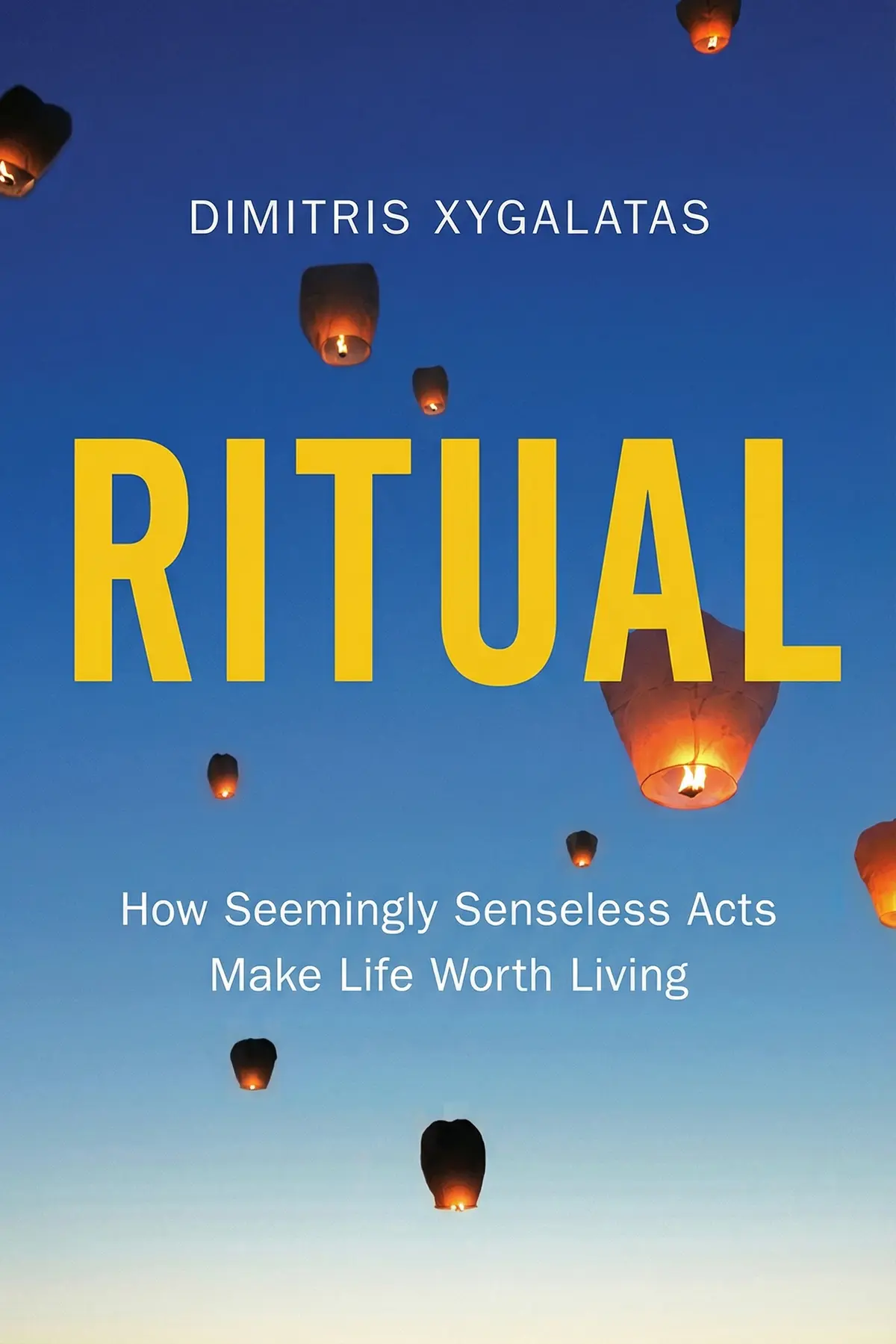
Table of Content
1. Introduction
1 min 49 sec
Think about the last time you were truly nervous. Maybe you were about to step onto a stage, enter a high-stakes job interview, or perhaps you were just waiting for some important news. In those moments, did you find yourself doing something repetitive? Perhaps you straightened your tie three times, tapped your knuckles against a desk, or whispered a specific phrase to yourself. On the surface, these actions don’t change the reality of the situation. Straightening a tie won’t make you more qualified for a job, and tapping a desk won’t change the news you’re waiting for. Yet, we do these things anyway. We perform these small, private rituals because, in the middle of chaos, they provide a much-needed sense of order.
But rituals aren’t just individual quirks. They scale up into massive, sometimes grueling public displays that define entire cultures. Across the globe, people engage in acts that seem, to an outside observer, entirely illogical—even painful. They walk across beds of glowing coals, they pierce their skin with decorative hooks, and they dance for hours until they collapse from exhaustion. Why would we, as a species, spend so much time and energy on things that don’t produce food, build shelter, or provide any immediate material benefit?
This is the central mystery of the human ritual. It turns out that these seemingly senseless acts are actually some of our most important survival tools. They are the mechanisms we use to bridge the gap between ourselves and others, to transform fear into confidence, and to turn a collection of individuals into a unified community. As we explore these ideas, we’ll see how rituals act as a powerful technology of the mind, helping us survive and thrive in a world that is often beyond our control.
2. Rituals as the Social Glue of Identity
2 min 36 sec
Discover how shared traditions transform a group of strangers into a unified community through the power of collective movement and intense shared experiences.
3. The Link Between Suffering and Generosity
2 min 18 sec
Explore the surprising connection between intense physical rituals and the desire to help others, revealing why pain can actually foster kindness.
4. Biological Resilience and the Ritual High
2 min 33 sec
Learn how the body responds to the stress of rituals by releasing natural chemicals that boost mood and lower long-term anxiety.
5. Gaining Control Through Repetition
2 min 29 sec
See how everyday rituals help us manage the chaos of life, providing a sense of stability when the world feels unpredictable.
6. The Dual Power of Ritual Influence
2 min 32 sec
Uncover the potent ability of rituals to amplify human behavior, whether leading to profound cooperation or deep-seated division.
7. Conclusion
1 min 31 sec
As we have seen, the world of ritual is far more complex and essential than it appears at first glance. These behaviors, which might seem like relics of a superstitious past, are actually fundamental to our survival as a social species. From the dramatic firewalking ceremonies that synchronize the hearts of a village to the quiet, repetitive habits that calm a nervous athlete, rituals provide us with the psychological and social tools we need to thrive.
They help us define who we are and where we belong, creating deep bonds of trust that allow for unprecedented levels of cooperation. They offer us a biological pathway to resilience, helping our bodies and minds recover from the stresses of life. And perhaps most importantly, they give us a sense of agency and order in a world that often feels chaotic and overwhelming.
Understanding the power of ritual allows us to look at our own lives with fresh eyes. We can see our daily habits not just as chores, but as opportunities for grounding and focus. We can see our community traditions not just as obligations, but as the vital threads that hold our social fabric together. By embracing the ‘senseless’ logic of ritual, we tap into a deep well of human wisdom that has sustained our ancestors for millennia and continues to offer us a path toward a more meaningful, connected, and resilient life. The next time you find yourself performing a small personal ritual or participating in a grand celebration, remember: you aren’t just going through the motions. You are engaging in a timeless human practice that makes life worth living.
About this book
What is this book about?
Why do we perform actions that seem to have no direct practical purpose? Whether it is a professional athlete’s repetitive pre-game routine or an ancient village’s firewalking ceremony, rituals are a universal feature of human life. This summary explores the cognitive and evolutionary roots of these behaviors, explaining how they serve as vital technologies for the human mind. You will discover how rituals help us navigate high-stress environments by providing a sense of control and how they act as a social glue that binds communities together. By examining the biological and psychological effects of both mundane and extreme traditions, this narrative reveals that rituals are not just relics of the past. Instead, they are essential tools that help us manage our emotions, foster generosity, and create a shared sense of identity in an unpredictable world. It’s a journey into the science of why we do what we do, even when it seems to make no sense on the surface.
Book Information
About the Author
Dimitris Xygalatas
Dimitris Xygalatas is an anthropologist and cognitive scientist who leads the Experimental Anthropology Lab at the University of Connecticut. He studies rituals through a combination of ethnographic fieldwork and scientific experiments to understand their impact on human behavior and society. He has published over 100 articles and his work has been featured in outlets including the New York Times, National Geographic, and the Guardian.
Ratings & Reviews
Ratings at a glance
What people think
Listeners describe this investigation into human ceremony as captivating and enlightening, although some point out that a few cultural specifics might have benefited from more rigorous fact-checking. Furthermore, they value the way the text applies interdisciplinary science to demonstrate the quantifiable psychological and social advantages of ritualistic habits. Listeners also commend the accessible prose and varied case studies, with one listener highlighting the fascinating puzzle box experiment that contrasts how children and chimpanzees imitate behavior. They further highlight how the author illustrates our yearning for social connection using vivid stories, including the bureaucratic chaos following a priest’s invalid baptism.
Top reviews
Milk
Wow, the story about the priest who accidentally invalidated thousands of baptisms because of a single word choice will stay with me forever. It’s the perfect example of how rigidity defines ritual. Xygalatas does an incredible job of bridging the gap between ancient traditions and modern science. He shows that whether we are fire-walking in Greece or just blowing on dice in a casino, we are trying to impose order on a chaotic world. The data on physiological synchrony during collective ceremonies was mind-blowing. I loved how he used biometric sensors to prove that these 'meaningless' acts have measurable benefits for our health and community. This is easily the most engaging science book I have read all year.
Show moreCarter
Finally got around to reading Xygalatas, and his work on 'honest signaling' and high-cost rituals like fire-walking is transformative. He explains why we do things that should, by all logic, be avoided. Why do we dance until we collapse or pierce our skin? Because it proves our dedication to the group in a way words never could. The book is packed with these 'aha!' moments that make you rethink your own daily routine. I found the writing to be incredibly immersive and the balance between lab experiments and field observations was perfect. It’s a rare book that can make you feel both smarter and more connected to humanity. Absolutely worth your time if you like social psychology.
Show moreAroha
Picked this up because I’ve always been fascinated by why humans do things that make no sense on paper. Xygalatas explains how these 'causally opaque' behaviors actually serve a massive psychological purpose. The study comparing how human children and chimpanzees solve puzzle boxes was a total standout for me. While the chimps were smart enough to skip the useless steps to get a treat, the kids followed the ritualized movements exactly. It really highlights how we are hardwired to value the process over the literal outcome. The writing is accessible and sharp, though I did find a few sections on the hormonal data a bit dense for a casual reader. Still, it’s a brilliant look at the invisible threads that hold our societies together.
Show moreIsaiah
As someone who grew up in a very traditional household, this book gave me a completely new perspective on the habits I used to resent. I always thought of ceremony as a waste of time, but Xygalatas argues that the 'wastefulness' is actually the point. It’s a signal of commitment. His exploration of 'high-cost' rituals—like the extreme body piercings during Thaipusam—explains how pain and effort create deep social bonds. The prose is lively and never feels like a dry textbook. I did think the chapter on COVID-19 felt a little rushed compared to the deep dives into tribal traditions, but the overall message is powerful. We aren't just thinking animals; we are ritualistic ones.
Show moreSin
The chapter on how rituals function in high-stress environments like sports or the military was eye-opening. We often mock athletes for their 'lucky' socks, but this book proves those small acts of repetition are vital for cognitive control. Xygalatas manages to make complex anthropology feel like a conversation at a bar. I especially liked the section on 'honest signaling' and why groups require such high entry costs to ensure loyalty. My only real gripe is that I wanted more focus on modern, digital rituals. The book leans heavily on traditional and religious examples, which are great, but I think there’s a missed opportunity to look at how we’re ritualizing our lives online today.
Show moreFatima
Ever wonder why we blow on dice or wear 'lucky' socks even when we know it doesn't actually change the physics of the game? This book dives deep into the 'causal opacity' of our lives. It turns out that when we feel out of control, our brains crave the structure of ritual to damp down the 'error signals' in our minds. I loved the mix of high-stakes religious ceremonies and mundane everyday habits. The anecdote about the priest whose 'we' instead of 'I' caused a bureaucratic nightmare for the Vatican was both hilarious and terrifying. It’s a solid 4-star read that offers a lot of great trivia and some genuinely profound psychological insights.
Show moreTanawan
Not gonna lie, I went into this expecting a dry academic text, but Xygalatas has a real knack for storytelling. He takes you from the laboratories of Connecticut to the villages of Mauritius without ever losing the reader. The way he explains the physiological benefits of shared trauma in rituals—how it syncs up the heart rates of entire crowds—is just brilliant. I did notice the mistake about Jewish mourning customs that other reviewers mentioned, which is a shame because it makes you wonder about the other cultural details. However, the overarching scientific theory is so compelling that I can overlook a few factual slips. It’s a fascinating look at the 'why' behind our most bizarre behaviors.
Show morePannipa
While the science behind the social bonding theories is undeniably robust, I found myself snagging on a few of the cultural descriptions. As a Jewish reader, seeing the author state that we watch over the dead for seven days at home was a bit jarring. It’s a basic fact that we bury our dead almost immediately; the 'shiva' is the mourning period that follows. This made me question if other rituals were fact-checked with the same level of care. Truth is, the book has some fascinating insights into why we crave ceremony, but these little inaccuracies pulled me out of the experience. It is a decent read for the psychology, just take some of the ethnographic details with a grain of salt.
Show moreMan
Is it a science book or an anthropology memoir? It sits somewhere in the middle. I enjoyed the description of the St. Andrews puzzle box experiment because it offered a clear, scientific look at human mimesis. However, the author’s personal transition from skeptic to believer felt a bit forced in the narrative. To be fair, the research into how collective action lowers cortisol levels is fascinating and well-presented. I just wish the tone was a bit more consistent. One minute you're reading about rigorous biometric testing and the next you're in a very anecdotal story about Greek fire-walkers. It’s an interesting collection of facts, but it lacks a cohesive thread to tie everything together perfectly.
Show moreIngrid
Frankly, I wanted to love this more than I actually did, but the middle section felt like a slog through data that didn't always justify the length. I appreciated the core argument that rituals reduce anxiety, but the author repeats this point across almost every chapter with slightly different examples. Some of the anecdotes are genuinely shocking, like the Toraja people keeping their deceased relatives in their homes for years, but the analysis surrounding them felt repetitive after a while. I also struggled with some of the generalizations made about modern secularism. It felt like a 300-page book that could have been a very tight, 50-page essay. Not a bad effort, but it just didn't hold my attention.
Show moreReaders also enjoyed
Age of Propaganda: The Everyday Use and Abuse of Persuasion
Anthony Pratkanis
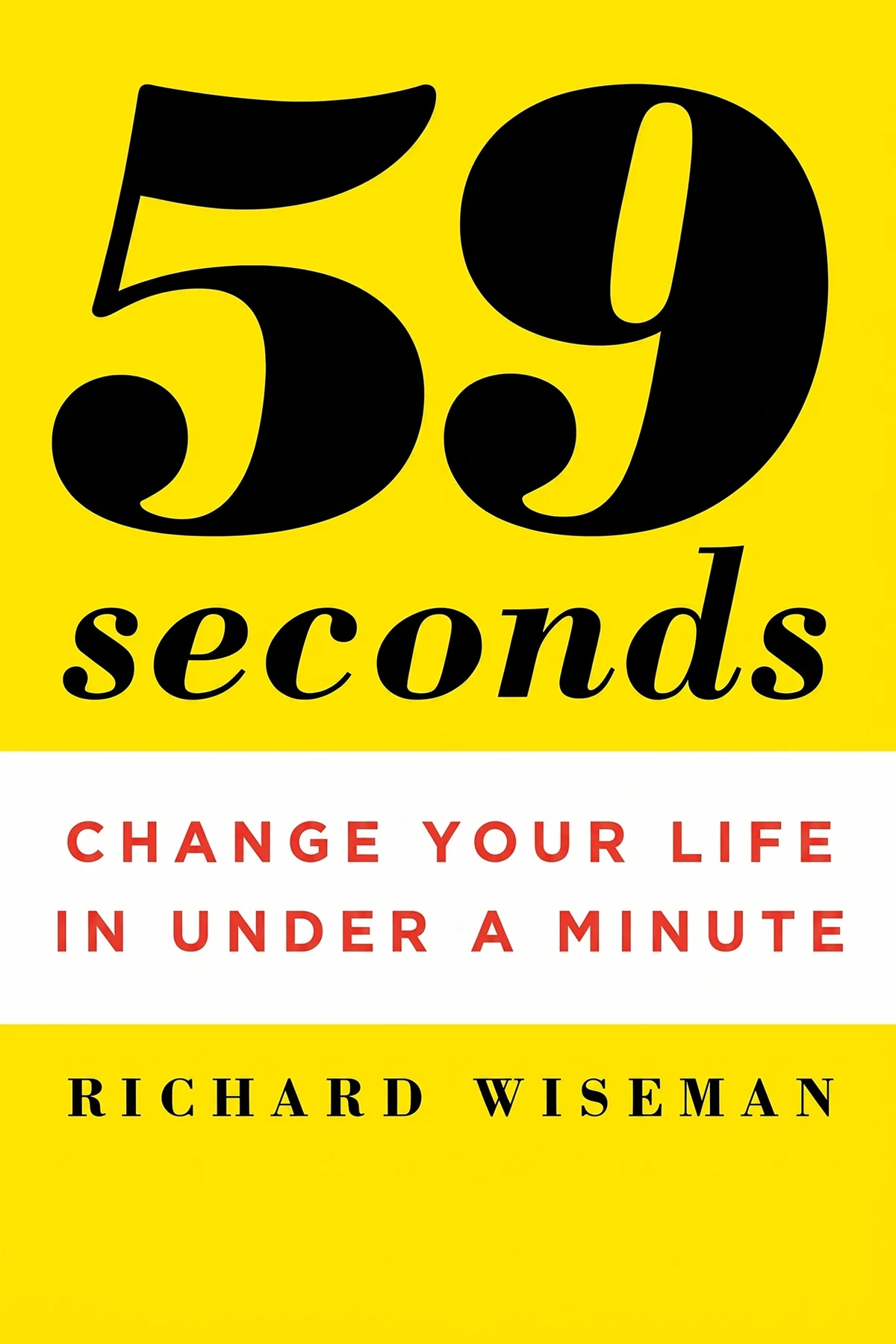
59 Seconds: Change Your Life in Under a Minute
Richard Wiseman
A Liberated Mind: How to Pivot Toward What Matters
Steven C. Hayes
AUDIO SUMMARY AVAILABLE
Listen to Ritual in 15 minutes
Get the key ideas from Ritual by Dimitris Xygalatas, plus 5,000+ more titles in English and Thai.
- 5,000+ titles
- Listen as much as you want
- 7-day free trial
- Cancel anytime







