
16 min 23 sec
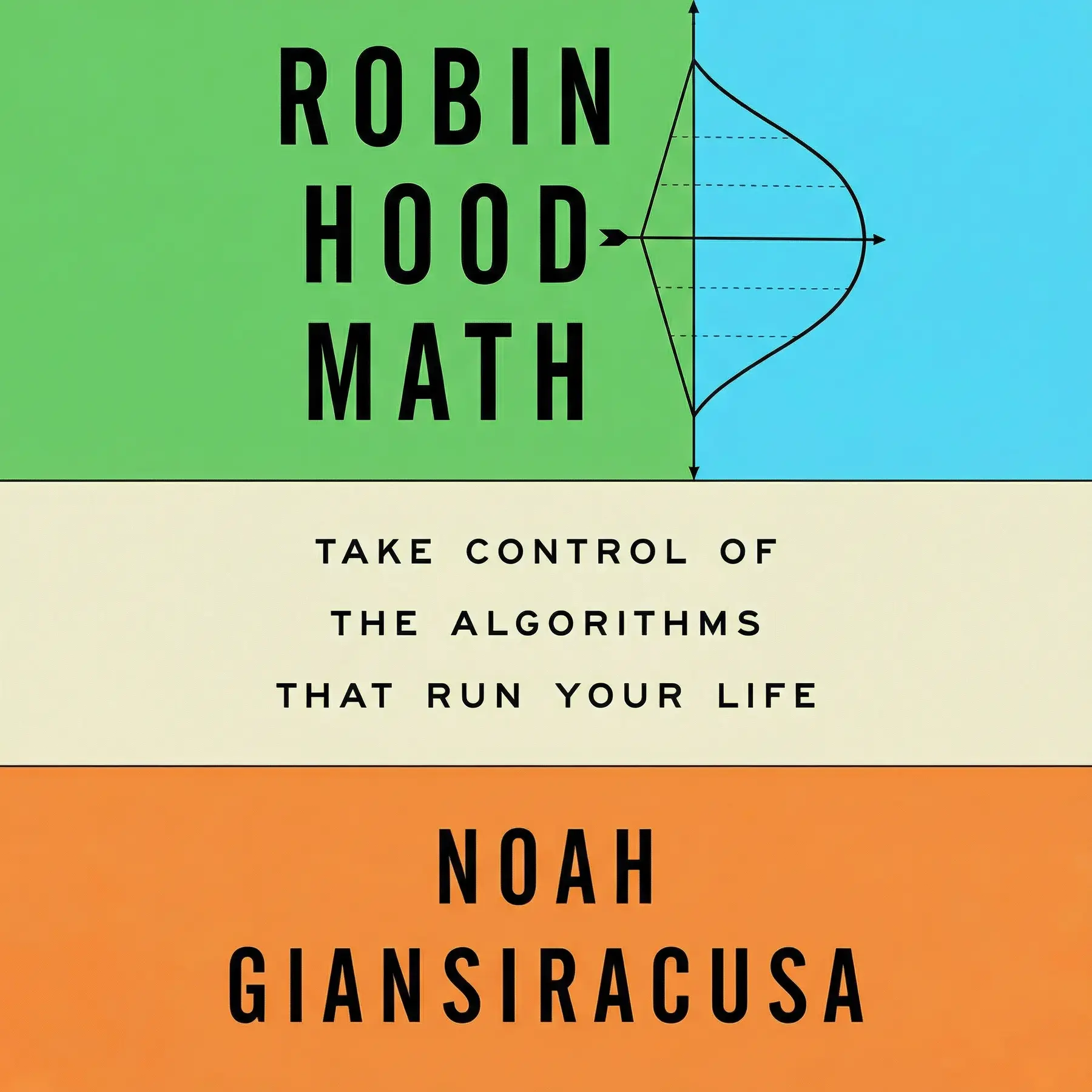
Robin Hood Math: Take Control of the Algorithms That Run Your Life
Robin Hood Math reveals how everyday algorithms and mathematical formulas shape social outcomes. It teaches you how to reclaim control by understanding the hidden mechanics behind rankings, digital feeds, and financial predictions.
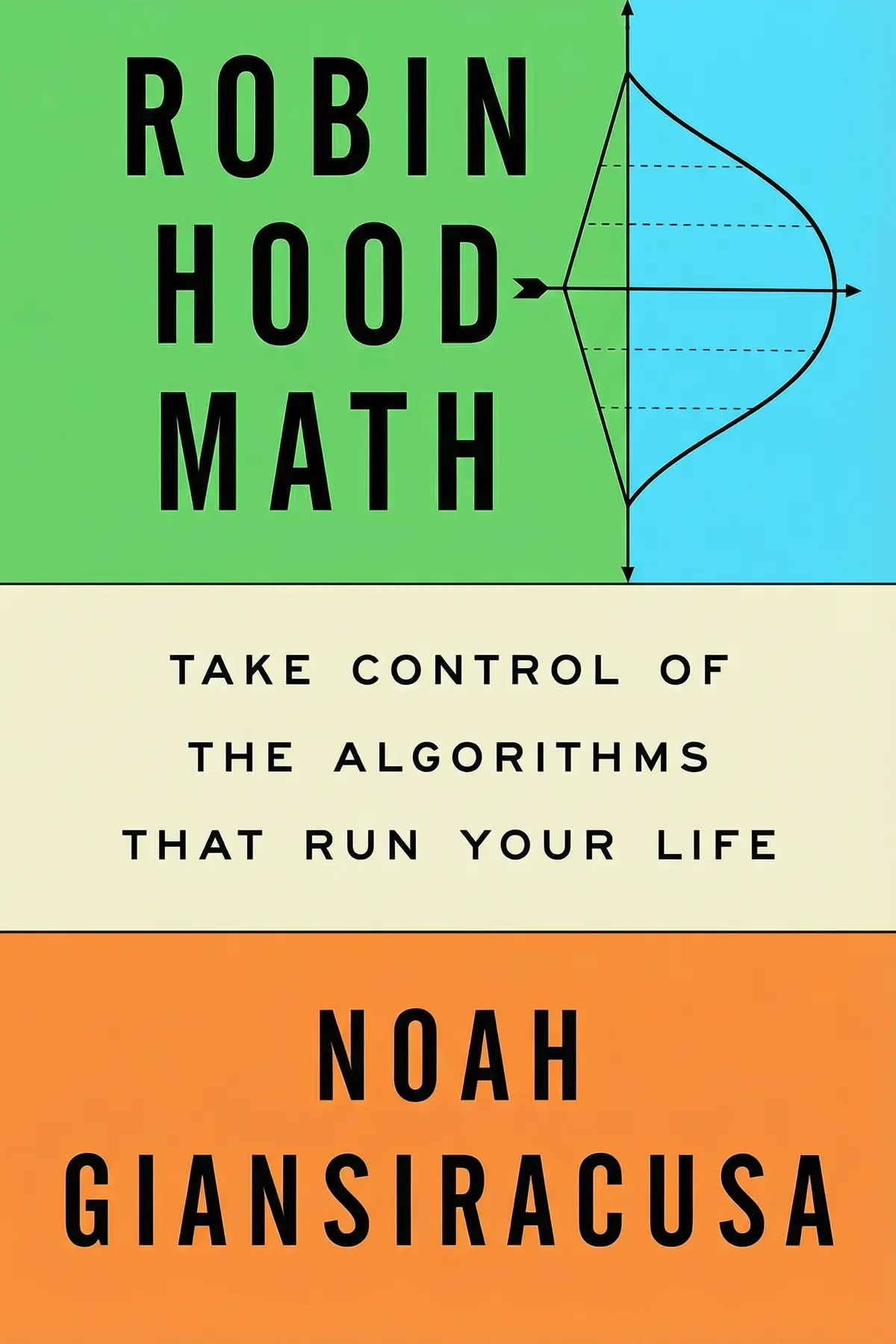
Table of Content
1. Introduction
1 min 39 sec
Imagine your morning routine. Before your first cup of coffee, your world is already being filtered, sorted, and ranked by mathematical formulas you didn’t choose and likely don’t see. From the time displayed on your smartphone to the specific news alerts popping up on your lock screen, numbers are making executive decisions about your day. We live in an era where our worth is often reduced to a credit score, our professional potential is measured by a keyword-scanning algorithm, and our social standing is tallied in likes and shares. It can feel like we are trapped inside a giant, invisible calculator that is programmed to benefit someone else—usually a tech giant or a financial institution.
But what if you could take the steering wheel of that calculator? What if the same mathematical principles used to create inequality could be used to foster fairness and personal agency? This is the core mission of our exploration into the concepts found in Noah Giansiracusa’s work. It’s about more than just numbers; it’s about power. By understanding the ‘Robin Hood’ potential of math, we can learn to take these sophisticated tools out of the hands of the elite and apply them to our own lives.
Throughout this journey, we will look at how rankings are actually made, why the wisdom of crowds can sometimes lead us astray, and how to update our own beliefs when the world throws new data at us. Most importantly, we’ll see how the very algorithms that track your every move on social media can be manipulated—not for profit, but for your own peace of mind. By the time we finish, you won’t just see numbers on a screen; you’ll see the levers of influence, and you’ll know exactly how to pull them to your advantage.
2. The Subjectivity of Rankings
2 min 34 sec
Discover how the seemingly objective lists that dictate college prestige and creditworthiness are actually based on hidden, subjective choices that you can learn to rewrite for yourself.
3. The Power and Peril of Averages
2 min 45 sec
Learn how the ‘wisdom of crowds’ can help you find truth in a sea of guesses, while discovering the dangerous mathematical traps that lead to financial ruin.
4. Updating Your Beliefs with Bayesian Logic
2 min 30 sec
Explore a simple mathematical shortcut for keeping your head clear when new, confusing information threatens to change your mind.
5. Decoding the Social Media Slot Machine
2 min 33 sec
Uncover the specific ‘weights’ that tech companies assign to your likes and comments, and learn how to starve the algorithm of the content you hate.
6. Reclaiming the Digital Marketplace
2 min 49 sec
Stop being a product of Big Tech and start being a savvy navigator by using search hacks and supporting systemic changes to the internet’s economy.
7. Conclusion
1 min 33 sec
As we close this exploration of Robin Hood Math, the throughline should be clear: mathematics is the invisible architecture of our lives, but it is an architecture we can inhabit and remodel. We have seen how rankings are subjective recipes, how averages can both guide and mislead us, and how Bayesian logic can keep us steady in a world of chaotic information. We’ve also seen that the algorithms of Big Tech are not mysterious magic; they are just weighted sums that we can choose to feed or starve.
The ultimate goal of learning these concepts isn’t to become a mathematician, but to become a more powerful citizen. When you understand the formulas, you lose the fear of the ‘black box.’ You realize that whenever a system tries to tell you what you’re worth, what you should buy, or what you should think, there is a human-made formula behind it—and that formula can be questioned.
Going forward, try to be the ‘Robin Hood’ of your own digital world. Take back your attention from the engagement-hungry algorithms. Customize your own rankings for the things that truly matter to you. Use the search tools that prioritize your needs over an advertiser’s profit. Math has been used for a long time to concentrate power and wealth in a few hands, but it’s a tool that belongs to all of us. When you take control of the numbers, you take control of the narrative of your life. Start small—change a search setting, ignore an inflammatory post, or update a belief—and watch how the world begins to add up differently.
About this book
What is this book about?
Have you ever wondered why certain colleges climb the rankings while others fall, or why your social media feed seems to prioritize conflict over connection? Robin Hood Math explores the invisible mathematical frameworks—like weighted sums and Bayesian logic—that govern everything from search results to loan approvals. It pulls back the curtain on Big Tech’s most profitable secrets, showing that the math used to concentrate power can also be used to redistribute it. The book promises a shift in perspective: moving from being a passive data point to an active participant in the digital age. By learning how to 'game' the systems that track us, readers can make more informed decisions and push for a fairer distribution of resources. It is a guide to using the tools of the powerful to empower the individual, providing a roadmap for navigating a world built on numbers without losing your humanity in the process.
Book Information
About the Author
Noah Giansiracusa
Noah Giansiracusa is an associate professor of mathematics at Bentley University and a visiting scholar at Harvard. He earned his PhD in algebraic geometry from Brown and focuses on demystifying the algorithms that shape everyday life. Along with books such as How Algorithms Create and Prevent Fake News, his writing has appeared in outlets like the Washington Post, Scientific American, TIME, and WIRED, where he strives to bring a clear, practical voice to big conversations about data, platforms, and power.
Ratings & Reviews
Ratings at a glance
What people think
Listeners find that this work successfully clarifies the intricate algorithms shaping today's world, noting that the breakdowns of mathematical ideas such as weighted sums are exceptionally easy for laypeople to grasp. Furthermore, they appreciate the book’s emphasis on taking back control from Big Tech, as one listener points out that the material enables readers to "use the same weighted sums, averages, and probabilities that steer modern algorithms to serve your values." They also highlight that the examples for applying these concepts to daily life are extremely useful. Although some individuals believe that the guidance on curating social media content can sometimes seem like common knowledge, most find the wider perspectives to be enlightening and anything but boring.
Top reviews
Tum
Ever wonder why your TikTok feed feels like it's reading your mind? This book pulls back the curtain on how those algorithms actually function. Instead of just complaining about Big Tech, Giansiracusa explains how to "starve" the bad signals and amplify the good ones. I loved the section on Bayesian updating—it’s a great mental model for life, not just for math. It’s all about recalibrating your beliefs as you get new info. The writing is snappy and accessible, even when he’s diving into things like expected value and the downfall of Sam Bankman-Fried. It feels like a civic toolkit for the 21st century. Seriously, if you want to understand the invisible forces steering your attention, read this.
Show moreNatalie
Noah Giansiracusa has done something genuinely impressive here. He’s translated the intimidating language of Silicon Valley into a handbook for the rest of us. The core idea—that we can "steal" the math used against us and use it for our own benefit—is brilliant. I particularly appreciated the discussion on how Amazon's "Featured" results are manipulated and how to use search filters to bypass the ads. It’s practical, grounded, and actually useful for day-to-day life. The math is explained with such clarity that I never felt lost. It's a manifesto for digital empowerment that doesn't just whine about the problem but offers actual ways to fight back. Essential reading.
Show moreChatri
Wow, I never thought I’d be using math to decide where to go on vacation. This book makes data feel fun and, more importantly, useful. Giansiracusa takes the scary "black box" of algorithms and opens it up so we can see the gears turning. Understanding that social media is just a series of weighted sums really changed how I interact with apps. I’m no longer just a passive consumer; I’m training the machine. The advice is practical and the tone is encouraging throughout. It’s the perfect read for anyone who wants to feel a little less controlled by their smartphone and a little more in the driver's seat. Highly recommended for non-math nerds!
Show moreBam
Picked this up as a gift for a data-science-curious friend and ended up reading the whole thing myself. It’s one of those rare books that changes how you look at the world. Giansiracusa manages to explain things like probability and algorithmic scoring without a single dry page. I loved the "Robin Hood" framing—it turns math from a boring school subject into a tool for resistance. Whether he's talking about insurance, COVID tests, or Google search tricks, the focus is always on giving the reader more power. It’s incredibly relevant to our current moment. Everyone who uses the internet should probably read this at least once.
Show moreBee
As someone who usually breaks out in a sweat at the mention of algebra, I was surprised by how much I enjoyed this. Giansiracusa demystifies the invisible "recipes" that companies like Google use to sort our lives. He takes these abstract concepts—like weighted sums and Bayesian logic—and makes them feel like tools rather than weapons. The example of the Brandeis University ranking shift was particularly eye-opening for me. It shows how numbers aren't some objective truth but a reflection of human priorities. My only real gripe is that some of the social media "hacks" felt a little basic, like advice most people have already heard. Still, the broader framework for taking back agency is incredibly empowering for anyone feeling overwhelmed by the digital age.
Show moreWin
Finally got around to reading this after seeing it on a "Best of" list. It’s a very sharp look at the hidden mechanics of our digital world. The author uses the Sam Bankman-Fried situation to perfectly illustrate the dangers of treating life as one long expected-value calculation without a moral compass. That chapter alone made the book worth it. I liked how he bridged the gap between personal decision-making and systemic algorithmic bias. It’s analytical yet accessible. Some of the political suggestions in the final chapters felt a bit like wishful thinking, but I appreciate the optimism. It definitely makes you more mindful of every click and scroll.
Show moreCaleb
After hearing a podcast interview with the author, I picked this up hoping for a manifesto against Big Tech. While it’s certainly that, it’s also a very practical guide to logic. The chapter on Bayesian reasoning was a standout—it's a perfect explanation of why we shouldn't let one piece of bad news derail our entire worldview. Giansiracusa makes a compelling case that math is a civic skill we all need to survive. There were moments where the pacing felt a little slow, and some of the examples were drawn out longer than necessary. However, the overall message of reclaiming autonomy is powerful. It’s a great companion piece to Naked Statistics.
Show moreSamira
The truth is, while the core premise here is fascinating, I found the actual advice for managing social media a bit underwhelming. Giansiracusa’s breakdown of how algorithms use weighted sums is brilliant, but the "solution" offered is often just "engage with what you like." I was hoping for more revolutionary tactics to stick it to the tech giants. That said, the earlier chapters on creating your own personalized ranking systems were quite useful. I’ve already started applying the weighted average method to help my family narrow down vacation spots. It’s a decent introductory text for non-math people, but if you’re already familiar with books like Weapons of Math Destruction, you might find this a bit elementary.
Show moreKavya
To be fair, the first half of this book is much stronger than the second. The deep dive into how college rankings are essentially arbitrary "recipes" was fantastic. It really exposes how easily we are manipulated by numbers that look official but are based on human biases. However, when the book pivots to social media and search engines, the insights felt a bit more routine. I think we all know by now that Facebook wants to make us angry to keep us engaged. Still, the author’s voice is pleasant, and he explains concepts like the "wisdom of crowds" and polling averages very effectively for a general audience. Good, but not groundbreaking.
Show moreSaowalak
Not what I expected based on the title. I was looking for a deep dive into the ethics of AI and high-level algorithmic theory. Instead, it felt like a basic statistics primer with a few "life hack" tips thrown in at the end. The writing style was a bit repetitive, often circling back to the same points about weighted sums without adding much new depth. To be fair, if you’ve never thought about how a credit score or a search engine works, this might be a 5-star read for you. But for anyone with a background in data or tech, there’s barely anything new here. I found the section on "starving" the algorithm to be especially common sense.
Show moreReaders also enjoyed
AUDIO SUMMARY AVAILABLE
Listen to Robin Hood Math in 15 minutes
Get the key ideas from Robin Hood Math by Noah Giansiracusa, plus 5,000+ more titles in English and Thai.
- 5,000+ titles
- Listen as much as you want
- 7-day free trial
- Cancel anytime







