All About Love: New Visions
bell hooks
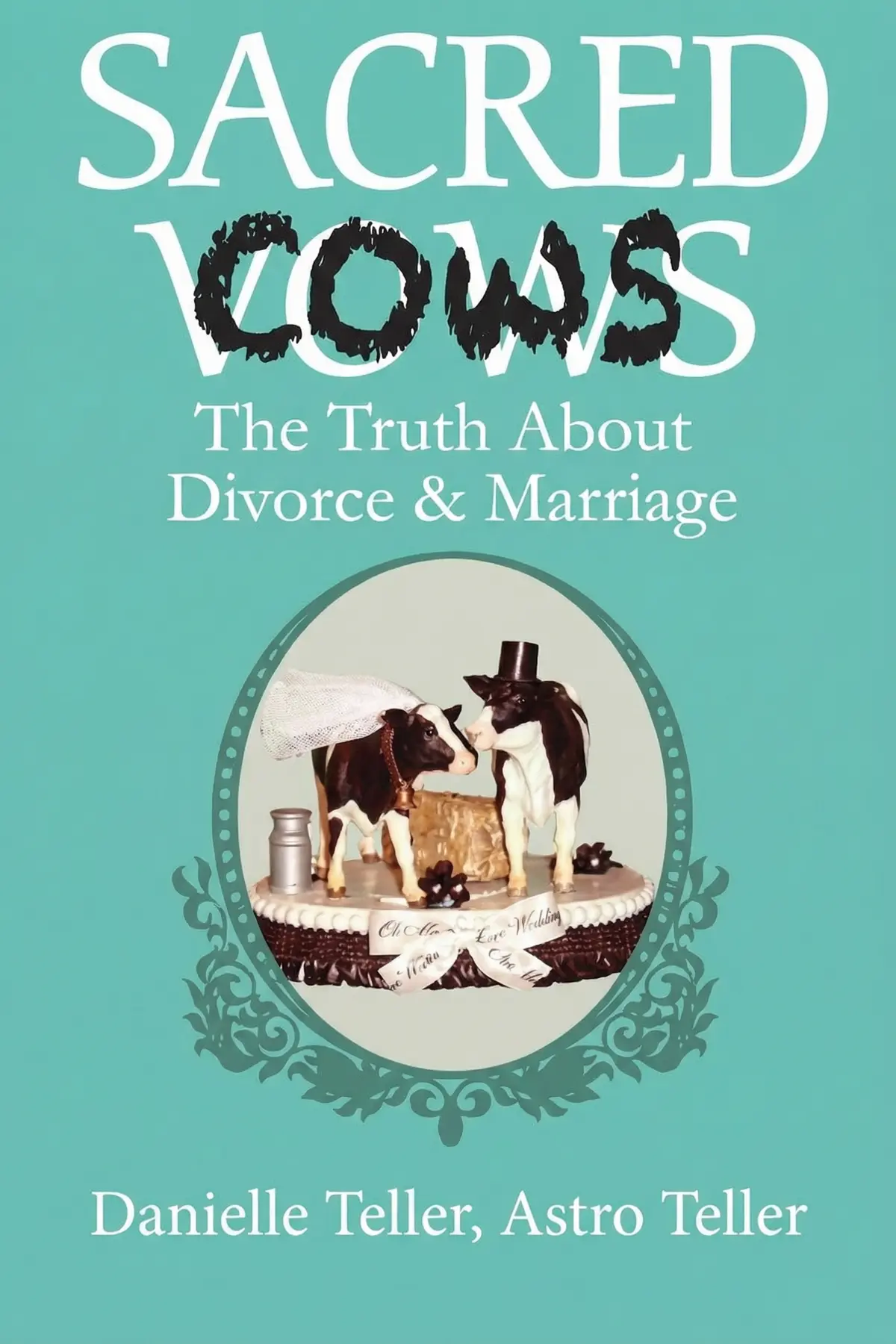
Sacred Cows dismantles the societal myths that prioritize marriage over personal happiness. It examines the psychological and cultural pressures that make divorce a stigma, offering a path toward living more authentically.
1 min 27 sec
Picture the quintessential image of a successful adult life. For many of us, that image is inextricably linked to the concept of a long-term, stable marriage. We are conditioned from a very young age to view the nuclear family as the ultimate benchmark of social and personal health. When a couple manages to stay together for decades, we applaud them for their resilience and character. Conversely, when a marriage ends, there is often a quiet, underlying sense of failure, not just for the couple involved, but in the eyes of the community around them. But why is this the case? Why do we place marriage on such a high pedestal while viewing divorce through a lens of suspicion or pity?
This exploration is about challenging those deeply ingrained cultural assumptions that the authors call “sacred cows.” These are the beliefs we rarely stop to question because they feel like fundamental truths of human existence. In the following pages, we will look at how these assumptions are constructed and why they might be causing more harm than good. We will dive into the specific ways society pressures individuals to remain in unhappy situations and how various “cows”—social archetypes of judgment—work to keep the status quo in place. The goal here isn’t to argue that marriage is bad, but to strip away the dogmatic layers that prevent us from seeing the truth about our own happiness and autonomy. By the end of this journey, you will have a better understanding of how to navigate the complex world of relationships without the heavy baggage of societal shame.
2 min 22 sec
Unquestioned cultural beliefs shape our lives more than we realize, often masquerading as absolute facts. Discover why challenging these ‘sacred cows’ is essential for personal freedom.
2 min 28 sec
How realistic is a vow that spans decades? We explore the ‘Holy Cow’ and why the promise of forever might be an impossible standard for human emotions.
2 min 20 sec
When seeking guidance, not all experts have your best interests at heart. Learn to identify the ‘Expert Cow’ who prioritizes dogma over your unique situation.
2 min 01 sec
Is a struggling marriage a sign of a broken person? We look at how the ‘Defective Cow’ uses shame to pathologize normal human experiences.
2 min 23 sec
Statistics are often used to make parents feel like divorce will ruin their children’s lives. We break down the ‘Innocent Victim Cow’ and the truth about correlation.
1 min 17 sec
The journey through the world of sacred cows reveals a simple but profound truth: society is often more invested in the appearance of a successful marriage than in the actual happiness of the people living it. We have seen how the Holy Cow demands impossible eternal promises, how the Expert Cow offers biased and generic guidance, how the Defective Cow uses shame to make us feel broken, and how the Innocent Victim Cow uses questionable statistics to fuel parental guilt. Each of these forces works together to create a culture where divorce is seen as a failure rather than a legitimate, and often healthy, life choice.
But the real power lies in your hands once you learn to recognize these “cows” for what they are—social pressures, not universal laws. Moving forward, the most important thing you can do is prioritize your own internal compass. Whether you choose to stay in your marriage or decide that it’s time to move on, that decision should be rooted in your own needs, values, and pursuit of an authentic life. Don’t let the fear of social stigma or the noise of outdated dogmas dictate your future. By challenging these sacred cows, you aren’t just making a choice about your relationship; you are reclaiming your right to define what a good life looks like for you.
For many people, the decision to end a marriage is fraught with more than just personal grief; it is weighed down by heavy cultural expectations and unspoken rules. This summary explores the concept of the “sacred cow”—those deeply held, unquestioned beliefs that dictate how we should view commitment, family, and success. By identifying the various archetypes of social pressure, from the dogmatic traditionalist to the biased expert, the text reveals how society often values the institution of marriage more than the individuals within it. Through an examination of common arguments regarding children, personal defects, and the validity of lifelong promises, this work provides a framework for re-evaluating the role of marriage in a modern life. It promises to help readers distinguish between genuine personal desires and the external noise of societal judgment, ultimately advocating for a life lived on one’s own terms rather than one dictated by outdated social norms.
Danielle Teller is a Canadian-born medical doctor who currently lives in Palo Alto, California. She received her professional training at prestigious institutions including Brown University and Yale University. In 2013, she transitioned from her medical career to follow her aspirations as a writer. Her husband, Astro Teller, is an expert in technology and artificial intelligence, holding a PhD from Carnegie Mellon University and having studied at Stanford University. In addition to his work in science and technology, he is the author of the science-fiction novel Exegesis.
Listeners describe the work as thought-provoking, shedding light on common myths surrounding marital separation and presenting a straightforward perspective on the subject. Furthermore, the content is engaging and accessible, as one listener points out that this isn't the standard type of book regarding divorce. In addition, listeners value its humorous approach and readable style.
As someone who has navigated the messy waters of a second marriage, this book felt like a massive weight being lifted off my chest. The Tellers provide an incredibly candid look at the cultural scripts we all follow without questioning. They expose the 'sacred cows'—those deeply held assumptions that make people stay in soul-crushing situations out of a misplaced sense of duty or fear of social stigma. I found the 'dictionary of divorce talk' to be particularly hilarious and spot-on. To be fair, the humor might not be for everyone, but for me, it made a heavy topic much more accessible and even entertaining. It’s not your typical, dry self-help book; it’s a refreshing challenge to the 'marriage is hard work' mantra that often keeps people trapped in emotional desolation. I wish I had read this a decade ago. It would have saved me years of mental torture and unnecessary guilt.
Show moreFinally, a book that doesn't treat marriage counseling like an infallible religion. I was particularly intrigued by the sections on how we've been socialized to view divorce as a contagious disease or a sign of character flaws. The Tellers are remarkably brave for questioning the 'hard work' cliché. If a job or a hobby required that much demoralizing effort, we’d quit, so why is marriage the exception? This book offers a much-needed sanity check for those caught in a cycle of people-pleasing and emotional self-flagellation. It’s insightful, provide clarity on widely held assumptions, and doesn't shy away from the hard truths. The writing style is breezy and engaging, making it one of the most entertaining books on social norms I’ve picked up in a long time. Even if you are happily married, it's worth reading just to understand the stigma your divorced friends might be facing.
Show moreAfter hearing about this on a podcast, I decided to see what all the fuss was about, and I’m glad I did. This is hands-down the best book on the sociology of divorce I’ve read in years. It’s not your typical 'how-to' guide; instead, it's a deep dive into the myths that keep us stuck. The Tellers are incredibly insightful, providing a level-headed look at studies that often get treated as gospel by counselors. I loved how they challenged the idea that everyone who gets divorced is 'damaged' or 'incapable of commitment.' For a woman who has been judged for having two failed marriages, this book was a literal lifesaver. It’s humorous, well-paced, and offers a perspective that is desperately needed in our 'pro-marriage at all costs' culture. It’s time we stop engaging in Groupthink and start looking at these relationships realistically.
Show moreEver wonder why we treat the end of a relationship like a moral failure instead of a life transition? This book dives deep into that question with a lot of wit and clarity. The authors are at their best when they are dismantling the industry of marriage counseling, specifically taking aim at methods like the Gottman approach which doesn't work for everyone. I appreciated the sociological perspective on how 'until death do us part' is a relatively modern, and perhaps unrealistic, expectation given how much longer we live now compared to the colonial era. My only real gripe is the repetitive cow metaphors. Phrases like 'putting it out to pasture' or things needing to 'moo-ve over' started off cute but eventually felt a bit condescending and distracting from the actual research. Still, the message is vital for anyone feeling suffocated by societal pressure to maintain a toxic union.
Show moreThe Tellers take a sledgehammer to the most cherished myths about why we stay in miserable unions. Look, I’m a firm believer in commitment, but this book helped me see how 'Groupthink' can actually be damaging to families. They argue convincingly that a 'good' divorce is often better for children than a 'bad' marriage, which is a perspective we rarely hear with such honesty. I did find it a bit strange that they referred to all the sacred cows using feminine pronouns—it felt like a weird stylistic choice that didn't quite land. Also, the authors' admission that they believe in 'one true love' felt a little bit unscientific compared to the rest of their analytical tone. However, the insight they provide on the lack of controlled studies in relationship sociology is eye-opening. It's a very easy read that will definitely make you rethink the institutional pressures of modern coupling.
Show moreWow, this was a breath of fresh air compared to the usual 'marriage is hard work' platitudes we see everywhere. I’ve been through a divorce myself, and the way the Tellers describe the 'sacred cows' that neighbors and family members throw at you is 100% accurate. They offer a candid look at the topic that is both accessible and surprisingly funny. I liked the section on how we've essentially created a 'moralistic insanity' around the idea of a lifelong contract. It’s a very easy-to-read book that provides much-needed clarity on why we feel so much shame for a relationship ending. While I agree with other reviewers that the cow puns get a bit old, the actual core message about individual happiness vs. societal expectation is incredibly powerful. Every person considering marriage should read this first just to know what they're actually signing up for.
Show moreIt is rare to find a book that challenges the Gottman method with such refreshing candor. Most people treat those studies as absolute truth, so seeing the Tellers point out the flaws in the research was eye-opening. The book is very entertaining and moves quickly, though I do think they could have switched up the gendered language a bit more when discussing the personified 'cows.' Personally, I found the chapter on how divorce affects children to be the most helpful, as it moved away from the 'broken home' trope and toward a more nuanced understanding of family health. While they do seem to lean toward the 'just leave' side of the argument a bit heavily, the clarity they provide on societal assumptions is invaluable. It's a great read for anyone who wants to examine their own relationship through a lens that isn't clouded by centuries-old guilt.
Show moreI picked this up hoping for a nuanced take on modern relationships, and for the most part, it delivered some interesting points about societal judgment. However, I’m not entirely sure how I feel about the overall execution. To be blunt, the cow references were laid on way too thick. You’d think the metaphors would be charming, but after the tenth 'moo' pun, it started to feel like the authors were talking down to the reader. I also noticed that the book leans very heavily into the authors' personal experiences, which makes it feel less like a scientific study and more like a defense of their own life choices. They mention believing in 'true love' as a justification for leaving their first spouses, which seemed to contradict their critique of other romantic myths. It’s a decent read for the perspective shift, but I’d take some of the 'scientific' claims with a grain of salt.
Show moreThe constant 'mooing' and pasture metaphors almost made me put this down by chapter three. It's a shame, because there are some valid critiques of the marriage-industrial complex hidden under all that shtick. My biggest issue is that the authors claim there is no way to rebuild attraction once it's gone, yet they completely ignore well-known studies on eye contact and shared novelty that suggest otherwise. It felt like they were intentionally omitting information that didn't fit their narrative that a 'dead' marriage is always better off buried. Frankly, it felt less like an objective analysis and more like a very long-winded way to justify why they left their previous partners for each other. While the 'dictionary of divorce' was funny, it wasn't enough to save the book from feeling like a biased manifesto rather than a helpful guide.
Show moreNot what I expected at all. I really wanted to find value here, but I was completely underwhelmed by the lack of rigor. The authors spend so much time tilting at windmills—or cows, in this case—that they end up skating dangerously close to condoning things like adultery as a byproduct of a bad marriage. I found the tone to be incredibly dismissive of people who actually want to put in the effort to save their families. The metaphors are worn out and the writing feels smug. I couldn't force my way through the slog of repetitive arguments and finally moved this to my abandoned shelf. If you're looking for actual relationship advice or deep sociological insight, look elsewhere. This felt like a one-sided argument designed to make the authors feel better about their own history rather than helping readers navigate their own complex lives.
Show moreAUDIO SUMMARY AVAILABLE
Get the key ideas from Sacred Cows by Danielle Teller, plus 5,000+ more titles in English and Thai.