
16 min 09 sec
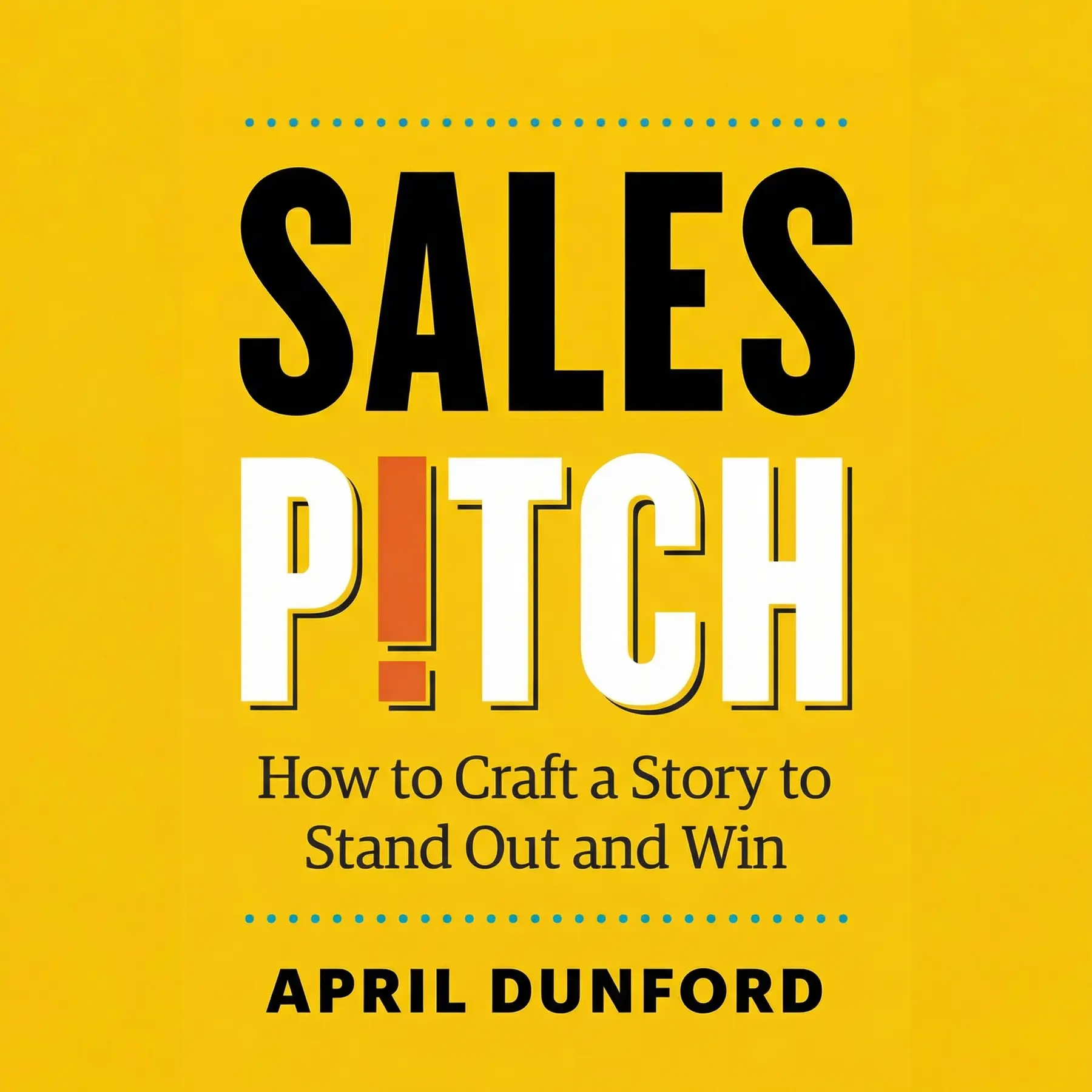
Sales Pitch: How to Craft a Story to Stand Out and Win
Sales Pitch explores how to move beyond generic product demos by using strategic positioning. It provides a framework for crafting sales narratives that guide customers through complex decisions and highlight unique value.
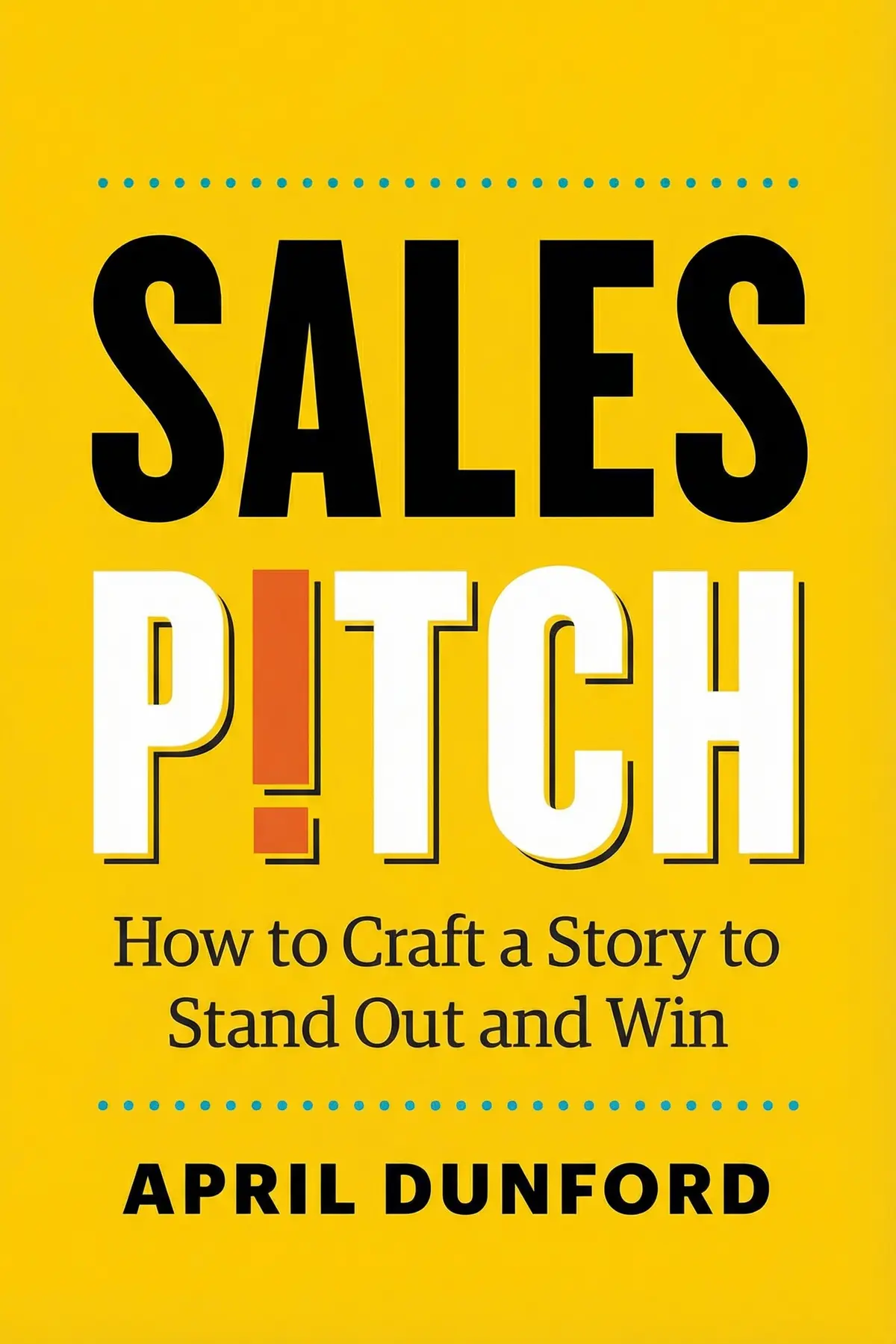
Table of Content
1. Introduction
1 min 24 sec
Have you ever wondered why, even when you have a great product, so many sales conversations just seem to fizzle out? It’s a common frustration. You spend weeks or months nurturing a lead, only for them to disappear or decide to do nothing at all. The reality of modern selling is that the biggest challenge isn’t necessarily the competition—it’s the customer’s own confusion and fear of making the wrong choice.
In this summary of April Dunford’s work, we are going to look at how to transform your sales approach from a standard presentation into a strategic narrative. We’ll move away from the idea of just ‘pitching’ and toward the idea of ‘positioning.’ This isn’t just about being a better public speaker or having flashier slides. It’s about understanding the psychology of the buyer and providing the clarity they desperately need to move forward.
We’ll explore how to act as a teacher and a guide, helping prospects navigate a market that feels like a maze. We’ll break down the specific components that make a product feel unique and necessary, rather than just another option in a crowded field. By the time we’re finished, you’ll see how a well-structured story can bridge the gap between a customer’s problem and your unique solution, making the decision to buy feel like the only logical next step.
2. The Shift from Seller to Guide
2 min 13 sec
High-stakes purchases can be terrifying for buyers. Discover why your role must shift from a traditional salesperson into a knowledgeable guide who helps customers navigate complex choices.
3. Confronting the Reality of Buyer Inertia
1 min 57 sec
Most sales aren’t lost to competitors; they are lost to ‘no decision.’ Learn how to tackle the 40 to 60 percent of deals that end in hesitation.
4. The Limitations of Traditional Sales Narratives
2 min 13 sec
Common storytelling structures like the ‘Hero’s Journey’ might be failing your sales team. Find out why these popular models often miss the mark in a competitive market.
5. Building the Foundation of Positioning
2 min 22 sec
Effective stories are built on the bedrock of positioning. Explore the five essential components that define how your product is perceived by the market.
6. The Strategic Importance of the Champion
1 min 55 sec
Not all stakeholders are created equal. Learn why identifying and empowering your ‘champion’ is the key to winning over an entire organization.
7. The Eight-Step Storyboard for a Winning Pitch
2 min 40 sec
Move from theory to practice with a structured eight-step framework that leads your prospect from initial insight to a final, confident commitment.
8. Conclusion
1 min 25 sec
As we wrap up, it’s clear that the art of the sales pitch is really the art of strategic positioning. The most successful sales professionals aren’t the ones with the loudest voices or the most aggressive tactics; they are the ones who act as teachers and guides. They understand that the customer’s biggest enemy isn’t a rival product, but the paralyzing fear of making a high-stakes mistake.
By moving away from standard, feature-heavy presentations and toward a structured, insight-driven narrative, you provide the clarity and confidence your prospects need to move forward. You’ve learned how to identify your true differentiated value, how to empower your internal champion, and how to follow an eight-step storyboard that builds a logical and persuasive case for your solution.
Remember, positioning is not a one-time event. The market is always changing, and your competitors are always evolving. To stay ahead, you must constantly refine your story, test your assumptions, and stay deeply connected to the business outcomes your customers value most. When you focus on helping the buyer navigate the complexity of their own world, you don’t just win a sale—you win a long-term partner and a spot as a leader in your market. Now, it’s time to take these insights and turn your next sales conversation into a journey of discovery and success.
About this book
What is this book about?
Many sales efforts fail because they focus too much on features and not enough on helping the customer understand the market. Sales Pitch addresses this by introducing a structured approach to sales narratives. It explains why customers often struggle to make decisions in a crowded marketplace and how a salesperson can act as a trusted guide rather than just a vendor. The book promises to give teams a repeatable process for creating pitches that stand out. It covers the difference between simple and high-stakes purchases, the pitfalls of traditional storytelling models like the Hero’s Journey, and the five essential components of positioning. Readers will learn how to build an eight-step storyboard that leads the customer from a broad market insight to a specific, confident call to action.
Book Information
About the Author
April Dunford
April Dunford has helped numerous technology companies enhance their growth by developing clear and persuasive positioning strategies. With experience spanning over two decades, she’s held VP of Marketing roles at various high-growth startups, successfully launching 16 products. Besides her role as an executive consultant and speaker, Dunford is also the author of the best-selling book Obviously Awesome.
Ratings & Reviews
Ratings at a glance
What people think
Listeners find the material highly applicable and simple to digest, with one listener noting it offers an excellent structure for creating sales pitches. Furthermore, they value its clear presentation, with one review emphasizing its detailed formula for improving win rates. The work also earns praise for how effective and readable it is, with one listener describing it as essential reading for those in tech and SaaS industries.
Top reviews
Matteo
April Dunford has done it again by bridging the gap between high-level positioning and the actual sales floor. While her first book helped us define what we are, this one provides the tactical blueprint for how to say it without putting the prospect to sleep. The focus on the 'status quo' as a primary competitor resonated deeply because, frankly, most of our lost deals just vanish into the void of indecision. I loved the structure of the 'Setup' versus the 'Follow-Through.' It’s rare to find a business book that gives you a literal slide-by-slide recommendation that doesn’t feel like a cookie-cutter template. It's concise, actionable, and perfect for anyone in Product Marketing who actually cares about sales enablement. Some might find it short, but I prefer the lack of fluff.
Show morePhichai
Picked this up on a Friday and finished it by Saturday morning. It’s that rare business book that you can actually implement immediately without needing a three-month retreat to 'find yourself.' The breakdown of how to group competitors into logical 'alternatives' changed how I think about our market landscape. It’s essentially a masterclass in narrative design for tech companies. If you're struggling with 'no decision' losses, this is your bible. No fluff, just a clear formula for winning.
Show moreTantipat
Stop sending your prospects 50-slide feature decks right now. April Dunford offers a much-needed course correction for B2B sales teams who are drowning in their own technical specifications. The shift from being a 'vendor' to a 'trusted guide' isn't just a semantic change; it's a total overhaul of the sales conversation. The chapter on integrating discovery into the pitch was worth the price of the book alone. It’s short, punchy, and incredibly practical. Some might complain it’s too focused on enterprise sales, but for those of us in that world, it's a godsend.
Show moreWan
I've been using the positioning framework from her first book for years, so I was eager to see how she handled the pitch. This is the missing piece of the puzzle. It takes the abstract concept of positioning and turns it into a weapon for the sales team. The way she integrates market education into the setup phase is brilliant. Since implementing a version of this narrative, our sales team has reported much higher engagement during demos. It’s not just about what the product does, but why the world has changed and why our approach is the only one that makes sense now. Essential reading for any SaaS leader.
Show moreOmar
Finally, a sales book that doesn't feel like a used-car salesman wrote it. Dunford nails the psychological aspect of B2B buying, specifically the paralyzing fear that stakeholders feel when they’re about to sign off on a massive contract. We often forget that our buyers are human beings who don't want to get fired for making a bad choice. This guide shows you how to act as a trusted guide rather than just another vendor pushing a demo. I’ve already started retooling our deck based on the 'insight' section. I'll admit, some parts felt a little repetitive, and the formatting is a bit basic. However, the clarity it brings to the 'why us' conversation is worth every penny for a SaaS team.
Show moreTariq
As someone who lives in the world of Product Marketing, I found the emphasis on 'the status quo' incredibly validating. We spend so much time worrying about Feature A vs. Feature B, but April reminds us that the biggest hurdle is usually the buyer's own inertia. The book provides a very clear, repeatable framework for building a narrative that builds buyer confidence. Look, much of this might feel like table stakes if you've been in the industry for a decade. However, the way she structures the conversation—moving from market insight to differentiated value—is elegant in its simplicity. I did feel like the middle section dragged a bit with redundant examples. But even with the repetition, the tactical value for sales enablement is undeniable.
Show moreMo
The truth is that most B2B sales pitches are essentially the same: a boring company history followed by a list of features nobody asked for. Dunford flips this on its head by focusing on the buyer's perspective. The framework she provides for handling 'alternatives' is particularly clever because it allows you to frame the competition without sounding petty or defensive. My only gripe is that the book is quite short for the price, and the writing style can feel a bit conversational to a fault. However, if you want a clear formula for improving your win rates, this is it. It’s a solid, practical guide for modern sales environments.
Show morePreeda
Wow, this was exactly what our team needed to hear. We’ve been struggling to differentiate ourselves in a crowded market, and this book gave us the language to finally stand out. The emphasis on building buyer confidence through a structured narrative is a game-changer. I especially appreciated the tactical advice on how to run a demo that actually ties back to the value proposition. It’s a very quick read, maybe even a bit too quick, but the density of useful advice is high. Definitely recommended for PMMs and Sales Ops folks.
Show moreWoramet
Is this a book or a long-form essay? To be fair, the core framework is solid, but the text feels stretched to reach a certain page count through constant rephrasing of the same three ideas. If you’ve already mastered 'Obviously Awesome' and listen to April’s podcast regularly, you might find yourself experiencing a bit of déjà vu throughout these chapters. It’s heavily geared toward established B2B corporate environments rather than scrappy, early-stage startups looking for their first ten customers. The idea that we need to lead with insight rather than features is hardly groundbreaking in 2024. Still, having the structure in one place is somewhat useful for training new PMMs who haven't seen this dance before. It’s a quick read, but I expected more new meat on the bones.
Show moreYindee
After hearing April on several podcasts, I had very high expectations for this one. Her first book was a revelation, but this feels a bit like a 'Greatest Hits' album with only one new song. Don’t get me wrong, the methodology for the sales narrative is sound, but it’s definitely targeted at larger organizations with established sales departments. If you are a solo founder at a seed-stage startup, this might feel a bit overkill or even irrelevant to your immediate needs. Not gonna lie, I was disappointed by the amount of repetition across the different sections. It felt like a 30-page whitepaper expanded into a full-length book. It’s a decent reference guide, but it lacked the 'aha' moments of her previous work.
Show moreFeatured in
Readers also enjoyed

AUDIO SUMMARY AVAILABLE
Listen to Sales Pitch in 15 minutes
Get the key ideas from Sales Pitch by April Dunford, plus 5,000+ more titles in English and Thai.
- 5,000+ titles
- Listen as much as you want
- 7-day free trial
- Cancel anytime







