
18 min 56 sec
Secrets of Sand Hill Road: Venture Capital and How to Get It
By Scott Kupor
Scott Kupor provides a comprehensive look into the venture capital industry, explaining how founders can navigate the funding process, master the pitch, and build lasting, successful partnerships with their investors.
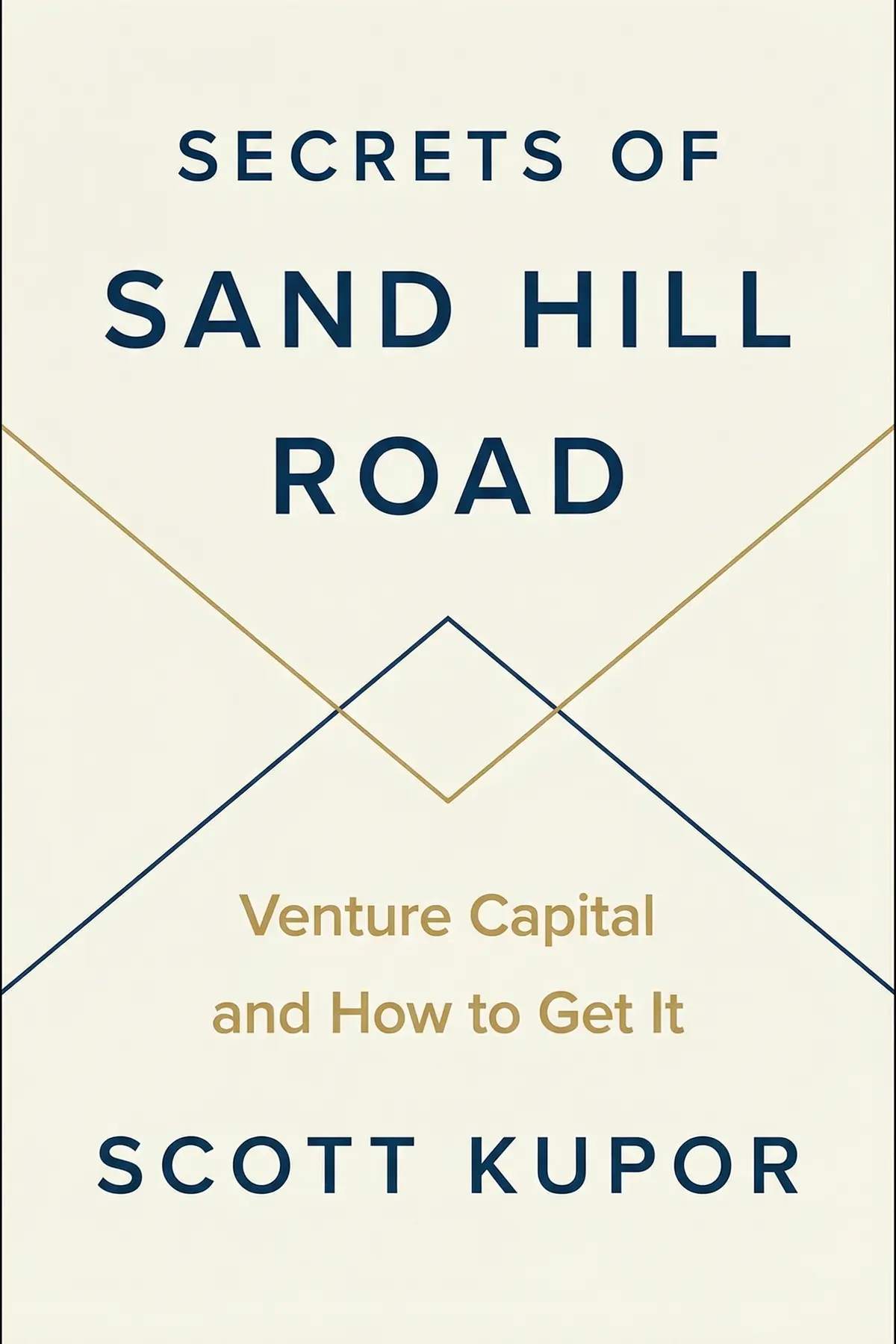
Table of Content
1. Introduction
2 min 02 sec
In the late fifteenth century, the world witnessed what we might call the first high-stakes venture capital deal. Queen Isabella of Spain took a massive financial gamble on a merchant named Christopher Columbus. The goal was to find a new, more efficient trade route to India, and the risk was absolute. If the ships sank or the route didn’t exist, the investment was gone. Today, the setting has moved from the royal courts of Spain to the offices on Sand Hill Road in California, but the fundamental mechanics remain surprisingly similar. Venture capital is a game of high risk and potentially astronomical rewards, where investors back ambitious pioneers who are looking to discover new worlds in the form of technology and business models.
In the modern landscape, the stakes haven’t really lowered. When we look at the statistics of the startup world, the reality is stark: nearly nine out of every ten startups will eventually fail. This staggering failure rate is the backdrop against which every venture capitalist, or VC, operates. They aren’t just looking for a good idea; they are looking for the rare exception that can survive the turbulent waters of the market. But a VC provides more than just the cash needed to keep the lights on. They offer a partnership. In exchange for an ownership stake in the company, these investors provide a lifetime of strategic advice, industry connections, and high-level decision-making support.
For many aspiring founders, the way VCs think and behave can feel like a black box—a mysterious process governed by hidden rules. This exploration aims to open that box. By understanding the lifecycle of a venture-backed company through the eyes of an industry insider, you can learn how to navigate the journey from a simple idea to a multi-billion dollar exit. We will look at how the relationship between founders and investors has evolved, what actually happens during those high-pressure pitches, and how to manage the complex governance of a growing company. This is the roadmap for anyone looking to build the next household name and understand the unique mechanics of the venture capital world.
2. The Evolution of Venture Capital Power Dynamics
2 min 43 sec
Understand how the power balance between investors and founders has shifted significantly due to technological advances and the rise of entrepreneurial education programs.
3. The Three Pillars of Investment Evaluation
2 min 39 sec
Explore the three primary lenses venture capitalists use to evaluate early-stage startups when hard data is scarce, focusing on the people, the product, and the market size.
4. Mastering the Pitch and the Idea Maze
2 min 29 sec
Learn why your pitch should focus on global dominance rather than exit strategies, and how to navigate the intense questioning process known as the idea maze.
5. Deciphering the Term Sheet: Economics vs. Governance
2 min 21 sec
Demystify the complexities of the term sheet by breaking it down into two essential categories: the financial economics and the long-term governance of the company.
6. Maintaining a Healthy CEO-Board Relationship
2 min 18 sec
Discover the secrets to building a productive relationship with your board of directors while ensuring you maintain your authority and vision as the company’s leader.
7. The End Game: Navigating Acquisitions and IPOs
2 min 44 sec
Navigate the final stages of the venture capital lifecycle, examining the critical differences between being acquired by a larger firm and launching an initial public offering.
8. Conclusion
1 min 40 sec
Navigating the world of venture capital is a journey that requires as much strategic thinking and emotional intelligence as it does technical skill. We have seen how the landscape has shifted from a few powerful gatekeepers to a more open ecosystem where founders have more leverage than ever before. Yet, despite these changes, the fundamental requirements for success remain the same. It takes a founder with a deep, unique insight into a problem, a revolutionary product that provides a massive leap forward, and a market opportunity that is large enough to justify the immense risks involved.
As you move forward with your own entrepreneurial ambitions, remember that the venture capital relationship is built on the foundation of the pitch and the term sheet. The ‘idea maze’ is your chance to prove you have the depth of thought required to lead, and the term sheet is the blueprint for how you will govern your company. Don’t just focus on the valuation; focus on the governance and the people you are inviting into your boardroom. These are the partners who will be with you when things go wrong, and they are the ones who will help guide you toward a successful acquisition or IPO.
The throughline of this journey is one of transition—from a visionary with an idea to a leader of a team, and finally to a steward of a public or acquired institution. The path through Sand Hill Road is narrow and filled with obstacles, but for those who understand the rules of the game and the motivations of the players, it remains the most powerful engine for innovation in the world. Use these insights to build a company that doesn’t just survive the ninety percent failure rate, but goes on to define the future of its industry. Your goal isn’t just to get funded; it’s to build something that lasts.
About this book
What is this book about?
This guide pulls back the curtain on the often-mysterious world of Silicon Valley investment. It addresses the fundamental shift in power between entrepreneurs and investors that has occurred over the last two decades, highlighting how technological advances and education have leveled the playing field. The book promises to demystify the entire lifecycle of a venture-backed company, from the initial seed of an idea to the complexities of the term sheet and, ultimately, to a successful exit through an acquisition or a public offering. Listeners will gain a deep understanding of what venture capitalists are actually looking for when they evaluate a startup, including the critical importance of founder-market fit and the necessity of pursuing massive, transformative market opportunities. It moves beyond just the how-to of getting a check, focusing instead on how to manage the ongoing relationship with a board of directors and how to maintain leadership throughout the company’s growth. Whether you are a first-time founder or an experienced entrepreneur, this overview provides the strategic framework needed to navigate the high-stakes environment of Sand Hill Road.
Book Information
About the Author
Scott Kupor
Scott Kupor is the managing partner at Andreessen Horowitz, a premier venture capital firm overseeing more than $7 billion in assets. His firm has backed industry giants like Facebook, Twitter, Airbnb, and Groupon. In addition to his leadership role, Kupor shares his expertise as an instructor at Stanford University and co-founded the university’s Venture Capital Director’s College.
Ratings & Reviews
Ratings at a glance
What people think
Listeners find this work highly educational, especially for founders, as it features clearly articulated ideas and a transparent narrative style. The guide is also quite accessible and straightforward to digest, with one listener noting it can be used as a textbook for raising funds.
Top reviews
Somporn
If you're an entrepreneur looking to decode the black box of venture capital, this is your bible. Scott Kupor provides a masterclass on the VC lifecycle, moving from the initial pitch to the eventual exit with surgical precision. I found the section on 'vitamins versus aspirins' particularly enlightening because it shifts how you think about product-market fit. While some people find the prose a bit dry, the tactical advice on term sheet mechanics is gold for anyone preparing for a Series A. To be fair, it reads a bit like a textbook, but that’s exactly what I needed. It isn't just about stories; it's about the grit of dilution and ownership structures. If you want to understand what goes on behind the closed doors of Sand Hill Road, start here.
Show moreNoppadol
The chapter on term sheets alone is worth the price of admission for any first-time founder. Kupor does an incredible job of demystifying the complex jargon that usually keeps entrepreneurs at a disadvantage during negotiations. I’ve read a lot of startup books, and this one stands out for its clarity and approachable writing style. It functions like a fundraising textbook, walking you through why certain clauses exist and how to navigate them without blowing up the deal. Look, the venture world can be incredibly opaque, so having a managing partner from a top-tier firm lay it all out is a rare gift. Even if you aren't planning to raise money tomorrow, understanding the long-term effects of dilution is crucial for your career. This belongs on every tech professional's bookshelf.
Show moreAim
As someone who advises startups on growth strategy, I found this to be an essential piece of the puzzle. Understanding the incentives of the people across the table is half the battle in fundraising. Kupor explains the VC mindset perfectly, particularly how they view 'aspirin' products versus 'vitamins.' It’s clear that a16z views themselves as a media company that happens to invest, and this book is a perfect example of their high-value content strategy. The prose is clear and provides a roadmap for everything from seed rounds to the IPO process. Not gonna lie, it’s a lot of information to digest, but it’s presented in such a logical way that it never feels overwhelming. This is now my go-to recommendation for founders starting their first raise.
Show moreChaiwat
Wow, I wish I had read this before my last series of meetings with investors. The way Scott breaks down the term sheet is probably the most clear and actionable explanation I have ever come across. He manages to turn complex legal and financial concepts into something that is approachable for a non-expert. I particularly liked the discussion on 'strong opinions, weakly held' and how that applies to founder-VC dynamics. It’s an incredibly useful book for entrepreneurs who want to avoid the common pitfalls of early-stage financing. Frankly, it should be required reading for anyone joining a startup as an executive. The focus on long-term ownership and dilution is a wake-up call that every founder needs to hear early on.
Show moreNathan
After hearing about this book for months in my circles, I finally dove in and wasn't disappointed by the depth of knowledge. This isn't your typical airport business book filled with fluff; it’s a dense, informative guide to the world of Sand Hill Road. The writing style is very approachable, making it feel more like a mentor session than a lecture. I appreciated the specific details on how to plan for sufficient runway and what VCs look for during the selection process. It is a fantastic book if you want to learn the nuts and bolts of how the venture capital machine actually turns. To be fair, it is a bit of a 'how-to' manual, but that makes it more valuable than a collection of vague success stories. It's a clear, well-explained resource.
Show moreMay
Picked this up after hearing Scott speak at a16z, and I have mixed feelings about the delivery despite the stellar content. The book is essentially a 201-level course on fundraising that covers everything from governance to liquidation preferences. Truth is, it lacks the narrative flair of Ben Horowitz’s writing, which makes the denser chapters on legal jargon a bit of a slog. It covers much of the same ground as Brad Feld’s 'Venture Deals,' though Kupor offers a slightly more modern perspective from the GP’s seat. I did notice some of the baseball analogies felt a little dated, and a few comments about 'smart wives' felt weirdly out of touch for 2019. Still, the breakdown of how VCs actually make decisions is invaluable for any founder. It’s a dense read, but arguably a necessary one for the startup toolkit.
Show moreErn
Finally got around to finishing this, and I'd say it’s a comprehensive guide that unfortunately suffers from a bit of 'dry-eye' syndrome. The information is high-quality, specifically the deep dives into how VCs manage their own LPs and the fiduciary duties of board members. However, the writing lacks the 'punchy' narrative style that makes business books truly memorable. It’s a lot more tactical than Ben Horowitz’s books, which is both a strength and a weakness. In my experience, you’ll want to keep this on your desk as a reference guide rather than reading it cover-to-cover in one go. It’s very informative for entrepreneurs, but it definitely feels like it was written by a lawyer-turned-VC. A very solid 4-star resource for the ecosystem.
Show moreSavannah
Ever wonder why VCs insist on certain board seats or liquidation preferences even when a company is doing well? This book explains the 'why' behind the 'what' in a way that is both educational and deeply tactical. Scott Kupor provides a wealth of context for how venture firms operate internally, which is something most founders never get to see. My only gripe is that the style can be a bit pedantic at times, and the constant baseball metaphors started to grate on me by the middle of the book. Personally, I found the chapters on governance and the role of the lead investor to be the most insightful. It’s a very informative read for anyone in the startup ecosystem, even if the writing isn't particularly soulful. Definitely worth the time.
Show moreRungrat
Is this book informative? Yes. Is it a fun Saturday afternoon read? Absolutely not. Scott Kupor clearly knows his stuff, but the tone often leans into a brand of Silicon Valley arrogance that is hard to ignore. Frankly, the constant baseball analogies felt tired, and some of the remarks regarding his wife seemed dismissive of women in the professional sphere. While the content regarding term sheets and board governance is technically sound, it’s presented with all the charisma of a legal deposition. If you’ve already read 'Venture Deals,' you likely won’t find enough new material here to justify the time investment. It’s a solid primer for those who know nothing about VC, but the 'a16z' polish can feel a bit thin at times. I expected more storytelling and less dry, tactical lecturing.
Show moreEthan
Not what I expected from the a16z hype machine, to be honest. While the book claims to reveal 'secrets,' most of this information is readily available on any decent startup blog or in the classic 'Venture Deals' text. The writing is incredibly boring and technical, lacking any of the colorful anecdotes that usually make these types of business memoirs tolerable. It felt more like a long-form marketing brochure for Andreessen Horowitz than an objective look at the industry. To be fair, if you are a complete novice, you might find some value in the basic definitions. But for anyone who has been in the tech scene for more than a year, this is mostly a repetitive 101-level slog. I found myself skimming large sections just to get to the end.
Show moreFeatured in
Readers also enjoyed

7 Powers: The Foundations of Business Strategy
Hamilton Helmer
Alibaba: The House That Jack Ma Built
Duncan Clark

Be A Free Range Human: Escape the 9 to 5, Create a Life You Love,
Marianne Cantwell

Be Obsessed or Be Average
Grant Cardone
Being Boss: Take Control of Your Work and Live Life on Your
Kathleen Shannon
AUDIO SUMMARY AVAILABLE
Listen to Secrets of Sand Hill Road in 15 minutes
Get the key ideas from Secrets of Sand Hill Road by Scott Kupor, plus 5,000+ more titles in English and Thai.
- 5,000+ titles
- Listen as much as you want
- 7-day free trial
- Cancel anytime







