
17 min 59 sec
Selfless: The Social Creation of “You”
By Brian Lowery
Explore the provocative idea that your identity is not innate, but rather a social construction. Learn how every relationship you have, from family to the nation-state, builds the person you are today.
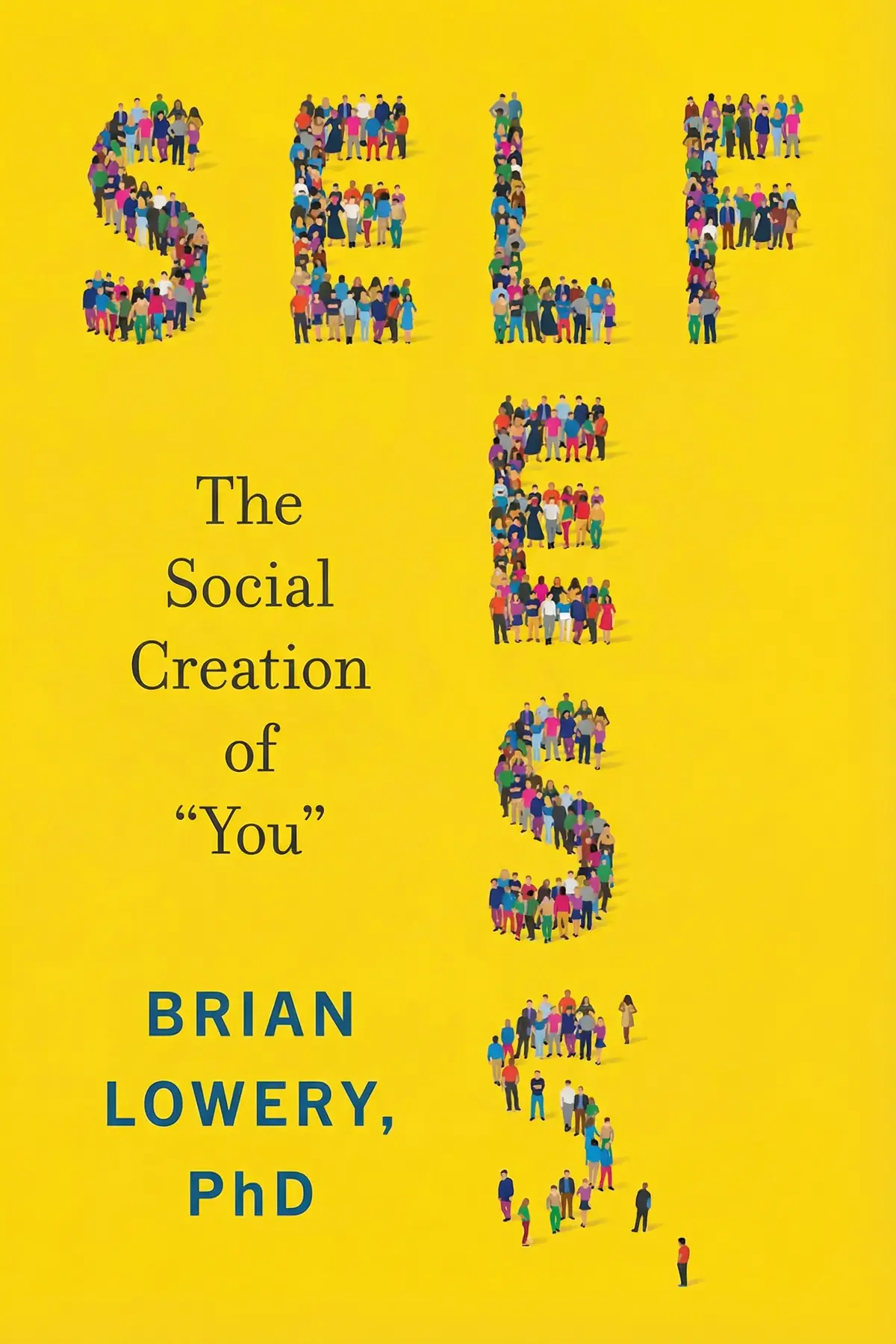
Table of Content
1. Introduction
1 min 22 sec
Think for a moment about a time when you were completely alone. Perhaps you were walking through a quiet forest or sitting by a window watching the rain fall. In those moments of deep solitude, it is easy to feel that there is a core ‘you’ that exists independently of the world—a solid, unchanging center that experiences thoughts and feelings. We often imagine our ‘self’ as a puppeteer behind a curtain, pulling the strings of our personality. But what if that puppeteer doesn’t actually exist in the way we think it does?
Social psychologist Brian Lowery offers a perspective that might feel counterintuitive at first. He suggests that the self isn’t a seed you are born with, waiting to bloom into a predetermined flower. Instead, the self is a social construction. It is a tapestry woven from the threads of every conversation, every look, and every relationship you have ever experienced. From the moment you enter the world, you are being built by the people around you. This throughline—that we are the sum of our social parts—completely redefines what it means to be an individual. Over the course of this summary, we will explore how this process works, from your closest family ties to the massive, invisible influence of the government and the digital world. By understanding that the self is created, not discovered, we can begin to see our place in the world with new clarity and compassion.
2. The Architect of Identity
1 min 55 sec
How is your personality actually formed? Discover why the concept of an innate self might be a myth and how social interactions act as the true builders of who you are.
3. The Self Beyond the Physical
1 min 58 sec
Does your identity end at the edge of your skin? Learn why the self is not confined to the brain or the body and how we live on through others.
4. The Circles of Influence
1 min 52 sec
From the first room you occupied to your current romantic partner, explore how intimate connections act as the primary sculptors of your personality.
5. The Collective Blueprint
1 min 54 sec
We are all part of something larger. Discover how our membership in social groups like race and gender defines the boundaries of our self-expression.
6. The Authority of the Nation
1 min 56 sec
How does the country you live in dictate who you are? Uncover the powerful ways nation-states regulate our identities through law and structure.
7. The Digital Expansion
1 min 56 sec
Technology has broken the boundaries of geography. Explore how the internet allows us to create new identities and the risks of digital manipulation.
8. The Ever-Changing Soul
1 min 58 sec
Is there a ‘true’ self hiding inside you? Discover why identity is a fluid, multifaceted mosaic that evolves with every passing moment.
9. The Freedom Paradox
1 min 50 sec
We all crave freedom, but is complete independence even possible? Learn why our social boundaries are actually what give our lives meaning.
10. Conclusion
1 min 18 sec
As we reach the end of this journey through the social creation of the self, it is worth reflecting on what this means for our daily lives. If we are not solitary individuals but interconnected beings, then the way we treat each other takes on a much higher level of importance. We are the architects of the people around us. Every time you show patience to a stressed-out coworker, every time you offer encouragement to a friend, and every time you stand up for someone in your community, you are helping to build their ‘self.’ You are giving them the materials to feel worthy, safe, and seen.
This perspective also invites us to be more compassionate toward ourselves. We are not failing if we feel different in different situations; we are simply responding to the social world as we were designed to do. We are works in progress, constantly being reshaped by the beautiful, messy reality of human connection. The throughline of our lives is not a solitary path, but a series of intersections. By embracing our ‘selflessness’—the fact that we are made of others—we can let go of the pressure to be perfectly independent. Instead, we can focus on building a community that is more generous, more inclusive, and more understanding. After all, when we improve the world for others, we are quite literally improving ourselves.
About this book
What is this book about?
Have you ever wondered who you really are when no one is watching? In this exploration of Brian Lowery’s work, we challenge the common belief that the self is an internal, fixed essence. Instead, we discover that the self is a dynamic creation forged through every interaction we have with the world around us. This shift in perspective changes how we view everything from our morning coffee runs to our deepest romantic commitments. The promise of this summary is a radical re-evaluation of human identity. We will move through the various layers of social influence—starting with the intimate circle of family and friends, expanding to our broader communities and digital spaces, and finally looking at the massive impact of the nation-state. By the end, you will see that you are not a solitary island, but a beautiful, shifting mosaic of everyone you have ever met. This summary provides a roadmap for understanding why we act differently in different contexts and why our need for others is the very thing that makes us who we are.
Book Information
About the Author
Brian Lowery
Brian Lowery is a distinguished social psychologist and a professor at Stanford University. Beyond his academic role, he reaches a wide audience as a writer and a podcast host. He has contributed significantly to psychological research, coauthoring scholarly journal articles such as “Self-Essentialist Reasoning Underlies the Similarity-Attraction Effect” and “Gender Backlash and the Moderating Role of Shared Racial Group Membership.” Selfless represents his first full-length book, bringing his expertise on social dynamics and identity to a broader public conversation.
Ratings & Reviews
Ratings at a glance
What people think
Listeners find the work deeply stimulating, as one listener mentions it presents intriguing philosophical questions to reflect upon. The content ignites curiosity, with one listener noting that it opens up new possibilities.
Top reviews
Sophia
Finally got around to reading 'Selfless' and it definitely lived up to the hype I saw on social media. The idea that we are fundamentally shaped by the people around us isn't exactly brand new, but Brian Lowery frames it in such a fresh way. I found myself constantly reflecting on my own relationships and how I change when I'm around my parents versus my coworkers. It makes you realize there is no 'core' you that exists in a vacuum, which is both scary and liberating. While some chapters felt a bit denser than others, the overall message about our shared responsibility to one another is beautiful. It’s a call to be more patient and generous because we literally help create the people we interact with daily. We are mirrors for each other.
Show morePim
This book changed how I view my friends and my inner circle almost immediately. Lowery makes a bulletproof argument that there is no such thing as a 'self-made' person because we are all products of our upbringing and influences. I love how he moves away from the 'nature vs nurture' debate to focus on the immediate interpersonal relationships that define us daily. The writing style is surprisingly digestible for a social psychologist, and he manages to tackle complex themes without being too condescending. It’s a must-read if you’ve ever wondered why you feel like a different person in different social contexts. It provides a platform for some really meaningful dialogue about how we treat those around us. This is definitely going on my favorite list.
Show moreIsabelle
Wow, just wow. I’ve been waiting for a book that looks at identity through this specific sociological lens for years. Most authors get bogged down in brain scans, but Lowery understands that humans are social animals first and foremost. He breaks down how our sense of self is a vibrant, constantly changing thing that depends entirely on our context. It really helped me articulate things I’ve felt for a long time but couldn't quite put into words. The idea that every interaction is a chance to 'see' ourselves is such a beautiful way to move through the world. This book is a rare mix of high-level philosophy and deeply personal insight. I genuinely think the world would be a better place if more people read this and practiced a bit more kindness.
Show moreJun
Lowery presents a compelling case for the social construction of identity that moves far beyond the usual neuroscience-heavy explanations. Instead of looking at gray matter, he looks at our social landscape to explain why we feel the way we do. The discussion surrounding the Rachel Dolezal controversy was particularly enlightening because it avoided the typical vitriol found online. He uses these high-profile examples to show how group boundaries define our reality, whether we like it or not. I did feel like he glossed over the biological aspects of the self a bit too much, though. Sometimes the social constructivism feels like it’s being pushed as the only factor at play. Still, it’s an incredibly thought-provoking read for anyone interested in sociology.
Show morePun
As a psychology student, I've read countless books on personality, but this is the first one that truly challenged my perception of 'selfhood' as a static thing. Lowery argues that we are a collection of mirrors, reflecting the expectations and histories of those we encounter. The example of how a friend acts differently around their mother really hit home for me. It’s not that they are being fake; they are simply navigating a different set of social boundaries. The book is well-written and generally easy to follow, even when the topics get heavy. I appreciated the non-judgmental tone he took when discussing sensitive issues like gender identity and race. It’s a solid addition to the conversation on what it means to be human in a connected world.
Show moreWorawit
What if everything you thought you knew about your 'true self' was actually just a reflection of your environment? This book dives deep into that question, exploring how we are essentially creations of our social circles. The final section on death and legacy was particularly moving, suggesting that we die twice: once physically and once when we are forgotten. It’s a haunting thought, but it emphasizes why the 'I am because we are' philosophy is so vital. Personally, I found the middle section a bit slow, especially when it veered into the more abstract philosophical territory. However, the insights into how we navigate modern society while staying 'true' to ourselves are worth the price of admission. It is a heavy read.
Show moreMilk
The chapter on Rachel Dolezal and the discussion of JK Rowling were the highlights of this book for me. Lowery manages to discuss these incredibly polarizing figures through a lens of social construction without taking the easy, judgmental path. He explains that these debates are actually about the defense of boundaries, which are necessary for us to have any sense of identity at all. Frankly, it’s refreshing to read a book that treats the reader like an adult capable of handling nuance. Even when I didn't fully agree with his conclusions, I respected the consistency of his logic throughout. The book forces you to ask: who are we to say who someone else is? It’s a powerful exploration of the labels we use to define ourselves and others.
Show moreSomsri
To be fair, the writing is solid and Lowery definitely knows his stuff, but I couldn't help feeling like I'd heard most of this before. The book emphasizes the social nature of the self, which is common sense to anyone who has studied basic sociology or even spent time thinking about their life. I was disappointed that he didn’t touch on Eastern or Buddhist philosophies that have been saying the self is an illusion for thousands of years. It felt like a very Western-centric take on a universal problem. There’s no real 'spark' in the prose, even if the arguments are logical and well-structured. It’s a decent introductory text for someone who has never questioned their identity, but seasoned readers might find it a bit surface-level. It’s fine, just not groundbreaking.
Show moreLeah
I really wanted to love this book, but it felt like sitting through a lecture from a professor who enjoys the sound of his own voice a bit too much. Lowery is clearly brilliant, yet the prose is often overly verbose and circles around the same points without adding much new evidence. I found myself checking how many pages were left in every chapter because the arguments lacked a strong, grounding underpin. It's more of a philosophical meditation than a rigorous psychological study, which might appeal to some, but I needed more substance. There’s some interesting stuff about how we are remembered after death, but it wasn't enough to save the experience for me. It’s a bit too 'ivory tower' for my personal taste.
Show moreYaowares
Gotta say, I found this incredibly frustrating and much too abstract for my liking. It feels like Lowery is just playing word games with the concept of the 'self' without ever providing a solid anchor. If we are only who other people say we are, then where does individual agency actually come from? He hand-waves away the biological and physiological aspects of our being as if the body doesn't matter at all. The prose is thick and academic, making it a real chore to get through some of the more repetitive sections. I was hoping for more practical insights from a social psychologist, but it felt more like a philosophy 101 seminar. It’s definitely thought-provoking, but often for the wrong reasons. It missed the mark.
Show moreReaders also enjoyed
59 Seconds: Change Your Life in Under a Minute
Richard Wiseman
A Liberated Mind: How to Pivot Toward What Matters
Steven C. Hayes
Acting with Power: Why We Are More Powerful Than We Believe
Deborah Gruenfeld
Age of Propaganda: The Everyday Use and Abuse of Persuasion
Anthony Pratkanis
AUDIO SUMMARY AVAILABLE
Listen to Selfless in 15 minutes
Get the key ideas from Selfless by Brian Lowery, plus 5,000+ more titles in English and Thai.
- 5,000+ titles
- Listen as much as you want
- 7-day free trial
- Cancel anytime







