
19 min 01 sec
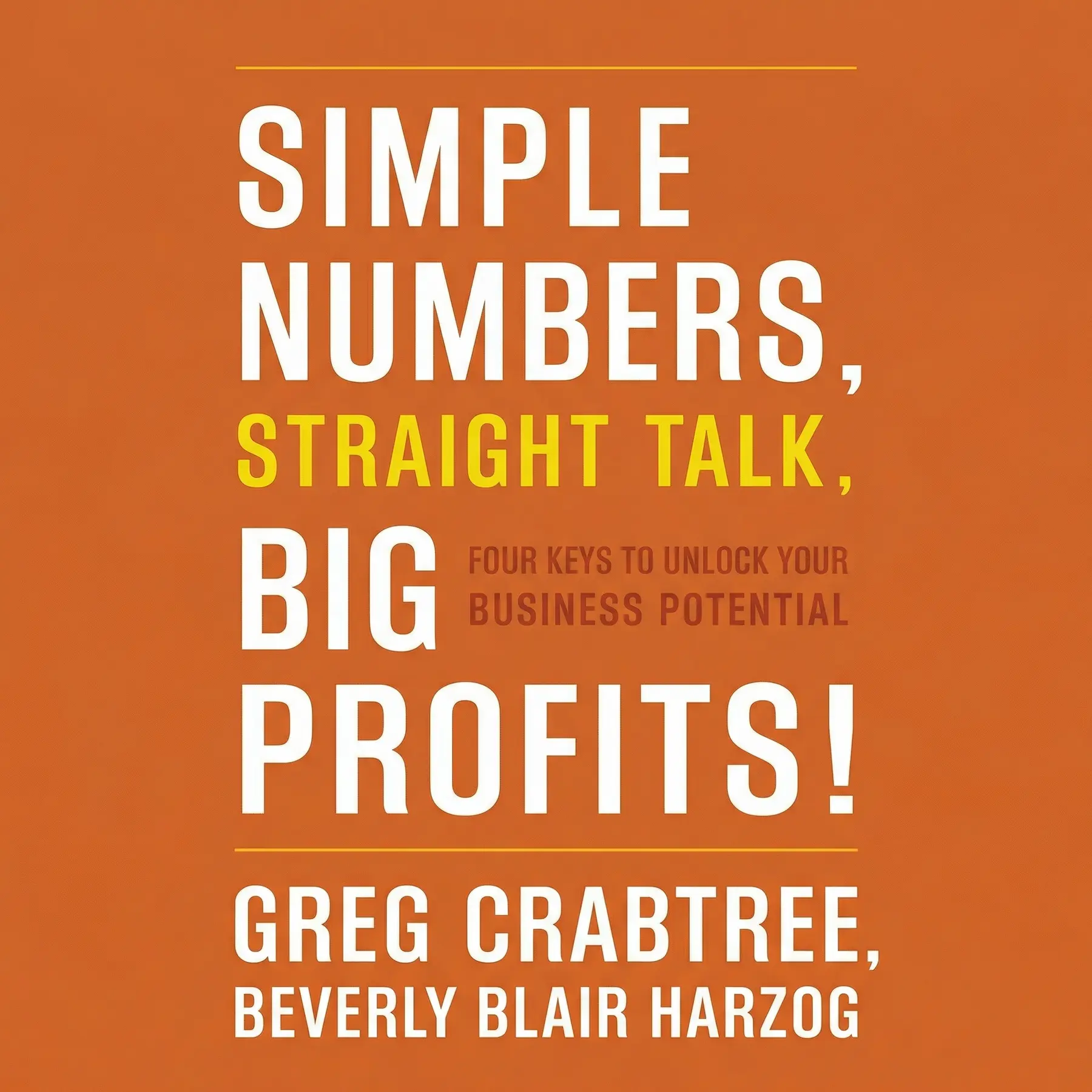
Simple Numbers, Straight Talk, Big Profits!: Four Keys to Unlock Your Business Potential
Discover a straightforward approach to small business finance that moves beyond vanity metrics. Learn how to manage labor productivity, maintain profitability targets, and build a debt-free foundation for long-term entrepreneurial success.
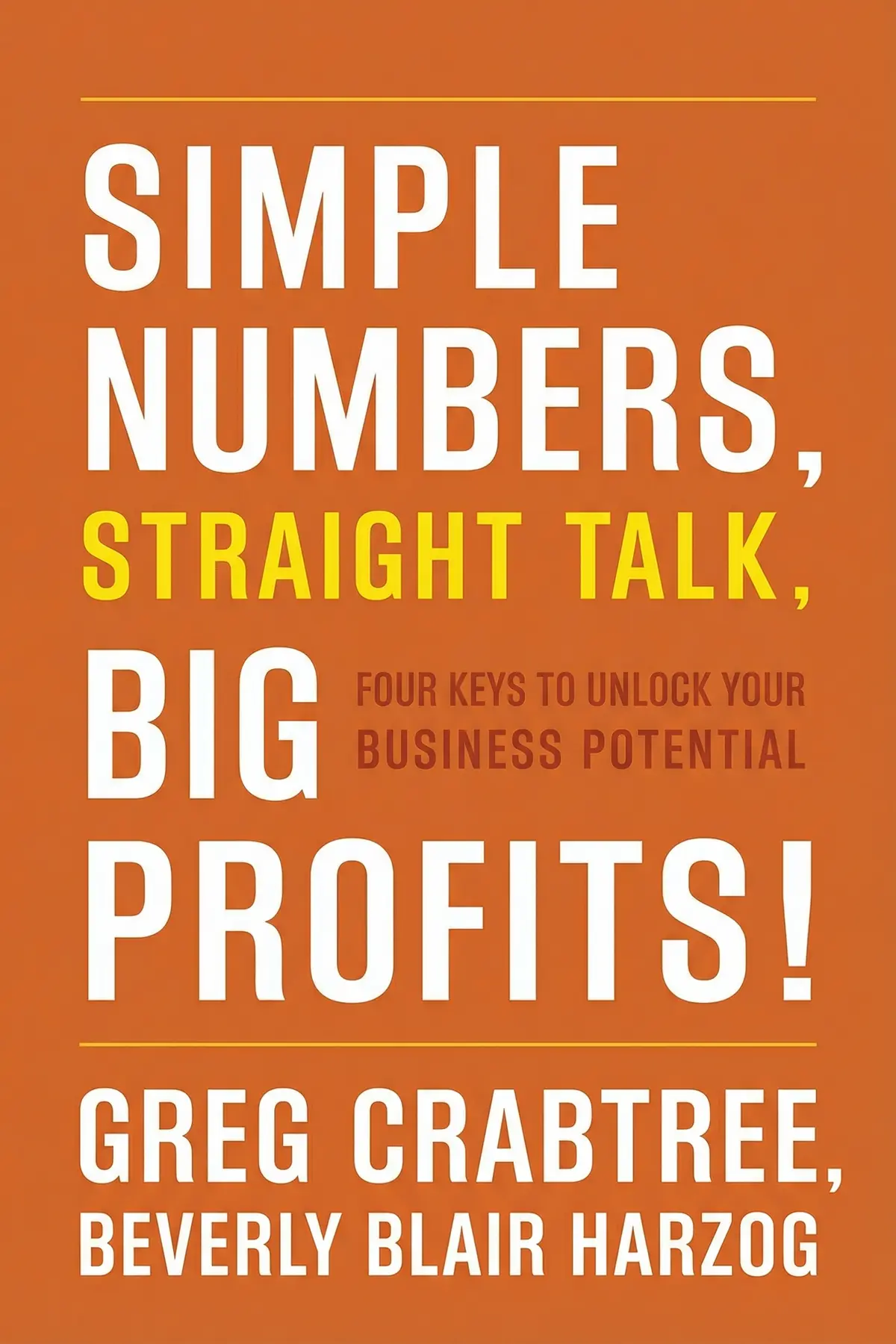
Table of Content
1. Introduction
1 min 27 sec
Imagine you are at the helm of a small business that is finally picking up speed. The early days of pure survival are behind you, and for the first time, the future looks bright. Naturally, your instinct is to push the accelerator. You look at your rising revenue and think that the path to success is simply a matter of selling more, hiring faster, and expanding your reach. But this is exactly where many promising entrepreneurs hit a wall. They fall into the trap of believing that a high volume of sales is the same thing as a healthy business. In reality, focusing solely on the money coming in can blind you to the danger of the money flowing out.
True business mastery isn’t about the size of your top-line revenue; it’s about the strength of your bottom-line profit. Without a clear understanding of your numbers, you might be growing yourself right into bankruptcy. This summary serves as a guide to the essential financial metrics that actually determine whether a company is thriving or just spinning its wheels. We will explore why traditional advice about owner salaries is often wrong, how to navigate the dangerous middle-growth stage known as the black hole, and why labor productivity is the most powerful lever you have for increasing your wealth.
By the end of this journey, you will have a new perspective on how to view your bank balance and your payroll. You’ll see that numbers don’t have to be intimidating; they are simply the language of your business’s health. Let’s dive into the core principles that transform confusing spreadsheets into a clear strategy for big profits and lasting success.
2. Owner Compensation and Market Reality
2 min 11 sec
Discover why underpaying yourself is a dangerous accounting trick that can trigger government audits and devalue your company’s worth.
3. Surviving the Financial Black Hole
1 min 55 sec
Learn how to navigate the perilous growth phase where your business outgrows its resources and risks collapsing under its own weight.
4. Implementing a Strategic Salary Cap
1 min 56 sec
Explore a sports-inspired method for controlling your largest expense and guaranteeing a minimum level of profit every month.
5. The Power of Labor Productivity
1 min 58 sec
Unlock the secret formula that connects your payroll costs to your bottom line and find out how to get more from your team.
6. Navigating the Four Forces of Cash Flow
2 min 01 sec
Understand the hierarchy of money management and learn why you should never take a distribution until your business is truly safe.
7. Debt vs. Sweat Equity
2 min 00 sec
Discover why borrowing money can lead to reckless decisions and how small sacrifices today can build massive wealth tomorrow.
8. The Rhythm of Financial Monitoring
1 min 58 sec
Break down the daunting task of accounting into daily, weekly, and monthly habits that keep your finger on the pulse of your firm.
9. Strategic Forecasting and Backward Planning
1 min 53 sec
Learn how to turn your financial goals into a reality by working backward from your desired profit to define your daily actions.
10. Conclusion
1 min 42 sec
Running a small business is one of the most challenging endeavors anyone can undertake, but it doesn’t have to be a financial mystery. As we have explored, the path to big profits is built on a foundation of simple numbers and straight talk. It begins with the integrity of paying yourself a fair market wage and the discipline of maintaining a profit margin between ten and fifteen percent. By implementing a salary cap and obsessing over labor productivity, you ensure that your team remains an asset rather than a liability.
Remember that cash flow is the lifeblood of your operation. By respecting the four forces—taxes, debt, core capital, and distributions—you protect your business from the common pitfalls that claim even the most promising startups. Avoid the trap of easy debt and embrace the power of sweat equity to build a company that you truly own. Establishing a rhythm of daily, weekly, and monthly monitoring keeps you in control, while backward-planning from your profit goals turns your vision into a measurable reality.
The most important takeaway is to stop focusing on revenue as the sole measure of your success. Revenue is a vanity metric; profit is sanity. If you commit to these principles, you will do more than just survive the ‘black hole’ of growth. You will build a resilient, high-value company that provides not just an income, but true financial freedom. Now, take a look at your latest profit-and-loss statement. Don’t look at the top line—look at the productivity of your labor and the strength of your reserves. That is where your true potential lies. Start applying these simple numbers today, and watch your straight talk turn into big profits.
About this book
What is this book about?
Many small business owners find themselves working harder and harder, only to see their bank accounts stagnate. Simple Numbers, Straight Talk, Big Profits! tackles this common frustration by stripping away complex accounting jargon and focusing on the core metrics that actually drive growth. The book promises to turn financial data into a roadmap for decision-making, helping entrepreneurs understand exactly where their money goes and how to keep more of it. Through practical frameworks like the salary cap and the four forces of cash flow, the guide provides a template for navigating the difficult transition periods of a growing firm. It shifts the focus from simple revenue growth to sustainable profitability. By following these clear-cut rules, owners can move from survival mode to building a high-value asset that is prepared for any market fluctuation or eventual sale.
Book Information
About the Author
Greg Crabtree
Greg Crabtree is a co-founder of a specialized certified public accounting firm. His professional career is dedicated to providing high-level financial advice and assistance specifically tailored to the needs of entrepreneurs. Beverly Blair Harzog is a well-known expert in the fields of credit cards and personal debt. She serves as a prominent public advocate, helping individuals navigate the complexities of lending and debt management.
Ratings & Reviews
Ratings at a glance
What people think
Listeners find this work indispensable for entrepreneurs, offering hands-on tips and concrete steps for maintaining a profitable business. They value its direct style and clear explanations of fiscal principles, with one listener highlighting how it makes overseeing cash flow much easier. Functioning as a highly useful manual for small business accounting, listeners consider the material well worth the investment.
Top reviews
Savannah
Finally got around to reading this, and it’s a total game-changer for my small agency. For years, I struggled to understand why our bank balance didn't reflect our 'profits' on paper, but Crabtree explains the 'business physics' of cash flow in a way that actually clicked. The concept of using multiple bank accounts to partition taxes and profits is brilliant and immediately actionable. I especially appreciated the no-nonsense breakdown of labor productivity and how to set a realistic salary cap for myself. Frankly, it’s refreshing to read a finance book that doesn't feel like a dry textbook. Every entrepreneur who feels overwhelmed by their P&L statement needs a copy of this on their desk. It’s the straight talk we all need but rarely get from our accountants.
Show moreHana
Why isn't this required reading for every startup founder? After seventeen years in business, I realized I was making every single mistake Crabtree warns about, especially regarding owner compensation and mismanaged cash reserves. The 'straight talk' title isn't just marketing—he really does call you out on your nonsense. I loved the emphasis on seeing profit as a requirement, not a 'nice to have' if anything is left over. The 99/1 rule for debt repayment is a standout strategy that I’ve already recommended to three other business owners this week. It’s concise, practical, and remarkably free of the fluff that plagues most American business books. This isn't just a book about numbers; it's a manual for building a sustainable culture and a company that actually lasts.
Show moreNum
Wow, the chapter on debt management alone was worth the price of admission. I was so focused on paying down my credit cards that I was ignoring the health of my actual business, and this book showed me how to do both simultaneously. The 99% profit-to-debt strategy is aggressive, but it provides a light at the end of the tunnel that I desperately needed. Crabtree writes like a mentor who isn't afraid to hurt your feelings if it means saving your company. It’s blunt, fast-paced, and filled with examples that feel like they were pulled directly from my own bank statements. I wish I had read this before I launched my first company; it would have saved me years of financial stress and thousands of dollars in wasted 'growth' that didn't actually lead to profit.
Show moreYui
Ever wonder why you have record-breaking revenue but your bank account is always empty? This book is the answer to that agonizing question. Crabtree explains the disconnect between P&L statements and actual cash flow with remarkable clarity. I loved the 'small plate' analogy for managing money—it’s such a simple way to visualize why we overspend when everything is in one big account. The book is short enough to read in a weekend but dense enough that you’ll want to take notes on every page. It’s rare to find a business book that is this practical without being boring. If you’re tired of 'flying blind' with your finances, buy this immediately. It’s straightforward, honest, and exactly what I needed to hear to get my business back on track.
Show moreSook
Picked this up on a whim after a friend recommended it, and I’m honestly blown away by how much it simplified my view of our payroll. The way he links labor costs to productivity changed how I think about hiring. We were overstaffed and underperforming, and the 'salary cap' formula helped me identify exactly where the bloat was. The writing is punchy and direct, which I appreciate as a busy founder. It’s not just about the numbers; it’s about the mindset of running a business that actually serves you instead of you serving it. While some of the tax talk is specific to the US, the fundamental 'business physics' are universal. It’s an essential guide for anyone who wants to stop guessing and start growing their profits intentionally.
Show moreNiphon
As someone who used to Google what 'revenue' meant every six months, I found this book incredibly approachable. It takes the mystery out of the numbers and provides a clear roadmap for financial survival. I’ve already started implementing the 5-bank account system, and for the first time in my business life, I’m not panicking about tax season. The section on debt management was particularly striking; using 99% of your profit share to kill debt while keeping 1% for yourself is a psychological masterstroke. It makes the process feel active rather than just painful. My only gripe is that some of the financial illustrations felt a bit dated or overly specific to larger operations. Still, the core principles are robust and very easy to follow for a novice like me.
Show moreAisha
In my experience, most business finance books are either too academic or too 'woo-woo,' but Crabtree hits a nice sweet spot here. He treats business like a science, or as he calls it, 'physics.' I appreciated the deep dive into labor productivity because that’s where most of my expenses were leaking out. To be fair, the book can be a little repetitive in the middle chapters, and his disdain for standard accounting terms might annoy professional CPAs. However, for a founder who just wants to know if they are actually making money, it’s invaluable. The focus on keeping profit and tax money in a separate bank to avoid 'dipping' is a simple but effective psychological hack. It’s a solid four-star read that I’ll likely revisit whenever I feel my expenses creeping up again.
Show moreSupranee
Gotta say, I was skeptical about another 'simple' finance book, but this one actually delivered on the promise. The author’s background as an accountant shines through in the best way possible. He doesn't just tell you to be profitable; he shows you exactly which levers to pull to make it happen. I found the '10% is the new breakeven' concept to be a great mental shift, even if the terminology is a bit loose. It forces you to build a buffer into your operations rather than just surviving month-to-month. My only criticism is that it can feel a bit repetitive, and the editing could be tighter. However, for a practical guide to small business finances, it’s hard to beat the actionable steps provided here. It’s a worthwhile investment for any serious owner.
Show moreSupachai
The advice is undeniably solid, but the writing style and editing left much to be desired. Crabtree has a habit of inventing his own terminology—like '10 percent is the new breakeven'—which is technically inaccurate and confusing for those already struggling with financial basics. Why call it 'core capital' when 'working capital' is the standard term? It feels like he’s trying to reinvent the wheel just for the sake of being different. That said, his perspective on 'sweat equity' and partner fairness was eye-opening and helped resolve a lingering dispute in my own firm. I’d recommend this for the insights, but be prepared to wade through some convoluted phrasing and US-centric tax examples. It’s a bit of a slog, but there are definitely nuggets of gold buried in the text if you have the patience to find them.
Show moreArm
Look, the core concepts are great, but I found the presentation a bit clunky. If you’ve read 'Profit First' by Mike Michalowicz, a lot of this will feel very familiar, though Crabtree focuses more on the granular metrics like salary caps and productivity figures. I struggled with his definitions; he often jumps between concepts without clear transitions, which made it hard to follow the logic at times. Also, if you aren't based in the US, the chapters on S-corps and LLCs won't be as relevant, though the general theory still applies. I think it’s a decent resource for someone who is already somewhat familiar with their balance sheet, but a total beginner might get lost in the idiosyncratic 'Crabtree-speak.' It’s okay, but there are clearer books out there on the same subject.
Show moreFeatured in
Readers also enjoyed
7 Powers: The Foundations of Business Strategy
Hamilton Helmer
Alibaba: The House That Jack Ma Built
Duncan Clark
Bad Blood: Secrets and Lies in a Silicon Valley Startup
John Carreyrou
AUDIO SUMMARY AVAILABLE
Listen to Simple Numbers, Straight Talk, Big Profits! in 15 minutes
Get the key ideas from Simple Numbers, Straight Talk, Big Profits! by Greg Crabtree, plus 5,000+ more titles in English and Thai.
- 5,000+ titles
- Listen as much as you want
- 7-day free trial
- Cancel anytime







