
17 min 32 sec
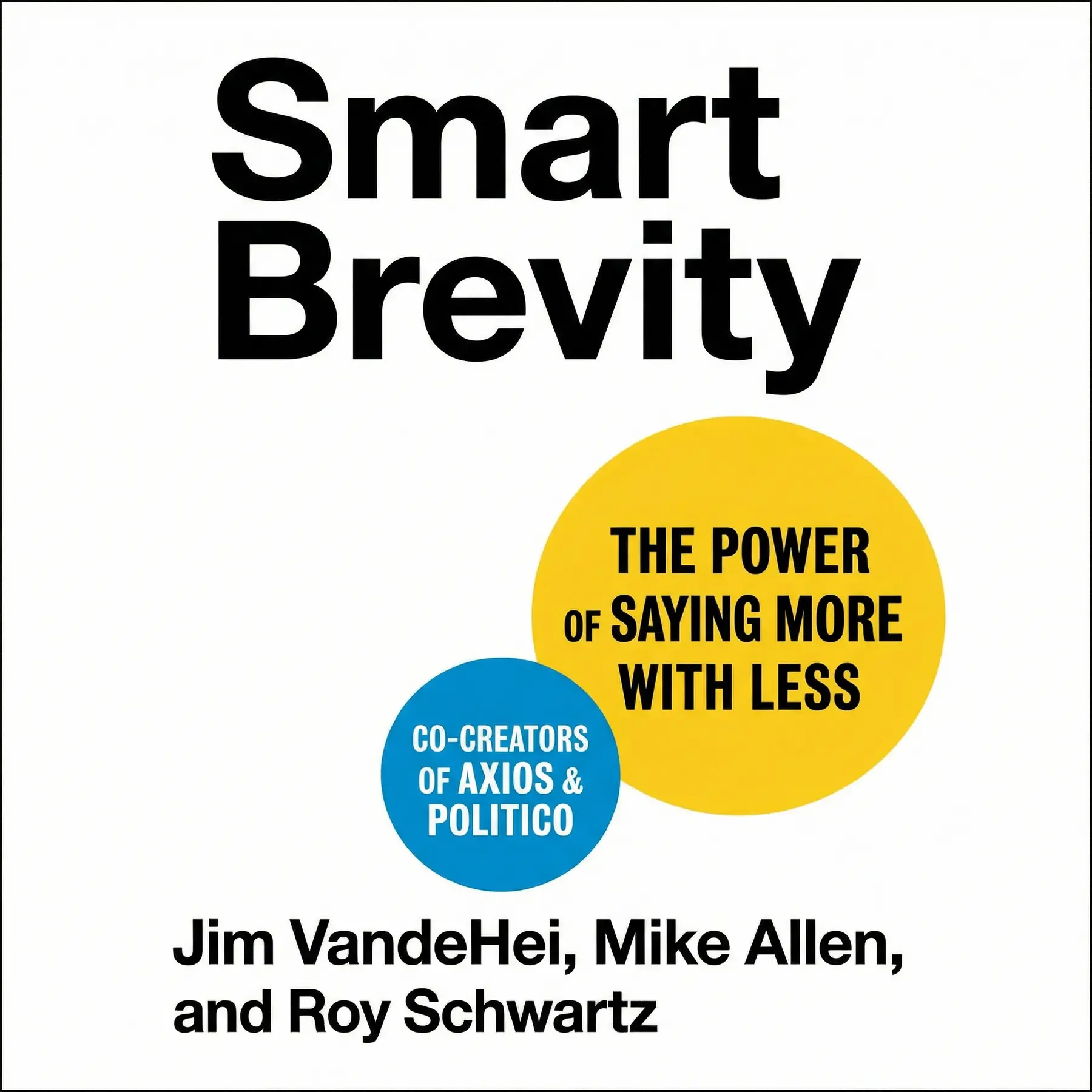
Smart Brevity: The Power of Saying More with Less
Smart Brevity offers a revolutionary communication framework designed for an era of information overload, teaching readers how to deliver high-impact messages that capture attention and respect the audience's limited time.
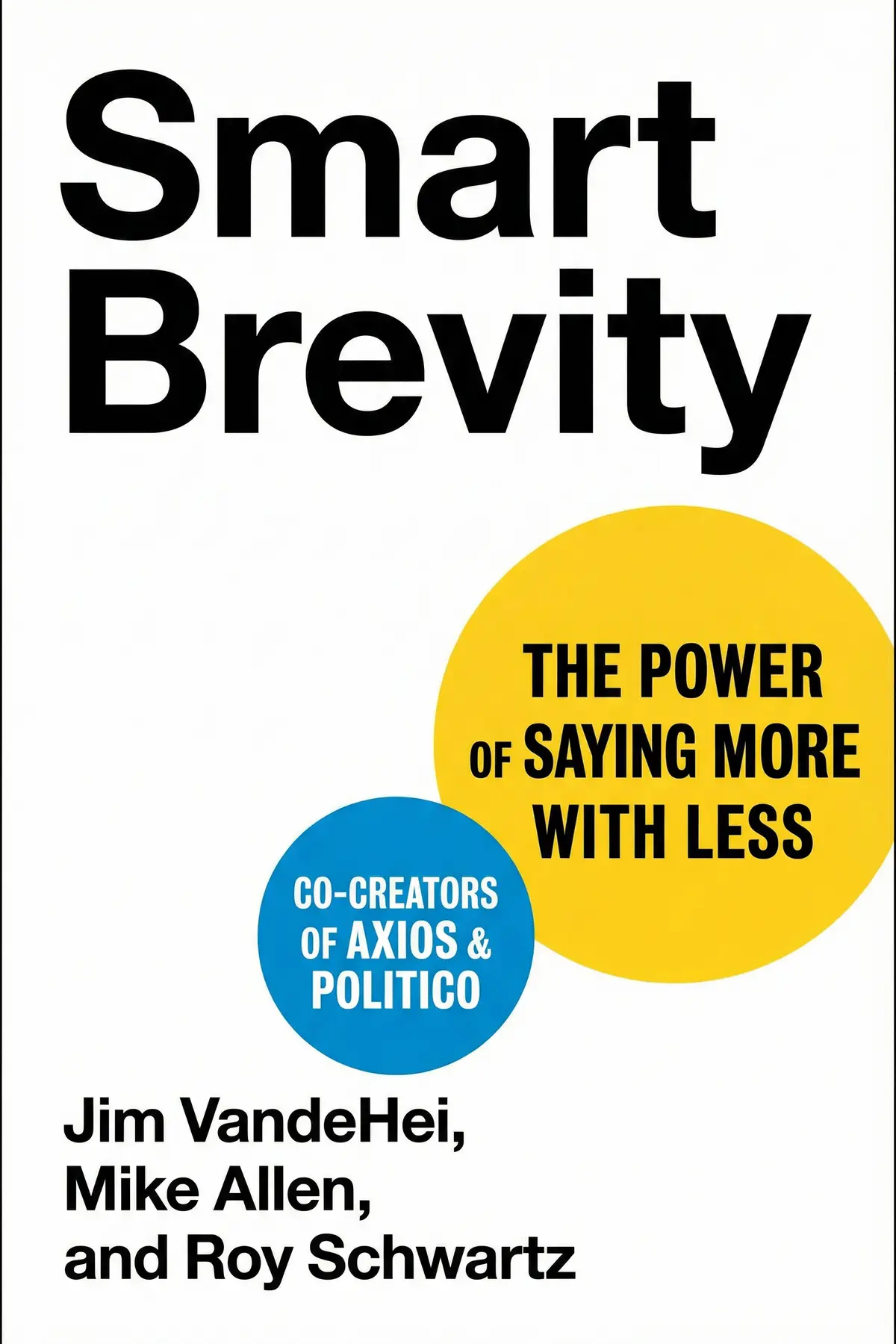
Table of Content
1. Introduction
1 min 46 sec
Think back to the early days of the digital age, when hearing a notification sound brought a sense of excitement and curiosity. Today, that feeling has been replaced by a sense of dread or simple exhaustion. Your smartphone and computer have become constant sources of interruption, flooding your consciousness with a never-ending stream of pings, alerts, and long-winded messages. We are living in an era where our brains have become congested storage facilities for mental clutter, struggling to keep up with a world that moves faster than our traditional habits of communication can handle.
This is the attention economy, a landscape where we compulsively scroll through feeds in search of quick hits of information, and where our ability to focus on long texts is rapidly diminishing. Yet, despite this massive shift in how we process information, most professional communication is still stuck in the past. We continue to write emails, reports, and articles as if people have hours of uninterrupted time to pore over every word. The result is a massive waste of energy and billions of words that are never actually read.
Smart Brevity is the direct response to this problem. It is not just a suggestion to write shorter sentences; it is a comprehensive system designed to align with the way modern minds work. It acknowledges that attention is a finite resource and that the most respectful thing you can do for your audience is to get to the point. Throughout this summary, we will explore how this framework allows you to deliver your most important ideas with maximum impact, ensuring that your voice is heard in a world that is louder than ever. We will look at the specific architecture of a concise message and how to apply these principles to your daily work life to become a more effective, memorable communicator.
2. The Evolution of Information Consumption
2 min 00 sec
Discover why the way we currently write is failing to reach people and how the addictive nature of modern technology has fundamentally rewired our brains.
3. Defining the Core of the System
1 min 45 sec
Learn why being concise isn’t about being shallow and how doing the hard work of synthesis for your reader makes your message indispensable.
4. The Art of the Tease
1 min 43 sec
Explore the psychological impact of first impressions in writing and why the ‘six-word rule’ is essential for capturing attention on mobile devices.
5. Crafting the Perfect Lede
1 min 37 sec
Master the one-sentence hook that ensures your message is understood even if the reader only looks at the first few words.
6. Providing Essential Context
1 min 43 sec
Learn how to use ‘axioms’ to signpost importance, ensuring your reader understands the significance of your news at a single glance.
7. The Depth and Formatting Strategy
1 min 41 sec
Discover the ‘Go Deeper’ technique to balance brevity with substance, and how formatting can prevent your message from becoming an intimidating block of text.
8. Revolutionizing the Workplace
1 min 58 sec
See how applying these principles to emails, newsletters, and meetings can save hours of wasted time and improve team alignment.
9. Speeches, Presentations, and Visuals
1 min 48 sec
Learn the ‘one-point’ rule for speeches and why your presentation slides should never be a script, focusing instead on visual impact.
10. Conclusion
1 min 31 sec
The ultimate goal of communication is to ensure that your ideas are not just transmitted, but truly received and acted upon. In our fast-paced, digital world, the old ways of writing and speaking are no longer enough. They are being filtered out by brains that have been conditioned to crave speed and clarity. By embracing the framework of Smart Brevity, you are choosing to adapt to this new reality rather than fighting against it.
This system—built on the pillars of a compelling tease, a sharp lede, clear context, and the option for deeper exploration—is more than just a set of writing tips. It is a fundamental shift in how you relate to your audience. It asks you to put the reader’s needs first, to value their time as much as your own, and to have the courage to be direct. When you strip away the unnecessary words and the ego-driven fluff, what remains is the truth of your message.
As you move forward, challenge yourself to apply these principles to every email you send, every meeting you lead, and every post you share. Notice how people respond when you get straight to the point. Notice how much more effectively you can lead and influence when your ideas are no longer buried. Remember that in a world of endless noise, the quietest, most concise voice is often the one that carries the most weight. Be short, be smart, and make every word count. Now, go out and captivate your audience with the power of less.
About this book
What is this book about?
The modern world is drowning in words. Between overflowing inboxes, endless social media feeds, and rambling corporate reports, our ability to focus has been completely fractured. Smart Brevity addresses this crisis by providing a structured system for concise, effective communication. It moves beyond simple editing, offering a psychological approach to how people actually consume information today. The promise of this method is simple yet profound: by saying more with less, you gain more influence. The book breaks down the specific elements needed to transform any message—be it an email, a presentation, or a speech—into a sharp, memorable piece of content. It provides a toolkit for identifying what truly matters and discarding the fluff that usually buries important ideas. Ultimately, it’s about winning back time for both the sender and the receiver while ensuring that critical information actually lands.
Book Information
About the Author
Jim Vandehei
Jim VandeHei is a prominent figure in modern media, having cofounded both Axios and Politico, outlets famous for their direct and impactful reporting. Mike Allen, also an Axios cofounder and former White House correspondent, is the primary voice behind the company’s influential newsletters. Roy Schwartz completes the trio as a cofounder of Axios and a former executive at Politico, known for his expertise in communication strategy.
Ratings & Reviews
Ratings at a glance
What people think
Listeners find this book highly useful for their professional lives, noting its actionable tips and the way it clarifies complicated notions. Furthermore, they like its ease of reading and how it conveys information, mentioning that it stays focused and aids in producing superior communications. The work's succinctness is celebrated as a significant shift, and listeners admire the caliber of the writing, with one listener specifically mentioning its fun format. Nevertheless, the overall length results in diverse perspectives: some embrace the condensed version while others believe it should be even more compact. Additionally, several listeners note that the content can be repetitive.
Top reviews
Pranee
Finally, a business book that actually practices what it preaches instead of droning on for eight chapters about the same tired case study. I polished this off in about two hours and felt like I had a better handle on my communication style than I’ve had in years of professional writing. The layout is brilliant; it uses bolding, lists, and spacing to make sure you actually retain the information rather than just scanning it. Not gonna lie, I was skeptical about the whole 'Axios HQ' branding at first, but the results speak for themselves. My emails are shorter, my meetings are more focused, and people are actually responding to my memos. It’s not just about being short; it’s about being impactful. It’s an essential tool for anyone working in a fast-paced environment where time is the most valuable currency. Definitely a game-changer for my daily workflow.
Show moreBo
Picked this up after a mentor recommended it, and I’m so glad I did because it completely changed how I think about content creation. The 'Smart Brevity' method is about more than just cutting words; it’s about structuring your thoughts so the most important takeaway is impossible to miss. I particularly appreciated the examples showing 'before and after' versions of emails and articles. It’s fascinating to see how much fluff we include just out of habit or a desire to sound smart. In my experience, most people are actually relieved when you give them less to read. The book itself is a quick accessible format that you can flip through in a single sitting. Some might find the tone a bit self-aggrandizing, but when you’ve built a media empire on these principles, you’ve earned the right to brag a little. Highly recommended for anyone in marketing or management.
Show morePierre
This is exactly what the modern business world needs right now. We are all overwhelmed by information, and the 'Smart Brevity' philosophy is a direct antidote to that exhaustion. The book is remarkably effective at demonstrating its own points, using the very formatting it encourages you to adopt. I loved the focus on the 'one big thing' and the way it encourages you to cut out the 'mush' that clogs up our brains. It’s a very practical guide that provides actionable advice you can use the same day you read it. Personally, I don't mind the references to Axios because they are the ones who pioneered this style and proved it works. If you’re a manager or anyone who has to lead through communication, this book is a mandatory read. It’s short, punchy, and potentially career-changing.
Show moreLucia
Most business books are a chore to get through, but this was a total joy. It gets straight to the point and provides a clear framework for making your messaging more impactful. I’ve struggled for years with being 'the person who writes the long emails,' and this book gave me the permission—and the tools—to stop. The emphasis on 'why it matters' has changed the way I pitch ideas to my team. Instead of burying the lead, I start with the punchline. While some critics say this style is 'cold,' I find it incredibly respectful of people's limited time. The book is a valuable resource that I keep on my nightstand to remind me to keep it simple. If you want to be heard in a world that won't stop talking, buy this book. It's a quick read that delivers a massive punch.
Show moreWei
As a project manager who spends half my life buried in unread Slack threads and bloated Word docs, this was a breath of fresh air. The authors essentially teach you how to treat your audience like people with actual lives, which means getting to the point before they stop caring. I loved the 'Why it Matters' framework because it forces you to justify why you're even taking up space in someone’s brain. Truth is, some of it feels a bit repetitive after the first fifty pages, and I did roll my eyes at the constant Axios self-promotion throughout the chapters. However, the core philosophy is undeniable: we are all drowning in noise. If you want your team to actually read your updates, you need to learn these tricks. It's a quick, punchy read that I’ll likely keep on my desk as a reference for the next time I’m tempted to write a ten-paragraph email.
Show moreFatima
Ever wonder why your emails go ignored while your colleague’s short updates get immediate traction? This book provides the blueprint for that success by focusing on the psychology of the modern reader. The authors argue that since we are constantly bombarded with information, we need to respect people's time by getting the 'bottom line' up front. I’ve started implementing the 'Why it Matters' section in my weekly reports, and the feedback from my director has been overwhelmingly positive. To be fair, the book does get a bit repetitive toward the end as it tries to apply the same three rules to every possible scenario. It could have been shorter, which is a hilarious critique for a book on brevity, but the practical guidance is still worth the price of admission. It’s a solid addition to any professional’s library, especially if you struggle with being long-winded.
Show moreLadawan
After hearing about this from several coworkers, I finally gave it a shot to see if the hype was real. I’ve always been someone who writes long, flowery sentences, so this was a much-needed slap in the face regarding my communication habits. The book is incredibly easy to navigate, featuring a clear presentation of ideas that makes it perfect for busy professionals. I found the specific advice on 'visual hacks' like bolding and bulleting to be the most applicable parts of the text. Gotta say, it’s a bit ironic that a book about brevity repeats itself so often, but I suppose the authors wanted to drill the message into our heads. It’s an entertaining format that keeps you engaged, even if some of the chapters feel like filler. If you want to stop wasting your audience’s time, this is a great place to start.
Show moreAnna
Look, I get the appeal of cutting through the clutter, but there’s a fine line between being concise and being shallow. This book does a great job of explaining how to grab attention, but it fails to address the cost of losing nuance in our daily communication. It’s filled with some genuinely helpful templates and rules for 'smart' writing, yet it often reads like a sales pitch for a specific brand of corporate efficiency. I found the sections on news delivery particularly troubling because the 'just the facts' approach often leaves out the context necessary for real understanding. It’s a valuable professional resource if you want to climb the ladder, but I worry about what happens to language when we all start writing like robots. It's useful for internal memos, sure, but I wouldn't want to live in a world where everything is written this way.
Show moreArjun
The irony is palpable when a book titled 'Smart Brevity' stretches its single, useful thesis across more than two hundred pages. Frankly, this entire concept could have been a three-paragraph blog post or a single, well-organized infographic. While I agree that modern readers have the attention span of a goldfish, I don't think the solution is to turn our language into a series of robotic bullet points. It feels like an instruction manual for a corporate dystopia where nuance goes to die in favor of 'scannability.' The authors spend so much time patting themselves on the back for their Axios success that it starts to feel like a very expensive brochure for their software. I found the constant boldface and forced structure more distracting than helpful. If you’re looking for genuine writing advice that respects the reader’s intelligence, you might want to look elsewhere. This is just a guide on how to sound like a LinkedIn algorithm.
Show moreMason
This felt more like a 200-page infomercial for Axios than a genuine attempt to help people become better writers. The 'Smart Brevity' trademark is plastered everywhere, and the constant references to their proprietary software made me feel like I was paying for the privilege of being marketed to. While the basic advice—write less, use bullets, put the main point first—is sound, it’s also incredibly basic. Do we really need a whole book to tell us that people are busy and don't like walls of text? It feels like they took a decent ten-minute TED Talk and inflated it just to meet a publisher's page count requirement. I was hoping for more deep insights into linguistics or communication theory, but instead, I got a 'how-to' on sounding like a press release. It's a very slick package with very little substance underneath the glossy formatting.
Show moreReaders also enjoyed
AUDIO SUMMARY AVAILABLE
Listen to Smart Brevity in 15 minutes
Get the key ideas from Smart Brevity by Jim Vandehei, plus 5,000+ more titles in English and Thai.
- 5,000+ titles
- Listen as much as you want
- 7-day free trial
- Cancel anytime







