
14 min 39 sec
Smart, Not Loud: How to Get Noticed at Work for All the Right Reasons
By Jessica Chen
Smart, Not Loud offers a practical roadmap for professionals from quiet cultures to navigate assertive Western workplaces. It teaches how to gain recognition and influence while remaining true to one's authentic self.
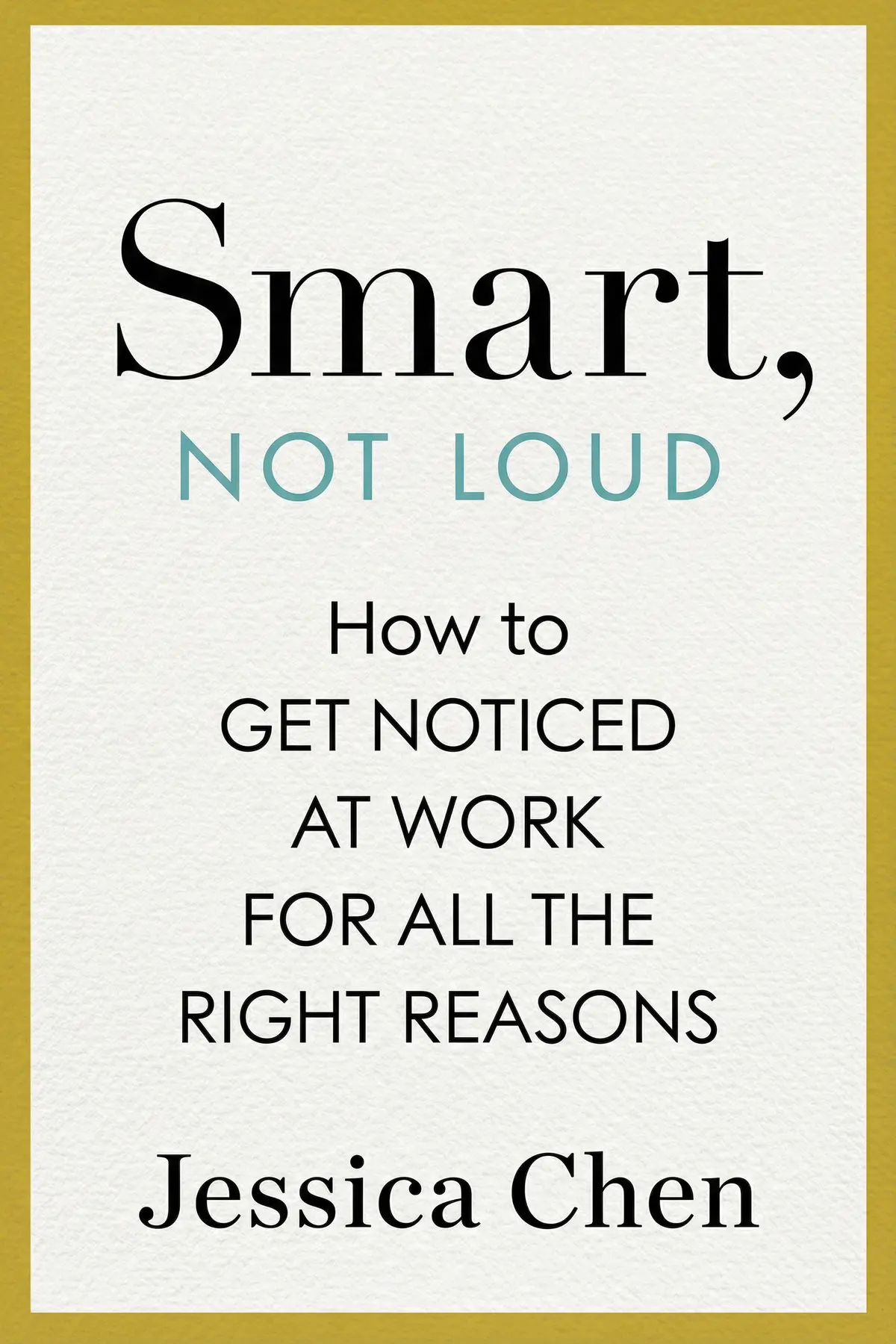
Table of Content
1. Introduction
1 min 21 sec
Have you ever felt like the hardest worker in the room, yet somehow the most invisible? Many of us were raised with a specific set of values: work hard, be humble, respect authority, and put the team first. These are noble traits that build strong foundations. However, when we enter the modern, often Westernized professional world, we discover a different set of rules. In these “loud” cultures, visibility is often equated with value, and assertiveness is mistaken for competence. If you come from a “quiet” culture, this clash can make you feel like you have to choose between your career and your integrity.
But what if there was a third way? What if you could get noticed for all the right reasons without becoming someone you’re not? This is the core promise we are exploring today. We are looking at how to navigate the professional landscape by being strategic rather than just loud. We’ll dive into the cultural roots of our communication styles and learn how to bridge the gap between working hard and being seen.
Through the insights of Jessica Chen, we will explore how to reframe your natural tendencies as strengths, how to speak up in meetings with confidence, and how to use non-verbal cues to command respect. It’s about learning a new language—not a new personality. By the end of this journey, you’ll have a clear framework for advocating for yourself and ensuring that your brilliance is never dimmed by your modesty. Let’s explore how to be smart, effective, and recognized, on your own terms.
2. The Cultural Divide in Communication
2 min 18 sec
Explore the hidden tension between quiet upbringing and loud workplace expectations, and why being the ‘diligent worker’ isn’t always enough to get promoted.
3. Reframing Your Professional Identity
2 min 24 sec
Discover how to redefine what ‘work’ actually means and learn why accepting praise is a service to your team, not an act of arrogance.
4. The ACT Framework for Self-Advocacy
2 min 33 sec
Learn a three-step strategy to ask for what you deserve and set boundaries without feeling like you’re being aggressive or disrespectful.
5. Mastering the Art of Strategic Speaking
2 min 20 sec
How to break into conversations and make your voice heard using transitions and ‘lane-switching’ techniques that command attention.
6. The Power of Non-Verbal Presence
2 min 21 sec
Uncover the science of first impressions and how small shifts in your posture and eye contact can dramatically change how you’re perceived.
7. Conclusion
1 min 22 sec
Navigating the modern workplace doesn’t require you to sacrifice your heritage or turn into a loud, boisterous version of yourself. As we’ve seen through the principles of Smart, Not Loud, the key to success lies in translation and strategy. It’s about understanding the cultural differences between ‘quiet’ and ‘loud’ environments and choosing to bridge that gap with intentionality.
Remember the core strategies we’ve discussed: Reframing your work to include social connection and visibility; using the ACT framework to advocate for your needs with clarity and persistence; speaking up by finding transitions and balancing data with impact; and mastering the non-verbal cues that build instant authority. These are not just tips—they are a new way of engaging with your career.
The throughline of all these ideas is the power of being ‘smart.’ A smart communicator knows when to listen, but also knows how to ensure their contribution is recognized. They know how to maintain their humility while still owning their achievements. By applying these techniques, you can transform from being the ‘invisible’ hard worker into a respected, high-impact leader who gets noticed for all the right reasons. You have the talent and the work ethic; now, you have the toolkit to make sure the world sees it. Go out there and be heard, on your own terms.
About this book
What is this book about?
The professional world often feels like it was built for the most vocal people in the room. For those raised in quiet cultures—environments where humility, group harmony, and diligent silence are prized—this can create a frustrating barrier to career advancement. Smart, Not Loud addresses this gap by explaining why traditional quiet-culture strengths sometimes fail to translate into recognition in high-visibility corporate settings. The book provides a bridge between these two worlds. It doesn't ask you to change who you are or become an aggressive self-promoter. Instead, it offers a toolkit for reframing your existing skills. You will learn how to advocate for your contributions using the ACT framework, how to master the unspoken rules of office body language, and how to communicate your value in a way that resonates with leadership. This is a guide for achieving professional impact through strategic communication rather than sheer volume.
Book Information
About the Author
Jessica Chen
Jessica Chen is an award-winning television news journalist and a prominent speaker who has consulted for Fortune 100 companies. As a specialist in communication strategies, her LinkedIn Learning courses have reached a global audience of over 2 million viewers. She focuses on helping professionals who identify with quiet cultures find success within louder, more assertive workplace environments.
Ratings & Reviews
Ratings at a glance
What people think
Listeners find the content insightful, with one listener highlighting how it illuminates specific struggles and issues. They praise its accessible nature, as one listener remarks that the book is a must-read for professionals.
Top reviews
Kanchana
After hearing about Jessica Chen's background in broadcast journalism, I was curious how she’d translate those high-pressure communication skills into a guide for the average corporate employee. This book exceeded my expectations. The central framework of 'Quiet Culture' versus 'Loud Culture' provided an immediate vocabulary for frustrations I’ve felt for years but couldn't quite name. It’s a relief to read a professional development book that doesn’t just tell you to 'be more confident' without explaining the mechanics of how to do so. Chen provides very tangible tools for those of us who find self-promotion inherently gauche or uncomfortable. In my experience, the specific advice on how to share personal accomplishments by focusing on their impact on the team was the most valuable takeaway. It transforms bragging into a service for the company. While some sections felt a bit fast-paced, the overall organization makes it a breeze to reference later when you're preparing for a performance review.
Show moreMaksim
The chapter on communication cadences totally changed how I approach my weekly check-ins with my manager! Before reading this, I thought that asking for what I wanted once was enough, but Chen explains that 'loud' environments require consistent visibility. This book is essentially a tactical manual for the introverted professional. Every chapter provides tangible tools that you can implement the very next day at the office. I listened to the audiobook version and the author’s voice is very encouraging and professional, which made the concepts easy to digest during my commute. I’ve already recommended this to several colleagues who are struggling with the same 'quiet culture' tendencies. It is very well-written and organized, making it easy to find specific advice for different scenarios like meetings or performance reviews. If you are starting your career, buy this immediately. It will save you years of wondering why you aren't moving up the ladder faster.
Show moreWeera
This book is essentially a blueprint for introverts who are tired of being overlooked in favor of more aggressive colleagues. Jessica Chen has written something truly special here by acknowledging that hard work alone isn't the ticket to the top. I’ve spent years wondering why my 'quiet' dedication wasn't being rewarded with the raises I deserved. Now I realize that I was playing by the rules of a culture that didn't exist in my office. The advice on building relationship currency is something I plan to implement immediately. Not gonna lie, the idea of 'exposing yourself to the view of your peers' still feels a bit daunting, but the book makes it feel achievable. The writing is incredibly clear and the anecdotes are relatable across various industries. It’s one of the best books on communication I’ve read in a long time. Highly recommended for anyone who wants to succeed on their own terms.
Show moreWoramet
Ever wonder why the loudest person in the room gets the promotion while you’re stuck doing the actual heavy lifting? This book tackles that exact injustice with a lot of grace and nuance. Jessica Chen explains how 'loud cultures' value interpersonal visibility just as much as—if not more than—the quality of the work itself. This was a hard pill to swallow, but a necessary one for my career growth. The strategies for speaking up without feeling like you're betraying your personality are genuinely helpful. I particularly liked the section on communication cadences and learning how to remind your boss about your goals without being a nuisance. Some of the research-backed info felt a little light in places, but the anecdotal evidence from her time in newsrooms kept me engaged. It’s a great read for anyone who feels like an invisible workhorse and wants to finally get noticed.
Show moreMilk
As someone who has always struggled with the 'bragginess' of corporate self-promotion, Chen’s advice on enumerating impact felt like a total lifeline. She validates the cultural and gender conditioning that makes many of us hesitate to speak up. The distinction between being 'smart' and being 'loud' is so important because it emphasizes that you don't have to change your core identity to succeed. You just have to learn a new set of communication signals. I found the chapter on navigating feedback particularly insightful, especially the part about being direct rather than circumspect. Truth is, I’ve probably lost out on opportunities because I expected my results to speak for themselves. This book gave me the permission I needed to advocate for myself more vocally. It’s a must-read for anyone who feels like they are being overlooked despite their high performance and dedication.
Show moreSuvannee
Finally got around to finishing this, and I’m struck by how much it addresses the specific cultural conditioning many of us face at work. The author uses her own transition from journalism to entrepreneurship to illustrate how vital it is to adapt your communication style to your environment. It’s not about being fake; it’s about being effective. I resonated deeply with the stories of people who were passed over for promotions simply because they weren't 'top of mind' for their supervisors. The 'Quiet Culture' vs 'Loud Culture' dichotomy is a brilliant way to frame the problem without making anyone feel like their personality is a defect. My only minor gripe is that some of the specific scripts provided for talking to bosses felt a little bit stiff. I’ll probably need to tweak them to sound more like myself. Still, the underlying strategy is spot-on and very empowering for anyone who feels naturally reserved.
Show moreSamroeng
Jessica Chen does a fantastic job explaining that 'hard work speaking for itself' is a myth in most modern Western workplaces. This was a painful but necessary realization for me. Personally, I grew up in a household where seniority was everything and you never corrected someone older than you. Bringing those habits into a 'loud' corporate culture was a recipe for stagnation. This book helped me see those traits not as weaknesses, but as cultural styles that simply need to be adjusted for the context of my current job. The specific techniques for 'loud' communication—like being more direct with feedback—are explained in a way that feels practical rather than intimidating. I wish there were a few more examples of 'loud' people successfully adapting to 'quiet' cultures, as that was mentioned but not explored in depth. Regardless, the value here is immense for anyone looking to bridge the communication gap and finally get the recognition they deserve.
Show moreTern
Look, the concept of 'Quiet Culture' vs 'Loud Culture' is undeniably clever and relatable for anyone who grew up being told to keep their head down and work hard. However, I’m not entirely sure this book offers anything groundbreaking that you wouldn't find in a standard communication seminar or a few long-form career blogs. The anecdotes from Chen's coaching clients are helpful, but after a while, they start to feel a bit repetitive and predictable. To be fair, the writing is very crisp and the layout is professional, which makes it an easy read over a weekend. It’s probably most useful for fresh undergraduate students or people entering a Western corporate environment for the first time. If you’ve been in the game for ten years, you might find yourself skimming through the more basic advice to get to the occasional nuggets of wisdom. It’s a solid three-star effort that serves as a good reminder, even if it isn't a total game-changer.
Show moreYongyut
To be fair, much of the advice here feels like it’s geared toward entry-level professionals or those just starting their corporate journey in a new country. I appreciated the initial discussion about Asian-American cultural traits, but I’m glad Chen decided to generalize the advice because these issues affect so many different groups. However, I felt like some of the 'loud culture' traits were a bit stereotyped. Not every Western workplace is a shark tank where only the squeaky wheel gets grease. Some of the advice felt a bit repetitive by the halfway point, and I think the book could have been about fifty pages shorter without losing much impact. That said, it’s a very quick read and the tone is incredibly supportive. If you’re looking for a light, encouraging guide to boost your confidence in meetings, this is a perfectly fine choice. Just don't expect a deep academic study on organizational behavior.
Show moreFort
I really wanted to love this, but it felt a bit like a collection of LinkedIn posts stretched into a full-length book. Frankly, the advice felt a bit recycled from other popular career guides I’ve read over the years. While I appreciate the effort to bridge the gap for those from 'quiet cultures,' many of the suggestions felt a little too surface-level for complex office politics. The book assumes that your manager is actually paying attention and just needs a little nudge, but in reality, many workplaces are much more toxic than the examples provided here. The writing style is pleasant enough, and the author is clearly talented, but I was hoping for more deep-dive psychological insights rather than quick-fix tips. It’s a decent starting point for some, but I found myself wanting more substance and original research to back up the anecdotes. Just wasn't quite what I was looking for at this stage of my career.
Show moreReaders also enjoyed


AUDIO SUMMARY AVAILABLE
Listen to Smart, Not Loud in 15 minutes
Get the key ideas from Smart, Not Loud by Jessica Chen, plus 5,000+ more titles in English and Thai.
- 5,000+ titles
- Listen as much as you want
- 7-day free trial
- Cancel anytime







