
26 min 54 sec
Snakes in Suits: Understanding and Surviving the Psychopaths in Your Office
Discover how to identify and defend against psychopathic behavior in the workplace. This guide explores the manipulation tactics of corporate predators and provides strategies to safeguard your career and organization.
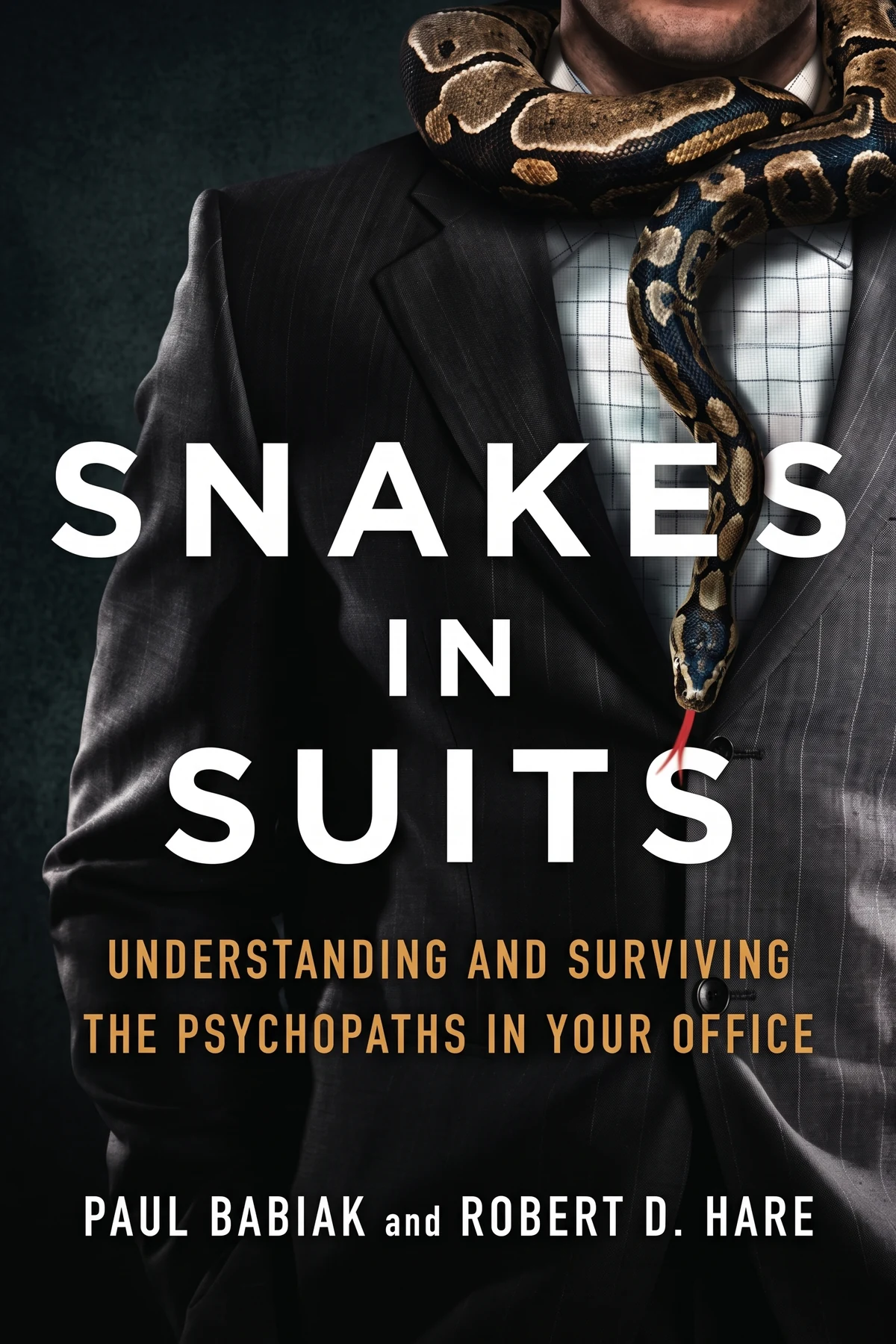
Table of Content
1. Introduction
2 min 01 sec
In the modern professional world, we are taught to value charisma, confidence, and the ability to influence others. These traits are often the hallmarks of a rising star. But what happens when these same qualities are used as a mask for something much darker? Many of us have felt that inexplicable sense of unease when working with a colleague who seems a bit too perfect, someone whose stories don’t quite add up, or who always manages to take credit for shared successes while dodging blame for failures. We might dismiss these behaviors as mere office politics or a difficult personality, but there is a more chilling possibility: you might be dealing with a workplace psychopath.
When we hear the word ‘psychopath,’ our minds often jump to the extreme images portrayed in thrillers—the silent, violent predator. However, the reality is that a significant number of individuals who meet the clinical criteria for psychopathy are not in prison; they are sitting in the cubicle next to yours or leading the meeting in the boardroom. These are the ‘snakes in suits,’ individuals who lack empathy and remorse but possess the social intelligence to navigate complex corporate structures. They don’t use weapons to get what they want; they use words, charm, and a keen understanding of human vulnerability.
In this exploration, we are going to look deep into the mechanics of how these individuals function within an organization. We will move past the myths to understand the specific psychological traits that define them. More importantly, we will trace the lifecycle of their workplace presence—how they get hired, how they build a web of influence, and how they eventually discard the people they have used. By understanding the ‘playbook’ of the corporate psychopath, you will be better equipped to spot the red flags before damage is done. This is about more than just identifying a bad coworker; it is about protecting the health of your career and the integrity of your company. Let’s begin by dismantling the Hollywood stereotypes and looking at what a psychopath actually looks like in a professional setting.
2. Beyond the Cinematic Villain
2 min 41 sec
Think you know what a psychopath looks like? Move past the Hollywood tropes to understand the four specific psychological domains that define a true predator in the professional world.
3. The Strategic Cycle of Predation
2 min 46 sec
Discover the three-stage process psychopaths use to exploit their victims: from the initial cold-blooded assessment to the calculated manipulation and the eventual, abrupt abandonment.
4. The Allure of the Modern Corporation
2 min 22 sec
Why do psychopaths thrive in big business? Explore the specific organizational structures that provide the perfect camouflage and high-stakes rewards for predatory behavior.
5. Navigating the Gatekeepers
2 min 28 sec
The job interview is a psychopath’s stage. Learn how they use charm and deception to bypass traditional hiring filters and secure positions of power.
6. Building a Web of Influence
2 min 37 sec
Inside the organization, the psychopath divides and conquers. Understand the roles of ‘pawns’ and ‘patrons’ in their strategy to secure power and protection.
7. The Silent Witnesses and Failed Oversight
2 min 32 sec
Why do those who see the truth often remain silent? Explore the ‘low-utility observers’ and the systemic failures that allow workplace predators to go unchecked.
8. Hardening the Perimeter
2 min 35 sec
Protecting your organization starts at the gate. Learn practical, objective strategies to interview and vet candidates to filter out those who rely on charm over substance.
9. Fortifying Your Personal Defenses
2 min 27 sec
The best defense is self-knowledge. Understand your own vulnerabilities and learn how to maintain professional boundaries when dealing with a potential manipulator.
10. Professional Survival Tactics
2 min 35 sec
If you find yourself working with a psychopath, you need a survival plan. Learn the importance of documentation, reputation, and knowing when it’s time to walk away.
11. Conclusion
1 min 50 sec
The presence of a psychopath in the workplace is a sobering reality that many of us will face at some point in our careers. These individuals are not just difficult coworkers; they are sophisticated predators who view the corporate world as a playground for their own self-interest. They rely on the fact that most people are decent, trusting, and busy—qualities that allow ‘snakes in suits’ to slip through the cracks of even the most successful organizations. However, as we have seen, they are not invincible. Their power comes from their ability to remain hidden behind a mask of charm and professionalism.
By understanding the four domains of psychopathic personality and the three-stage cycle of assessment, manipulation, and abandonment, you take away their greatest weapon: the element of surprise. Whether you are an executive looking to protect your company’s culture or an individual contributor looking to safeguard your career, the tools are the same: rigorous objectivity, clear boundaries, and deep self-awareness. We must move away from valuing ‘magnetic’ personalities over proven character and technical substance.
As you move forward in your professional life, remember to ‘know thyself.’ Take the time to understand your own emotional triggers so they cannot be used against you. At the same time, take the time to truly ‘know your company.’ Understand the rules, the formal processes, and the ethical standards that define a healthy workplace. If you see something that doesn’t feel right, don’t dismiss it. Trust your observations, document the facts, and rely on the support of genuine colleagues. The best defense against a predator in a suit is a culture of transparency, accountability, and mutual respect. By staying vigilant and informed, you can ensure that your workplace remains a place for growth and collaboration, rather than a hunting ground for the unscrupulous.
About this book
What is this book about?
Have you ever encountered a colleague who was incredibly charming yet left a trail of chaos in their wake? Snakes in Suits explores the unsettling reality of psychopathy within the corporate world. While we often associate psychopathy with violent crime, this work reveals that many individuals with these traits trade a prison cell for a corner office. These corporate predators use a sophisticated mix of superficial charm, calculated deception, and emotional manipulation to exploit organizations and climb the professional ladder. The book promises to pull back the curtain on the subtle indicators of psychopathy that often go unnoticed by even the most experienced managers. By detailing the specific phases of their predatory behavior—from the initial assessment of victims to the final act of abandonment—it provides a roadmap for understanding how these individuals operate. You will learn why certain organizational cultures are particularly vulnerable to these 'snakes' and how they manage to neutralize potential threats to their power. Ultimately, this summary offers actionable defense mechanisms, ranging from more rigorous hiring practices to personal self-awareness techniques, ensuring you can protect yourself and your professional integrity from those who view people merely as tools for their own advancement.
Book Information
About the Author
Paul Babiak
Paul Babiak, Ph.D., is an organizational psychologist who specializes in the field of management development. His research and practical work have been featured in prominent publications like the New York Times and the Harvard Business Review. Robert D. Hare, Ph.D., is an emeritus professor of psychology at the University of British Columbia. He is widely considered one of the world’s most distinguished experts on the phenomenon of psychopathy.
Ratings & Reviews
Ratings at a glance
What people think
Listeners describe this work as captivating and skillfully composed, offering solid research and actionable insights for comprehending psychopathic traits. Furthermore, they value how effective it is as a manual and its capacity to provide psychological clarity. On the other hand, the narrative style gets varied feedback, including one listener who characterized it as a weak effort to blend dramatic elements with non-fiction. Plus, several listeners feel the content can be redundant.
Top reviews
Laddawan
Picked this up after a particularly brutal performance review with a manager who seemed to delight in my confusion. It was like reading a manual on my boss’s exact personality. The research presented by Babiak and Hare is deeply enthralling, and it actually helped restore my peace of mind by confirming I wasn’t the one losing it—the problem was structural and pathological. Frankly, the way they break down the manipulation tactics used in boardrooms is both terrifying and incredibly helpful for self-preservation. While some sections felt a little repetitive, hitting the same notes about the three-phase model of the corporate psychopath, the core message about how these "snakes" climb the ladder is essential for anyone in a high-stakes office environment. This isn’t just a book; it’s a survival guide for the modern cubicle dweller. I walked away feeling much more equipped to handle the psychological games being played around me.
Show moreVimolwan
This book changed my entire perspective on workplace politics and saved my sanity. I had been struggling for years to understand why certain colleagues were so destructive, and "Snakes in Suits" gave me the vocabulary to describe what was happening. It’s remarkably well-written, even if the tone leans a little towards the dramatic side. Personally, I found the distinction between antisocial behavior and true psychopathy to be the most helpful part of the research. It isn’t just about people who break laws; it’s about those who break people for fun or profit. An absolutely essential read for the modern office worker who feels like they're being gaslit by a superior.
Show moreTee
After hearing so much about the PCL-R test, I was eager to see how the concepts applied to the business world. This book doesn't disappoint in terms of insight. It provides a terrifyingly clear framework for understanding how empathy-free individuals can thrive in environments that prioritize profit over people. My only real gripe is that it feels a bit dated in its examples of corporate structure, but the personality profiles are timeless. It’s a wake-up call for anyone who thinks the business world is a meritocracy based on hard work and decency. Hard to read because of the subject matter, but even harder to ignore once you see the patterns.
Show moreMaksim
As someone who works in recruitment, I found the chapters on screening and HR practices to be the most valuable part of this entire read. The authors provide a very clear-eyed look at how charismatic predators can bypass standard interview questions by mirroring the interviewer’s own values. To be fair, the book does drag a bit in the middle, and I think they could have condensed the theoretical sections significantly. However, the practical information on identifying "red flags" in a professional setting is top-tier. It’s a solid handbook for anyone trying to protect their company culture from the damage a single toxic hire can cause. It avoids being too academic while still feeling grounded in Hare's famous clinical work.
Show moreCholada
Wow, what an incredibly disturbing but necessary deep dive into the darker corners of the corporate world. The authors do a fantastic job of explaining why these individuals are often promoted instead of fired—their traits are frequently mistaken for "strong leadership" or "strategic vision." I’ve seen this play out in real-time, and reading this book was like finally seeing the man behind the curtain. Gotta say, the advice on how to handle yourself when you’re targeted by a "snake" is worth the price of the book alone. It provides a level of practical information that most academic texts lack, even if the storytelling elements are a bit hit-or-miss.
Show moreMo
Truth is, most of us have worked with a "snake" at some point, and this book makes that realization hit like a ton of bricks. It’s enthralling to see how Babiak and Hare map out the stages of a psychopathic takeover within a company—from entry to manipulation and finally to the "clean up." While it definitely could have used a more aggressive editor to trim the repetitive fat, the core content is brilliant. Truly helpful for restoring some peace of mind after a bad experience. A solid guide.
Show moreCaleb
Not what I expected given the heavy academic credentials of Robert Hare. The book attempts to merge deep psychological research with these fictionalized "Dave and Dave" stories, but it feels like a bit of a mismatch. These dramatic vignettes are meant to illustrate the points, but they often come across as slightly cheesy and distract from the actual science. I was looking for more hard data and fewer fictional accounts of corporate drama. Still, the underlying analysis of how organizations inadvertently reward psychopathic traits is spot on and quite eye-opening. It’s worth a look if you can tolerate the repetitive structure and the somewhat sensationalized tone of the case studies.
Show moreElena
Finally got around to finishing this, and I have mixed feelings about the final product. On one hand, Robert Hare is the gold standard for psychopathy research, and his insights into the "mask of sanity" in a business context are fascinating. On the other hand, the book is incredibly repetitive, hitting the same three or four points for nearly three hundred pages. It’s a bit of a slog to get through the middle chapters where the fictional narratives take over. I think a shorter, more concise version would have been much more effective. It’s good info, but it requires some serious patience to dig it out of the fluff.
Show moreDen
Ever wonder if the field of psychology is occasionally prone to a bit of scaremongering for the sake of book sales? While there is some legitimate research here, the authors seem utterly convinced that almost every bad boss is a clinical psychopath rather than just a regular jerk. The reliance on anecdotal evidence and their own proprietary tests feels a bit self-serving at times. Look, the book raises some interesting points about the "dark triad," but it overreaches by trying to turn every corporate scandal into a case of pathology. If you want a more balanced view of the industry, Jon Ronson’s book is probably a better starting point for understanding how we label people.
Show moreMadison
The chapter on recruitment and the supposed "signs" to look for in candidates feels a bit thin on actual evidence. It’s a lot of professional intuition dressed up as hard science. The truth is, the book leans too heavily on fictional storytelling to bridge the gaps in its research. It feels like a lame attempt to merge a drama novel with a non-fiction textbook, which really undermines the credibility of the more interesting statistics. For a book by such famous authors, I expected something a lot more rigorous and grounded in data rather than these hypothetical scenarios. It’s repetitive and ultimately more frustrating than it is informative.
Show moreReaders also enjoyed

A Bigger Prize: How We Can Do Better Than the Competition
Margaret Heffernan

59 Seconds: Change Your Life in Under a Minute
Richard Wiseman

AUDIO SUMMARY AVAILABLE
Listen to Snakes in Suits in 15 minutes
Get the key ideas from Snakes in Suits by Paul Babiak, plus 5,000+ more titles in English and Thai.
- 5,000+ titles
- Listen as much as you want
- 7-day free trial
- Cancel anytime







