
14 min 50 sec
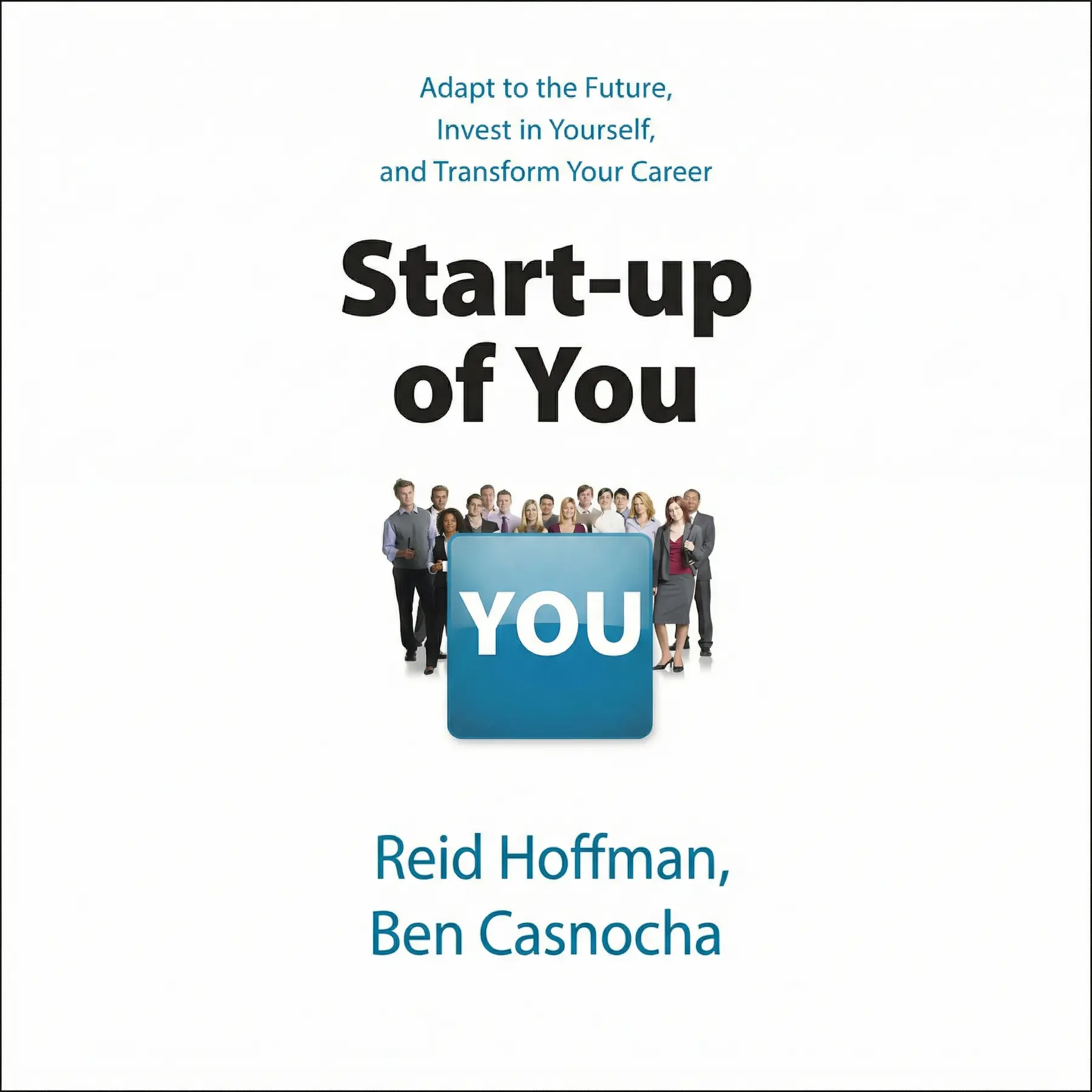
Start-up of You: Adapt, Take Risks, Grow Your Network, and Transform Your Career
A transformative guide to navigating the modern workforce by applying entrepreneurial principles to your career. Learn to adapt to change, build powerful networks, and treat your professional development as a lifelong start-up.
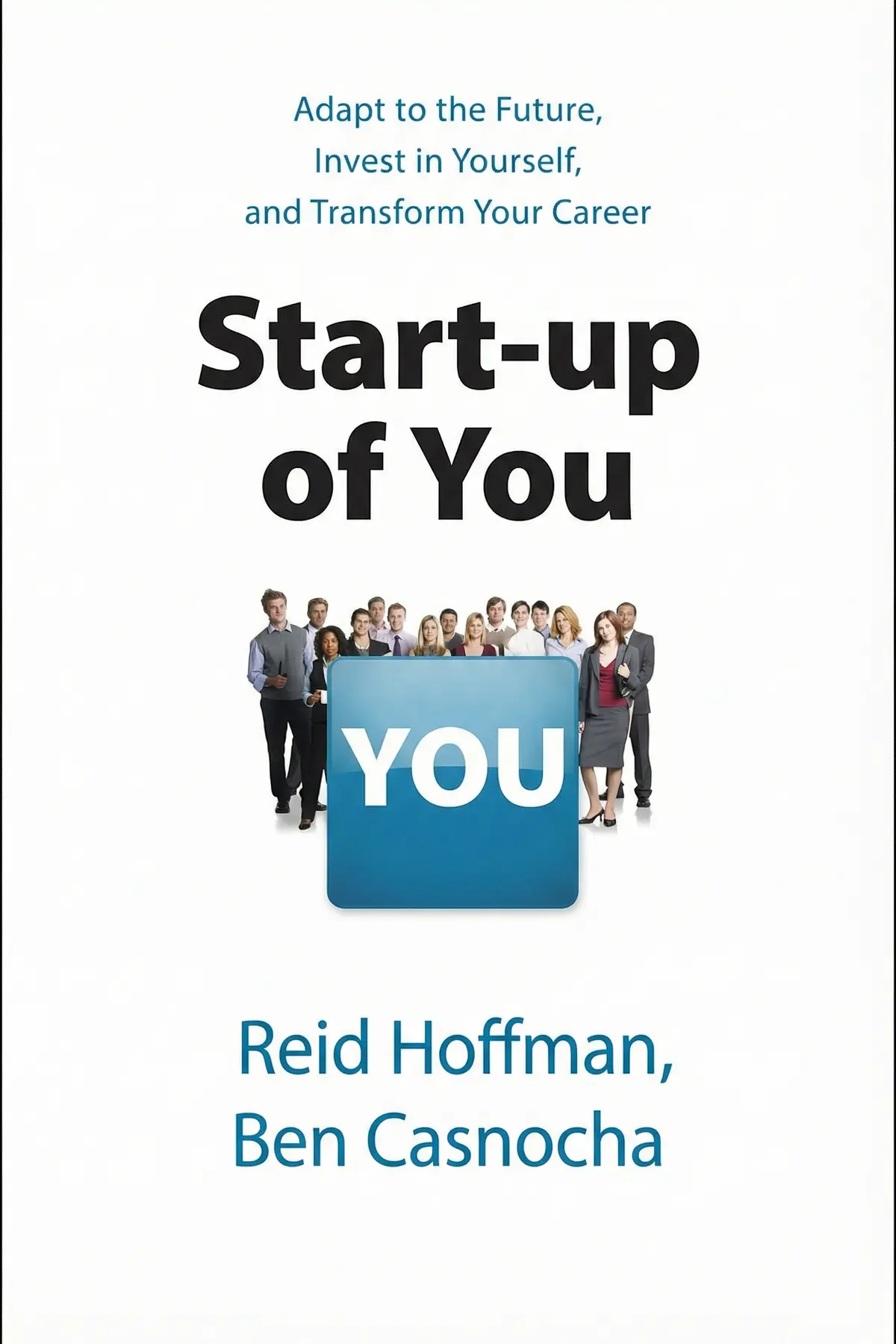
Table of Content
1. Introduction
1 min 29 sec
For decades, the path to professional success followed a predictable, almost mechanical rhythm. If you worked hard, earned a degree, and landed a role at a reputable corporation, you were essentially stepping onto a career escalator. You could expect to rise steadily through the ranks, gaining seniority, better benefits, and a higher salary simply by staying the course. This was the social contract of the twentieth-century workforce: loyalty and steady performance in exchange for security and advancement.
However, that escalator has reached a standstill. The modern landscape is defined by two massive, unrelenting forces—globalization and technological disruption—that have fundamentally altered how we work. Entry-level roles are scarcer, middle management is frequently squeezed, and the promise of a gold watch after forty years of service has vanished. If you are waiting for the system to carry you upward, you are standing on a platform that is no longer moving.
To survive and thrive in this new reality, you must adopt the mindset of an entrepreneur. You are the CEO of your own career, and your professional life is your start-up. This doesn’t mean you have to quit your job and launch a tech company; rather, it means applying the strategies that successful start-ups use—adaptability, networking, and iterative planning—to your personal development. By viewing your career as a work in progress, or what we call ‘permanent beta,’ you can navigate uncertainty and turn professional volatility into your greatest competitive advantage. In the following chapters, we will explore exactly how to rebuild your professional foundation for the twenty-first century.
2. Adopting the Permanent Beta Mindset
1 min 55 sec
Traditional career models prioritize stability, but the modern world demands constant evolution and a willingness to remain a work in progress through every stage of life.
3. Developing Your Competitive Edge
2 min 12 sec
Success isn’t just about hard work; it requires finding the unique intersection where your specific talents, personal goals, and market demands all meet.
4. The Power of ABZ Planning
2 min 05 sec
Traditional long-term planning is too rigid for today’s world. A more flexible strategy involves balancing your current path with potential pivots and a solid safety net.
5. Pursuing and Creating Breakout Opportunities
1 min 50 sec
Career-defining moments rarely arrive on a silver platter. They require a mix of proactive searching, extreme resourcefulness, and the courage to commit when others hesitate.
6. Cultivating Relationships and Network Intelligence
2 min 05 sec
Your professional network is not just a list of contacts; it is a living source of information and support that requires genuine investment and a spirit of generosity.
7. Managing Risk through Action
1 min 56 sec
Playing it safe is often the most dangerous strategy. Learn how to identify and embrace intelligent risks while protecting yourself from catastrophic downsides.
8. Conclusion
1 min 18 sec
As we have seen, the era of the stable, predictable career is over, but that does not mean you are powerless. By viewing yourself as a start-up, you shift from being a passive passenger on a broken escalator to being the driver of your own destiny. The principles we’ve explored—from maintaining a permanent beta mindset and building a competitive advantage to strategic ABZ planning and leveraging network intelligence—provide a blueprint for resilience in an age of uncertainty.
Ultimately, your success depends on your willingness to embrace the entrepreneurial spirit. This means seeing the world not as a collection of fixed jobs, but as a landscape of evolving opportunities and relationships. It requires you to be proactive, to invest in yourself continuously, and to understand that your network is your greatest safety net.
Remember that you are never ‘finished.’ Your career will always be a work in progress, and that is its greatest strength. By staying curious, taking calculated risks, and focusing on building genuine value for others, you can navigate the complexities of the modern workforce with confidence. The future belongs to those who are adaptable, connected, and always ready to pivot. It is time to stop waiting for the escalator to start moving and to start building your own path forward. You are the CEO of your career—now go out and lead it.
About this book
What is this book about?
The traditional career path, once compared to a steady escalator, has effectively broken down. In a world of global competition and rapid technological shifts, professional stability is no longer guaranteed by long tenure at a single company. Instead, success requires a fundamental shift in mindset: viewing yourself as a start-up. This book provides a strategic framework for managing your career in this turbulent environment. It explores how to develop a competitive advantage by balancing your skills, passions, and market needs. It introduces the concept of ABZ planning to ensure flexibility and highlights the critical importance of building deep professional alliances. By embracing the principles of permanent beta and intelligent risk-taking, you can turn uncertainty into a platform for growth and long-term resilience.
Book Information
About the Author
Reid Hoffman
Reid Hoffman is a prominent American entrepreneur and venture capitalist, widely recognized as the co-founder and executive chairman of LinkedIn. He has played pivotal roles in the growth of iconic companies like PayPal, Facebook, and Zynga. Ben Casnocha is a successful entrepreneur and author who began his first venture at age twelve and was honored as one of America’s top young entrepreneurs by BusinessWeek.

Ratings & Reviews
Ratings at a glance
What people think
Listeners find this book to be a swift and intelligent guide that offers practical tips for professional advancement. They appreciate the stimulating reflections and motivating material, with one listener mentioning how it constantly pushes their thinking. The book focuses effectively on building and leveraging networks in a strategic way, while offering excellent concepts on a variety of themes.
Top reviews
Ahmed
Wow. This isn't just another dry business manual; it’s a fundamental shift in how to view your career path. The concept of 'permanent beta'—the idea that you are never a finished product—really resonated with me. I’ve always been hesitant to take risks, but Hoffman’s breakdown of uncertainty versus actual danger helped reframe my anxiety. Some might say the advice is simple, yet the way it's packaged makes it feel fresh and urgent. Truth is, the world is changing too fast to rely on old-school career ladders anymore. I especially appreciated the 'To Do' lists at the end of the chapters because they turn abstract concepts into immediate actions. Even if you aren't trying to start a company, thinking like a founder is essential for survival today. Highly recommended for anyone feeling stagnant.
Show moreRapee
As someone who felt stuck in a dead-end corporate role, this perspective was the kick in the pants I needed. I love the idea of 'permanent beta'—it gave me permission to try new things and fail without feeling like my career was over. The authors do a great job of explaining why the old 'finish school, get a job, retire' model is dead. Now, you have to be agile. In my experience, the most valuable part was learning how to leverage 'weak ties' to find hidden opportunities. I’ve already started my own 'Interesting People Fund' and the results have been surprising. Sure, it’s a bit of a LinkedIn puff piece at times, but the underlying strategies for navigating an uncertain economy are top-notch. It’s inspirational without being too cheesy, which is a hard balance to strike in the business self-help genre.
Show moreAom
To be fair, I don't usually enjoy business self-help, but the 'Interesting People Fund' concept is a genuine game-changer. It’s a tiny shift that makes a massive difference in how you spend your time and money. I also appreciated the deep dive into 'negativity bias.' We are hardwired to see danger everywhere, which makes us miss incredible opportunities right in front of us. This book isn't just about LinkedIn; it’s about an entire philosophy of living. It encourages you to be alert, to be proactive, and to never stop learning. While some of the Silicon Valley anecdotes feel a bit dated now, the core advice on managing risk and uncertainty is timeless. It’s the kind of book you can finish in a few sittings but will find yourself quoting for months. A very smart, practical guide for anyone looking to take control of their professional life.
Show morePornthip
Ever wonder how to actually 'network' without feeling like a sleazy salesman? This book offers a refreshing take by framing professional relationships as 'alliances' rather than just transactions. I particularly loved the 'Interesting People Fund' idea; it’s such a simple way to prioritize personal growth and serendipity by literally budgeting for coffee with strangers. Gotta say, the writing style is very accessible, though it occasionally dips into Silicon Valley jargon that might not translate well for someone working in, say, healthcare or education. However, the core message that you are the entrepreneur of your own life is powerful. It challenges you to stop being a passive employee and start hunting for opportunities before they even appear on a job board. Not every chapter hit home, but there are enough nuggets of wisdom here to make it a worthwhile weekend read.
Show moreKaen
The chapter on risk management was worth the price of admission alone. Most people, myself included, tend to overestimate threats and underestimate our own resources, a 'negativity bias' that keeps us stuck in safe but boring jobs. Hoffman argues that the real risk is actually standing still. This perspective shift is crucial. I enjoyed the blend of high-level philosophy and tactical advice, like the specific 'To-Do' items for the next day, week, and month. It makes the daunting task of 'rebranding' yourself feel manageable. Is it perfect? No. Some of the stories feel a bit 'ivory tower,' and the Silicon Valley bias is thick. But the concept of serendipity—not as blind luck, but as being alert to potential—is something everyone should practice. It’s a smart, quick read that left me with a much more proactive mindset regarding my professional future.
Show moreDimitri
After hearing Reid Hoffman on several podcasts, I decided to see if the book lived up to the hype. It’s a smart, fast-paced read that focuses heavily on the power of networks. The distinction between 'blind luck' and 'serendipity' was a highlight for me. Essentially, you have to put yourself in the path of luck by doing more things and meeting more people. Personally, I think the book excels when it talks about professional alliances. Treating your colleagues as allies rather than just coworkers changes the dynamic of your office life entirely. Some critics argue it’s too focused on Silicon Valley, and while that’s true, the principles of adaptability are universal. The advice on 'Plan Z'—your rock-bottom fallback plan—is particularly grounded and helpful. It allows you to take bigger risks knowing you won't end up on the street. A solid addition to any professional's bookshelf.
Show moreSatit
Picked this up during my senior year of college and found the 'To Do' lists at the end of each section incredibly helpful. Transitioning from a structured school environment to the chaos of the real world is terrifying, but this book provides a roadmap. It taught me that my network is my greatest asset. I used to think networking was just about collecting business cards, but Hoffman explains it’s about building genuine relationships and helping others first. The writing is clear and the tone is encouraging without being overly saccharine. Truth is, I’ve already implemented the 'next week' tasks and I’m starting to see more doors open. It might be a bit basic for seasoned professionals, but for someone just starting out, it’s an essential guide to the modern workforce. It makes the future feel like an opportunity rather than a threat.
Show moreMalee
Finally got around to this one, and while the core logic holds up, it definitely shows its age. Much of what Hoffman and Casnocha suggest—like building an online presence or treating your career as a work-in-progress—has become absolute table stakes in today's economy. When this first came out, it probably felt revolutionary, but now it feels a little bit like common sense. To be fair, the section on 'Plan ABZ' planning is still quite useful for anyone trying to navigate a pivot. It provides a safety net mindset that most people lack. I found the anecdotes about Silicon Valley founders interesting, if a bit repetitive. If you’re a complete novice to the modern job market, this is a solid 3-star read. For the rest of us, it’s a decent refresher that could have been summarized in a long-form article.
Show moreThitiwan
This book felt more like an extended brochure for LinkedIn than a rigorous career guide. While I respect Reid Hoffman's success, I found the constant references to his own platform a bit tiresome and self-serving. Most of the 'insights' provided here—like the importance of networking or staying curious—are things you could find in any mid-tier business blog post from the last decade. It’s not that the advice is wrong, per se, but it lacks the concrete data I expected from someone with access to LinkedIn’s massive datasets. If you are already active in the tech scene, you probably already do most of this. Frankly, it feels geared toward people who haven't updated their professional worldview since 1995. I was looking for something more tactical, but instead, I got a lot of motivational-speak that feels quite vacuous upon reflection.
Show moreGift
Look, I wanted to like this given the authors' pedigree, but it’s basically a Silicon Valley echo chamber. The examples provided are almost exclusively about high-flying entrepreneurs who have access to capital and networks that the average person can only dream of. How does a teacher in rural Ohio apply the 'friendship with Mark Pincus' anecdote to their own life? It feels out of touch. The book lacks the concrete, actionable steps required for someone who isn't already living in a tech hub. I found the 'motivational' quotes particularly grating and empty of real substance. If you're looking for a job-hunting manual with practical resume or interview tips, this is absolutely not it. It’s a philosophical manifesto for a very specific type of person. It’s not that the ideas are bad, they’re just too abstract to be useful for the millions of people struggling in the traditional workforce.
Show moreFeatured in
Readers also enjoyed
60 Seconds & You’re Hired!
Robin Ryan
Be the Unicorn: 12 Data-Driven Habits That Separate the Best Leaders from the
William Vanderbloemen
AUDIO SUMMARY AVAILABLE
Listen to Start-up of You in 15 minutes
Get the key ideas from Start-up of You by Reid Hoffman, plus 5,000+ more titles in English and Thai.
- 5,000+ titles
- Listen as much as you want
- 7-day free trial
- Cancel anytime







