

17 min 59 sec
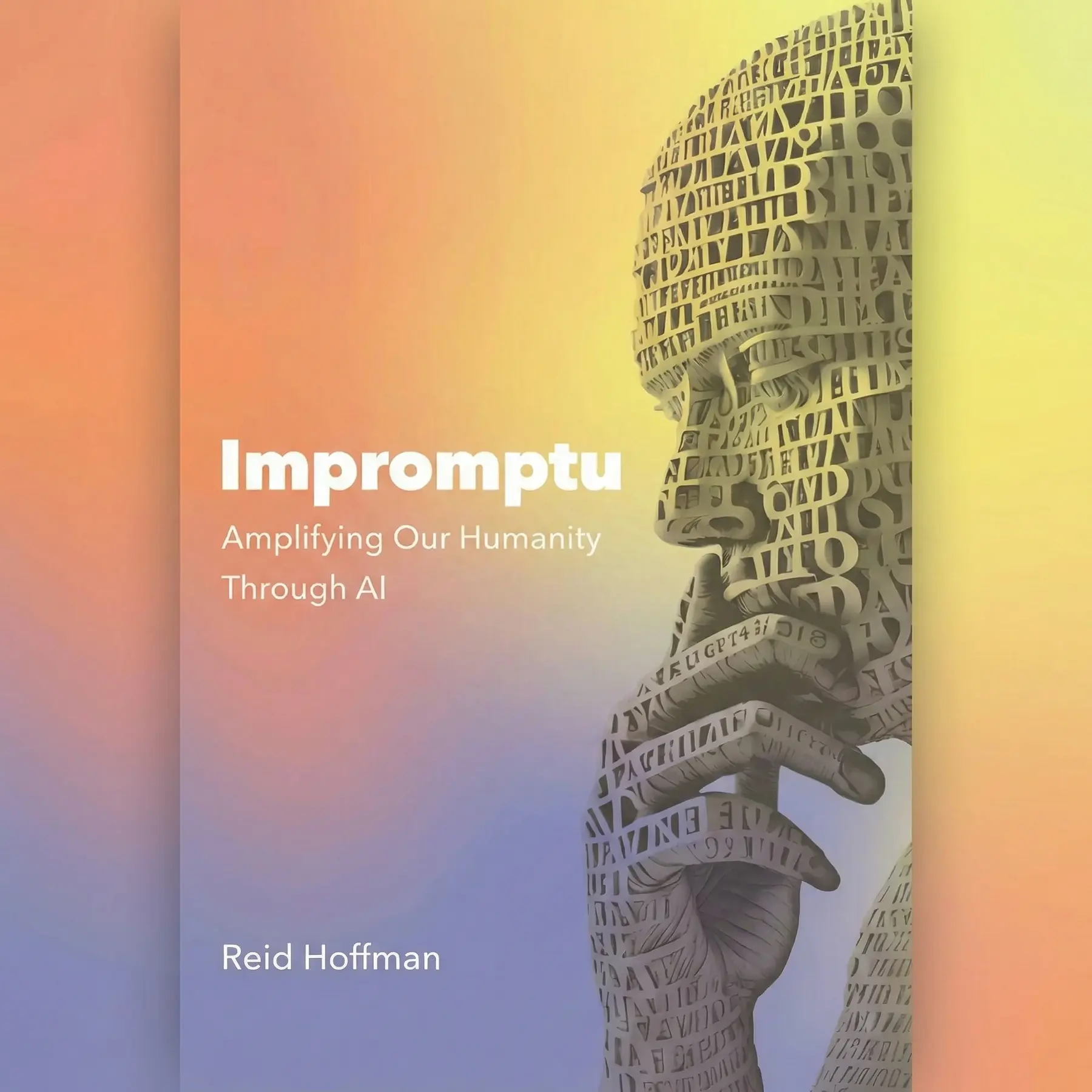
Impromptu: Amplifying Our Humanity Through AI
By Reid Hoffman
Impromptu explores the transformative partnership between humanity and artificial intelligence. Reid Hoffman illustrates how tools like GPT-4 can act as catalysts for creativity, educational equity, and more efficient social systems.
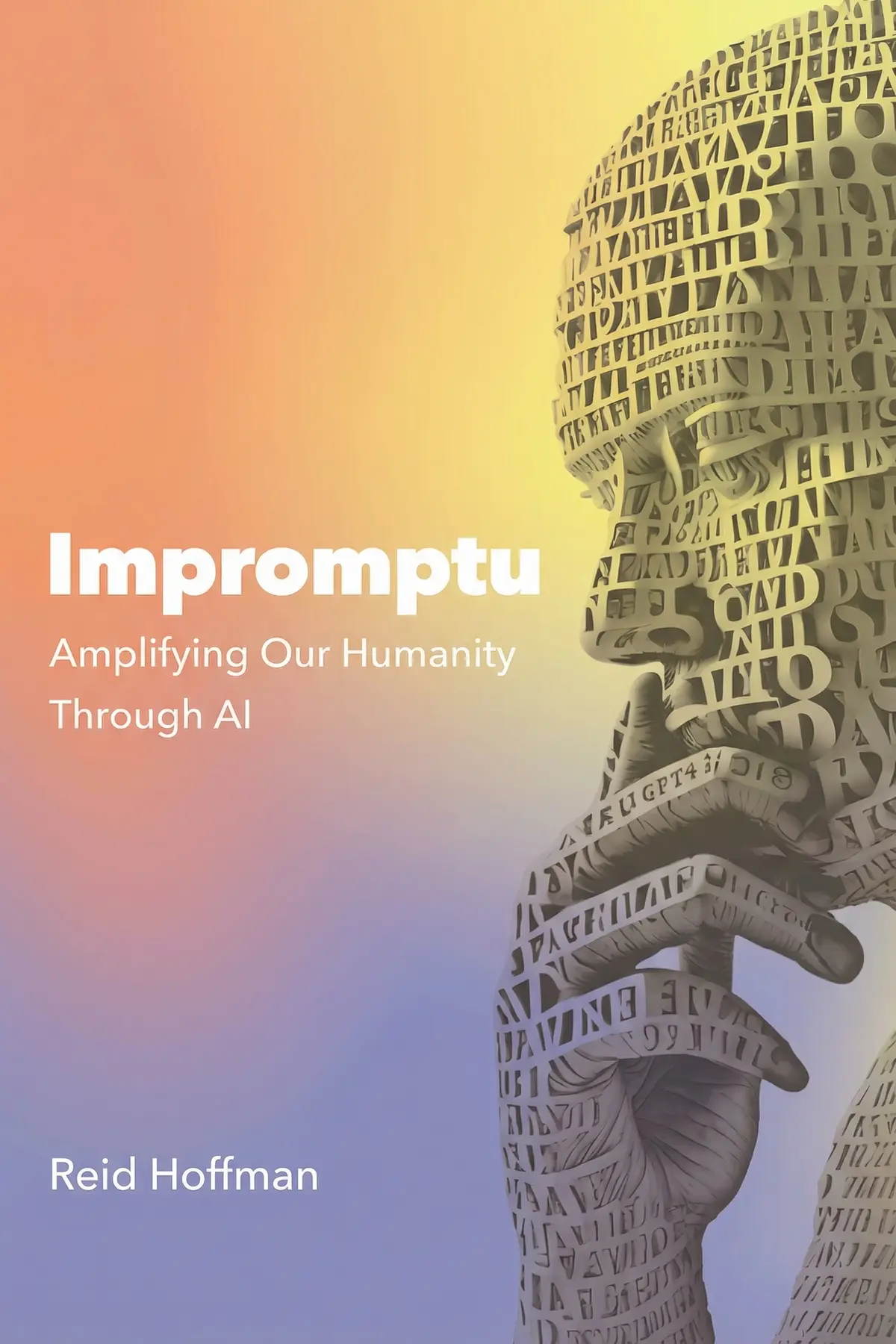
Table of Content
1. Introduction
2 min 17 sec
Imagine standing at the edge of a new era, holding a tool that feels more like a partner than a machine. This is the central premise of Impromptu, a deep dive into the burgeoning world of artificial intelligence written by Reid Hoffman in collaboration with GPT-4. To understand the scale of this shift, consider a simple, almost silly exercise: asking a computer to tell a joke. Most people are familiar with the mechanical, dry responses of older software. But when you ask an advanced Large Language Model how many restaurant inspectors it takes to change a light bulb, the response is startlingly human. It might give you a straightforward, factual answer, or it might offer a satirical take involving bureaucratic citations and multiple people holding ladders.
The complexity only grows from there. If you ask the machine to rewrite that joke in the voice of a famous comedian or a deep-thinking philosopher, it does so with a grasp of nuance, tone, and abstract concepts that was once thought to be the exclusive domain of the human mind. This is more than just a party trick; it represents a fundamental shift in how we process information and generate ideas. GPT-4, the engine behind many of these interactions, is what we call a Large Language Model. It isn’t just repeating stored sentences; it is drawing on a vast ocean of human thought and data to synthesize something new based on the prompts we provide.
Reid Hoffman suggests that we should view this moment not with fear, but as a travelogue for a future we are building in real-time. This isn’t a book about technology replacing people; it’s about technology amplifying what it means to be human. Throughout this summary, we will explore how this ‘impromptu’ collaboration between man and machine can reshape education, revitalize creativity, reform our justice systems, and help us navigate a world overflowing with data. The throughline here is clear: the future belongs to those who learn to dance with the machine, using its speed and vast knowledge to elevate their own unique human qualities like curiosity, ethics, and leadership. Let’s take a look at how this partnership is already beginning to change the world as we know it.
2. A New Chapter for Learning
2 min 43 sec
Traditional education often fears technology as a tool for shortcuts, but AI might actually be the key to unlocking personalized instruction for every student.
3. The Infinite Creative Partner
2 min 39 sec
Creative professionals are often wary of automation, yet AI could serve as the ultimate muse, helping artists break through blocks and explore new horizons.
4. Justice and Social Equity
2 min 36 sec
Our legal and social systems are often slow and biased, but AI offers a way to streamline bureaucracy and provide high-quality legal support to the underserved.
5. Journalism in a Sea of Information
2 min 32 sec
With trillions of gigabytes of data generated every year, AI is becoming an essential tool for journalists to find the truth amidst the noise.
6. Navigating the Glitches of the Machine
2 min 41 sec
AI models are prone to ‘hallucinations,’ but understanding these errors is part of the process of building more reliable and beneficial technology.
7. Conclusion
2 min 31 sec
As we look back on the various ways AI is poised to change our world, a central theme emerges: humanity is currently standing at a crossroads. We have developed a technology that can mirror our intelligence, our creativity, and even our biases. Large Language Models like GPT-4 are not just passive tools; they are active participants in our daily lives. They have the power to revolutionize how our children learn, how our artists create, and how our legal systems deliver justice. But the direction of that revolution is entirely up to us.
It is easy to get caught up in the binary of utopia versus dystopia—thinking that AI will either save the world or destroy it. The reality is much more nuanced. AI is a mirror. If we use it to automate our worst tendencies, we will see those tendencies amplified. But if we use it with intention, curiosity, and a commitment to ethics, we can amplify our best qualities. We can use it to bridge the gap between those who have access to information and those who don’t. We can use it to solve problems that were once too complex for the human mind to grasp alone.
In the end, the most important part of the ‘human-AI partnership’ is the human. We must continue to value the things that a machine cannot replicate: our lived experiences, our moral compass, and our capacity for empathy. AI can provide the data, the structure, and the speed, but we must provide the soul. The title of this book, Impromptu, suggests a performance that is spontaneous and unscripted. That is exactly what the future looks like right now. We are performing this new reality as we go, learning and adjusting with every step.
So, as you move forward into this AI-augmented world, don’t be afraid to experiment. Use these tools to challenge yourself, to learn something new, and to expand your creative horizons. But also, stay critical. Be the fact-checker in the room. Be the person who asks the difficult ethical questions. If we walk this path carefully and confidently, we won’t just be surviving the age of AI—we will be using it to become more fully human than ever before. The future is an impromptu collaboration, and it’s time for us to take the stage.
About this book
What is this book about?
Impromptu is an exploration of the burgeoning relationship between human beings and Large Language Models. Written as a collaborative travelogue between tech pioneer Reid Hoffman and the AI known as GPT-4, the book serves as a hopeful guide for navigating the rapid advancements in artificial intelligence. It moves beyond the common anxieties of automation to focus on how AI can amplify our natural talents and help us solve complex global challenges. The book promises a vision where AI is not a replacement for human intellect but a sophisticated partner. By examining specific sectors—including the classroom, the artist's studio, the courtroom, and the newsroom—Hoffman demonstrates how these tools can democratize access to knowledge and specialized services. He addresses the technical limitations of current models, such as their tendency to 'hallucinate' facts, while arguing that the potential for progress far outweighs the risks if we approach the technology with curiosity and careful regulation.
Book Information
About the Author
Reid Hoffman
Reid Hoffman is a renowned entrepreneur and investor who has been a central figure in the growth of major technology companies, most notably as a co-founder of LinkedIn and an early executive at PayPal. In 2022, he expanded his influence in the field by co-founding Inflection AI, a startup focused on enhancing the way humans interact with computers. He is a prolific author of bestsellers like The Startup of You and Masters of Scale. GPT-4 is an advanced artificial intelligence system developed by OpenAI. It utilizes massive datasets of human language and information to carry out complex tasks, provide detailed answers, and interact with users in a highly sophisticated and productive manner.
Ratings & Reviews
Ratings at a glance
What people think
Listeners find this work deeply insightful regarding artificial intelligence, and one review mentions how well it examines real-world responses. Furthermore, the content is accessible and useful for learning objectives, while one listener points out the emphasis on the flexible applications of AI. They also value the informal style that strengthens human bonds, along with the captivating investigation into the subject and its hopeful outlook on what lies ahead. The prose is skillfully written, and listeners appreciate the infusion of humor throughout the text.
Top reviews
Carter
Ever wonder how the people building the future actually view these tools? Hoffman’s Impromptu is a fascinating look at the synergy between human creativity and machine logic, structured through real-time interactions with GPT-4. It’s not just a book about tech; it’s a manual for amplifying our humanity, as the subtitle suggests. The dialogues between historical figures like Plato and H.G. Wells (generated by the AI) were surprisingly witty and served as a great proof-of-concept for educational use cases. To be fair, some parts might feel outdated by next month given how fast LLMs move, but the philosophical framework Hoffman provides for the AI-human partnership is timeless. It really opened my eyes to the potential benefits of using GPT-4 in my daily workflow.
Show moreHassan
This book is an essential resource for anyone feeling overwhelmed by the recent AI explosion. Hoffman writes with a humorous, light touch that keeps the complex subject matter from feeling too dense or intimidating. I found the chapter on creativity especially eye-opening, particularly the idea that GPT-4 can serve as a tireless collaborator for artists and writers. It’s a very human-centric approach to a very mechanical subject. While the author's financial ties to Microsoft and OpenAI are clear, the insights he provides into the versatile use of these models are genuinely helpful for my own small business goals. The conversational tone makes the reading experience feel very personal. I think Reid has a great point of view and has really opened my eyes to the potential benefits.
Show moreOoi
Wow, I didn't expect to enjoy this as much as I did! Hoffman manages to create a sense of genuine human connection while discussing algorithms and neural networks. The book is structured as a series of explorations, making it easy to jump around to the topics that interest you most, whether that’s the justice system or artistic expression. It’s a very 'pro-human' book that views technology as a tool for expansion rather than a replacement for our natural talents. Even the parts that feel a bit like marketing are still packed with enough practical insight to make the read feel worthwhile and empowering. I love the idea of how GPT-4 can help with creativity and specifically writing lyrics. It is a motivating and inspiring read with a very unique ghostwriter!
Show moreElise
Picked this up because I wanted to see how a Silicon Valley heavyweight actually uses GPT-4 day-to-day. The conversational style makes it feel like you're sitting in on a high-level brainstorming session, which is refreshing compared to drier tech manuals. I particularly enjoyed the section on how LLMs can overhaul our justice system—it's an optimistic take that we rarely hear in the typical AI doomsday cycle. My only gripe is that it feels a bit like a victory lap for OpenAI given Hoffman’s board seat at Microsoft. He does disclose the conflict, but the bias is evident throughout the chapters. Still, the practical examples of prompt engineering are gold for anyone trying to stay relevant in this fast-moving field. It is well worth the few dollars for the ebook version.
Show moreStella
After hearing about this on a few podcasts, I decided to dive in, and I'm glad I did. The book does an excellent job of de-mystifying the concept of 'prompts' and turning it into a recognizable craft that anyone can learn. I loved the optimistic view of the future where AI doesn't replace us but acts as a force multiplier for our own curiosity and work ethic. Some of the AI-generated lyrics and poetry were a bit cringey, but they served the purpose of showing the current limits of the tech. Look, it’s a quick read, it’s cheap, and it gives you a front-row seat to how the tech elite are thinking about the next decade of human progress. Even with the Microsoft bias, the versatile use cases for education make it a worthwhile read.
Show moreWatcharee
As someone who spends way too much time on ChatGPT, I found this to be a well-executed analysis of where we’re headed. The book avoids the usual doomsday rhetoric and instead focuses on how we can use these tools to solve real-world problems in education and governance. I appreciated the transparency regarding how the book was put together, even if some of the AI’s responses were a little long-winded and lacked the 'moral authority' a human writer brings. The truth is, the world is changing, and this serves as a solid bridge between the old way of working and the new AI-integrated reality. It’s not a deep technical dive, but it’s a great high-level strategic overview that manages to stay engaging throughout.
Show moreOtt
This is a time-sensitive but incredibly thought-provoking look at the current state of GPT-4. I picked it up mainly for the prompt examples, and I wasn't disappointed—Hoffman illustrates how the way we ask questions determines the value of the answers we get. While it’s true that some of the specific technical details are already becoming obsolete as newer models drop, the fundamental principles of AI-human collaboration are solid. To be fair, you have to take the optimism with a grain of salt given the author's background on the Microsoft board, but his vision for a more efficient and creative society is hard to ignore. It’s a fast, engaging read for anyone in the tech space or anyone curious about how AI will integrate into our society, for good and bad.
Show moreWanida
Finally got around to reading this, and while the price point for the ebook is a steal, I’m left with mixed feelings. On one hand, the exploration of how AI can assist in the legal and educational sectors is genuinely enlightening and easy to grasp for a non-techie like myself. On the other hand, the book leans very heavily into the 'everything is great' camp, brushing over the ethical nightmares of hallucinations and data privacy far too quickly. It's essentially a long-form advertisement for GPT-4 wrapped in a philosophical wrapper. Personally, I found the constant quoting of the AI a bit tedious after a while. If you can look past the obvious conflict of interest, there’s some practical advice on prompting that's worth the hour it takes to skim through.
Show moreEli
The chapter on education was the highlight for me, as it paints a vivid picture of personalized learning that could actually help overworked teachers. However, the rest of the book felt a bit like a collection of ideas expanded into a PDF. There’s a lot of focus on the 'what' but not enough on the 'how' when it comes to the risks of these Large Language Models. Personally, I would have liked more depth on the technical side and fewer pages of GPT-4 talking to itself in the voices of dead philosophers. It’s an interesting experiment in book publishing, but it lacks the weight of Hoffman’s previous work like 'The Start-up of You.' It's a decent read if you want to understand the Silicon Valley perspective, but take it with a grain of salt.
Show moreYongyut
Not what I expected from someone of Hoffman’s caliber. The 'co-author' gimmick with GPT-4 wears thin after the first fifty pages, leading to a structure that feels disjointed and repetitive. It’s hard to shake the feeling that this was rushed out to capitalize on the ChatGPT hype cycle before the technology moved on. Frankly, seeing a billionaire pitch his own investment while ignoring the labor concerns of the teachers and artists he claims to be 'empowering' felt a bit tone-deaf. There are a few interesting thought experiments regarding the future of public intellectuals, but they are buried under mountains of AI-generated fluff that I could have prompted myself for free. The whole thing could have been a series of blog posts or even a long Twitter thread. Disappointing.
Show moreReaders also enjoyed
AUDIO SUMMARY AVAILABLE
Listen to Impromptu in 15 minutes
Get the key ideas from Impromptu by Reid Hoffman, plus 5,000+ more titles in English and Thai.
- 5,000+ titles
- Listen as much as you want
- 7-day free trial
- Cancel anytime







