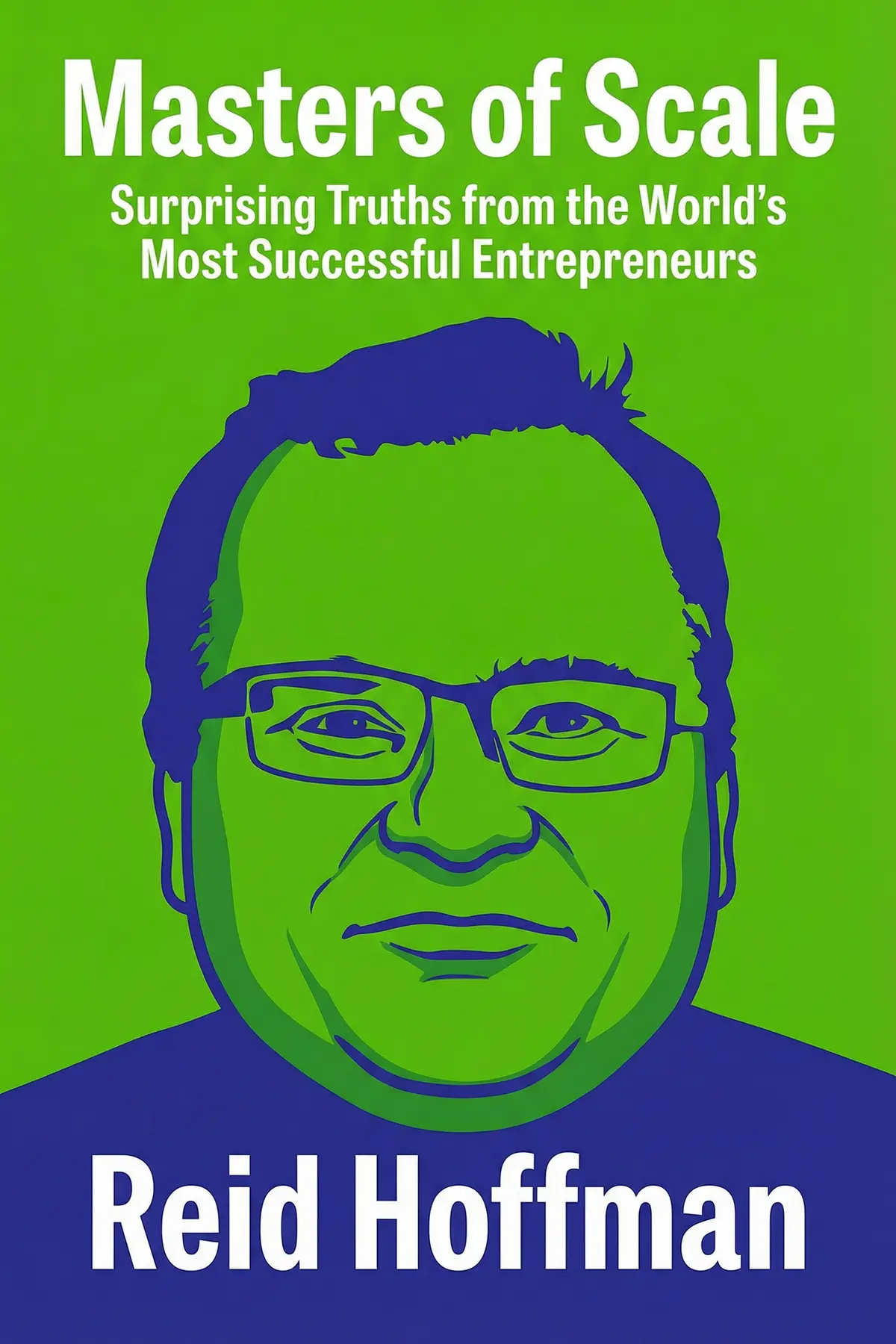
Impromptu: Amplifying Our Humanity Through AI
Reid Hoffman
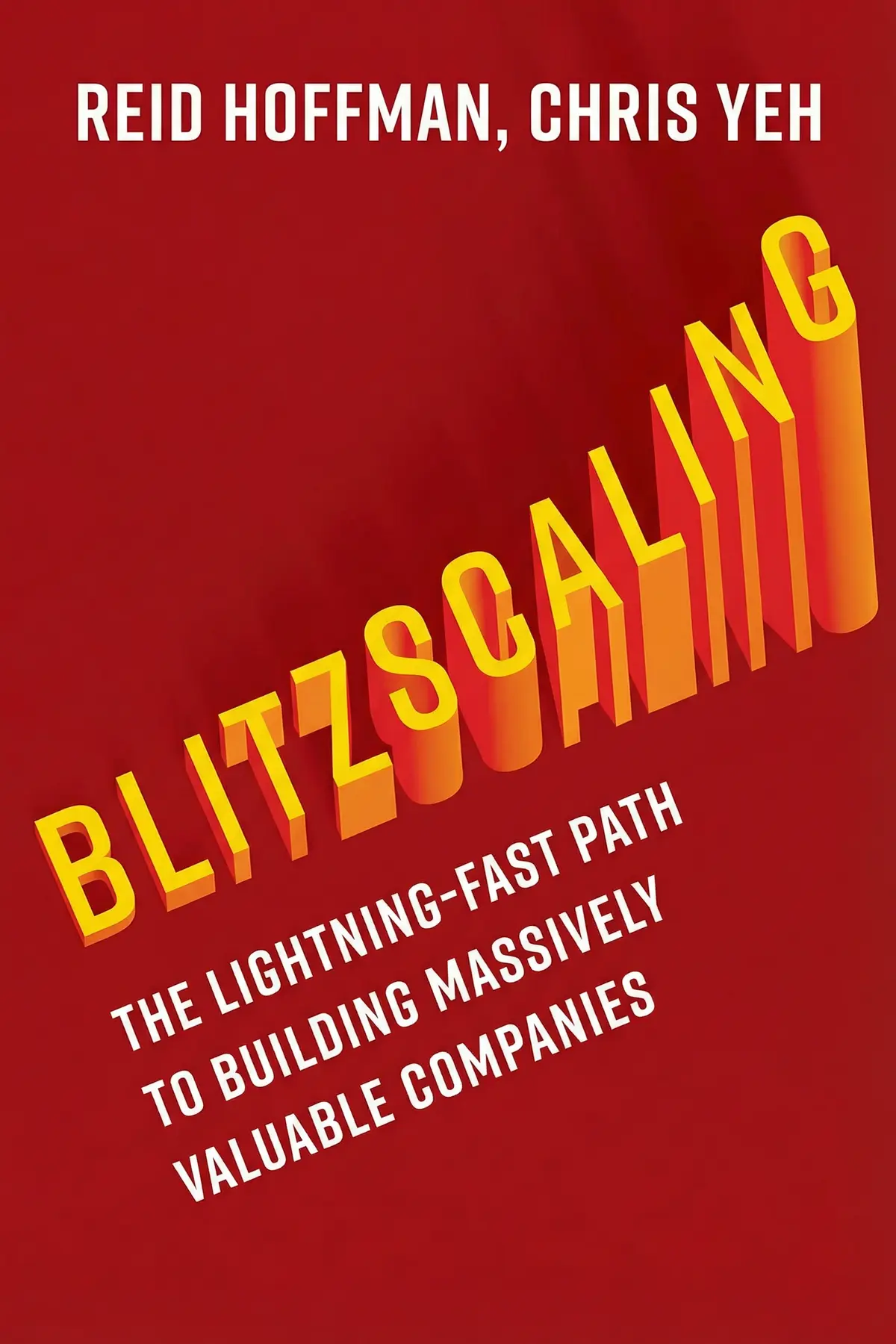
Blitzscaling explores the high-stakes strategy of prioritizing speed over efficiency to achieve massive growth. It provides a roadmap for startups to navigate uncertainty and dominate global markets in the digital age.
2 min 10 sec
In the middle of the 1990s, the landscape of the global economy looked vastly different than it does today. If you looked at the list of the most valuable corporations on the planet at the end of 1996, you would find names that defined the industrial era. Giants like General Electric, ExxonMobil, and the Coca-Cola Company stood at the summit of the business world, alongside international powerhouses like Royal Dutch Shell and Nippon Telegraph and Telephone. These were companies built on physical infrastructure, steady expansion, and decades of traditional management.
Now, skip forward just twenty years. The transformation is nothing short of revolutionary. Those industrial stalwarts have been pushed aside by a new breed of corporate titans: Apple, Alphabet, Microsoft, Amazon, and Facebook. In a remarkably short window of time, the world’s economic center of gravity shifted toward Silicon Valley and the broader technology sector. Today, the top 150 technology firms in that region alone command a combined valuation of roughly three and a half trillion dollars.
This isn’t just a story of new companies replacing old ones; it is a story of a completely different way of growing. How did startups like Uber, Airbnb, or LinkedIn go from being ideas in a garage to becoming multibillion-dollar entities in just a few years? The answer lies in a specific, high-speed strategy known as blitzscaling. This approach represents a departure from everything taught in traditional business schools. It is a philosophy of growth that embraces chaos, prioritizes speed over efficiency, and seeks to capture entire markets before the competition even realizes the game has started.
In the following segments, we are going to break down exactly what this process entails. We will look at why the modern economy creates a ‘winner-take-all’ environment that makes rapid scaling necessary. We will explore the four growth factors that fuel this expansion, the two limiters that can kill it, and the management shifts required to survive the journey. By understanding these principles, you will see how today’s giants were built and what it takes to thrive in an age where lightning-fast speed is the only way to win.
2 min 23 sec
Ever wondered how some startups transform into global titans seemingly overnight? Discover the linguistic roots of a revolutionary growth strategy that balances lightning-fast speed with sustainable organizational expansion.
2 min 12 sec
Traditional business logic suggests securing your base before expanding, but the modern economy rewards a far more aggressive approach. Learn why prioritizing momentum over safety is the key to victory.
2 min 19 sec
In the world of rapid scaling, doing things ‘the right way’ can actually lead to failure. Understand why blitzscalers deliberately choose inefficiency to outpace their rivals and secure the future.
2 min 15 sec
What makes a company truly unstoppable? Explore the dynamics of network effects and why the size of your potential audience dictates the limits of your lightning-fast growth.
2 min 17 sec
Money is the fuel for expansion, but not all revenue is created equal. Discover why the world’s most successful tech giants rely on incredible margins to fund their global ambitions.
2 min 19 sec
Having a great product is only half the battle. Learn the secrets of viral distribution and why digital goods offer a unique advantage that allows companies to reach billions at zero marginal cost.
2 min 05 sec
Not every attempt at blitzscaling succeeds. Discover the two critical limiters—product-market fit and operational scalability—that determine whether a company soars or crashes and burns.
2 min 20 sec
As a company doubles and triples in size, the old ways of working stop working. Learn how to manage the ‘human’ side of blitzscaling and avoid the cultural pitfalls that can sink a giant.
2 min 10 sec
How do you turn a massive user base into a massive bank account? Explore the specific business models, from digital goods to SaaS, that successful blitzscalers use to find their fortune.
2 min 17 sec
The ultimate goal of a blitzscaler is to become the ‘infrastructure’ of an industry. Learn how platforms and marketplaces allow companies to take a cut of every transaction in their ecosystem.
1 min 59 sec
In the fast-moving world of modern business, the old rules of slow, cautious growth have become a liability. Blitzscaling is the new playbook for anyone who wants to build a massively valuable company in the digital age. It is a strategy that requires outsized ambition and a high tolerance for risk. It demands that leaders prioritize speed over efficiency and embrace the chaos of rapid expansion in the face of total uncertainty.
Throughout this summary, we have seen that the most successful companies of our time—from Amazon to Airbnb—didn’t get where they are by being safe. They identified huge markets, leveraged network effects, maintained high gross margins, and mastered viral distribution. They navigated the dangerous limiters of product-market fit and operational scalability, and they survived the organizational hurdles of growing from a handful of people to a global workforce.
But blitzscaling isn’t just for tech startups in Silicon Valley. The principles we have discussed can be applied to almost any organization that needs to move fast. Think about the clothing retailer Zara, which uses lightning-fast supply chains to dominate fashion. Or consider the Khan Academy, which used blitzscaling techniques to bring education to millions of students for free. Even political campaigns have used these strategies to mobilize voters on an unprecedented scale.
The final takeaway is this: the world is more networked than ever before, and in a networked world, speed is the ultimate competitive advantage. If you have a great idea and a large market, you cannot afford to wait. You must be willing to take the leap, accept the risk of being inefficient, and move with the speed of lightning. By understanding the patterns of blitzscaling, you can turn your vision into a global reality. It is a difficult path, and the risks are high, but for those who succeed, the rewards are nothing less than the chance to define the future. Now, it’s time to look at your own projects: where can you trade a bit of certainty for a lot of speed? How can you start scaling your impact today?
Blitzscaling is an exploration of the aggressive growth strategies used by today’s most dominant technology giants to achieve unprecedented scale in record time. The book outlines a framework for why and how companies should pursue rapid expansion, even when it involves significant risk and operational inefficiency. By examining the shift from the industrial era to the networked age, the authors explain that the traditional rules of business have been rewritten. The promise of the book is to reveal the internal mechanics of 'lightning-fast' growth. It details the specific growth factors—such as network effects and high gross margins—and the critical growth limiters that can derail a company if not managed correctly. Readers will learn how to transition through various stages of company size, how to manage the chaos of rapid hiring, and how to eventually turn massive scale into sustainable profitability. It is a guide for anyone looking to understand how the winners of the modern economy are built.
Reid Hoffman was one of the cofounders of LinkedIn, an early executive at PayPal and an angel investor in Facebook. He has served as a board member at Microsoft, and he was one of the coauthors of The Start-Up of You and The Alliance, both of which were New York Times best sellers. Chris Yeh is also a coauthor of The Alliance. He is an investor, entrepreneur, writer and mentor based in the San Francisco Bay Area. His business perspective is informed by two degrees from Stanford University and an MBA from Harvard Business School.

Listeners find the material educational and straightforward to follow, as one listener notes how it simplifies intricate concepts. They also view it as an essential guide for business founders, with one listener highlighting its utility in building viral organizations. Additionally, the work earns praise for its deep insights and inspiring tone, while listeners value the writers' brilliance and the narrative's steady tempo.
Finally got around to reading this Silicon Valley staple, and I found the framework for hypergrowth surprisingly actionable. Hoffman manages to distill the chaotic process of scaling a startup into a structured roadmap that any aspiring founder should memorize. The way he breaks down the shift from being a 'pirate' to joining the 'navy' provides a clear mental model for organizational maturity. Truth is, most business books are fluff, but this one actually tackles the hard problem of prioritizing speed over efficiency during periods of extreme uncertainty. While the pacing is brisk, it doesn't sacrifice the depth needed to explain how network effects truly create market dominance. It’s a highly motivational guide for anyone looking to build a company that can actually change the world at scale.
Show moreWow. This is easily the most comprehensive guide to understanding why certain tech giants seem to take over the world overnight. Hoffman and Yeh don’t just talk about growth; they explain the specific mechanics of how to weaponize speed to crush competition and capture network effects. I loved the counterintuitive rules section, especially the idea that you should launch a product that embarrasses you just to get moving. It's a refreshing departure from traditional management books that obsess over efficiency and slow, methodical planning. The pacing is perfect, keeping you engaged through what could have been dry, technical material. If you’re trying to build a viral product or just want to understand the modern economy, this is non-negotiable reading.
Show morePicked this up during a lull in my own startup's growth and it provided the exact jolt of motivation I needed to rethink our strategy. The authors' intelligence shines through in every chapter, particularly when they discuss the four key growth factors like market size and distribution. It’s rare to find a book that is both thought-provoking and practically useful for day-to-day decision-making. I especially liked the rule about hiring Ms. Right Now instead of searching for a perfect long-term fit who might slow you down in the current phase. It really captures the frenzied, chaotic energy of a company in hypergrowth mode. This is an essential resource for anyone serious about building a viral, category-defining business in the 21st century.
Show moreAs someone who works in a mid-sized tech firm, I found the categorization of growth stages—Family, Tribe, Village, City, and Nation—to be incredibly illuminating. It explains why the 'move fast and break things' mentality eventually needs to give way to more specialized management structures. The authors provide a wealth of anecdotes from companies like Airbnb and LinkedIn, making complex concepts regarding market size and distribution feel very accessible. My only real gripe is the heavy reliance on a Silicon Valley ecosystem that doesn't exist for everyone. Frankly, it’s a bit idealistic about the social impact of these massive platforms, often ignoring the messy externalities they leave behind. Still, the core strategies for achieving 'venture scale' are some of the most intelligent I've encountered in recent business literature.
Show moreAfter hearing so many colleagues rave about this, I expected another generic 'how-to' book, but Blitzscaling is actually quite analytical. It does a great job of explaining the logic behind why VCs pour millions into companies that aren't yet profitable. The concept of sacrifice—giving up efficiency for the sake of speed—is articulated with a level of clarity that makes the high-risk nature of tech startups feel logical. I appreciated the specific focus on Management Innovation, which is a topic that often gets ignored in favor of product features. Not gonna lie, some of the examples feel a bit cherry-picked to fit the narrative, but the underlying principles remain solid. It’s an informative deep dive into the engine room of the world's most valuable companies.
Show moreEver wonder why some startups explode while others stagnate despite having a better product? This book answers that question by focusing on the First Scaler Advantage and how to navigate the transition from a small family-style team to a massive nation-sized organization. The authors do a fantastic job of making high-level business strategy feel approachable and even exciting for the average reader. I particularly enjoyed the distinction between fastscaling and blitzscaling, as it clarifies that speed is only valuable when you're operating under extreme uncertainty. There are some parts where the writing gets a little repetitive, and it could have been trimmed down by fifty pages or so. Nevertheless, the insight into how digital goods and subscription models scale is worth the price of admission alone.
Show moreTo be fair, I was skeptical of the blitzscaling buzzword at first, but the book does a solid job of justifying the term. It takes the complex, often opaque world of venture-backed growth and makes it accessible to anyone with an interest in business. The breakdown of how to handle organizational 'fires' was a highlight for me, as it validates the messy reality of scaling that most gurus try to hide. While the book is clearly a product of its environment—heavily focused on the winners of Silicon Valley—it offers a unique perspective on the value of speed as a defensive strategy. It’s a well-paced read that manages to be both educational and engaging. I would have liked more discussion on the potential downsides of this strategy, but as a primer on growth, it's top-tier.
Show moreThe chapter on strategy innovation had some brilliant nuggets, but the rest of the book felt like it was drowning in its own hype. I was particularly frustrated by the sweeping claims about M-Pesa's impact in Africa, which were presented without any concrete citations or external references. It feels like Reid Hoffman is used to speaking in a bubble where his anecdotes are never challenged by dissenting data. In my experience, the section on business model patterns—like the shift from bits to atoms—is quite useful for analyzing current market trends. However, the advice to 'let fires burn' and 'ignore your customer' feels dangerous if taken out of its extremely niche context. It’s a thought-provoking read, but one that requires a heavy dose of skepticism to avoid the traps of unsustainable growth.
Show moreLook, I appreciate what the authors were trying to do here, but it felt like a series of decent blog posts stretched into a full-length book. The core message is simple: grow as fast as possible to win the market, even if it’s messy. While the anecdotes about Google and Amazon are interesting, they don't necessarily provide a replicable framework for those of us not backed by billions in capital. It’s informative enough, and the writing style is easy to follow, but it lacks the nuance needed for businesses outside of the tech bubble. I found the sections on Management Innovation to be the most grounded, while the rest felt a bit like a sales pitch for a specific brand of capitalism. It's an okay read if you have the time, but you could probably get the same value from a detailed summary.
Show moreThis book represents everything that is currently wrong with the venture capital mindset. Hoffman essentially argues that sustainability and unit economics should be ignored in favor of reckless expansion, which has led to the rise of countless 'zombie' companies. While it might work for a low-marginal-cost software business, the advice is being applied to industries like ride-sharing and grocery delivery with disastrous results. Personally, I found the tone to be intolerably bromidic, acting as if blitzscaling is a philanthropic gift to humanity rather than a ruthless market-grab strategy. The lack of diversity in perspectives is glaring, as it almost exclusively celebrates the Silicon Valley boys club and their specific way of doing business. Unless you are building the next Facebook, most of these recommendations are a recipe for a very expensive failure.
Show more
Hamilton Helmer



Duncan Clark


John Carreyrou
AUDIO SUMMARY AVAILABLE
Get the key ideas from Blitzscaling by Reid Hoffman, plus 5,000+ more titles in English and Thai.