
16 min 29 sec
Superagency: What Could Possibly Go Right with Our AI Future
Superagency explores the potential of artificial intelligence to dramatically expand human capability. This guide examines how AI can transform mental health, education, and governance, turning technological anxiety into a roadmap for empowerment.
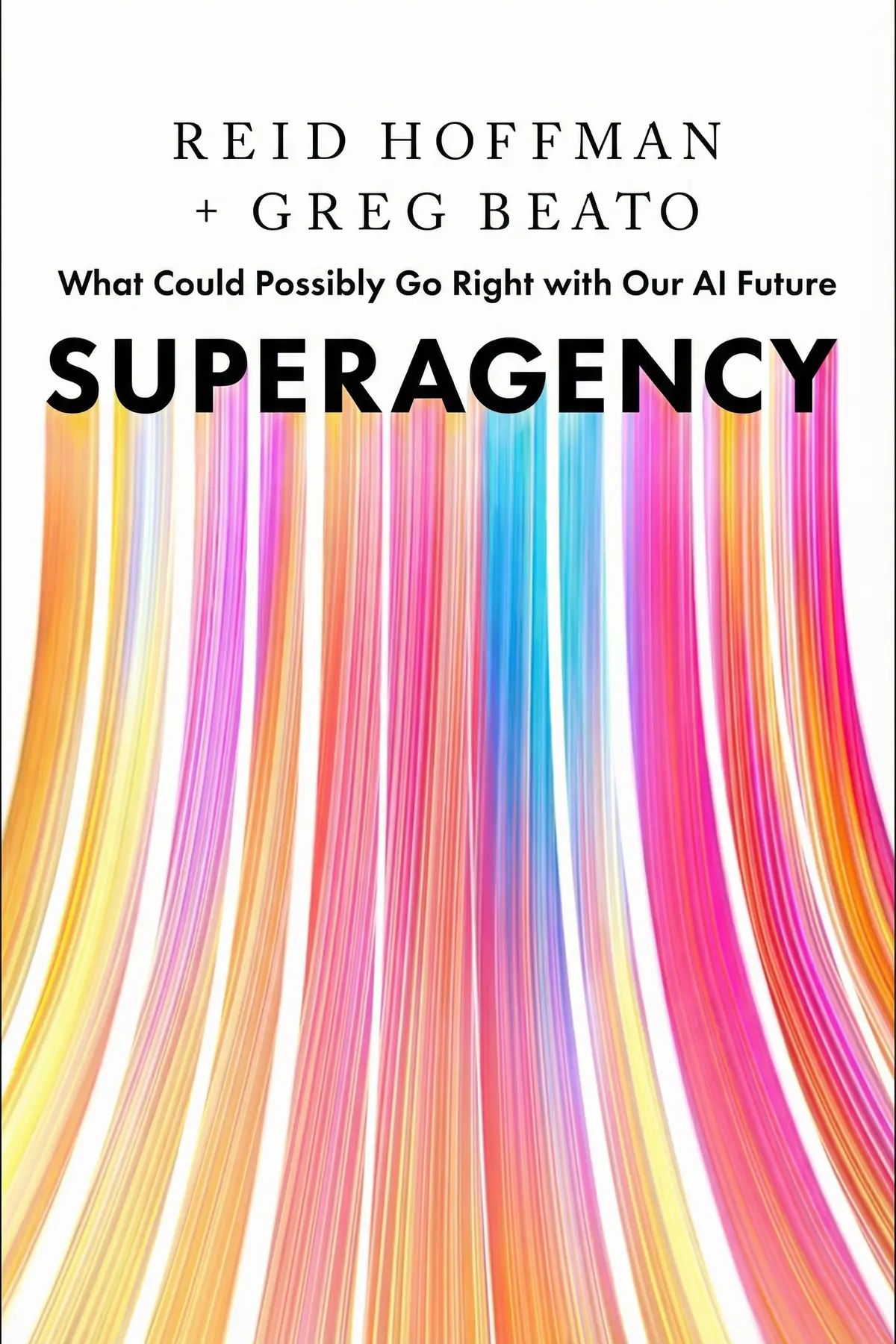
Table of Content
1. Introduction
2 min 03 sec
Imagine for a moment that it is the 15th century. A new machine has just been invented that can replicate the written word with incredible speed. For the religious and political leaders of the time, this wasn’t a miracle—it was a nightmare. They feared that the printing press would strip them of their authority, allowing dangerous ideas to spread like a virus through a society that wasn’t ready to handle them. They worried that the sanctity of knowledge would be lost if just anyone could own a book.
Fast forward a few centuries, and we see the same pattern repeat with the telephone. Critics at the time argued that this new gadget would destroy the art of conversation and lead to a world where human beings no longer felt the need to visit one another in person. Even the humble bicycle was once seen as a threat to the social order, particularly for women seeking independence.
Today, we find ourselves in the middle of a very similar cultural panic regarding artificial intelligence. The headlines are filled with warnings about the end of work, the death of privacy, and the loss of human agency. But if history has taught us anything, it’s that these transformative shifts rarely result in the total collapse we fear. Instead, they usually provide us with new ways to be human.
In our exploration of Superagency, we are going to look past the doom-and-gloom predictions to find a much more compelling possibility. This isn’t just about software that can write poems or generate images. It’s about a fundamental shift in what an individual is capable of doing. We are entering an era of superagency, where artificial intelligence functions not as a competitor, but as a cognitive exoskeleton. Just as the industrial age used engines to amplify our physical strength, the AI age uses neural networks to amplify our mental reach. Over the next several chapters, we will see how this technology might solve the mental health crisis, reshape our democratic systems, and provide every person on the planet with a personalized navigator for the complex world of information.
2. Closing the Gap in Mental Healthcare
2 min 47 sec
Could a machine actually be more empathetic than a person? Explore how AI is revolutionizing mental wellness by providing instant, affordable, and surprisingly compassionate support to millions.
3. The Power of Iterative Progress
2 min 32 sec
Innovation often moves faster than regulation, and history shows that’s not always a bad thing. Discover why ‘permissionless innovation’ might be the safest way forward.
4. Building Modern Infrastructure for Freedom
2 min 24 sec
Regulation doesn’t have to be a cage; it can be a highway. Learn how the right rules can actually make us more mobile and more powerful in the digital age.
5. The Personal GPS for Knowledge
2 min 34 sec
AI is doing for information what GPS did for geography. Discover how personalized intelligence can help anyone navigate complex systems and level the playing field.
6. A New Era of Sovereign Intelligence and Civic Voice
2 min 35 sec
AI isn’t just for big tech companies; it’s becoming a national and civic priority. See how nations are using technology to protect culture and strengthen democracy.
7. Conclusion
1 min 34 sec
As we have seen, the story of artificial intelligence is not a story of machines versus humans. It is the story of humans choosing to become more than they were before. The ‘superagency’ we’ve explored—from the universal access to mental healthcare to the democratization of expertise and the strengthening of our civic bonds—is not a distant dream. It is a path that is currently being built by innovators and citizens who refuse to let fear dictate the future.
We stand at a unique moment in history. We have the choice to treat AI as a threat to be managed, or as a partner to be embraced. If we choose the latter, we can move toward a world where the ‘devil wagons’ of today become the essential highways of tomorrow. We can choose to use these tools to close the gaps in our society, to empower the marginalized, and to give every single person the ability to solve the problems that matter most to them.
The true power of AI doesn’t lie in its ability to think; it lies in its ability to help *us* think bigger, act faster, and care more deeply. By focusing on how we can use this technology to amplify our own agency, we aren’t just surviving the digital age—we are mastering it. The future isn’t something that happens to us; it’s something we build, one intelligent interaction at a time. Now is the time to step into your own superagency and see just how far we can go.
About this book
What is this book about?
Throughout human history, major technological breakthroughs—from the printing press to the automobile—have been met with intense skepticism and fear. In Superagency, authors Reid Hoffman and Greg Beato argue that we are currently at a similar crossroads with artificial intelligence. Rather than viewing AI as a replacement for human autonomy, they propose a vision of the future where AI acts as a powerful amplifier for individual and collective potential. The book moves past the common narrative of machines taking over, instead focusing on the concept of superagency: the unprecedented expansion of what a single human being can achieve. By examining real-world applications in healthcare, civic engagement, and education, the authors demonstrate how AI can solve previously intractable problems of scale and access. Readers will discover how iterative innovation and thoughtful regulatory frameworks can ensure that AI remains a tool for human flourishing, helping us navigate a complex information age with greater precision, empathy, and speed. Ultimately, the book serves as a hopeful manifesto for a future where technology makes us more, not less, human.
Book Information
About the Author
Reid Hoffman
Reid Hoffman is a prominent tech entrepreneur and venture capitalist, best known as the co-founder of LinkedIn and Inflection AI. He currently serves as the chairman of Village Global and has authored influential books including The Startup Of You and Blitzscaling. Greg Beato is an established writer focusing on technology and culture. His work has been featured in major publications such as The New York Times, Wired, and The Washington Post, and he has contributed to over 100 outlets globally.
Ratings & Reviews
Ratings at a glance
What people think
Listeners find this work to be a highly engaging read that offers a compelling case for AI’s revolutionary power, especially concerning major advancements in areas like education. Furthermore, the book is deeply informative and well-supported by research, with the authors effectively blending human warmth and intellectual depth in their analysis. Listeners also value the positive outlook on artificial intelligence and the focus on individual instruction, with one listener highlighting how it dismantles obstacles to personalized learning.
Top reviews
Thitiwan
Wow, it’s refreshing to read something about artificial intelligence that isn't dripping with doomerism. This book is an optimistic take on AI that focuses on how it can actually uplift human dignity. The examples of AI-powered health advisors and tutoring systems illustrate a future where expertise is democratized. One of my favorite parts was the discussion on how AI can help the most junior employees develop mastery faster, acting as a constant mentor. It’s an informational powerhouse that bridges the gap between technical capability and human aspiration. For anyone who feels overwhelmed by the 'digital apocalypse' narrative, this provides a necessary counterweight. It shows how we can use these tools to enhance our own agency rather than surrendering it. Truly a breakthrough in how we should be discussing the marriage of heart and intellect in tech.
Show moreSaovapa
I've been thinking about the 'digital commons' for years, and this book finally puts words to the potential of collective AI intelligence. Hoffman and Beato deliver a brilliant manifesto for how we can amplify human potential. They don't just talk about efficiency; they talk about agency—our ability to make choices and impact the world. The focus on personalized learning as a way to break down societal barriers is a major highlight. It’s a well-researched, intellectual deep dive that still manages to feel accessible and human. The authors successfully argue that AI can be a force for democratization, giving everyone the tools that were once reserved for the elite. This is essential reading for anyone trying to understand the positive trajectory of our technological evolution. It’s bold, it’s bright, and it’s exactly what the discourse needs right now.
Show moreJoseph
Finally got around to finishing this, and I’m feeling much more hopeful about the classroom of the future. The authors argue that AI can act as a personalized mentor, breaking down traditional barriers to customized education for every child. I loved the idea of a student having a da Vinci-level tutor in their pocket. It’s clear the authors approached this topic with both intellect and heart. While the tone is definitely leaning toward the 'Bloomer' camp, the research into how AI can assist with dyslexia and language barriers is genuinely moving. Truth is, we often fear what we don’t understand, and this book does a great job of demystifying the potential for good. I do wish there was more focus on the digital divide, but as a vision for what education could become, it is incredibly persuasive and well-researched.
Show moreAnucha
Think of this as a blueprint for cognitive abundance rather than just another technical manual on machine learning. The authors make a compelling case for 'superagency,' where AI doesn't replace us but expands our ability to act in the world. I found the section on mental health particularly striking. The idea of 'Spotify for therapy'—where support is affordable, personalized, and available 24/7—could be a total game-changer for accessibility. It is a very informational read that doesn't just look at the code, but at the human impact. Some might find the optimism a bit much, but I think we need these kinds of visionary perspectives to balance out the constant doom-scrolling. It’s a well-researched argument for why we should embrace the tool as a partner in our long journey of technological expansion.
Show moreWipada
As someone who spends a lot of time thinking about tech ethics, I found the historical parallels here deeply fascinating. Hoffman and Beato trace the path from the printing press to the telephone to show that every major leap forward was met with fear. The research is thorough, and they successfully frame AI as a tool for 'superagency' that can help us solve the most complex problems of our time. I appreciated the nuance in the discussion about AI benchmarks not being a perfect proxy for real-world progress. Not gonna lie, the book is definitely biased toward innovation, but the authors are transparent about that from page one. It’s a persuasive argument for why we should keep the doors of development open. It’s well-written, engaging, and offers a much-needed vision for a proactive rather than reactive future.
Show moreCamila
Reid Hoffman has a very specific vision of the future, but I’m not sure I buy the analogies he uses to get there. He compares our burgeoning relationship with LLMs to the bond people have with their pets or even their religious deities. To me, that feels like a stretch that ignores the biological and spiritual complexity of those human experiences. The book is well-written and full of ideas, yet it feels a bit like a chronology of AI hype rather than a balanced analysis. It’s an interesting perspective on how we might achieve cognitive abundance, but the 'precautionary principle' is dismissed too quickly for my comfort. Look, there are some brilliant points about how LinkedIn and other platforms paved the way for this agency. However, the narrative loses its appeal midway when it pivots to random historical tangents that don't always land.
Show moreMontri
How we regulate AI is the defining question of our era, and this book takes a firm stand on the side of iteration over restriction. The authors use historical parallels, like the evolution of the interstate highway system, to show how technology improves through real-world use. It’s a fascinating take, especially the focus on how Singapore and South Korea are integrating AI into governance to empower citizens. However, the analysis feels one-sided in several chapters. They talk about 'private digital commons' as if privacy concerns have already been solved by the market. In my experience, the 'Move Fast and Break Things' era left a lot of wreckage, and I’m not sure I’m ready to apply that to superintelligence. It’s an engaging read for sure, and I recommend it for the breadth of examples, but keep your critical thinking cap on while reading.
Show moreCameron
Honestly, I picked this up because of the hype, and I'm walking away with some interesting notes but a lot of 'what ifs.' The concept of AI as a 'private digital commons' is cool, but the book feels a bit like it’s piggybacking on the current AI wave without offering enough critical pushback. I liked the bits about how AI can help people with dyslexia, which showed a lot of heart. Still, the tone can be quite patronizing toward those who have legitimate fears about safety and regulation. It’s a quick, entertaining read, but it feels more like a chronology of what might go right if everything stays perfect. To be fair, if you want a boost of optimism, this is the one. If you want a deep dive into the risks, you might find it lacking.
Show moreGun
Look, I wanted to like this, but frankly, it reads more like a billionaire’s wishlist than a serious ethical inquiry. Hoffman wants us to trust that the same hyper-capitalist structures that created our current problems will magically solve them with robots. He mentions challenges, but he doesn’t go deep into the systemic risks of economic capture or job displacement. The analogy comparing AI safety to 1920s car races felt dismissive of the actual lives at stake in the digital age. It lacks the anthropological density needed to tackle such a massive shift in human agency. The book is rich in faith but poor in actual critical thought regarding power dynamics. It’s mostly a collection of interesting anecdotes that avoid the harder questions about who actually wins in this new world. I expected more than just a polished defense of permissionless innovation.
Show moreAroon
The level of techno-optimism here is actually terrifying. By reframing Orwell’s 1984 as a failure of the state to properly 'hear' its citizens rather than a warning against total surveillance, Hoffman reveals a staggering lack of political depth. He essentially treats dystopia as a design flaw that better code could fix. The book pushes for 'permissionless innovation,' which is just a fancy way of saying we should accelerate deregulation and let tech billionaires experiment on society without oversight. To be fair, the writing is polished, but the content is a corporate pamphlet for hyper-capitalism disguised as a humanist manifesto. It completely ignores the power asymmetries that define our world today. If you think the solution to problems created by technology is just more, unchecked technology, you’ll love this. Otherwise, it is a deeply concerning read that prioritizes market speed over human safety.
Show moreReaders also enjoyed

AUDIO SUMMARY AVAILABLE
Listen to Superagency in 15 minutes
Get the key ideas from Superagency by Reid Hoffman, plus 5,000+ more titles in English and Thai.
- 5,000+ titles
- Listen as much as you want
- 7-day free trial
- Cancel anytime







